
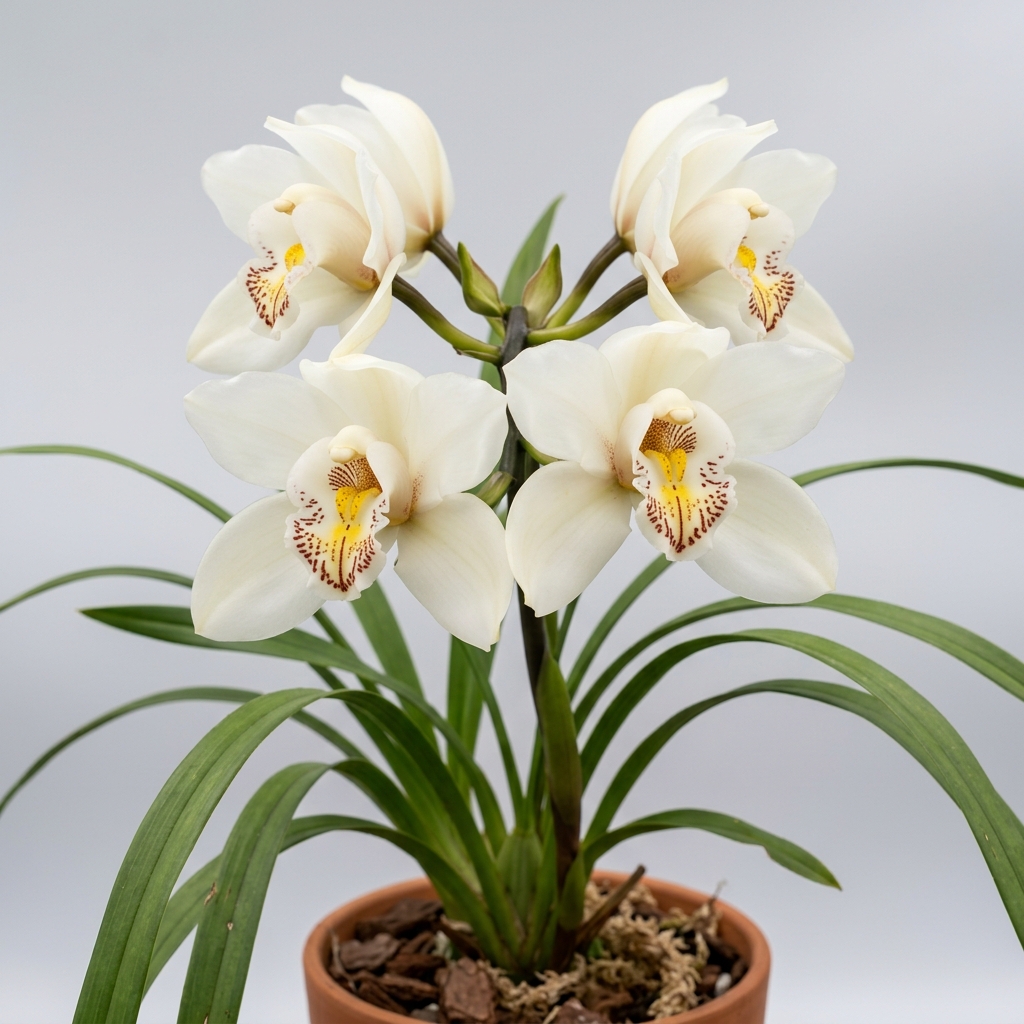
Cymbidium Eburneum, commonly known as the ivory-colored Cymbidium, is a highly prized species orchid celebrated for its elegant, pristine white blossoms and outstanding fragrance. Originating from the high-altitude regions of the Himalayas and Southeast Asia, this orchid brings a touch of classic sophistication to any collection. Its graceful, arching foliage and upright flower spikes make it a standout choice for intermediate to cool-climate growers who appreciate traditional orchid beauty.
Cultivated both as a collector’s species and as a foundational parent in modern hybridizing, this orchid is revered for its large, waxy flowers that emit a sweet, lilac-like scent. While it requires specific temperature drops to initiate blooming, its rewarding floral display and robust growth habit make it a highly desirable plant for dedicated orchid enthusiasts. Providing the right balance of light, moisture, and seasonal temperature variation is key to unlocking its full potential.
💡 Did You Know?
Cymbidium Eburneum belongs to the Cymbidium orchid group, where flower presentation is often just as important as . White-flowered cultivars are especially valued indoors because their pale blooms reflect well and pair easily with many home, greenhouse, and display settings.
🌿 Botanical Overview
Cymbidium Eburneum is a medium-sized, epiphytic or lithophytic orchid species native to moist, montane forests. It features tightly clustered, egg-shaped pseudobulbs enveloped by the bases of long, linear, strap-like leaves. These leaves are dark green, flexible, and provide an attractive year-round display even when the plant is not in bloom.
In its natural habitat, the plant grows on mossy tree trunks or rock crevices where it receives filtered sunlight and abundant moisture during the growing season. This evolutionary background dictates its preference for excellent drainage, high humidity, and distinct seasonal shifts in temperature and watering.
🌸 Flower Characteristics
The blossoms of Cymbidium Eburneum are renowned for their striking ivory-white color, which gives the species its botanical name. Each flower spike typically produces one to three large, waxy flowers, measuring up to three to four inches across. The petals and sepals are broad and overlapping, creating a full, rounded floral shape.
The lip, or labellum, is a key feature of the bloom, displaying a central yellow band or callus ridge that contrasts beautifully with the surrounding white tissue. The flowers are long-lasting, often remaining fresh on the plant for several weeks if kept in cool, stable conditions.
Fragrance & Bloom Profile
One of the most compelling attributes of Cymbidium Eburneum is its intense, sweet fragrance. The scent is frequently described as a blend of lilac, citrus, and honey, which is most pronounced during the morning hours when temperatures begin to rise.
The blooming cycle typically occurs from late winter through early spring. Because the flower spikes emerge from the base of the pseudobulbs and grow upright, they present the blossoms prominently above or alongside the foliage, making for an exceptionally clean and elegant presentation.
Parentage & Hybrid Lineage
As a pure species, Cymbidium Eburneum does not have hybrid parentage, but it has played a monumental role in the history of orchid hybridization. It is one of the primary ancestral species used to breed modern standard and miniature Cymbidium hybrids, contributing its large flower size, pure white coloration, and sweet fragrance to its offspring.
While wild-collected specimens are rare and protected, line-bred cultivars of this species are occasionally available through specialty nurseries. Growers should look for established, nursery-propagated plants to ensure vigor and compliance with conservation guidelines.
🌱 Growing Conditions
To thrive, Cymbidium Eburneum requires bright, indirect light. A location near an east- or shaded south-facing window is ideal, or under professional LED grow lights. The leaves should maintain a healthy light-green hue; dark green leaves suggest insufficient light, while yellowing or scorched spots indicate excessive direct sun.
💡 Care Tip
For best results, grow Cymbidium Eburneum in bright filtered with steady and gentle airflow. Avoid placing the plant in harsh midday sun, but do not keep it in a dark corner; weak is one of the most common reasons cultivated orchids refuse to rebloom.
Temperature management is crucial for this species. It prefers cool to intermediate conditions, with summer days around 70 to 80 degrees Fahrenheit and cooler nights. A significant drop in night temperatures during the autumn, down to 50 to 55 degrees Fahrenheit, is generally necessary to trigger the development of flower spikes.
Watering, Feeding & Potting Media
During the active spring and summer growing season, Cymbidium Eburneum requires frequent watering to keep the potting medium evenly moist but never waterlogged. As growth slows in the autumn and winter, watering should be reduced, allowing the medium to dry out slightly between waterings while preventing the pseudobulbs from shriveling.
A well-draining, moisture-retentive potting mix is essential. A blend of medium-grade fir bark, perlite, and chopped sphagnum moss works exceptionally well. Feed the plant weekly with a diluted, balanced orchid fertilizer during the growing season, flushing the pot with pure water once a month to prevent salt buildup.
Blooming Season & Care Notes
The primary blooming window spans from late winter to early spring. Once the flower spikes begin to emerge from the base of the pseudobulbs, avoid moving the plant to a location with drastically different light or temperature, as sudden environmental changes can cause bud drop.
After the flowers fade, cut the spent spikes back to the base of the pseudobulb using sterilized cutting tools. Repotting should be performed every two to three years, immediately after flowering has finished and before new root growth begins, to refresh the decomposing media.
⚠️ Common Issues
⚠️ Common Mistake
The most common mistake is by calendar instead of root and potting-media condition. Cymbidium roots need moisture and air at the same time, so constantly wet bark or sphagnum can lead to root loss even when the leaves still look healthy.
- Root rot: Caused by overwatering or compacted, poorly draining potting media.
- Bud blast: Sudden dropping or drying of flower buds due to rapid temperature fluctuations or low humidity.
- Leaf tip burn: Often a sign of excessive fertilizer salt buildup or low humidity.
- Spider mites and scale: Common pests that thrive in dry, warm indoor environments; treat promptly with insecticidal soap or neem oil.
- Pseudobulb shriveling: Indicates severe dehydration, either from underwatering or root loss.
❓ Frequently Asked Questions
How do I trigger blooming in my Cymbidium Eburneum?
To initiate flower spikes, provide a distinct drop in night temperatures during the autumn months, aiming for 50 to 55 degrees Fahrenheit, alongside bright indirect light and reduced watering.
What is the best potting mix for this orchid?
A highly breathable yet moisture-retentive mix consisting of medium fir bark, perlite, and a small amount of sphagnum moss or charcoal is ideal for supporting its epiphytic root system.
Why are the leaf tips turning brown on my plant?
Brown leaf tips are typically caused by accumulated fertilizer salts in the potting medium or insufficient ambient humidity. Flush the pot thoroughly with pure water and ensure humidity levels remain above fifty percent.
Can Cymbidium Eburneum be grown outdoors?
Yes, in temperate climates with mild summers and cool, frost-free winters, it can be grown outdoors in a shaded location, provided it is protected from freezing temperatures and intense afternoon sun.
⭐ Final Growing Notes
Cymbidium Eburneum remains a crown jewel of the orchid world, offering a timeless combination of pristine white blossoms and a captivating fragrance. While its temperature and seasonal requirements demand an attentive hand, the reward of its elegant winter-to-spring blooms makes it an incredibly satisfying species to cultivate. By mimicking its native montane habitat with bright light, cool nights, and consistent moisture, growers can enjoy this botanical masterpiece for many years.
⚕️ Health, Safety & Edibility
Understanding how a plant interacts with people, pets, and the surrounding environment is part of responsible cultivation. This section uses conservative, general guidance and does not replace professional medical or veterinary advice.
Human Safety: No published evidence currently identifies species-specific toxicity concerns for Cymbidium Eburneum during normal handling. As with most ornamental plants, it should not be intentionally consumed.
Pet Safety: Published information does not indicate that this orchid commonly poses a toxicity concern for cats or dogs. However, chewing leaves, flowers, roots, or potting media may still cause mild digestive upset.
Edibility: This orchid is cultivated for ornamental display rather than food. Ornamental plants may carry fertilizers, pesticides, or other horticultural treatments that make them unsuitable for consumption.
Skin Contact: Routine handling is not generally associated with skin irritation. Gardeners with sensitive skin may prefer wearing gloves when repotting, pruning, or handling potting media.
🌱 Propagation Tip
Propagation should be approached patiently. Most home growers should wait for natural keikis or divide only mature, healthy plants when the orchid type allows it. Never remove a young growth until it has strong roots and enough leaves to support itself away from the parent plant.
⭐ Expert Advice
Repot after flowering when fresh root tips begin to appear. This timing helps the plant anchor quickly into new bark or sphagnum and reduces stress, especially for orchids grown indoors where airflow, , and drying speed can change from season to season.




Leave A Comment