
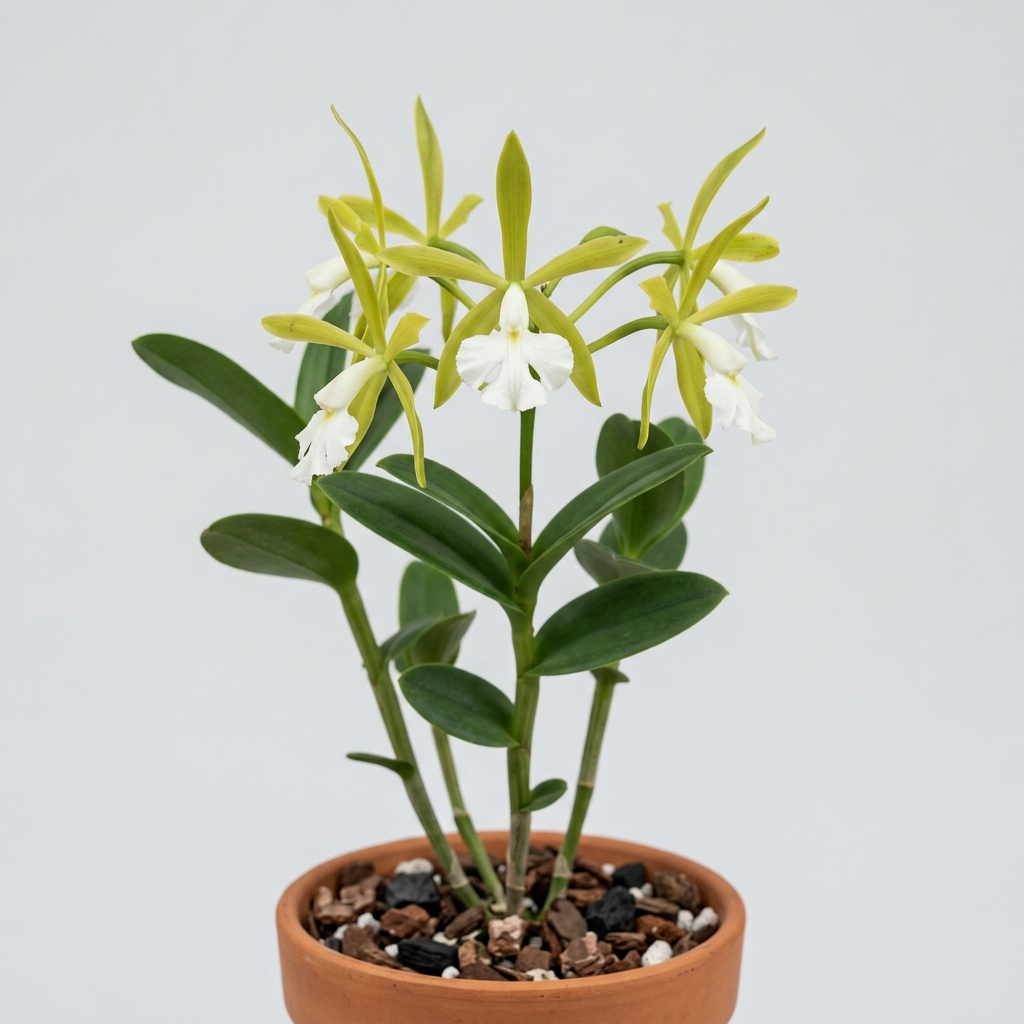
Epidendrum Nocturnum, commonly known as the night-scented Epidendrum, is a captivating orchid species highly prized by collectors for its elegant floral structure and nocturnal fragrance. Belonging to one of the largest and most diverse genera in the orchid family, this species showcases a reed-stemmed growth habit that makes it both visually striking and structurally resilient.
Enthusiasts value this orchid for its reliable growth and its fascinating adaptation to night-pollination. While its daytime appearance is understated, the orchid transforms at dusk, releasing a sweet, pervasive scent designed to attract nocturnal pollinators, making it a rewarding addition to any indoor or greenhouse collection.
💡 Did You Know?
The species name 'nocturnum' directly references the orchid's nocturnal nature. Its white, spider-like flowers are virtually scentless during the day but release a powerful, sweet at night to attract specific hawkmoth pollinators that are active only after dark.
🌿 Botanical Overview
Epidendrum Nocturnum is native to the tropical and subtropical regions of the Americas, ranging from southern Florida through the Caribbean and Central America down to northern South America. In its natural habitat, it primarily grows as an epiphyte on tree trunks and branches, though it can occasionally be found growing lithophytically on damp rocks in humid forests.
The plant features slender, reed-like pseudobulbs or stems that can grow quite tall under optimal conditions. The leaves are coriaceous, meaning thick and leathery, arranged alternately along the upper portion of the stems. This structural adaptation helps the plant retain moisture during periods of low rainfall in its native canopy environments.
🌸 Flower Characteristics
The flowers of Epidendrum Nocturnum are distinctive and elegant, characterized by long, narrow sepals and petals that range in color from pale green to yellowish-white. The most prominent feature is the pristine white labellum, or lip, which is deeply three-lobed. The lateral lobes are large and wing-like, while the middle lobe is slender and pointed, giving the bloom a delicate, spider-like silhouette.
Flowers are typically produced sequentially on short, terminal inflorescences arising from the apex of the mature stems. Each bloom can measure several inches across, presenting a stark, beautiful contrast against the dark green foliage. Because the flowers open one or two at a time, a single stem can remain in bloom for an extended period.
Fragrance & Bloom Profile
As the specific epithet nocturnum suggests, the primary allure of this orchid is its powerful nocturnal fragrance. During the daylight hours, the flowers are virtually odorless. However, as dusk approaches, they begin to emit a rich, sweet, and slightly spicy scent that peaks in intensity during the middle of the night.
This fragrance is a highly specialized evolutionary adaptation designed to attract nocturnal hawkmoths, which are the primary pollinators of the species in the wild. For indoor growers, placing this orchid in a bedroom or living area allows for full appreciation of its unique olfactory display.
Parentage & Hybrid Lineage
Epidendrum Nocturnum is a naturally occurring species rather than a man-made hybrid. While it is not a cultivar in the traditional sense of being a registered artificial cross, selected clones and superior horticultural forms are frequently cultivated and traded under this botanical name.
In orchid breeding, Epidendrum Nocturnum has occasionally been used to introduce fragrance and unique floral shapes into Epicattleya and other intergeneric hybrids. However, because its natural form is already so highly regarded, many growers prefer to cultivate the pure species to preserve its wild characteristics and reliable night-blooming habit.
🌱 Growing Conditions
To cultivate Epidendrum Nocturnum successfully, growers should attempt to replicate its native tropical canopy environment. It thrives in bright, indirect light. While it can tolerate some morning or late afternoon sun, direct midday sunlight can scorch the leathery leaves. An east- or shaded south-facing window is often ideal.
💡 Care Tip
To maximize the nocturnal of your Epidendrum Nocturnum, place it in a room with gentle air circulation in the evening. This helps disperse the sweet scent throughout the space without drying out the delicate blooms.
Temperature: wise, this orchid prefers warm to intermediate conditions. Daytime temperatures between 75 and 85 degrees Fahrenheit (24 to 29 degrees Celsius) with a slight drop at night are optimal. High humidity, ideally between 50% and 70%, combined with gentle, continuous air movement, is essential to prevent fungal issues and encourage robust growth.
Watering, Feeding & Potting Media
During the active growing season in spring and summer, Epidendrum Nocturnum requires regular watering to keep the roots consistently moist but never waterlogged. The potting medium should be allowed to dry out slightly between waterings, but should not be left bone-dry for extended periods. In winter, watering should be reduced slightly to mimic the natural dry season.
A well-draining potting mix is critical. A medium-grade fir bark mix combined with perlite and charcoal works exceptionally well. Alternatively, because of its epiphytic nature, this orchid can be mounted on cork bark or tree fern plaques if high humidity can be maintained. Feed weekly with a diluted, balanced orchid fertilizer during active growth, flushing the pot with pure water once a month to prevent salt buildup.
Blooming Season & Care Notes
Epidendrum Nocturnum can bloom sporadically throughout the year, but the peak flowering season typically occurs from late summer through winter. The inflorescences are persistent, meaning they can produce flowers over several months or even years from the same stem apex.
Growers should avoid cutting back the flower spikes after the initial blooms fade, as long as the spike remains green. Only prune the spikes when they have completely dried and turned brown. Repotting should be performed every two to three years, preferably in the spring when new root growth is just beginning, to refresh the decomposing media.
⚠️ Common Issues
While generally resilient, Epidendrum Nocturnum can fall victim to several common orchid ailments if environmental conditions are suboptimal:
⚠️ Common Mistake
A frequent error is cutting down green flower spikes after the first bloom fades. Epidendrum Nocturnum produces flowers sequentially on the same spike over a long period; cutting them prematurely deprives you of future blooms.
- Root Rot: Caused by overwatering or compacted, poorly draining potting media.
- Bud Blast: Sudden dropping of buds before opening, often triggered by rapid temperature fluctuations or low humidity.
- Mealybugs and Scale: Common pests that hide in the leaf axils and along the reed-like stems.
- Leaf Spotting: Fungal or bacterial spots resulting from water sitting on the leaves overnight without adequate airflow.
❓ Frequently Asked Questions
Why are the buds on my Epidendrum Nocturnum falling off before opening?
This issue, known as bud blast, is typically caused by sudden environmental stress. Common culprits include low humidity, drafty locations, or rapid temperature shifts. Ensure the plant is kept in a stable environment with adequate humidity and away from heating or cooling vents.
How often should I water my night-scented Epidendrum?
Watering frequency depends on your home’s humidity and temperature, but generally, you should water when the top inch of the potting medium feels dry. During active growth, this may be twice a week, while in the winter rest period, it can be reduced to once a week or less.
Can I grow Epidendrum Nocturnum mounted on wood?
Yes, mounting this orchid on cork bark or a tree fern plaque is highly effective and mimics its natural epiphytic habit. However, mounted orchids dry out much faster than potted ones, requiring daily misting or watering in typical indoor environments.
Does this orchid require a winter rest period to bloom?
While Epidendrum Nocturnum does not require a strict, dry winter rest like some other orchid genera, it benefits from a slight reduction in watering and fertilizer during the cooler, darker winter months to align with its natural seasonal cycle.
⭐ Final Growing Notes
Epidendrum Nocturnum remains a classic choice for orchid enthusiasts seeking a species with exceptional fragrance and architectural elegance. By providing bright indirect light, consistent warmth, and high humidity, growers can enjoy the enchanting nightly perfume and delicate blooms of this tropical treasure for many years to come.
⚕️ Health, Safety & Edibility
Understanding how a plant interacts with people, pets, and the surrounding environment is part of responsible cultivation. This section uses conservative, general guidance and does not replace professional medical or veterinary advice.
Human Safety: No published evidence currently identifies species-specific toxicity concerns for Epidendrum Nocturnum during normal handling. As with most ornamental plants, it should not be intentionally consumed.
Pet Safety: Published information does not indicate that this orchid commonly poses a toxicity concern for cats or dogs. However, chewing leaves, flowers, roots, or potting media may still cause mild digestive upset.
Edibility: This orchid is cultivated for ornamental display rather than food. Ornamental plants may carry fertilizers, pesticides, or other horticultural treatments that make them unsuitable for consumption.
Skin Contact: Routine handling is not generally associated with skin irritation. Gardeners with sensitive skin may prefer wearing gloves when repotting, pruning, or handling potting media.
🌱 Propagation Tip
Propagation is most successful through division of mature clumps during repotting. Ensure each division has at least three active, healthy reed-like stems with viable roots to guarantee successful establishment in new media.
⭐ Expert Advice
If your orchid is growing tall but refusing to bloom, try gradually increasing the intensity. While they tolerate lower , bright indirect is the primary trigger for initiating the terminal flower spikes.




Leave A Comment