
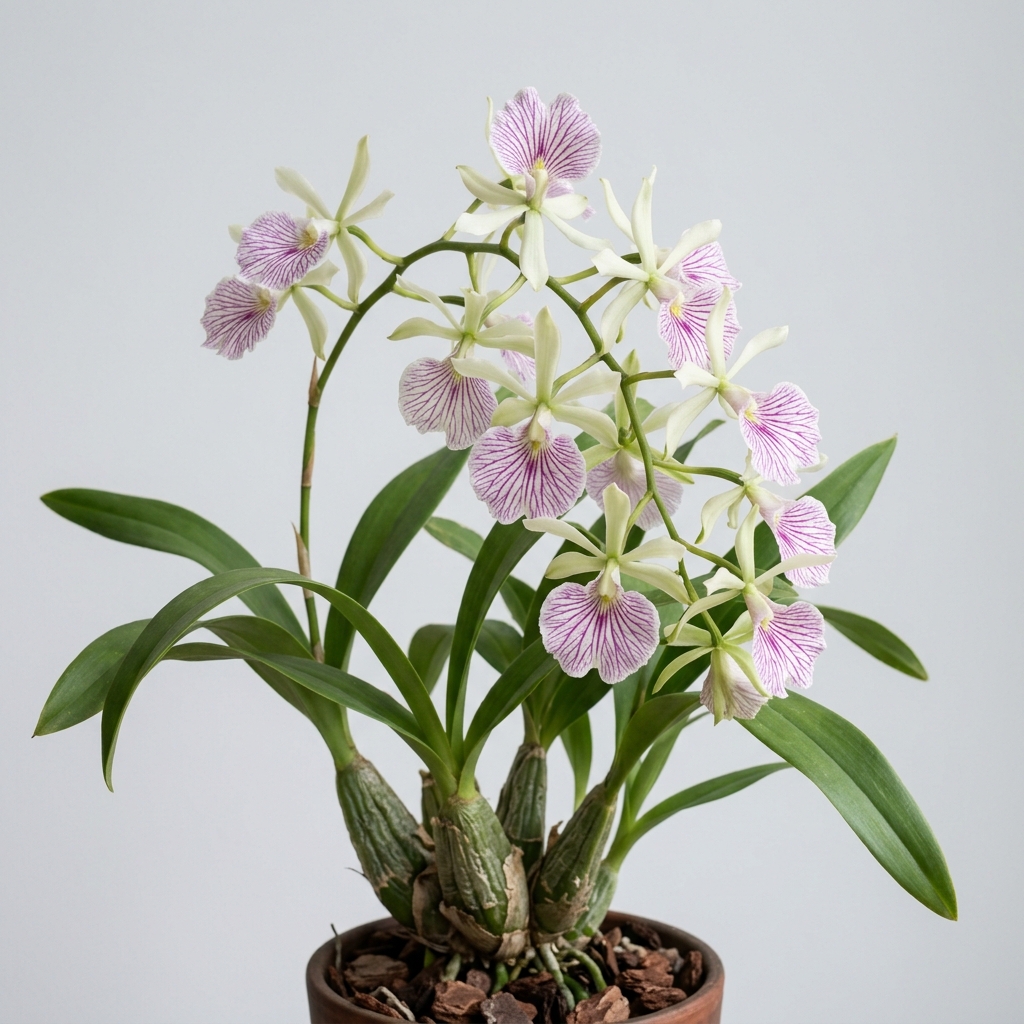
Encyclia Radiata, commonly known as the cockleshell orchid, is a highly esteemed epiphytic species native to the warm, seasonal forests of Central America and Mexico. Prized by collectors for its unique floral structure and ease of cultivation, this orchid features distinctive, ribbed pseudobulbs that produce strap-like, leathery green leaves. Its robust growth habit and compact size make it an exceptional choice for indoor growing spaces, greenhouses, and windowsills alike.
Growers particularly value this orchid for its reliable blooming habit and its remarkably sweet, spicy fragrance. Unlike many delicate orchid varieties, it shows a resilient nature that tolerates minor variations in care, making it an ideal bridge species for beginners transitioning from common hybrids to species orchids. When provided with bright, filtered light and proper wet-to-dry watering cycles, it rewards growers with clusters of long-lasting, elegant blossoms.
💡 Did You Know?
Unlike most orchids that twist 180 degrees as they develop to place the lip at the bottom, Encyclia Radiata produces non-resupinate flowers. This means the shell-shaped lip naturally sits at the top of the blossom, giving it a distinctive upside-down appearance that resembles a tiny cockleshell.
🌿 Botanical Overview
Encyclia Radiata is native to the tropical and subtropical regions of Mexico, Central America, and parts of northern South America. In its natural habitat, it grows primarily as an epiphyte on the trunks and branches of trees in oak and pine forests, often at elevations ranging from sea level up to 1,500 meters. This diverse elevation range contributes to the plant’s adaptability to varying household temperatures.
Taxonomically, this species has undergone several reclassifications. While widely known and traded under the genus Encyclia, many modern botanists classify it under Prosthechea or Anacheilium due to its vegetative characteristics and non-resupinate flowers. Regardless of the current botanical debate, its care requirements remain consistent with other robust, medium-sized epiphytic orchids.
🌸 Flower Characteristics
The flowers of this orchid are highly distinctive, measuring approximately one to one and a half inches in diameter. They are non-resupinate, meaning the blossoms are oriented upside down compared to most other orchids, positioning the lip or labellum at the top of the flower rather than the bottom. The sepals and petals are a uniform creamy white or pale green, spreading outward to frame the central feature.
The defining feature of the bloom is its shell-shaped, concave lip, which gives rise to its common name. This white or cream lip is adorned with striking, radiating lines of deep purple or magenta that draw the eye toward the column. The flowers are produced in upright, compact racemes that emerge from the apex of mature pseudobulbs, carrying anywhere from three to twelve flowers per spike.
Fragrance & Bloom Profile
One of the most compelling reasons to grow this orchid is its intense, pleasing fragrance. The scent is commonly described as a sweet, spicy blend reminiscent of coconut, vanilla, cinnamon, or clover. This fragrance is strongest during the daytime, particularly when the plant is exposed to warm temperatures and bright light, filling an entire room with its perfume.
The blooming cycle typically begins in late spring and extends through the summer months. Individual flowers are remarkably long-lasting and durable, often remaining fresh on the plant for six to eight weeks. Because the flowers open sequentially or nearly simultaneously along the spike, the overall display provides a prolonged period of color and scent.
Parentage & Hybrid Lineage
As a naturally occurring species rather than a man-made hybrid, Encyclia Radiata does not have parentage in the traditional sense. However, select line-bred cultivars have been developed by orchid nurseries to enhance desirable traits such as flower size, color contrast on the lip, and overall plant vigor. These selected strains are highly sought after by collectors.
In orchid breeding, this species has been utilized to introduce its exceptional fragrance, compact growth habit, and unique flower form into new hybrids. It crosses readily with other members of the Encyclia and Cattleya alliances. While specific hybrid registration details can vary, its genetic influence is highly valued for creating hardy, fragrant, and floriferous offspring.
🌱 Growing Conditions
To cultivate this orchid successfully, aim to mimic its native forest canopy environment. It thrives in bright, filtered indirect light. While it can tolerate some gentle morning sun, direct midday sunlight should be avoided to prevent the leaves from scorching. A location near an east- or shaded south-facing window is typically ideal.
💡 Care Tip
Provide strong, buoyant air circulation around your orchid at all times. Good airflow mimics its native canopy environment, helping to dry the foliage quickly after and preventing fungal spotting on the leaves.
Temperature management is straightforward, as the plant adapts well to standard household ranges. It prefers intermediate to warm conditions, with daytime temperatures between 75°F and 85°F, and a nighttime drop to 60°F or 65°F. This diurnal temperature fluctuation is beneficial for promoting healthy growth and triggering the development of flower spikes.
Watering, Feeding & Potting Media
Proper watering is critical to the health of this epiphytic orchid. During the active growing season in spring and summer, water the plant thoroughly, then allow the potting medium to dry out almost completely before watering again. In the winter, when growth slows, reduce the watering frequency significantly, allowing the plant to experience a drier rest period.
Feed the orchid with a balanced, water-soluble orchid fertilizer diluted to quarter or half strength. Apply this fertilizer weekly during the active growing phase, following the common grower’s rule of feeding weakly, weekly. Flush the potting medium with clean, mineral-free water once a month to wash away any accumulated fertilizer salts that could damage the roots.
The potting medium must provide excellent drainage and aeration to prevent root suffocation. A coarse mix composed of fir bark, charcoal, and perlite works exceptionally well. Alternatively, in high-humidity environments, this orchid can be mounted on cork bark or tree fern plaques, which allows the roots to dry rapidly after watering.
Blooming Season & Care Notes
The primary blooming season occurs from late spring through mid-summer, aligned with the plant’s natural growth cycle. Once the flowers fade, the old flower spike can be cut back to the base of the pseudobulb. Do not remove the green, plump pseudobulbs themselves, as they serve as vital water and nutrient storage organs for the developing new growths.
Repotting should be performed only when necessary, typically every two to three years as the potting medium begins to decompose or the plant outgrows its container. The best time to repot is immediately after flowering or when new root tips begin to emerge from the base of the newest pseudobulb, ensuring the plant establishes quickly in its new medium.
⚠️ Common Issues
⚠️ Common Mistake
Avoid keeping the potting medium constantly wet or using fine, water-retentive soil. Overwatering and compacted, decaying bark are the primary causes of root rot, which can quickly decline the health of this epiphytic orchid by suffocating its sensitive root system.
- Root Rot:
Caused by overwatering or a degraded, compacted potting medium that retains too much moisture around the roots. - Leaf Scorch: Appears as bleached or blackened patches on the leaves, resulting from exposure to direct, intense sunlight.
- Spider Mites and Scale: Common pests that can infest the foliage and pseudobulbs, particularly in dry indoor environments with low humidity.
- Bud Blast:
The sudden yellowing and dropping of flower buds before they open, often triggered by rapid temperature changes, drafts, or low humidity.
❓ Frequently Asked Questions
Why are the flowers on my Encyclia Radiata upside down?
This is a natural botanical characteristic known as non-resupination. Unlike most orchids that twist during development to place the lip at the bottom, this species does not twist, leaving the shell-shaped lip positioned at the top of the bloom.
How often should I water my orchid during the winter?
During the winter rest period, reduce watering significantly. Water only enough to prevent the pseudobulbs from shriveling excessively, allowing the potting medium to dry out completely between light waterings.
Can I grow this orchid successfully under LED grow lights?
Yes, this orchid performs very well under modern LED grow lights. Position the plant so it receives bright, moderate-intensity light for 12 to 14 hours a day, ensuring the lights are not close enough to cause heat damage to the foliage.
What should I do if the pseudobulbs start to shrivel?
Slight shriveling of older pseudobulbs is normal during dry periods or when producing new growth. However, severe shriveling usually indicates dehydrated roots, which can be caused by either underwatering or root loss due to overwatering.
⭐ Final Growing Notes
Encyclia Radiata remains a classic favorite among orchid enthusiasts for its captivating fragrance, intriguing shell-like flowers, and forgiving nature. By providing bright indirect light, excellent drainage, and a distinct winter rest, growers can enjoy the delightful scent and unique beauty of this resilient species year after year.
⚕️ Health, Safety & Edibility
Understanding how a plant interacts with people, pets, and the surrounding environment is part of responsible cultivation. This section uses conservative, general guidance and does not replace professional medical or veterinary advice.
Human Safety: No published evidence currently identifies species-specific toxicity concerns for Encyclia Radiata during normal handling. As with most ornamental plants, it should not be intentionally consumed.
Pet Safety: Published information does not indicate that this orchid commonly poses a toxicity concern for cats or dogs. However, chewing leaves, flowers, roots, or potting media may still cause mild digestive upset.
Edibility: This orchid is cultivated for ornamental display rather than food. Ornamental plants may carry fertilizers, pesticides, or other horticultural treatments that make them unsuitable for consumption.
Skin Contact: Routine handling is not generally associated with skin irritation. Gardeners with sensitive skin may prefer wearing gloves when repotting, pruning, or handling potting media.
🌱 Propagation Tip
Propagate mature specimens by division during the spring repotting cycle. Ensure each new division has at least three to four healthy, mature pseudobulbs with active lead growth to guarantee successful establishment in its new container.
⭐ Expert Advice
To trigger robust spring blooming, provide a slight cooling period and reduce frequency during the late autumn and winter months. This environmental shift mimics the natural dry season of its native habitat, signaling the plant to initiate flower spikes.




Leave A Comment