
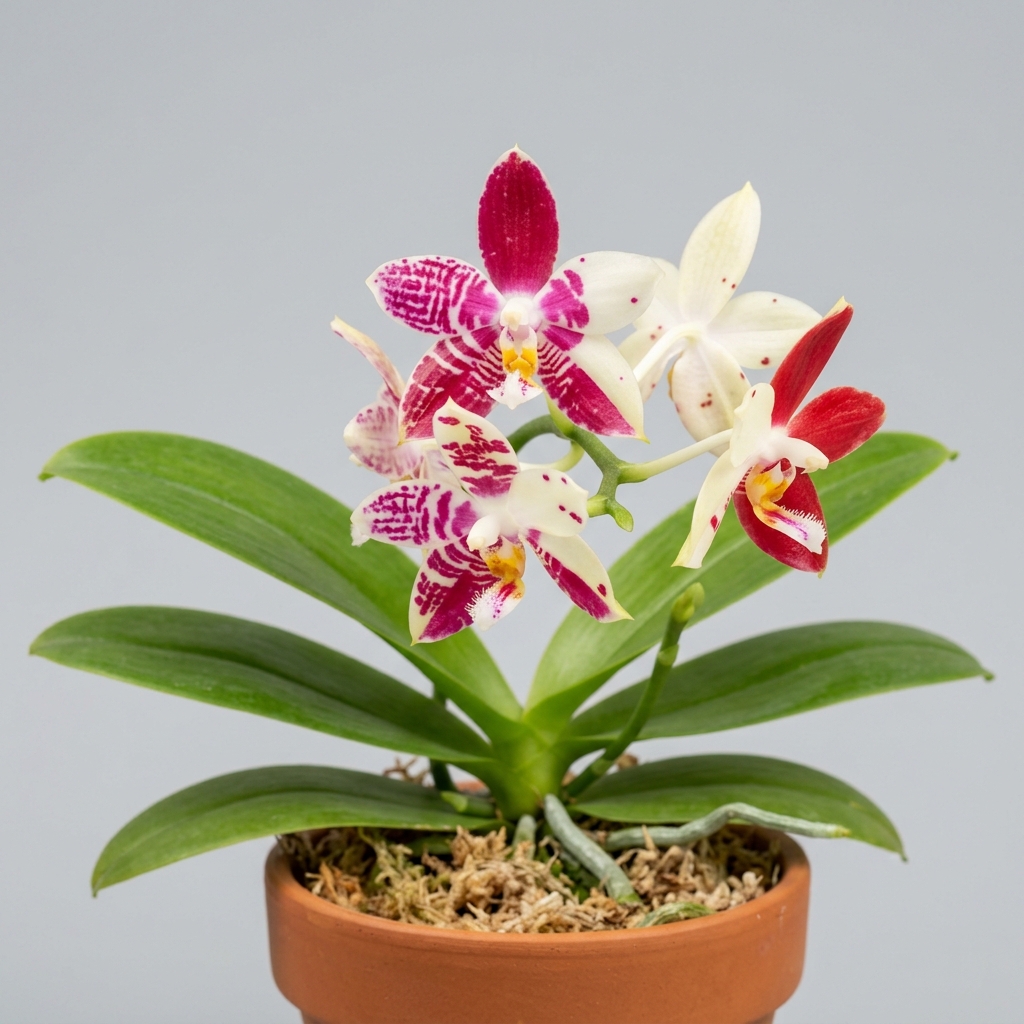
Phalaenopsis Tetraspis is a highly sought-after species orchid native to the tropical regions of the Andaman and Nicobar Islands and parts of Sumatra. Renowned for its star-shaped blossoms and variable color patterns, this epiphytic orchid brings a touch of wild elegance to indoor collections. Unlike standard commercial hybrids, this species retains its natural growth habit and delicate charm, making it a prized possession for both novice collectors and seasoned orchid enthusiasts.
Growers particularly value Phalaenopsis Tetraspis for its unique flowering behavior and delightful fragrance. The species is famous for producing blossoms where individual petals and sepals can display random splashes of red or magenta, meaning no two flowers on the same plant are exactly alike. Its compact size, combined with a tendency to bloom sequentially on long-lived spikes, ensures a rewarding and dynamic display over an extended period.
💡 Did You Know?
Phalaenopsis Tetraspis is famous for its random floral pigmentation, a phenomenon where individual petals and sepals on the same plant can bloom in different combinations of white and red. This means a single flower spike can simultaneously display solid white flowers, solid red flowers, and flowers with striped or half-colored segments, making every bloom cycle a unique surprise.
🌿 Botanical Overview
Phalaenopsis Tetraspis is a monopodial epiphyte, meaning it grows upward from a single stem with alternating leaves. In its natural habitat, it clings to the branches of trees in warm, humid lowland forests, often near coastal areas. The leaves are typically obovate or oblong, glossy green, and can reach lengths of six to twelve inches, presenting a neat, fan-like appearance when healthy.
The root system of this species is highly adapted to its epiphytic lifestyle, featuring thick, silvery-green aerial roots covered in velamen to absorb moisture and nutrients directly from the air. Because it is adapted to constant air movement and high humidity, replicating these conditions in a home environment is key to successful cultivation.
🌸 Flower Characteristics
The flowers of Phalaenopsis Tetraspis are star-shaped, measuring approximately one and a half to two inches in diameter. They are borne on arching or pendulous inflorescences that can produce multiple flowers simultaneously or sequentially. The petals and sepals are typically waxy, with a base color of creamy white to pale green, often adorned with transverse reddish-brown or magenta bars.
One of the most fascinating traits of certain clones is the random distribution of solid red or pink segments on the petals and sepals. The lip, or labellum, is relatively small, three-lobed, and features a hairy mid-lobe with yellow or orange highlights, adding intricate detail to the center of the bloom.
Fragrance & Bloom Profile
Unlike many modern Phalaenopsis hybrids that lack scent, Phalaenopsis Tetraspis is celebrated for its distinct and pleasant fragrance. The scent is often described as sweet, floral, or subtly fruity, reminiscent of citrus or mango. This fragrance is typically most pronounced during the morning hours when temperatures begin to rise and light levels increase.
The blooming profile is sequential, meaning the plant produces flowers one after another along the same spike over several weeks or even months. Because the spikes remain green and active for a long time, growers are advised to leave them intact after the initial flowers fade, as they frequently push out new buds from the same nodes in later seasons.
Parentage & Hybrid Lineage
As a naturally occurring species rather than a man-made hybrid, Phalaenopsis Tetraspis does not have a complex lineage of parental cultivars. However, it has been extensively used in hybridization programs to introduce its star-shaped form, fragrant properties, and unique color patterning to new grexes.
In taxonomic circles, there has been historical debate regarding the distinction between Phalaenopsis Tetraspis and Phalaenopsis speciosa. While some botanists consider them closely related or even synonymous, many horticulturalists maintain them as separate entities based on subtle differences in floral morphology and color distribution. For the average grower, both species require identical care and offer similar aesthetic rewards.
🌱 Growing Conditions
To thrive, Phalaenopsis Tetraspis requires warm to hot temperatures, ideally ranging from 75°F to 85°F during the day, with a slight drop to 65°F to 70°F at night. It does not tolerate cold drafts or temperatures dropping below 60°F, which can cause leaf drop or stall growth.
💡 Care Tip
Keep levels above sixty percent and provide gentle air movement using a small fan. This mimics the tropical breezes of its native habitat, preventing stagnant moisture from causing fungal leaf spots while keeping the aerial roots hydrated.
Light levels should be moderate to low, mimicking the dappled shade of its native forest canopy. Bright, indirect light is ideal, such as that provided by an east-facing window or a shaded south-facing window. High-quality LED grow lights can also be highly effective. Humidity should be kept consistently high, ideally between 60% and 80%, accompanied by gentle, continuous air movement to prevent fungal pathogens from settling on the foliage.
Watering, Feeding & Potting Media
Watering should be frequent enough to keep the potting medium evenly moist but never waterlogged. Because this species lacks pseudobulbs to store water, it is sensitive to drying out completely. During the active growing season in spring and summer, water thoroughly whenever the top layer of the medium begins to feel dry.
A loose, well-draining potting mix is essential. High-grade New Zealand sphagnum moss or a mix of medium-grade fir bark, perlite, and charcoal works exceptionally well. Some growers prefer to mount Phalaenopsis Tetraspis on cork bark or tree fern plaques, which showcases its natural pendulous growth habit but requires daily watering or misting to maintain adequate moisture. Feed the plant weekly with a diluted, balanced orchid fertilizer at one-quarter strength during active growth.
Blooming Season & Care Notes
Phalaenopsis Tetraspis can bloom at various times throughout the year, but the primary flowering period typically occurs from late spring through autumn. To encourage robust blooming, maintain consistent environmental conditions and avoid moving the plant while buds are developing, as sudden changes can trigger bud drop.
After the flowers have finished blooming, do not cut the green flower spikes unless they have completely yellowed and dried out. These spikes can remain viable for multiple years, producing new branches and flowers season after season. Repotting should be done every one to two years, preferably in the spring just as new root growth begins, to refresh the decomposing medium and prevent root rot.
⚠️ Common Issues
⚠️ Common Mistake
A frequent error is cutting down green flower spikes after the blossoms fade. Because this species blooms sequentially and can produce flowers on the same spike for multiple years, removing green spikes deprives you of future blooms.
- Root Rot: Caused by overwatering or compacted, decomposing potting media that suffocates the roots.
- Bud Blast: The premature drying and dropping of flower buds, often triggered by sudden temperature fluctuations, low humidity, or drafts.
- Spider Mites and Mealybugs: Common pests that hide in leaf joints or on the undersides of leaves; treat promptly with insecticidal soap or neem oil.
- Leaf Spotting: Fungal or bacterial spots arising from water sitting on the leaves overnight without adequate air circulation.
- Dehydration: Indicated by wrinkled, limp leaves and dry, shriveled roots, usually due to underwatering or a compromised root system.
❓ Frequently Asked Questions
Why are the flowers on my Phalaenopsis Tetraspis turning solid white instead of showing red patterns?
The color variation in Phalaenopsis Tetraspis can be highly dependent on environmental factors such as light intensity and temperature. Cooler temperatures and lower light levels often result in more white segments, while warmer temperatures and brighter light can stimulate the development of the red or magenta pigments.
Should I cut the flower spikes after the blooms fall off?
No, you should not cut the green flower spikes of Phalaenopsis Tetraspis. This species is a sequential bloomer and can produce new flowers from the same spike for several seasons. Only cut the spike if it turns completely brown, dry, and brittle.
Can Phalaenopsis Tetraspis be grown mounted on wood?
Yes, mounting Phalaenopsis Tetraspis on cork bark or tree fern plaques is an excellent way to mimic its natural epiphytic growth habit. However, mounted orchids dry out much faster than potted ones and typically require daily watering or high-humidity greenhouse conditions to thrive.
How often should I repot my Phalaenopsis Tetraspis?
It is best to repot Phalaenopsis Tetraspis every one to two years. The ideal time to repot is in the spring when active new root growth is visible, which helps the plant establish quickly in its fresh potting medium.
⭐ Final Growing Notes
Phalaenopsis Tetraspis is a captivating species orchid that rewards attentive growers with its fragrant, uniquely patterned, star-shaped blossoms. By providing warm temperatures, high humidity, and consistent moisture, you can enjoy its dynamic floral displays for many years. Its distinct charm and manageable size make it an exceptional addition to any indoor orchid collection.
⚕️ Health, Safety & Edibility
Understanding how a plant interacts with people, pets, and the surrounding environment is part of responsible cultivation. This section uses conservative, general guidance and does not replace professional medical or veterinary advice.
Human Safety: No published evidence currently identifies species-specific toxicity concerns for Phalaenopsis Tetraspis during normal handling. As with most ornamental plants, it should not be intentionally consumed.
Pet Safety: Published information does not indicate that this orchid commonly poses a toxicity concern for cats or dogs. However, chewing leaves, flowers, roots, or potting media may still cause mild digestive upset.
Edibility: This orchid is cultivated for ornamental display rather than food. Ornamental plants may carry fertilizers, pesticides, or other horticultural treatments that make them unsuitable for consumption.
Skin Contact: Routine handling is not generally associated with skin irritation. Gardeners with sensitive skin may prefer wearing gloves when repotting, pruning, or handling potting media.
🌱 Propagation Tip
While Phalaenopsis Tetraspis is primarily propagated through laboratory flasking, mature plants may occasionally produce adventitious offsets called keikis along the old flower spikes. Allow the keiki to develop at least three healthy roots before gently detaching and potting it.
⭐ Expert Advice
To maximize the vibrant red patterning on your blooms, slightly increase the intensity and keep daytime temperatures warm as the buds are forming. Cooler conditions tend to produce flowers with more white and less color saturation.




Leave A Comment