
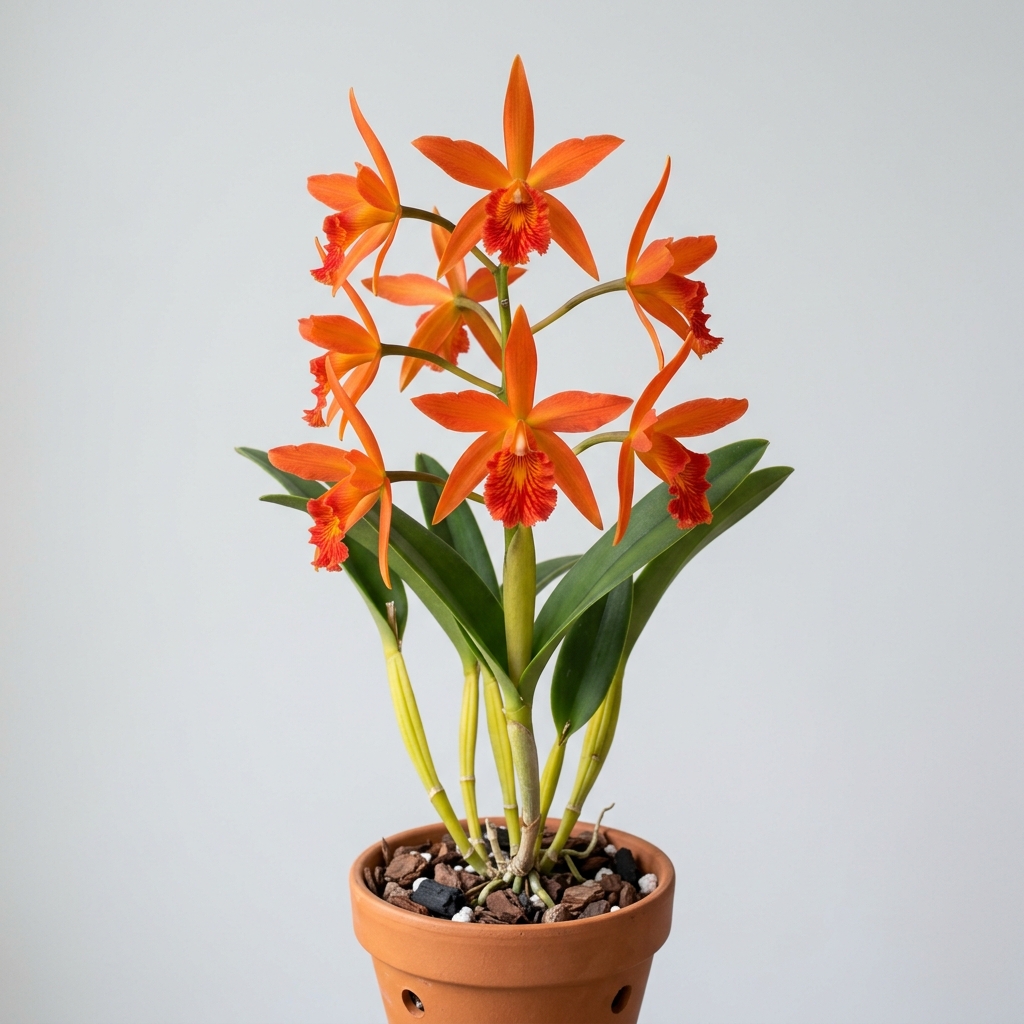
Laelia Cinnabarina is a highly prized orchid celebrated for its striking, star-shaped blossoms that showcase a brilliant, fiery orange hue. Originating from the rocky, sun-drenched regions of Brazil, this rupicolous species brings a dramatic splash of color to any orchid collection. Growers particularly value this plant for its tall, upright flower spikes and its ability to thrive in bright light conditions that would challenge more delicate orchid varieties.
As a member of the Cattleya alliance, this orchid shows a robust growth habit characterized by slender, upright pseudobulbs topped with rigid, leathery leaves. While it requires specific attention to drainage and light levels, its rewarding display of vibrant blooms makes it a favorite among intermediate and advanced hobbyists. Cultivating this orchid successfully relies on mimicking its natural, exposed cliffside habitat, balancing intense light with excellent air circulation.
💡 Did You Know?
Laelia Cinnabarina belongs to a unique ecological group known as rupicolous Laelias. In their native Brazilian habitats, these resilient orchids grow directly on exposed rock faces, anchoring themselves in shallow pockets of organic debris. They endure intense daytime sun and dramatic drops at night, absorbing moisture primarily from heavy morning mists.
🌿 Botanical Overview
Laelia Cinnabarina is historically classified as a rupicolous Laelia, a specialized group of orchids adapted to growing directly on or among rocks in their native Brazilian habitats. These plants are accustomed to harsh environmental conditions, including intense sunlight, strong winds, and rapid moisture evaporation. The pseudobulbs are typically swollen at the base and taper toward the top, producing a single, stiff, erect leaf that helps minimize water loss.
The root system of this orchid is adapted to anchor the plant firmly to rocky substrates while absorbing moisture rapidly from morning dews and passing rain showers. In cultivation, understanding this lithophytic nature is key to providing the correct root environment. The plant relies on its tough, fibrous structures to withstand periods of dryness, making it highly sensitive to stagnant moisture around its root zone.
🌸 Flower Characteristics
The defining feature of Laelia Cinnabarina is its brilliant cinnabar-orange flowers, which are star-shaped and measure approximately two to three inches in diameter. The petals and sepals are narrow, elegant, and uniform in color, framing a beautifully ruffled lip that may feature subtle yellow or darker orange undertones in the throat. The blossoms are arranged along a tall, erect inflorescence that rises well above the foliage, presenting the flowers in a striking, airy cluster.
A single flower spike can bear anywhere from five to fifteen blooms, depending on the maturity and vigor of the plant. The presentation is exceptionally clean, as the rigid spike holds the flowers aloft, ensuring they are highly visible. The intense coloration of the petals remains vibrant throughout the blooming cycle, making a dramatic visual statement against the dark green, leathery leaves.
Fragrance & Bloom Profile
Unlike some of its highly fragrant relatives in the Cattleya alliance, Laelia Cinnabarina is not widely noted for a strong scent. Any fragrance produced is typically described as very faint, clean, or slightly sweet, and it is most noticeable during the warmest hours of the day. Because fragrance levels can vary based on individual clones and environmental factors, growers should appreciate this orchid primarily for its visual impact rather than its olfactory qualities.
The blooms are relatively long-lasting, often remaining in pristine condition for three to six weeks if kept in a cool, draft-free environment. To maximize the lifespan of the flowers, it is best to avoid getting the petals wet during watering and to shield the plant from intense afternoon sun once the buds have fully opened.
Parentage & Hybrid Lineage
Laelia Cinnabarina is a distinct species that has played a monumental role in orchid hybridization. Its intense orange pigmentation is highly dominant, making it a prized parent for creating orange, red, and yellow Cattleya alliance hybrids. When crossed with other genera, it contributes its brilliant color, upright flower spikes, and compact growth habit to its progeny.
While its historical status as a species is well-established, modern taxonomists frequently debate its classification, sometimes placing it within the genus Cattleya or Sophronitis. In commercial trade and grower circles, it is still widely recognized and labeled under its traditional name. When purchasing this plant, growers should look for reputable nurseries that document the specific clonal name or lineage to ensure authentic characteristics.
🌱 Growing Conditions
To cultivate Laelia Cinnabarina successfully, growers must replicate the bright, airy conditions of its native habitat. This orchid requires high light levels, equivalent to those preferred by many Cattleyas. Providing bright, filtered sunlight with some direct morning sun will encourage robust growth and reliable blooming. If the leaves develop a slight reddish or purple tint, it indicates the plant is receiving the maximum acceptable amount of light.
💡 Care Tip
Provide strong, continuous air circulation around your Laelia Cinnabarina. Excellent airflow mimics its native cliffside environment, helping to cool the leaves under high conditions and ensuring that the fast-draining potting medium dries out quickly to prevent root rot.
Temperature ranges should be kept intermediate to warm, with daytime temperatures between 75°F and 85°F, and a nighttime drop to around 55°F to 60°F. This diurnal temperature fluctuation is crucial for triggering bud development. Additionally, strong air movement is essential at all times to prevent heat buildup on the leaves and to ensure the potting medium dries out rapidly after watering.
Watering, Feeding & Potting Media
Watering practices must align with the orchid’s seasonal growth cycle. During the active growing season in spring and summer, water the plant thoroughly, allowing the potting medium to dry out almost completely between applications. In the winter rest period, significantly reduce watering, providing only enough moisture to prevent the pseudobulbs from shriveling excessively.
A highly porous, fast-draining potting medium is non-negotiable for this species. A mixture of coarse fir bark, horticultural charcoal, and inorganic materials like sponge rock or granite chips works exceptionally well. Alternatively, the plant can be mounted on cork bark or tree fern plaques if high humidity can be maintained. Feed the orchid with a diluted, balanced orchid fertilizer every two weeks during active growth, flushing the pot with pure water monthly to prevent salt buildup.
Blooming Season & Care Notes
Laelia Cinnabarina typically blooms from late winter through late spring, with the exact timing depending on local growing conditions and temperature cues. As the new pseudobulbs mature, a green sheath will emerge from the apex of the leaf. The flower spike will slowly develop inside this sheath before emerging to display its brilliant orange buds.
Once the blooming cycle is complete, the plant enters a brief period of semi-dormancy. This is the ideal time to perform any necessary repotting or division, just as new root tips begin to emerge from the base of the newest pseudobulb. Avoid disturbing the root system unless the potting medium has started to break down, as this species can be sensitive to root disturbance and may take a season to recover.
⚠️ Common Issues
⚠️ Common Mistake
The most common mistake is using a heavy, moisture-retentive potting soil or fine bark mix. Laelia Cinnabarina roots require rapid drying cycles; keeping them in soggy, compacted media will quickly lead to root decay, causing the pseudobulbs to shrivel and the plant to decline.
- Root Rot:
Caused by overwatering or a decomposing potting medium that retains too much moisture around the roots. - Bud Blast:
Sudden drops in humidity, extreme temperature fluctuations, or drafts can cause developing buds to yellow and drop before opening. - Leaf Scorching: While the plant loves light, sudden exposure to intense, unshaded afternoon sun can cause dry, white, or black patches on the leaves.
- Pests:
Scale insects and mealybugs can occasionally hide in the dry sheaths surrounding the pseudobulbs; inspect these areas regularly. - Dehydration:
Shriveled pseudobulbs and wrinkled leaves indicate insufficient watering during the active growing season or a compromised root system unable to absorb water.
❓ Frequently Asked Questions
How much light does Laelia Cinnabarina need to bloom?
This orchid requires very bright, indirect light to bloom successfully. It thrives in conditions similar to those for Cattleyas, benefiting from direct morning sun and shaded afternoon light. A healthy plant will often exhibit a light green leaf color with a subtle reddish-purple tint, indicating it is receiving optimal light for flower production.
What is the best potting medium for this orchid?
A highly porous, fast-draining medium is essential. A mix of coarse fir bark, charcoal, and perlite or pumice is ideal. Because it is a lithophytic orchid, some growers successfully cultivate it in pure inorganic media like lava rock or mounted on cork bark, provided they can maintain adequate humidity and water frequently enough.
Why are the pseudobulbs on my orchid shriveling?
Shriveled pseudobulbs usually indicate dehydration, which can stem from two opposite causes. It may be due to under-watering during the active growing season, or it could be a sign of root rot caused by over-watering, which destroys the roots and prevents the plant from absorbing moisture. Check the root health to determine the cause.
How often should I fertilize Laelia Cinnabarina?
During the active growing season in spring and summer, fertilize every two weeks with a balanced orchid fertilizer diluted to half or quarter strength. Reduce feeding to once a month or suspend it entirely during the winter rest period when the plant’s growth slows down significantly.
⭐ Final Growing Notes
Laelia Cinnabarina is a spectacular orchid that rewards the patient grower with an unmatched display of brilliant orange blossoms. By respecting its natural affinity for bright light, excellent air movement, and rapid drainage, you can enjoy its architectural growth and fiery blooms year after year. It stands as a classic testament to the diverse beauty of the Brazilian rupicolous orchids, making it a highly rewarding addition to any intermediate orchid collection.
⚕️ Health, Safety & Edibility
Understanding how a plant interacts with people, pets, and the surrounding environment is part of responsible cultivation. This section uses conservative, general guidance and does not replace professional medical or veterinary advice.
Human Safety: No published evidence currently identifies species-specific toxicity concerns for Laelia Cinnabarina during normal handling. As with most ornamental plants, it should not be intentionally consumed.
Pet Safety: Published information does not indicate that this orchid commonly poses a toxicity concern for cats or dogs. However, chewing leaves, flowers, roots, or potting media may still cause mild digestive upset.
Edibility: This orchid is cultivated for ornamental display rather than food. Ornamental plants may carry fertilizers, pesticides, or other horticultural treatments that make them unsuitable for consumption.
Skin Contact: Routine handling is not generally associated with skin irritation. Gardeners with sensitive skin may prefer wearing gloves when repotting, pruning, or handling potting media.
🌱 Propagation Tip
Propagate this orchid by division only when the plant has outgrown its container and has at least six to eight healthy pseudobulbs. Ensure each new division has at least three active pseudobulbs and a strong lead growth, performing the split just as new roots begin to emerge.
⭐ Expert Advice
To trigger a spectacular bloom cycle, ensure your orchid experiences a distinct 15 to 20-degree Fahrenheit drop in between day and night during the autumn and winter months. This natural cooling cue, combined with a reduction in , is essential for robust bud development.




Leave A Comment