
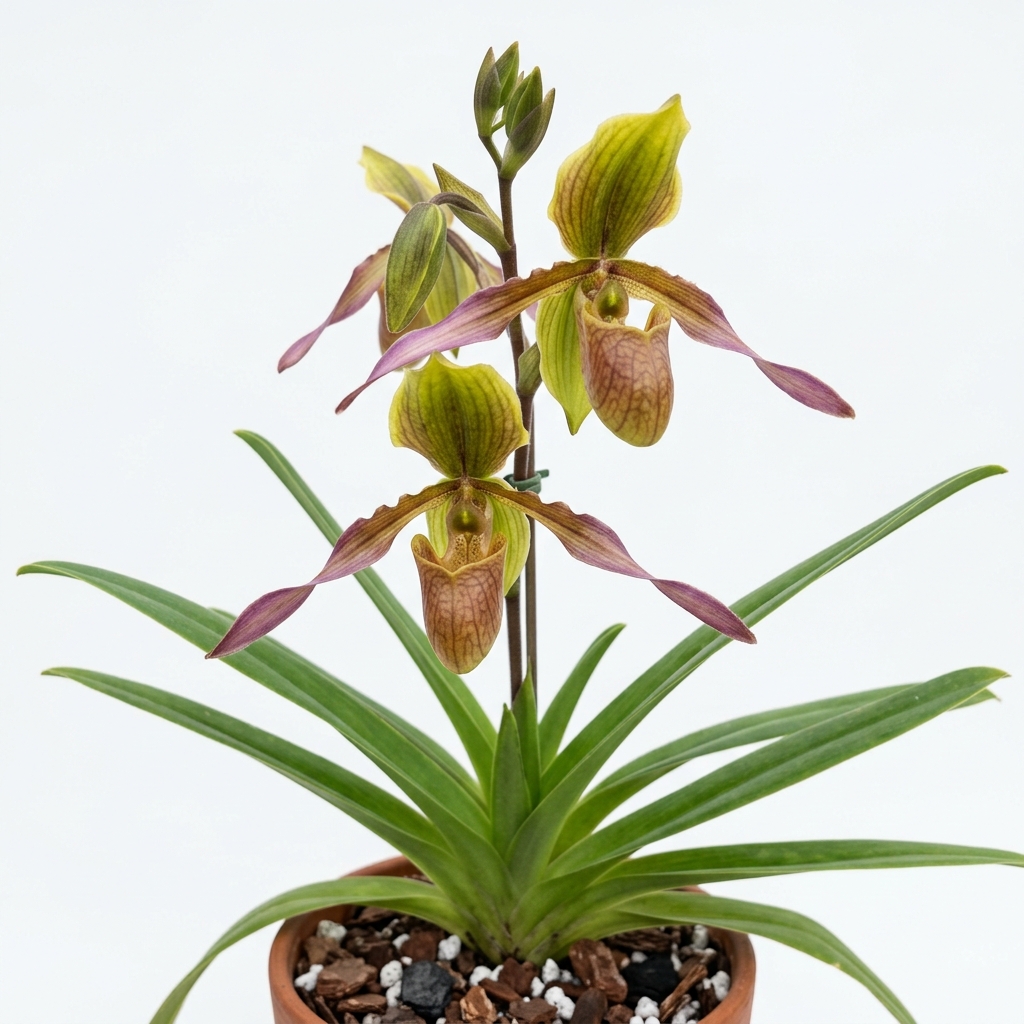
Paphiopedilum Lowii is a highly celebrated multi-floral lady slipper orchid native to Southeast Asia, particularly prized by collectors for its dramatic, sweeping petals and stately growth habit. Unlike single-flowered slipper orchids, this species can produce several large, striking blossoms on a single tall spike, making it a magnificent centerpiece in any indoor growing space. Its elegant foliage and architectural presence have earned it a permanent place in the collections of both novice and experienced orchid enthusiasts.
Cultivating this orchid successfully requires an understanding of its natural epiphytic and lithophytic tendencies. While it is generally considered more adaptable than some of its high-altitude relatives, providing the correct balance of filtered light, consistent moisture, and moderate warmth is essential for encouraging its spectacular seasonal blooms. With proper care, Paphiopedilum Lowii rewards growers with long-lasting flowers that showcase a beautiful blend of green, purple, and copper tones.
💡 Did You Know?
Paphiopedilum Lowii is part of the Paphiopedilum orchid group, a favorite among growers because its flowers, growth habit, and care needs make it useful for comparing cultivated orchids within the same . Observing its leaves, roots, and bloom spikes can help growers understand how this cultivar responds to indoor conditions.
🌿 Botanical Overview
Paphiopedilum Lowii belongs to the subgenus Polyantha, a group characterized by its multi-floral blooming habit. In its native habitats of Malaysia, Sumatra, Java, and Borneo, it is frequently found growing as an epiphyte on mossy tree branches or as a lithophyte on limestone cliffs. This adaptability in nature translates to a resilient constitution in home cultivation, provided its basic environmental needs are met.
The plant features strap-like, leathery green leaves that lack the mottled patterning found in some other Paphiopedilum species. These solid green leaves are designed to capture filtered sunlight beneath the forest canopy. The root system is typically thick and covered in fine root hairs, adapted for gripping rough bark or rocky crevices while absorbing moisture and nutrients from passing rain.
🌸 Flower Characteristics
The flowers of Paphiopedilum Lowii are renowned for their distinctive, aerodynamic shape and vibrant coloration. Each bloom features a prominent, dorsal sepal that is typically greenish-yellow with darker veining at the base. The lateral petals are long, narrow, and gracefully horizontal or slightly drooping, often twisting slightly toward the tips. These petals transition from a greenish-yellow base dotted with dark purple spots to a solid, rich magenta or purple hue at the ends.
The pouch, or labellum, is shaped like a classic slipper and is usually a glossy coppery-brown or greenish-bronze color. A single, upright inflorescence can carry anywhere from three to seven flowers, which open nearly simultaneously or in rapid succession, creating a dramatic and long-lasting display.
Fragrance & Bloom Profile
While Paphiopedilum Lowii is highly valued for its visual appeal, it is not widely known for having a strong scent. Most growers report that the flowers are virtually fragrance-free, though occasional subtle, earthy aromas have been noted under specific warm, humid conditions. The lack of fragrance is amply compensated for by the longevity of the blooms, which can remain in pristine condition for six to eight weeks.
Parentage & Hybrid Lineage
As a naturally occurring species rather than a man-made hybrid, Paphiopedilum Lowii represents a foundational building block in slipper orchid breeding. It has been extensively used by hybridizers to introduce multi-floral habits, long petals, and robust growth to modern Paphiopedilum hybrids. While its exact historical registration details can vary across older horticultural registries, its role as a parent in classic grexes is well-documented and highly respected in orchid societies worldwide.
🌱 Growing Conditions
To replicate its tropical forest habitat, Paphiopedilum Lowii thrives in bright, filtered light. Direct afternoon sun should be avoided as it can easily scorch the solid green leaves, but insufficient light will prevent the plant from producing its tall flower spikes. East- or shaded south-facing windows are often ideal, as is growing under a professional LED setup.
💡 Care Tip
For best results, grow Paphiopedilum Lowii in bright filtered with steady and gentle airflow. Avoid placing the plant in harsh midday sun, but do not keep it in a dark corner; weak is one of the most common reasons cultivated orchids refuse to rebloom.
Temperature: wise, this orchid prefers intermediate to warm conditions. Daytime temperatures between 75 and 85 degrees Fahrenheit (24 to 29 degrees Celsius) are optimal, with a slight drop at night to around 60 to 65 degrees Fahrenheit (15 to 18 degrees Celsius). Maintaining a relative humidity level of 50% to 70% along with gentle, continuous airflow is crucial to prevent fungal pathogens from settling on the foliage.
Watering, Feeding & Potting Media
Unlike some orchids that possess pseudobulbs for water storage, Paphiopedilum Lowii relies on its thick leaves and roots to retain moisture. Consequently, the potting medium should never be allowed to dry out completely. Water the plant thoroughly just as the medium approaches dryness, typically once or twice a week depending on your home environment. Use rainwater, distilled water, or low-mineral tap water to avoid salt buildup.
A well-draining potting mix is essential. A combination of medium-grade fir bark, perlite, charcoal, and a small amount of chopped sphagnum moss works exceptionally well. Feed the orchid weekly with a highly diluted, balanced orchid fertilizer during the active growing season, flushing the pot with pure water once a month to remove residual salts.
Blooming Season & Care Notes
Paphiopedilum Lowii typically initiates its blooming cycle in the spring and summer months. As the new growth matures, a sturdy flower spike will emerge from the center of the leaf fan. During this period, avoid changing the plant’s orientation to the light source, as this can cause the developing buds to twist or develop unevenly. Once the blooming cycle is complete, the old spike can be cut down to the base of the foliage. Repotting is best performed every one to two years in the spring, just after flowering, to refresh the decomposing medium.
⚠️ Common Issues
⚠️ Common Mistake
The most common mistake is by calendar instead of root and potting-media condition. Paphiopedilum roots need moisture and air at the same time, so constantly wet bark or sphagnum can lead to root loss even when the leaves still look healthy.
- Root Rot:
Caused by overwatering or compacted, poorly draining potting media that deprives roots of oxygen. - Bud Blast:
Sudden drops in humidity, drafts, or water stress can cause developing flower buds to yellow and drop before opening. - Leaf Scorch: Exposure to direct, intense sunlight leads to bleached or dry brown patches on the foliage.
- Mealybugs and Scale: These pests often hide in the tight crevices at the base of the leaves or under the flower bracts.
- Fungal Leaf Spotting: High humidity combined with stagnant air can encourage unsightly black or brown spots on the leaves.
❓ Frequently Asked Questions
How often should I repot my Paphiopedilum Lowii?
It is generally recommended to repot Paphiopedilum Lowii every one to two years. Slipper orchids do not tolerate stale or decomposing media well, as it suffocates their roots. The best time to repot is during the spring, shortly after the blooming cycle has concluded and new root growth is visible.
Why are the tips of my orchid’s leaves turning brown?
Brown leaf tips are commonly caused by a buildup of mineral salts from tap water or fertilizer in the potting medium. To prevent this, flush the pot thoroughly with pure rainwater or distilled water once a month, and ensure you are using a highly diluted fertilizer solution.
Can Paphiopedilum Lowii be grown under artificial lights?
Yes, this orchid adapts exceptionally well to indoor growing under LED or fluorescent grow lights. Position the plant so it receives bright, indirect light for 12 to 14 hours a day, ensuring the light fixture is kept at a safe distance to prevent heat damage to the foliage.
What should I do if my orchid fails to bloom?
If your Paphiopedilum Lowii is healthy but refuses to bloom, it is often due to insufficient light or a lack of temperature drop at night. Try gradually increasing the amount of filtered light the plant receives, and ensure there is a distinct 10-to-15-degree Fahrenheit drop in nighttime temperatures during the autumn to stimulate spike production.
⭐ Final Growing Notes
Paphiopedilum Lowii remains one of the most rewarding multi-floral slipper orchids for any indoor collection. Its dramatic, long-lasting blossoms and robust growth habit make it a standout specimen. By providing consistent moisture, bright filtered light, and excellent air circulation, growers can enjoy the architectural beauty and spectacular blooms of this classic Southeast Asian species for many years to come.
⚕️ Health, Safety & Edibility
Understanding how a plant interacts with people, pets, and the surrounding environment is part of responsible cultivation. This section uses conservative, general guidance and does not replace professional medical or veterinary advice.
Human Safety: No published evidence currently identifies species-specific toxicity concerns for Paphiopedilum Lowii during normal handling. As with most ornamental plants, it should not be intentionally consumed.
Pet Safety: Published information does not indicate that this orchid commonly poses a toxicity concern for cats or dogs. However, chewing leaves, flowers, roots, or potting media may still cause mild digestive upset.
Edibility: This orchid is cultivated for ornamental display rather than food. Ornamental plants may carry fertilizers, pesticides, or other horticultural treatments that make them unsuitable for consumption.
Skin Contact: Routine handling is not generally associated with skin irritation. Gardeners with sensitive skin may prefer wearing gloves when repotting, pruning, or handling potting media.
🌱 Propagation Tip
Propagation should be approached patiently. Most home growers should wait for natural keikis or divide only mature, healthy plants when the orchid type allows it. Never remove a young growth until it has strong roots and enough leaves to support itself away from the parent plant.
⭐ Expert Advice
Repot after flowering when fresh root tips begin to appear. This timing helps the plant anchor quickly into new bark or sphagnum and reduces stress, especially for orchids grown indoors where airflow, , and drying speed can change from season to season.




Leave A Comment