
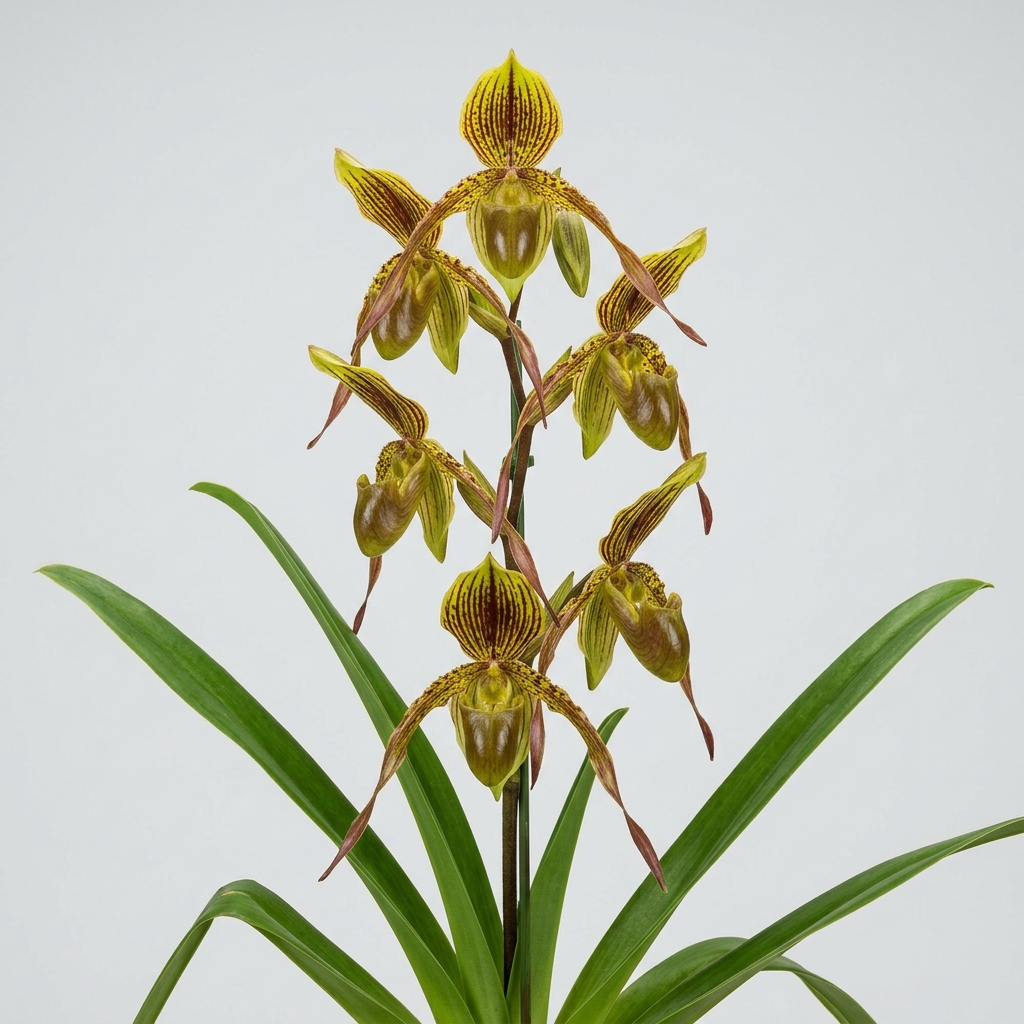
Paphiopedilum Supardii is a highly prized multi-floral slipper orchid native to the limestone cliffs of Borneo. Renowned for its dramatic, architectural blooms and robust growth habit, this species stands out among slipper orchids due to its striking, multi-flowered spikes that can carry several large blossoms simultaneously. Orchid enthusiasts value it for its exotic, wild appearance and its commanding presence in any collection.
Unlike many single-flowered slipper orchids, this species produces long, strap-like green leaves and tall, sturdy inflorescences. The flowers feature uniquely twisted petals and a glossy, pouch-shaped lip that exemplifies the complex beauty of the genus. While it requires a bit of patience to grow to blooming size, the reward of a fully mature specimen in flower is unmatched for dedicated growers.
💡 Did You Know?
Paphiopedilum Supardii is named after the Indonesian plant collector Supardi, who first brought this unique species to the attention of botanists in the late 20th century. Its native habitat on the sheer limestone cliffs of Kalimantan makes it a true lithophyte, adapted to capturing nutrients from decaying organic matter trapped in rock crevices.
🌿 Botanical Overview
Paphiopedilum Supardii is a lithophytic and terrestrial orchid species native to Kalimantan, Borneo, where it grows in pockets of organic debris on limestone hillsides. This specific habitat dictates much of its cultural requirements in cultivation, particularly its preference for excellent drainage combined with consistent moisture. The plant features large, leathery, clear green leaves that lack the mottled patterning found in some other members of the genus.
The growth habit is relatively large and clump-forming over time. Mature plants produce fan-shaped growths that support the tall, upright flower spikes. Because it is adapted to limestone environments, it appreciates a slightly alkaline to neutral growing medium, which can be replicated in cultivation by adding dolomite lime or crushed oyster shells to the potting mix.
🌸 Flower Characteristics
The blooms of Paphiopedilum Supardii are a masterclass in natural geometry. Each inflorescence can produce three to seven flowers, which open nearly simultaneously to create an impressive display. The dorsal sepal is broad, yellow-green, and decorated with bold, vertical mahogany-brown stripes.
The lateral petals are long, narrow, and elegantly twisted, arching downward and outward with dark spotting along the margins. The pouch, or labellum, is deeply cupped, glossy, and ranges in color from yellow-green to a rich, warm brown. This complex combination of stripes, spots, and architectural shapes makes each flower look like an exotic insect, designed to attract specific pollinators in its native habitat.
Fragrance & Bloom Profile
While some slipper orchids possess subtle scents, a distinct fragrance is not consistently documented for Paphiopedilum Supardii. Growers generally cultivate this species for its spectacular visual presentation rather than its aroma.
The blooms are exceptionally long-lasting, often remaining in pristine condition for six to eight weeks if kept in a cool, draft-free environment. The multi-floral habit means that the entire display remains vibrant for an extended period, as the flowers open in sequence or all at once, depending on environmental conditions and plant vigor.
Parentage & Hybrid Lineage
Paphiopedilum Supardii is a distinct species rather than a man-made hybrid, meaning its lineage is defined by its wild ancestry in the forests of Borneo. It belongs to the subgenus Polyantha, which is characterized by multi-flowered inflorescences and strap-like green leaves.
In hybridizing, Paphiopedilum Supardii is highly valued for introducing its multi-floral habit, twisted petals, and bold striping to new grexes. When crossed with other species, it often passes down its robust growth habit and dramatic flower count, though these hybrid offspring are cultivar-dependent and their characteristics can vary significantly.
🌱 Growing Conditions
To successfully cultivate Paphiopedilum Supardii, growers should aim to replicate its warm, humid forest habitat. It thrives in bright, indirect light, requiring more light than the mottled-leaf Paphiopedilum species but still needing protection from direct midday sun, which can scorch the foliage. East or shaded south-facing windows are often ideal.
💡 Care Tip
To mimic its natural limestone habitat, top-dress the potting medium with a small handful of oyster shells or dolomite lime once a year. This slowly releases calcium and magnesium, helping to maintain a stable, slightly alkaline pH that supports healthy root development.
Temperature ranges should remain warm to intermediate, ideally between 65°F and 85°F during the day, with a slight drop at night to stimulate healthy growth. High humidity of 60% to 80% is essential, combined with gentle, continuous airflow to prevent stagnant air from encouraging fungal pathogens on the leaves and roots.
Watering, Feeding & Potting Media
Unlike epiphytic orchids that prefer to dry out completely between waterings, Paphiopedilum Supardii lacks pseudobulbs for water storage and must be kept evenly moist. Water the plant thoroughly just as the medium begins to approach dryness, ensuring that excess water drains away immediately to prevent root rot.
A potting mix based on fine to medium fir bark, blended with perlite, charcoal, and chopped sphagnum moss, works well to retain moisture while allowing air to reach the roots. Because of its lithophytic origin on limestone, incorporating a small amount of dolomite lime into the mix helps maintain a stable pH. Feed weekly with a highly diluted, balanced orchid fertilizer during the active growing season, flushing the pot with pure water once a month to prevent salt buildup.
Blooming Season & Care Notes
The primary blooming season for Paphiopedilum Supardii is typically late spring through summer, though this can vary based on local growing conditions. The development of the flower spike is a slow process that requires patience, often taking several months from the first appearance of the sheath to the fully opened flowers.
Once blooming is complete, cut the spent flower spike down to the base of the growth. Repotting is best done every one to two years in the spring, just as new root growth begins. This ensures the potting medium remains fresh and does not break down, which would suffocate the sensitive, hairy roots of this slipper orchid.
⚠️ Common Issues
⚠️ Common Mistake
A frequent error is treating this multi-floral species like a standard mottled-leaf Paphiopedilum. Paphiopedilum Supardii requires significantly more and slightly warmer temperatures to trigger blooming; keeping it in deep shade will often result in lush foliage but no flowers.
- Root Rot: Caused by overwatering or compacted, decomposing potting media that deprives roots of oxygen.
- Bud Blast: Sudden dropping or drying of flower buds, often triggered by rapid changes in temperature, low humidity, or drafts.
- Mealybugs and Scale: Pests that hide in the tight crevices of the fan-shaped leaf bases; treat promptly with insecticidal soap or horticultural oil.
- Leaf Scorch: Yellow or brown patches on the leaves resulting from exposure to direct, unfiltered sunlight.
- Fungal Leaf Spotting: Dark spots on the foliage caused by high humidity combined with poor air circulation.
❓ Frequently Asked Questions
How often should I water my Paphiopedilum Supardii?
Water typically once or twice a week, depending on your home’s humidity and temperature. The goal is to keep the potting medium evenly moist, like a wrung-out sponge, without letting the roots sit in standing water.
Does this orchid require a winter rest period?
No strict winter rest is required, but you should slightly reduce watering and fertilizer during the cooler, darker winter months when the plant’s growth naturally slows down.
Can I grow Paphiopedilum Supardii under artificial LED lights?
Yes, it adapts well to LED grow lights. Position the plant so it receives bright, diffused light for 12 to 14 hours a day, ensuring the lights are not close enough to emit heat that could dry out or burn the leaves.
Why are the tips of my orchid’s leaves turning brown?
Brown leaf tips are often a sign of low humidity, underwatering, or a buildup of fertilizer salts in the potting medium. Flush the pot thoroughly with pure water and consider increasing local humidity.
⭐ Final Growing Notes
Paphiopedilum Supardii is a magnificent addition to any serious orchid collection, offering a dramatic display of architectural, multi-floral blooms that reward the grower’s patience. By providing consistent moisture, bright indirect light, high humidity, and a well-draining, calcium-rich medium, you can enjoy the prehistoric beauty of this Bornean slipper orchid for many years to come.
⚕️ Health, Safety & Edibility
Understanding how a plant interacts with people, pets, and the surrounding environment is part of responsible cultivation. This section uses conservative, general guidance and does not replace professional medical or veterinary advice.
Human Safety: No published evidence currently identifies species-specific toxicity concerns for Paphiopedilum Supardii during normal handling. As with most ornamental plants, it should not be intentionally consumed.
Pet Safety: Published information does not indicate that this orchid commonly poses a toxicity concern for cats or dogs. However, chewing leaves, flowers, roots, or potting media may still cause mild digestive upset.
Edibility: This orchid is cultivated for ornamental display rather than food. Ornamental plants may carry fertilizers, pesticides, or other horticultural treatments that make them unsuitable for consumption.
Skin Contact: Routine handling is not generally associated with skin irritation. Gardeners with sensitive skin may prefer wearing gloves when repotting, pruning, or handling potting media.
🌱 Propagation Tip
Propagation is best achieved by division during repotting, but only when the specimen has grown into a large clump with multiple mature fans. Ensure each division has at least two or three healthy, active growths and a well-developed root system to guarantee successful establishment.
⭐ Expert Advice
If your mature plant refuses to bloom despite receiving adequate , try initiating a slight drop of 10°F to 15°F between day and night for a few weeks in the early autumn. This natural seasonal cue often stimulates the development of the flower sheath.




Leave A Comment