
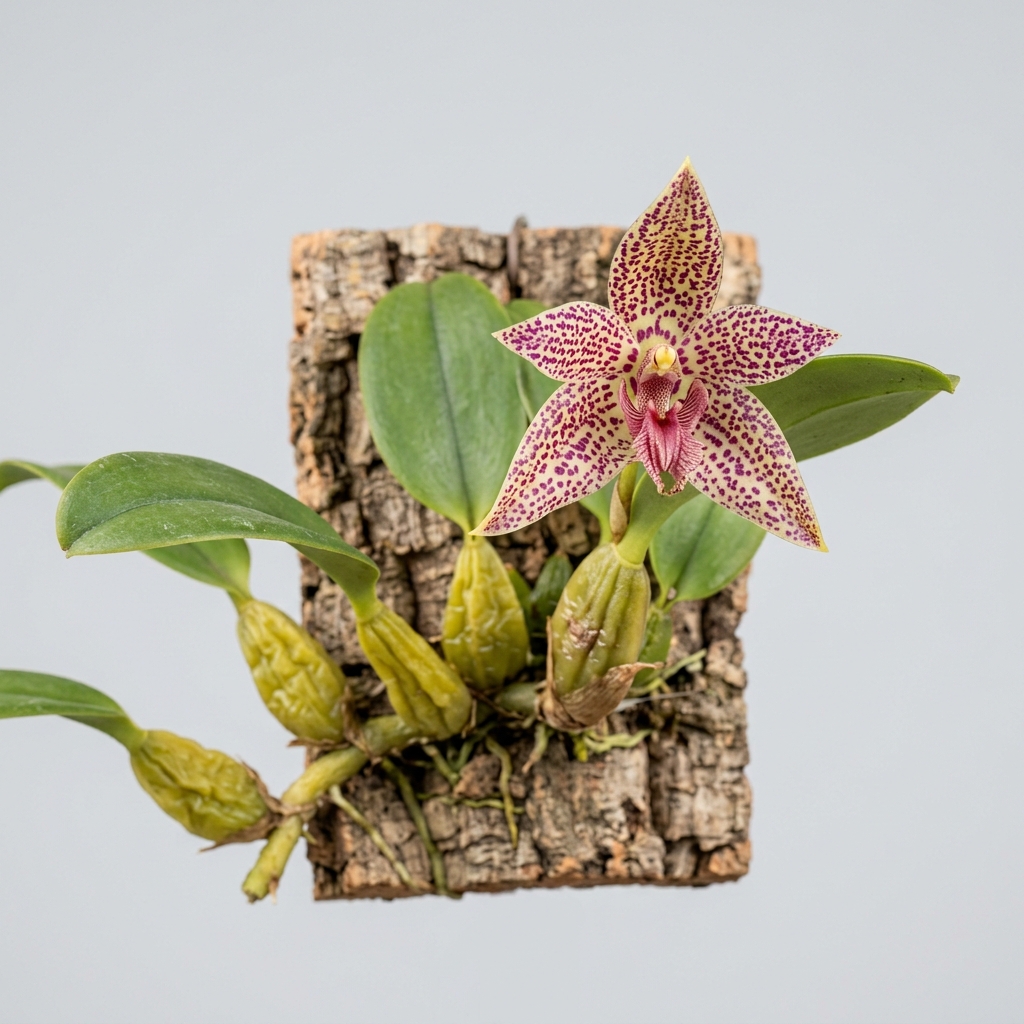
Bulbophyllum Macranthum, commonly known as the large-flowered Bulbophyllum, is a fascinating epiphytic orchid species native to the warm, humid rainforests of Southeast Asia. Highly prized by orchid collectors and enthusiasts, this species is celebrated for its unique growth habit and structurally complex, striking flowers that emerge individually from its creeping rhizome. Unlike many traditional orchids, its blooms present an exotic, almost alien appearance that makes it a standout addition to any specialized orchid collection.
As a member of one of the largest genera in the orchid family, this species showcases the remarkable evolutionary adaptations of Bulbophyllum. Cultivating Bulbophyllum Macranthum successfully requires an understanding of its native jungle habitat, where it thrives in high humidity, dappled light, and constant air movement. For growers willing to meet its specific environmental needs, this orchid rewards patience with a spectacular display of intricate, highly specialized blossoms.
💡 Did You Know?
The flowers of Bulbophyllum Macranthum are non-resupinate, meaning they appear upside down compared to many other orchids. This unique orientation, combined with a hinged, highly mobile lip that wiggles in the breeze, is a specialized evolutionary adaptation designed to attract specific fly pollinators in its native rainforest canopy.
🌿 Botanical Overview
Bulbophyllum Macranthum is characterized by its distinct vegetative structure, featuring a long, creeping rhizome that produces well-spaced, single-leaved pseudobulbs. The pseudobulbs are typically ovate or yellowish-green, each bearing a single, leathery, oblong leaf that remains upright to capture filtered light beneath the forest canopy. This spreading growth habit allows the plant to quickly colonize tree trunks and branches in its natural habitat.
In the wild, this orchid is found at lower elevations across Malaysia, Sumatra, Java, Borneo, and the Philippines. It thrives as an epiphyte, clinging to bark where its roots can dry quickly after frequent tropical downpours. Understanding this creeping vegetative habit is crucial for growers, as it dictates the potting and mounting strategies required for successful cultivation.
🌸 Flower Characteristics
The flowers of Bulbophyllum Macranthum are visually arresting, measuring up to several centimeters across and featuring a highly modified structure. The flowers are typically non-resupinate, meaning they appear upside down compared to many other orchid genera, with the intricate lip or labellum positioned at the top. The sepals and petals are often pale yellow or cream, heavily speckled or striped with rich purple, red, or magenta spots, creating a dramatic, tiger-like pattern.
Each flower is produced singly on a short inflorescence that arises directly from the nodes along the creeping rhizome rather than from the apex of the pseudobulb. The lateral sepals are often elongated and curved, framing the small, highly mobile lip that moves with the slightest breeze to attract specific insect pollinators.
Fragrance & Bloom Profile
The fragrance of Bulbophyllum Macranthum is a subject of much interest among orchid growers, as it deviates significantly from the sweet scents of traditional orchids. The blooms emit a distinct, complex aroma that is often described as spicy, chemically sweet, or reminiscent of cloves and damp forest floors. This scent is an evolutionary adaptation designed to attract fly pollinators in its native tropical environment.
While some growers find the fragrance intriguing and pleasant in a well-ventilated space, others note that it can be somewhat intense in enclosed growing areas. The individual flowers typically last for one to two weeks, but a mature, well-established specimen with multiple growing points can produce a succession of blooms over several weeks.
Parentage & Hybrid Lineage
As a naturally occurring species rather than a man-made hybrid, Bulbophyllum Macranthum represents a pure lineage shaped by natural selection in Southeast Asian rainforests. It is classified within the Sestochilos section of the genus Bulbophyllum, a group known for producing relatively large, solitary flowers with prominent lateral sepals.
While it is primarily grown as a species, Bulbophyllum Macranthum has occasionally been used in hybridization programs to introduce its unique flower size, bold spotting, and robust creeping habit to new grexes. However, registered hybrids featuring this species are relatively uncommon, and most plants found in cultivation are wild-type species selections or line-bred cultivars selected for superior flower color and form.
🌱 Growing Conditions
Replicating the warm, humid environment of Southeast Asian jungles is key to successfully growing Bulbophyllum Macranthum. This orchid thrives in warm to hot temperatures, ideally ranging from 75°F to 85°F (24°C to 29°C) during the day, with a slight drop at night. It does not tolerate cold drafts or temperatures dropping consistently below 60°F (15°C).
💡 Care Tip
Because of its creeping rhizome, Bulbophyllum Macranthum thrives best when mounted on cork bark or tree fern plaques with a small pad of sphagnum moss. This mimics its natural epiphytic habit and allows the plant to scramble freely without outgrowing a traditional pot.
Light levels should be kept moderate to low, mimicking the dappled shade of the forest understory. Bright, indirect light is ideal, while direct afternoon sunlight will quickly scorch the leathery leaves. High humidity is absolutely essential, ideally maintained between 60% and 80%, accompanied by continuous, gentle air movement to prevent fungal pathogens from settling on the damp foliage.
Watering, Feeding & Potting Media
Because of its creeping rhizome and shallow root system, Bulbophyllum Macranthum requires a potting medium that retains moisture while allowing excellent drainage and aeration. Growing this orchid on a cork or tree fern mount is highly recommended, as it allows the rhizome to scramble freely. If mounted, the plant must be watered daily, or even multiple times a day in dry environments, to prevent the roots from drying out completely.
Alternatively, it can be grown in shallow, wide baskets or pans filled with a loose mix of high-quality sphagnum moss and fine bark. Watering should be frequent and consistent; the medium should remain damp but never waterlogged. During the active growing season, apply a balanced, highly diluted orchid fertilizer weekly, flushing the medium with pure water periodically to prevent salt buildup.
Blooming Season & Care Notes
Bulbophyllum Macranthum typically initiates its blooming cycle in the spring and summer months, though flowers can occasionally appear at other times of the year if optimal growing conditions are maintained. The emergence of new growths along the rhizome is usually followed by the development of flower buds at the nodes.
To encourage robust blooming, ensure the plant receives consistent warmth and high humidity throughout the winter months, avoiding any prolonged dry periods. Unlike some orchids that require a distinct dry winter rest, this species prefers relatively stable moisture year-round. Repotting or remounting should only be done when the plant has outgrown its support or the medium begins to decompose, preferably just as new root growth begins in the spring.
⚠️ Common Issues
⚠️ Common Mistake
A frequent mistake is letting the potting medium dry out completely between waterings. Unlike Cattleyas, Bulbophyllum Macranthum lacks large water-storing structures and prefers constant, even moisture. Allowing the roots to dry out completely will quickly lead to shriveled pseudobulbs and bud drop.
- Root Rot:
Caused by compacted, poorly draining media or overwatering in stagnant air conditions. - Leaf Spotting: Fungal or bacterial spots can develop if water sits on the leaves overnight without adequate air circulation.
- Dehydration:
Indicated by shriveled pseudobulbs and wrinkled leaves, often due to insufficient watering of mounted specimens. - Pests:
Mealybugs and spider mites can occasionally target the undersides of the leaves and the crevices around the pseudobulbs. - Bud Blast:
Sudden drops in humidity or temperature can cause developing flower buds to yellow and drop before opening.
❓ Frequently Asked Questions
How do I encourage my Bulbophyllum Macranthum to bloom?
To encourage blooming, ensure the plant receives consistent warmth, high humidity, and stable moisture. Providing bright, indirect light without scorching the leaves is also critical, as insufficient light can prevent the orchid from forming flower buds.
Can I grow Bulbophyllum Macranthum indoors without a greenhouse?
Yes, you can grow this orchid indoors, but you must provide supplemental humidity using a humidifier or a dedicated grow tent. Additionally, a small fan should be used to maintain gentle air circulation around the plant to prevent stagnant conditions.
Why are the pseudobulbs on my orchid shriveling?
Shriveled pseudobulbs are a sign of dehydration. This can occur either from underwatering or from root loss due to overwatering and root rot. Inspect the root system to determine the cause and adjust your watering schedule accordingly.
Is Bulbophyllum Macranthum suitable for beginners?
This species is generally considered best for intermediate growers. Its high humidity requirements, creeping growth habit, and preference for mounted or basket culture make it slightly more challenging than common windowsill orchids like Phalaenopsis.
⭐ Final Growing Notes
Bulbophyllum Macranthum is a rewarding and visually spectacular orchid that brings a touch of the exotic tropical rainforest into any collection. While its creeping growth habit and high humidity demands require a bit more attention than standard windowsill orchids, its unique, tiger-spotted blooms and fascinating botanical features make it an absolute joy to cultivate. By providing consistent warmth, abundant moisture, and excellent air circulation, you can enjoy the captivating presence of this remarkable species for many years to come.
⚕️ Health, Safety & Edibility
Understanding how a plant interacts with people, pets, and the surrounding environment is part of responsible cultivation. This section uses conservative, general guidance and does not replace professional medical or veterinary advice.
Human Safety: No published evidence currently identifies species-specific toxicity concerns for Bulbophyllum Macranthum during normal handling. As with most ornamental plants, it should not be intentionally consumed.
Pet Safety: Published information does not indicate that this orchid commonly poses a toxicity concern for cats or dogs. However, chewing leaves, flowers, roots, or potting media may still cause mild digestive upset.
Edibility: This orchid is cultivated for ornamental display rather than food. Ornamental plants may carry fertilizers, pesticides, or other horticultural treatments that make them unsuitable for consumption.
Skin Contact: Routine handling is not generally associated with skin irritation. Gardeners with sensitive skin may prefer wearing gloves when repotting, pruning, or handling potting media.
🌱 Propagation Tip
This orchid is easily propagated by division. Ensure each division has at least three to four healthy pseudobulbs and an active growing lead. Use a sterile blade to cut the rhizome, and secure the new division firmly to its new mount or basket until roots establish.
⭐ Expert Advice
To maximize blooming potential, maintain high levels of 70% or more and provide gentle, continuous air movement. Stagnant air combined with high can lead to fungal leaf spot, but a small fan running nearby will keep the foliage dry and healthy while supporting robust growth.




Leave A Comment