
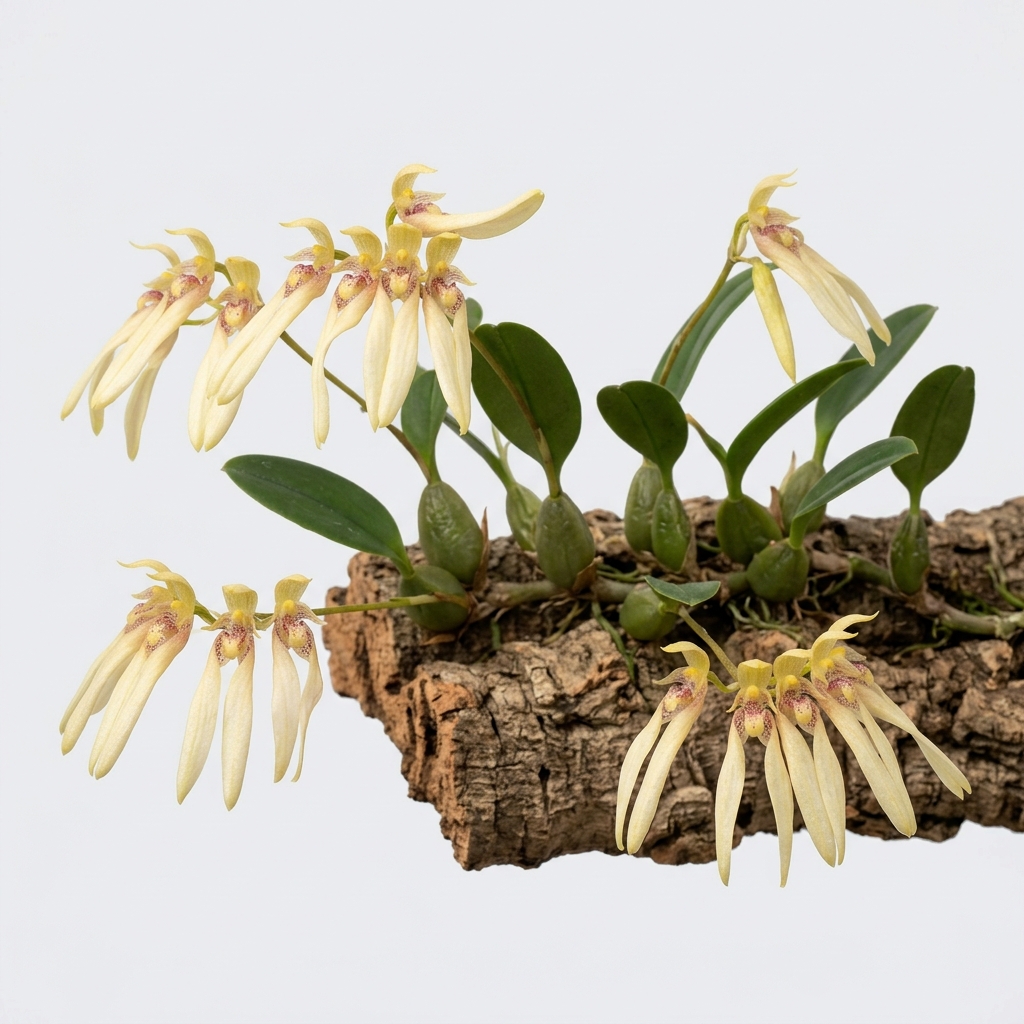
Bulbophyllum Vaginatum is a captivating miniature to small-sized epiphytic orchid species native to the tropical rainforests of Southeast Asia, including Thailand, Malaysia, Indonesia, and the Philippines. Highly prized by collectors for its extraordinary and distinctive floral display, this species produces dense, fan-like clusters of pale yellow to cream-colored blossoms that resemble delicate, windblown threads. Its compact growth habit and creeping rhizomes make it an useful selection for mount cultivation or shallow basket culture, where its trailing nature can be fully appreciated.
As a member of the vast and diverse Bulbophyllum genus, this orchid appeals to growers who appreciate unusual botanical forms and rewarding blooming cycles. While it requires specific humidity and moisture levels to thrive, its overall adaptability makes it an accessible choice for intermediate orchid enthusiasts looking to venture beyond more common genera. Providing the correct balance of filtered light, consistent moisture, and excellent air circulation is key to unlocking the full potential of this remarkable species.
💡 Did You Know?
Bulbophyllum Vaginatum is part of the Bulbophyllum orchid group, a favorite among growers because its flowers, growth habit, and care needs make it useful for comparing cultivated orchids within the same . Observing its leaves, roots, and bloom spikes can help growers understand how this cultivar responds to indoor conditions.
🌿 Botanical Overview
Bulbophyllum Vaginatum is characterized by its distinct growth habit, featuring small, conical to ovoid pseudobulbs spaced along a creeping rhizome. Each pseudobulb bears a single, thick, leathery leaf that is oblong to elliptic in shape, designed to store moisture and nutrients in its native canopy habitat. In nature, these orchids grow as epiphytes on tree trunks and branches, where they are exposed to frequent rainfall and rapid drying cycles.
The species is highly adapted to warm, humid environments where air movement is constant. Its root system is relatively fine and shallow, spreading across the bark of host trees to absorb moisture and organic debris. Understanding this epiphytic lifestyle is fundamental to replicating its natural conditions in a home or greenhouse setting.
🌸 Flower Characteristics
The most striking feature of Bulbophyllum Vaginatum is its inflorescence, which arises from the base of the pseudobulb. The orchid produces a short scape that terminates in a crowded, umbel-like raceme, creating a circular or fan-shaped arrangement of flowers. Each individual flower is dominated by long, slender, thread-like lateral sepals that drape downward, giving the entire cluster a feathery, wispy appearance.
The color of the blossoms typically ranges from pale cream to soft yellow, occasionally featuring subtle orange or reddish undertones near the center. The petals and dorsal sepal are much smaller, forming a hood over the tiny, mobile lip (labellum). This hinged lip is a classic feature of the genus, designed to move with the slightest breeze to attract specific insect pollinators.
Fragrance & Bloom Profile
The fragrance of Bulbophyllum Vaginatum is a subject of interest among growers, as members of this genus are famous for their diverse and sometimes unusual scents. For this species, the aroma is often described as faintly sweet, musky, or slightly medicinal, though some growers report little to no detectable scent. The fragrance is typically most pronounced during the warmer hours of the day when light and temperature levels peak.
Individual blooms are relatively short-lived, often lasting only a few days to a week. However, a mature, well-established specimen can produce multiple flower spikes simultaneously or in succession, extending the overall display period and creating a spectacular show of delicate, hanging fans.
Parentage & Hybrid Lineage
Unlike many commercially available orchids, Bulbophyllum Vaginatum is a naturally occurring species rather than a man-made hybrid. It is recognized as a distinct species within the section Cirrhopetalum, a group within the Bulbophyllum genus known for their fan-shaped inflorescences and elongated lateral sepals.
While it is primarily grown as a species, it has occasionally been used in hybridizing programs to introduce its unique fan-like floral structure and compact growth habit to new grexes. However, documented registry records for hybrids involving Bulbophyllum Vaginatum are relatively limited in general hobbyist literature, and it remains most popular in its pure, wild form among species collectors.
🌱 Growing Conditions
To cultivate Bulbophyllum Vaginatum successfully, growers must replicate its tropical canopy origin. It thrives in medium to bright, filtered light, similar to the conditions preferred by many Phalaenopsis or Paphiopedilum species. Direct, midday sunlight should be avoided, as it can easily scorch the thin leaves, while excessively low light may inhibit flowering.
💡 Care Tip
For best results, grow Bulbophyllum Vaginatum in bright filtered with steady and gentle airflow. Avoid placing the plant in harsh midday sun, but do not keep it in a dark corner; weak is one of the most common reasons cultivated orchids refuse to rebloom.
Temperature: wise, this orchid is a warm-to-intermediate grower. It prefers daytime temperatures between 75°F and 85°F (24°C to 29°C), with a slight drop at night to stimulate healthy growth and spike initiation. High relative humidity, ideally between 60% and 80%, is crucial for maintaining the health of the foliage and preventing the fine roots from desiccating.
Watering, Feeding & Potting Media
Because of its creeping rhizome and shallow root system, Bulbophyllum Vaginatum is exceptionally well-suited to being mounted on cork bark, tree fern plaques, or hardwood blocks. When mounted, it requires daily watering—or even multiple mistings per day in dry climates—to ensure the roots do not dry out completely for extended periods.
If grown in pots or baskets, a highly porous, moisture-retentive medium is essential. A mix of fine-grade fir bark, sphagnum moss, and tree fern fiber works well to provide moisture while allowing excellent drainage and aeration. Fertilize weakly weekly during the active growing season with a balanced, diluted orchid fertilizer, reducing the frequency during the cooler winter months when growth naturally slows.
Blooming Season & Care Notes
Bulbophyllum Vaginatum typically initiates its blooming cycle in the late summer or autumn, though opportunistic flowering can occur at other times of the year if environmental conditions are stable. The emergence of flower spikes from the base of mature pseudobulbs signals the need for consistent moisture; allowing the plant to dry out excessively at this stage can lead to bud blast.
After the blooming cycle concludes, the orchid may enter a brief period of semi-dormancy. During this time, reduce watering slightly, allowing the medium to become damp rather than saturated, but never let the pseudobulbs shrivel severely. Repotting or remounting is best performed in the spring as new root growth begins to emerge from the base of the newest pseudobulbs.
⚠️ Common Issues
⚠️ Common Mistake
The most common mistake is by calendar instead of root and potting-media condition. Bulbophyllum roots need moisture and air at the same time, so constantly wet bark or sphagnum can lead to root loss even when the leaves still look healthy.
- Root Rot:
Caused by compacted, poorly draining media or overwatering in stagnant air conditions. - Pseudobulb Shriveling: Indicates dehydration, which can result from underwatering, low humidity, or a compromised root system unable to absorb water.
- Leaf Spotting: Fungal or bacterial spots can develop if water sits on the foliage overnight, highlighting the need for good air circulation.
- Bud Blast:
Sudden dropping or drying of flower buds, often triggered by rapid shifts in temperature, low humidity, or dry media during spike development. - Pests:
Mealybugs and spider mites can occasionally target the tender new growth or the undersides of leaves; treat promptly with horticultural soap or neem oil.
❓ Frequently Asked Questions
How often should I water Bulbophyllum Vaginatum?
Mounted specimens typically require daily watering or misting, as they dry out very quickly. If grown in a pot or basket with a moisture-retentive medium like sphagnum moss, water just as the top layer of the medium begins to dry, ensuring the roots remain damp but never waterlogged.
Can I grow Bulbophyllum Vaginatum under LED lights?
Yes, this species adapts well to artificial lighting. Position the orchid under moderate-intensity LED grow lights, ensuring the fixture does not generate excessive heat that could lower the local humidity or scorch the foliage.
Why are the leaves on my orchid turning yellow?
Yellowing leaves can be caused by several factors, including over-exposure to direct sunlight, natural shedding of older leaves on backbulbs, or root damage due to overwatering and poor drainage.
Is Bulbophyllum Vaginatum suitable for beginners?
It is generally considered an intermediate orchid due to its high humidity requirements and need for consistent moisture. However, dedicated beginners can succeed with this species if they grow it in a humid greenhouse, terrarium, or dedicated orchid case.
⭐ Final Growing Notes
Bulbophyllum Vaginatum is a rewarding and visually spectacular orchid that brings a touch of exotic tropical wonder to any collection. By focusing on high humidity, consistent moisture, and excellent air movement, growers can enjoy the mesmerizing, fan-like blooms of this unique Southeast Asian species for years to come.
⚕️ Health, Safety & Edibility
Understanding how a plant interacts with people, pets, and the surrounding environment is part of responsible cultivation. This section uses conservative, general guidance and does not replace professional medical or veterinary advice.
Human Safety: No published evidence currently identifies species-specific toxicity concerns for Bulbophyllum Vaginatum during normal handling. As with most ornamental plants, it should not be intentionally consumed.
Pet Safety: Published information does not indicate that this orchid commonly poses a toxicity concern for cats or dogs. However, chewing leaves, flowers, roots, or potting media may still cause mild digestive upset.
Edibility: This orchid is cultivated for ornamental display rather than food. Ornamental plants may carry fertilizers, pesticides, or other horticultural treatments that make them unsuitable for consumption.
Skin Contact: Routine handling is not generally associated with skin irritation. Gardeners with sensitive skin may prefer wearing gloves when repotting, pruning, or handling potting media.
🌱 Propagation Tip
Propagation should be approached patiently. Most home growers should wait for natural keikis or divide only mature, healthy plants when the orchid type allows it. Never remove a young growth until it has strong roots and enough leaves to support itself away from the parent plant.
⭐ Expert Advice
Repot after flowering when fresh root tips begin to appear. This timing helps the plant anchor quickly into new bark or sphagnum and reduces stress, especially for orchids grown indoors where airflow, , and drying speed can change from season to season.




Leave A Comment