
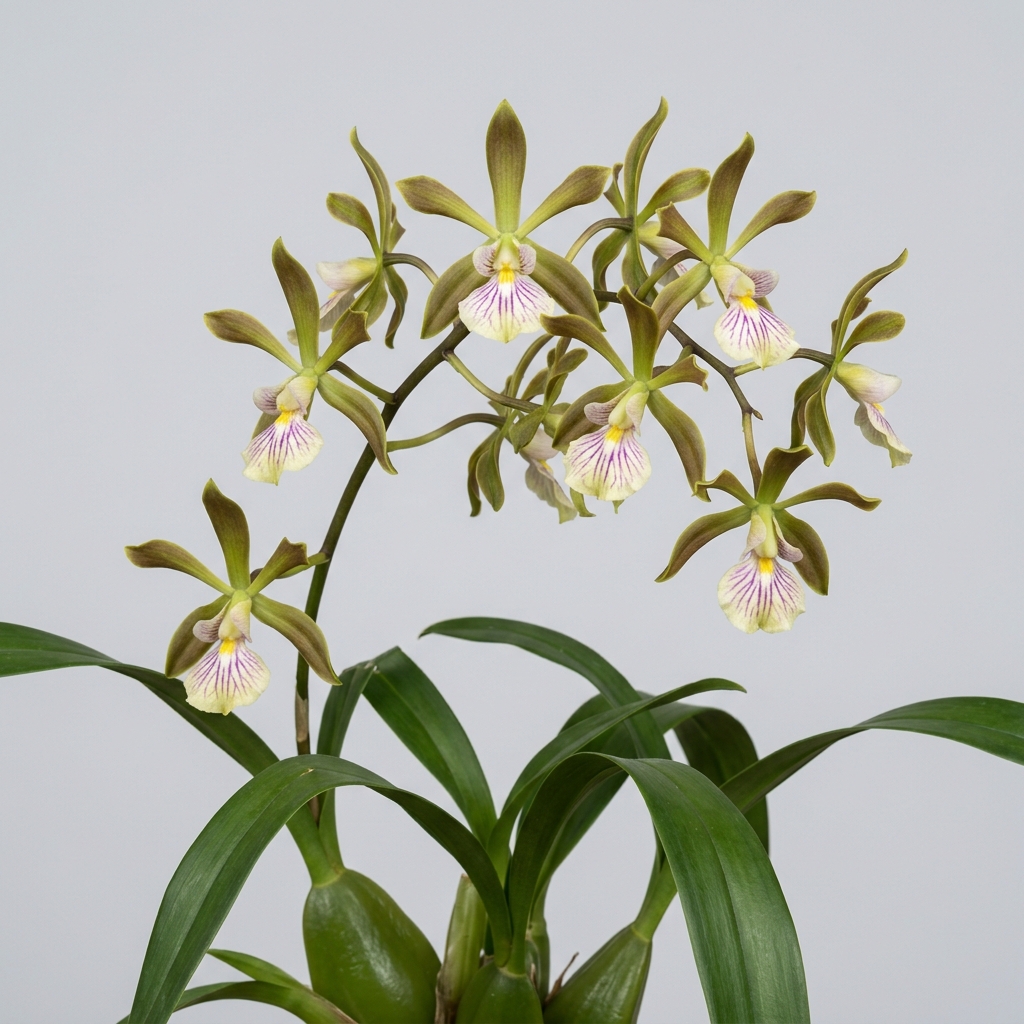
Encyclia Alata, commonly known as the winged Encyclia, is a highly esteemed orchid species native to Central America and parts of Mexico. Renowned for its striking, spider-like blossoms and robust growth habit, this epiphytic orchid is a favorite among collectors who appreciate both its architectural beauty and its relatively straightforward care requirements. The plant produces large, pear-shaped pseudobulbs topped with long, strap-like leaves, creating an elegant structural presence even when not in bloom.
When in bloom, Encyclia Alata produces magnificent, branched inflorescences that can carry dozens of fragrant flowers. The blossoms feature narrow, greenish-bronze petals and sepals that frame a highly detailed, white-and-yellow labellum marked with radiating purple veins. This combination of dramatic floral form, ease of culture, and sweet, honey-like fragrance makes it an exceptional addition to any indoor orchid collection or warm-climate greenhouse.
💡 Did You Know?
The common name winged Encyclia comes from the unique structure of the flower's column, which features small, wing-like appendages on either side. In its native Central American habitats, these structural features help guide specific pollinating bees directly to the pollen source, ensuring successful reproduction in the wild.
🌿 Botanical Overview
Encyclia Alata is an epiphytic orchid species native to low-elevation deciduous forests and coastal woodlands stretching from Mexico through Central America. In its natural habitat, it grows perched on tree trunks and branches, where it is exposed to bright, filtered sunlight and excellent air circulation. This environment has shaped its evolutionary adaptations, including its prominent pseudobulbs and thick, leathery leaves designed to store water during dry periods.
The species belongs to the genus Encyclia, which was historically grouped with Epidendrum but is distinguished by its distinct, non-fused lip and rounded pseudobulbs. The specific epithet alata translates to winged, referencing the wing-like lobes of the column within the flower structure. This robust species is highly adaptable, making it one of the more resilient members of its genus in cultivation.
🌸 Flower Characteristics
The flowers of Encyclia Alata are celebrated for their intricate, spider-like form and dramatic color contrast. Individual blossoms typically measure between two to three inches in diameter, arranged on a tall, arching, and often branched inflorescence that can reach up to three feet in height. A single mature spike can support anywhere from twenty to over fifty flowers, creating a spectacular cloud-like display.
The sepals and petals are narrow, slightly reflexed, and display a rich greenish-yellow base overlaid with warm bronze or brown tones. The focal point of the flower is the prominent, three-lobed lip (labellum). The lateral lobes of the lip wrap partially around the column, while the central lobe is broad, wavy-edged, and colored in shades of cream, yellow, and white, decorated with striking, radiating lines of magenta or purple.
Fragrance & Bloom Profile
One of the most compelling reasons growers cultivate Encyclia Alata is its intense and delightful fragrance. The flowers emit a strong, sweet scent that is commonly described as a blend of honey, vanilla, and warm spices, with some growers noting subtle citrus undertones. This fragrance is most pronounced during the morning and early afternoon hours, especially when the plant is exposed to warm, bright conditions.
The blooming cycle is highly rewarding, with individual flowers remaining fresh and vibrant for four to six weeks. Because the inflorescence opens sequentially, the overall display can last for up to two months. The scent combined with the longevity of the blooms makes this species a standout performer in any growing space.
Parentage & Hybrid Lineage
Unlike complex modern hybrids, Encyclia Alata is a naturally occurring species. However, its desirable traits—namely its high flower count, robust growth, and sweet fragrance—have made it a popular parent in orchid hybridization. It has been crossed with various other Encyclia species and related genera, such as Cattleya and Brassavola, to produce unique intergeneric hybrids.
In historical registration records, parentage and hybrid lines involving Encyclia Alata can sometimes be complex due to past botanical reclassifications between Encyclia and Epidendrum. When purchasing hybrids derived from this species, growers should note that individual cultivars may exhibit variations in flower size and fragrance intensity depending on the specific parental clones used in the breeding program.
🌱 Growing Conditions
To successfully grow Encyclia Alata, providing conditions that mimic its native tropical habitat is key. It thrives in bright, indirect light, similar to the light levels required by Cattleyas. A location near an east- or west-facing window, or a shaded south-facing window, is ideal. If the leaves turn a deep, dark green, the plant may not be receiving enough light; a healthy plant should have medium-green leaves with a slight yellowish tint under optimal light.
💡 Care Tip
To encourage robust blooming, ensure your orchid receives bright, filtered that mimics the canopy of its native forests. The leaves should maintain a , grassy-green color. If they turn dark green, gradually move the plant to a brighter location to stimulate flower spike development.
Temperature: wise, this orchid prefers warm to intermediate conditions. Daytime temperatures should ideally range between 75°F and 85°F (24°C to 29°C), with a nighttime drop to around 60°F to 65°F (15°C to 18°C). High humidity levels of 50% to 70% are beneficial, but must be accompanied by strong air movement to prevent fungal and bacterial pathogens from settling on the foliage.
Watering, Feeding & Potting Media
Encyclia Alata requires a distinct wet-and-dry cycle. Because of its large pseudobulbs, the plant is highly drought-tolerant and sensitive to overwatering. During the active growing season in spring and summer, water the plant thoroughly, then allow the potting medium to dry out almost completely before watering again. In the winter, reduce watering frequency significantly, providing just enough moisture to keep the pseudobulbs from shriveling excessively.
The ideal potting medium is a highly porous, fast-draining mix. Coarse fir bark blended with charcoal and perlite works exceptionally well in clay pots, which help wick away excess moisture. Alternatively, because of its epiphytic nature, Encyclia Alata is an excellent candidate for mounting on cork bark or tree fern plaques, provided the grower can maintain adequate humidity and water the plant daily during hot weather. Feed with a balanced orchid fertilizer diluted to quarter-strength every two weeks during active growth.
Blooming Season & Care Notes
The primary blooming season for Encyclia Alata occurs from late spring through mid-summer. As the new growth matures in early spring, the flower spike will begin to emerge from the center of the developing pseudobulb. During this period, avoid moving the plant or changing its orientation to the light source, as this can cause the developing buds to twist or fail to open properly.
Once the blooming cycle is complete, cut the spent flower spike down to the base of the pseudobulb. Repotting should only be performed when new root growth is visible at the base of the newest pseudobulb, typically in late spring or early summer. Avoid repotting during the winter rest period, as damaged roots will not recover quickly and may rot.
⚠️ Common Issues
While generally resilient, Encyclia Alata can encounter several common cultivation issues:
⚠️ Common Mistake
A frequent mistake is keeping the potting medium constantly wet. Unlike some terrestrial orchids, this epiphyte requires its roots to dry out rapidly between waterings. Using a heavy, moisture-retaining soil mix or too frequently will quickly lead to root rot and plant decline.
- Root Rot: Caused by overwatering or compacted, decaying potting media that retains too much moisture.
- Shriveled Pseudobulbs: A sign of dehydration, which can occur from underwatering or, paradoxically, from root rot where the plant has lost the roots needed to absorb water.
- Scale and Mealybugs: These pests often hide in the dry sheaths surrounding the pseudobulbs or under the leaves; treat promptly with insecticidal soap or neem oil.
- Leaf Spotting: Fungal or bacterial spots can develop if water is allowed to sit on the leaves overnight without adequate air circulation.
- Bud Blast: The premature dropping of flower buds, usually triggered by sudden changes in temperature, drafty conditions, or low humidity.
❓ Frequently Asked Questions
How often should I water my Encyclia Alata?
Water thoroughly and then allow the potting medium to dry out almost completely before watering again. During the active spring and summer growing season, this may mean watering once or twice a week, while in the winter rest period, watering should be reduced to once every two weeks or less.
Can Encyclia Alata be grown mounted on wood?
Yes, this species thrives when mounted on cork bark or tree fern plaques due to its epiphytic nature. Mounted plants require high humidity and more frequent watering—often daily during hot summer days—as their roots dry out much faster than those in pots.
Why are the pseudobulbs on my orchid shriveling?
Mild shriveling is normal during the winter rest period or when a new growth is drawing energy. However, severe shriveling during the growing season indicates either underwatering or root loss due to overwatering. Inspect the root system to determine the cause.
What kind of fertilizer is best for this orchid?
Use a balanced, water-soluble orchid fertilizer diluted to one-quarter or one-half strength. Apply every two weeks during the active spring and summer growing phase, and flush the pot with pure water once a month to remove salt buildup.
⭐ Final Growing Notes
Encyclia Alata is a magnificent and rewarding orchid that brings a touch of tropical elegance and a rich, sweet fragrance to any collection. By respecting its natural cycle of wet summers and dry winter rests, providing bright light, and ensuring excellent air movement, growers of all experience levels can enjoy its spectacular, long-lasting floral displays year after year.
⚕️ Health, Safety & Edibility
Understanding how a plant interacts with people, pets, and the surrounding environment is part of responsible cultivation. This section uses conservative, general guidance and does not replace professional medical or veterinary advice.
Human Safety: No published evidence currently identifies species-specific toxicity concerns for Encyclia Alata during normal handling. As with most ornamental plants, it should not be intentionally consumed.
Pet Safety: Published information does not indicate that this orchid commonly poses a toxicity concern for cats or dogs. However, chewing leaves, flowers, roots, or potting media may still cause mild digestive upset.
Edibility: This orchid is cultivated for ornamental display rather than food. Ornamental plants may carry fertilizers, pesticides, or other horticultural treatments that make them unsuitable for consumption.
Skin Contact: Routine handling is not generally associated with skin irritation. Gardeners with sensitive skin may prefer wearing gloves when repotting, pruning, or handling potting media.
🌱 Propagation Tip
Propagation is best achieved by division during repotting in the spring. Ensure that each division has at least three to four healthy, mature pseudobulbs and active root growth. Avoid dividing small plants, as larger clumps produce far more impressive flower displays.
⭐ Expert Advice
For the best results, grow this orchid in a clay pot with coarse bark or mount it directly onto cork. Clay pots allow the root zone to breathe and dry evenly, which perfectly matches the plant's natural wet-and-dry cycle and prevents the root suffocation common in plastic containers.




Leave A Comment