
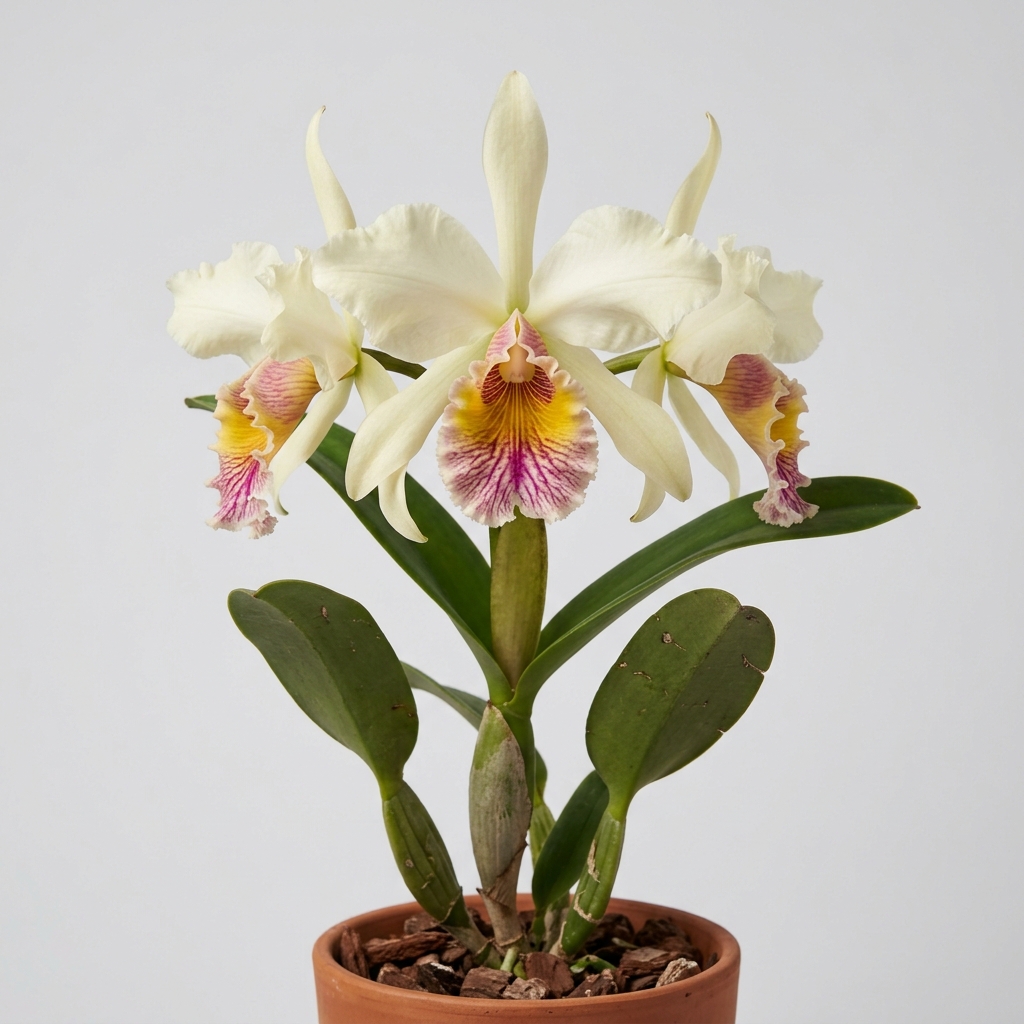
The Cattleya Rex orchid, historically revered as the ‘King of Cattleyas,’ is a magnificent unifoliate species native to the montane forests of Peru. Highly prized by collectors and hybridizers alike, this orchid is celebrated for its striking, elegant flowers that feature creamy-white to soft ivory petals contrasted against an intricately patterned, vibrant lip. Its majestic presentation and historical rarity make it a crown jewel in any serious orchid collection.
Cultivating this species requires a nuanced understanding of its natural habitat, particularly its preference for bright, filtered light and distinct seasonal moisture variations. While it has a reputation for being somewhat demanding compared to modern complex hybrids, providing the correct balance of humidity, air movement, and temperature rewards growers with spectacular, fragrant summer blooms.
💡 Did You Know?
Cattleya Rex was once so rare and highly guarded by commercial plant hunters in the late 19th century that its exact geographic origin in Peru remained a closely kept secret for years. Collectors went to extreme lengths to prevent rivals from discovering the natural habitats of this coveted orchid species.
🌿 Botanical Overview
Cattleya Rex is an epiphytic orchid species indigenous to the eastern slopes of the Andes in Peru, where it grows on moss-covered tree branches at elevations ranging from 800 to 1,200 meters. This specific elevation exposes the plant to warm, humid days followed by cooler nights, a diurnal temperature fluctuation that is vital for its overall vigor and blooming cycle.
The plant structure is characterized by club-shaped, slightly compressed pseudobulbs, each bearing a single, leathery, oblong leaf. These sturdy pseudobulbs act as water storage organs, helping the orchid survive brief periods of dryness in its native canopy. Understanding this growth habit is key to replicating its natural environment in a domestic greenhouse or indoor growing space.
🌸 Flower Characteristics
The blossoms of Cattleya Rex are widely regarded as some of the most beautiful in the genus. Each flower spike can produce between three and eight large, showy flowers, typically measuring up to six inches in diameter. The sepals and petals are a delicate creamy-white or pale yellow, providing a clean backdrop for the spectacular labellum.
The lip, or labellum, is the defining feature of this orchid. It is deeply trilobed, with a trumpet-like shape that flares open to reveal a rich tapestry of golden-yellow throat markings and intricate crimson, purple, or magenta veining. The margins of the lip are beautifully ruffled, adding a sense of dramatic texture to the overall floral display.
Fragrance & Bloom Profile
In addition to its visual splendor, Cattleya Rex is famous for its intense, sweet fragrance. The scent is often described as a complex blend of citrus, vanilla, and sweet floral notes, which becomes most pronounced during the morning hours when light levels increase.
The blooms typically last between three to four weeks if kept in a cool, draft-free environment. To maximize the lifespan of the flowers, growers should avoid getting water on the petals during routine maintenance, as excess moisture can encourage fungal spotting or premature wilting.
Parentage & Hybrid Lineage
Unlike many hybrid cultivars, Cattleya Rex is a distinct, naturally occurring species rather than a man-made cross. However, its exceptional floral traits have made it an invaluable parent in orchid hybridization programs since its discovery in the late 19th century.
It has been used extensively to introduce its clean, light-colored petals and highly detailed, colorful lip to classic large-flowered Cattleya hybrids. While its exact historical collection details were once kept secret by commercial explorers to protect their sources, it remains a highly respected foundational species in modern orchid breeding.
🌱 Growing Conditions
Replicating the montane forest canopy is essential for successfully growing Cattleya Rex. It thrives in bright, indirect light, similar to the conditions preferred by most unifoliate Cattleyas. A south or east-facing window with sheer curtain filtering, or high-quality LED grow lights, will provide the necessary energy for robust growth and flowering.
💡 Care Tip
To prevent fungal infections, always water Cattleya Rex early in the morning. This ensures that any water splashed onto the leaves or into the emerging flower sheaths has ample time to evaporate before nightfall when temperatures drop.
Temperatures should ideally range from 75°F to 85°F (24°C to 29°C) during the day, dropping to 60°F to 65°F (15°C to 18°C) at night. This drop in night temperature is crucial for triggering the development of flower buds. High humidity levels of 60% to 80% must be maintained, coupled with strong, continuous air movement to prevent stagnant air pockets that harbor pathogens.
Watering, Feeding & Potting Media
Watering should be frequent and thorough during the active growing season in spring and summer, allowing the potting medium to dry out almost completely between waterings. In the winter, watering should be reduced significantly, providing just enough moisture to prevent the pseudobulbs from shriveling.
A well-draining, coarse potting mix is mandatory. High-quality medium to large fir bark mixed with horticultural charcoal and perlite works exceptionally well in clay pots, which allow the roots to breathe. Feed the plant weekly with a balanced, diluted orchid fertilizer (such as a quarter-strength 20-20-20 formula) during active growth, flushing the pot with pure water once a month to remove accumulated salts.
Blooming Season & Care Notes
Cattleya Rex typically blooms in the mid-to-late summer months. The flower sheath emerges from the top of the newly matured pseudobulb, and buds will gradually develop inside. During this critical phase, avoid moving the plant or changing its orientation to the light source, as this can cause the buds to twist or fail to open properly.
Once the blooming cycle is complete, the orchid enters a brief period of rest. This is the ideal time to assess if the plant needs repotting. Repotting should only be done when new root tips begin to emerge from the base of the newest pseudobulb, ensuring the plant establishes itself quickly in its new container.
⚠️ Common Issues
⚠️ Common Mistake
A frequent mistake is repotting Cattleya Rex at the wrong time. Doing so when the plant is not actively producing new roots can shock the orchid, leading to root loss and a prolonged decline from which it may take years to recover.
- Root Rot:
Caused by overwatering or using a degraded, waterlogged potting medium that suffocates the roots. - Bud Blast:
Sudden dropping of flower buds, often triggered by rapid temperature fluctuations, low humidity, or drafts. - Scale and Mealybugs: Common pests that hide in the dry sheaths of pseudobulbs; treat promptly with insecticidal soap or neem oil.
- Leaf Scorching: Yellow or brown patches on leaves caused by exposure to direct, unfiltered midday sunlight.
❓ Frequently Asked Questions
How often should I water my Cattleya Rex?
Water thoroughly when the potting medium is nearly dry, which typically translates to once or twice a week during the warm summer growing season. Reduce this frequency significantly during the winter rest period to prevent root rot.
Why are the buds on my Cattleya Rex falling off before opening?
This issue, known as bud blast, is usually caused by environmental stress such as sudden temperature drops, low humidity, dry drafts, or moving the plant to a new location while the buds are developing.
Can Cattleya Rex be grown mounted instead of in a pot?
Yes, Cattleya Rex can be successfully grown on cork bark or hardwood mounts. However, mounted plants dry out very quickly and will require daily watering or misting, making this method best suited for high-humidity greenhouses.
What is the best potting mix for this orchid?
A coarse, highly aerated mix of medium to large fir bark, charcoal, and perlite is ideal. This combination ensures rapid drainage and excellent airflow around the roots, mimicking its natural epiphytic habitat.
⭐ Final Growing Notes
While Cattleya Rex demands a bit more attention to humidity and watering schedules than common grocery-store orchids, its breathtaking summer display is well worth the effort. By providing bright, filtered light, consistent air movement, and a distinct winter rest, you can enjoy the majestic blooms and intoxicating fragrance of this legendary Peruvian species for decades.
⚕️ Health, Safety & Edibility
Understanding how a plant interacts with people, pets, and the surrounding environment is part of responsible cultivation. This section uses conservative, general guidance and does not replace professional medical or veterinary advice.
Human Safety: No published evidence currently identifies species-specific toxicity concerns for Cattleya Rex during normal handling. As with most ornamental plants, it should not be intentionally consumed.
Pet Safety: Published information does not indicate that this orchid commonly poses a toxicity concern for cats or dogs. However, chewing leaves, flowers, roots, or potting media may still cause mild digestive upset.
Edibility: This orchid is cultivated for ornamental display rather than food. Ornamental plants may carry fertilizers, pesticides, or other horticultural treatments that make them unsuitable for consumption.
Skin Contact: Routine handling is not generally associated with skin irritation. Gardeners with sensitive skin may prefer wearing gloves when repotting, pruning, or handling potting media.
🌱 Propagation Tip
Propagate Cattleya Rex by division only when the plant has outgrown its pot and possesses at least six to eight healthy pseudobulbs. Ensure each divided section has at least three active pseudobulbs and a strong lead growth to guarantee survival.
⭐ Expert Advice
If your Cattleya Rex is growing healthy green leaves but failing to bloom, it likely needs more . Gradually move the orchid to a brighter location where the leaves take on a , grassy-green color rather than a deep forest green.




Leave A Comment