
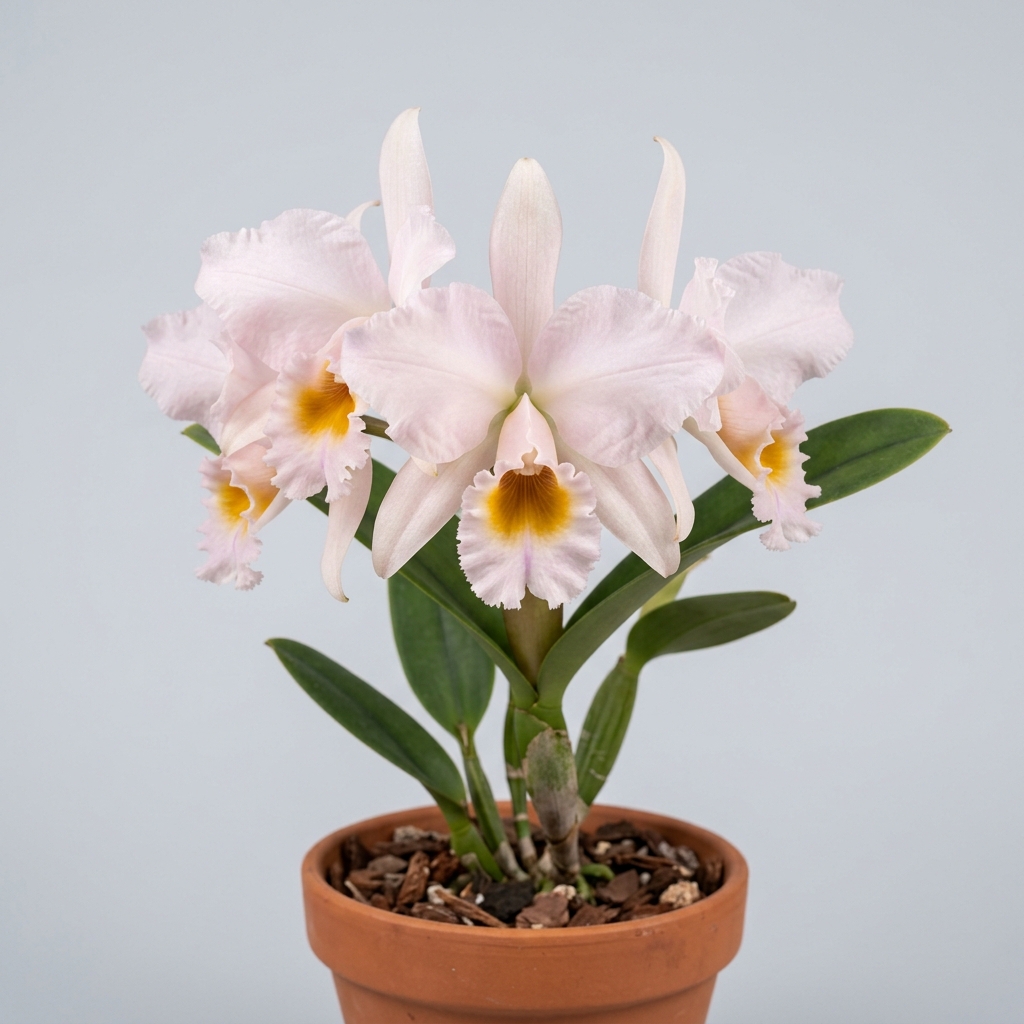
Cattleya Schroderae is a highly esteemed orchid species native to Colombia, celebrated among collectors for its delicate pastel blooms and exceptionally sweet fragrance. Often referred to as the Easter orchid due to its typical spring blooming window, this unifoliate Cattleya produces large, elegant flowers that range from soft blush pink to nearly pure white. Its graceful growth habit and historical significance make it a cornerstone of classic orchid collections.
Growers value Cattleya Schroderae not only for its aesthetic charm but also for its relatively predictable growth cycle. While it demands the typical high-light and intermediate-temperature conditions of the Cattleya alliance, its resilience and rewarding floral display make it an excellent choice for dedicated hobbyists. Proper attention to its seasonal rest period is key to unlocking its full blooming potential year after year.
💡 Did You Know?
Cattleya Schroderae is historically known as the Easter Orchid because its spectacular blooming cycle naturally peaks in early spring, perfectly aligning with Easter celebrations. Its sweet, peach-like is so distinct that historical collectors could often identify the species by scent alone before even seeing the delicate pastel blossoms.
🌿 Botanical Overview
Cattleya Schroderae is native to the eastern Andes of Colombia, where it naturally grows as an epiphyte on tree branches, basking in filtered canopy light. It features club-shaped, single-leaved pseudobulbs (unifoliate) that store water and nutrients, allowing the plant to survive seasonal dry spells in its native habitat. The leathery, oblong leaves are dark green and provide a sturdy structural contrast to the delicate flowers.
In its natural environment, this orchid experiences distinct wet and dry seasons, which dictate its growth and flowering cycles. Understanding this native rhythm is essential for indoor and greenhouse cultivation, as the plant relies on seasonal temperature drops and watering adjustments to initiate its bud development.
🌸 Flower Characteristics
The flowers of Cattleya Schroderae are notably large, often reaching five to seven inches in diameter. They feature broad, wavy petals and sepals that exhibit a luminous, crystalline texture, typically in shades of pale rose, lavender-pink, or pristine white. The most striking feature is the lip, or labellum, which is deeply tubular with a beautifully fringed margin and a rich, warm yellow-orange throat that provides a stunning contrast to the pastel petals.
These blooms are borne on short, sturdy spikes emerging from a protective sheath at the apex of the matured pseudobulb. A single spike can carry three to five flowers, presenting them in a well-spaced, elegant cluster that stands out in any display.
Fragrance & Bloom Profile
One of the defining characteristics of Cattleya Schroderae is its intense, sweet fragrance, which many growers compare to the scent of ripe peaches or sweet floral honey. The perfume is most pronounced during the morning and early afternoon hours when temperatures rise and light levels increase. The blooms are relatively long-lasting for a Cattleya, often remaining fresh and fragrant for three to five weeks if kept in a cool, draft-free environment.
Parentage & Hybrid Lineage
As a distinct species rather than a man-made hybrid, Cattleya Schroderae possesses a pure genetic lineage that has been highly influential in orchid breeding. It has been extensively used as a parent in classic large-flowered Cattleya hybrids to introduce its desirable pastel coloration, sweet fragrance, and excellent flower form. While some historical records of specific early crosses can be variable, its status as a foundational species in the development of modern lavender and pink Cattleya hybrids is universally recognized by orchid historians.
🌱 Growing Conditions
To thrive, Cattleya Schroderae requires bright, indirect light, equivalent to about 2,000 to 3,000 foot-candles. A southern or eastern exposure with sheer curtain filtering is ideal for indoor growers. The foliage should be a light, grassy green; dark green leaves indicate insufficient light, while yellowing or scorched spots suggest excessive direct sun.
💡 Care Tip
Provide your Cattleya Schroderae with strong, buoyant air movement. Good ventilation is just as critical as , as it helps dry the foliage quickly after and prevents fungal pathogens from taking hold on the delicate pastel petals.
Temperature: wise, this orchid prefers intermediate to warm conditions. Daytime temperatures should ideally range between 75 and 85 degrees Fahrenheit, with a nighttime drop to 60 or 65 degrees Fahrenheit. This diurnal temperature fluctuation is crucial for the plant’s overall vigor and successful bud initiation. High humidity levels of 50 to 70 percent, accompanied by continuous, gentle airflow, will prevent stagnant air and minimize the risk of fungal pathogens.
Watering, Feeding & Potting Media
Watering should follow a distinct wet-to-dry cycle. Irrigate the plant thoroughly, allowing water to run freely through the pot, and then allow the potting medium to dry out almost completely before watering again. During the active growing season in spring and summer, the orchid requires more frequent watering, whereas watering should be significantly reduced during its winter rest period.
A coarse, fast-draining potting medium is essential to prevent root rot. A mix of medium-grade fir bark, horticultural charcoal, and perlite works exceptionally well. For feeding, apply a balanced orchid fertilizer diluted to quarter or half strength every two weeks during active growth, flushing the pot with pure water once a month to remove accumulated mineral salts.
Blooming Season & Care Notes
Cattleya Schroderae typically blooms in the early spring, often coinciding with Easter. The flower buds develop within a green sheath that forms at the top of the new pseudobulb during the previous summer and autumn. Once the sheath appears, maintain stable growing conditions and avoid moving the plant excessively. After blooming concludes, the orchid enters a brief period of vegetative rest, which is the ideal time for repotting if the potting medium has degraded or the plant has outgrown its container.
⚠️ Common Issues
⚠️ Common Mistake
Avoid Cattleya Schroderae heavily during its winter rest period. Excessive moisture when the plant is inactive easily leads to root rot, which destroys the root system and prevents the orchid from absorbing water when spring growth begins.
- Root Rot: Caused by overwatering or a degraded, waterlogged potting medium that suffocates the roots.
- Bud Blast: Sudden dropping or yellowing of buds, often triggered by abrupt changes in temperature, low humidity, or drafts.
- Pests: Scale insects, mealybugs, and spider mites can occasionally colonize the undersides of leaves and pseudobulb sheaths.
- Dehydration: Indicated by shriveled pseudobulbs and wrinkled leaves, usually due to underwatering or a compromised root system.
❓ Frequently Asked Questions
How often should I water Cattleya Schroderae?
Watering frequency depends on your environment, but generally, you should water thoroughly once the potting medium is nearly dry. This typically translates to once or twice a week during the warm active growing season, and once every ten to fourteen days during the winter rest period.
Why are the buds on my Cattleya Schroderae turning yellow and falling off?
This issue, known as bud blast, is usually caused by environmental stress. Common culprits include sudden temperature drops, dry indoor air, cold drafts, or moving the plant to a different location with significantly lower light levels while the buds are developing.
When is the best time to repot this orchid?
The ideal time to repot Cattleya Schroderae is in the spring, immediately after the blooming cycle has finished and just as new root tips begin to emerge from the base of the newest pseudobulb. Repotting at this stage minimizes transplant shock.
Can I grow Cattleya Schroderae under LED grow lights?
Yes, this orchid can be successfully grown under high-output LED grow lights. Ensure the lights are positioned close enough to provide the required bright, indirect light intensity, and monitor the leaf color to ensure the plant is receiving adequate but not excessive light.
⭐ Final Growing Notes
Cattleya Schroderae remains a timeless treasure in the orchid world, offering a spectacular sensory reward for the mindful grower. By respecting its natural cycle of active summer growth, dry winter rest, and bright spring awakening, you can enjoy its magnificent, peach-scented blooms for decades. Its classic elegance and reliable nature make it an indispensable addition to any serious orchid collection.
⚕️ Health, Safety & Edibility
Understanding how a plant interacts with people, pets, and the surrounding environment is part of responsible cultivation. This section uses conservative, general guidance and does not replace professional medical or veterinary advice.
Human Safety: No published evidence currently identifies species-specific toxicity concerns for Cattleya Schroderae during normal handling. As with most ornamental plants, it should not be intentionally consumed.
Pet Safety: Published information does not indicate that this orchid commonly poses a toxicity concern for cats or dogs. However, chewing leaves, flowers, roots, or potting media may still cause mild digestive upset.
Edibility: This orchid is cultivated for ornamental display rather than food. Ornamental plants may carry fertilizers, pesticides, or other horticultural treatments that make them unsuitable for consumption.
Skin Contact: Routine handling is not generally associated with skin irritation. Gardeners with sensitive skin may prefer wearing gloves when repotting, pruning, or handling potting media.
🌱 Propagation Tip
Propagate Cattleya Schroderae by division only when the plant has outgrown its pot and has at least six healthy pseudobulbs. Ensure each division retains at least three active pseudobulbs with a viable lead eye to guarantee successful establishment.
⭐ Expert Advice
To maximize bloom quality, maintain a strict 15-degree drop between day and night during the autumn months. This natural cooling mimicry signals the orchid to initiate strong, healthy flower buds within its protective winter sheaths.




Leave A Comment