
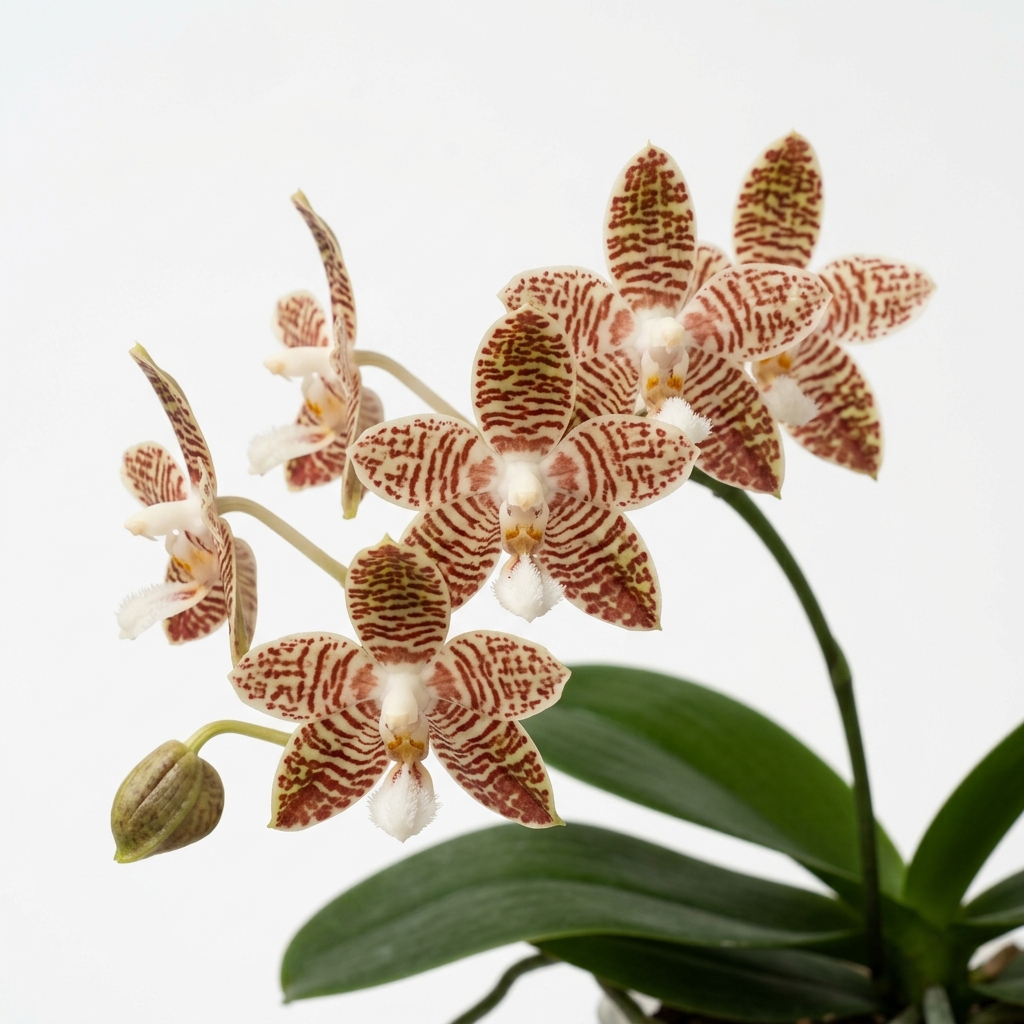
Phalaenopsis Sumatrana is a highly coveted species orchid native to the tropical rainforests of Sumatra, Borneo, and the Malay Peninsula. Renowned among collectors for its star-shaped blossoms and intricate patterning, this warm-growing epiphyte brings a touch of exotic elegance to indoor collections. Unlike mass-market hybrid moth orchids, this species retains a wild, natural charm that appeals to dedicated orchid enthusiasts seeking a rewarding growing experience.
Cultivators value this orchid not only for its striking visual presentation but also for its manageable growth habit and delightful fragrance. It typically thrives in shaded, humid environments, mimicking its native canopy habitat. Understanding its specific cultural requirements is key to successfully maintaining its health and encouraging regular, vibrant blooming cycles.
💡 Did You Know?
Phalaenopsis Sumatrana belongs to the Phalaenopsis orchid group, where flower presentation is often just as important as . White-flowered cultivars are especially valued indoors because their pale blooms reflect well and pair easily with many home, greenhouse, and display settings.
🌿 Botanical Overview
Phalaenopsis Sumatrana is a monopodial epiphyte, meaning it grows upward from a single stem with alternating leaves. In its natural habitat, it clings to tree trunks and branches in low-altitude, humid river valleys. The leaves are typically fleshy, obovate-oblong, and glossy green, reaching up to 8 to 12 inches in length under optimal growing conditions.
The root system is robust and adapted to absorbing moisture and nutrients rapidly from the humid air and passing rain. Because it lacks pseudobulbs, the plant relies on its thick leaves and roots to store water, making it sensitive to prolonged periods of drought. Healthy roots are thick, silvery-green when dry, and bright green when wet.
🌸 Flower Characteristics
The flowers of Phalaenopsis Sumatrana are distinctively star-shaped, measuring approximately 2 to 2.5 inches in diameter. The sepals and petals are typically cream, pale yellow, or white, adorned with horizontal bars of reddish-brown or deep mahogany. This striking pattern provides a high-contrast display that immediately draws the eye.
One of the most defining features of this species is its complex lip, or labellum. The lip is three-lobed, with a white, fleshy midlobe that features a prominent tuft of fine hairs or trichomes. The flowers are borne on pendulous or arching inflorescences that can produce several blooms simultaneously, creating a dramatic and elegant presentation.
Fragrance & Bloom Profile
This species is celebrated for its distinct fragrance, which is often described as a sweet, spicy, or citrus-like scent. The aroma is most pronounced during the morning hours when temperatures begin to rise and light levels increase. It adds an extra layer of sensory appeal to an already visually stunning plant.
Individual blooms are long-lasting, often remaining fresh on the spike for several weeks. The inflorescence itself can be sequential, meaning it may produce new buds over an extended period. Growers should avoid cutting green flower spikes, as they can rebloom in later seasons from the same nodes.
Parentage & Hybrid Lineage
As a pure species rather than a man-made hybrid, Phalaenopsis Sumatrana possesses a stable genetic lineage shaped by natural selection. It belongs to the Polychilos section of the genus Phalaenopsis, which is characterized by star-shaped, fleshy flowers and sequential blooming habits. This evolutionary background makes it highly distinct from standard commercial hybrids.
In orchid breeding, this species has been highly influential. Hybridizers have frequently used it to introduce complex patterning, fragrance, and star-shaped form into modern novelty Phalaenopsis hybrids. Its genetic contributions continue to be highly valued in contemporary orchid registration and breeding programs.
🌱 Growing Conditions
To cultivate Phalaenopsis Sumatrana successfully, one must replicate its warm, humid forest understory habitat. It prefers low to medium indirect light, similar to the light levels suitable for standard moth orchids, though it can tolerate slightly lower light. Direct sunlight must be avoided as it will quickly scorch the tender foliage.
💡 Care Tip
For best results, grow Phalaenopsis Sumatrana in bright filtered with steady and gentle airflow. Avoid placing the plant in harsh midday sun, but do not keep it in a dark corner; weak is one of the most common reasons cultivated orchids refuse to rebloom.
Temperature ranges should remain consistently warm, ideally between 70°F and 85°F during the day, with a slight drop at night to no lower than 60°F to 65°F. High humidity is crucial, ideally maintained between 60% and 80%. Adequate air movement is essential to prevent stagnant air, which can lead to fungal and bacterial infections on the leaves and roots.
Watering, Feeding & Potting Media
Watering should be frequent enough to keep the potting medium evenly moist but never waterlogged. Because this species lacks water-storing pseudobulbs, it should not be allowed to dry out completely. Rainwater, distilled water, or reverse osmosis water is preferred, as the roots can be sensitive to mineral buildup from tap water.
A balanced, diluted orchid fertilizer should be applied weakly weekly during the active growing season. For potting media, a high-quality New Zealand sphagnum moss or a fine-grade bark mix works well. Sphagnum moss helps retain the consistent moisture this species craves, while bark provides excellent drainage and aeration to the root zone.
Blooming Season & Care Notes
While the primary blooming season occurs in the spring and summer, Phalaenopsis Sumatrana can bloom sporadically throughout the year under optimal conditions. The flower spikes emerge from the base of the plant and should be supported gently if they become too pendulous, though many growers prefer to let them hang naturally.
After the blooms fade, do not cut the green spike unless it turns brown and dry. The plant can produce new buds from the old spike in the next blooming cycle. Repotting is best done in the spring, just as new root growth begins, to minimize transplant shock and ensure the plant establishes quickly in its new medium.
⚠️ Common Issues
⚠️ Common Mistake
The most common mistake is by calendar instead of root and potting-media condition. Phalaenopsis roots need moisture and air at the same time, so constantly wet bark or sphagnum can lead to root loss even when the leaves still look healthy.
- Root Rot: Caused by overwatering or compacted media that prevents oxygen from reaching the roots.
- Bud Blast: Sudden dropping of buds due to rapid changes in temperature, low humidity, or drafts.
- Spider Mites and Mealybugs: Common pests that hide in leaf joints and under leaves; treat with insecticidal soap or neem oil.
- Leaf Scorch: Yellow or brown patches on leaves resulting from exposure to direct sunlight.
- Bacterial Soft Rot: Wet, mushy spots on leaves caused by water sitting in the crown or leaf axils overnight.
❓ Frequently Asked Questions
How often should I water my Phalaenopsis Sumatrana?
Water when the potting medium is nearly dry but still retains slight moisture. In sphagnum moss, this usually means watering when the top layer feels dry to the touch. Avoid letting the medium dry out completely, as this species lacks pseudobulbs to store water.
Why are the flower buds on my orchid falling off before opening?
This is known as bud blast and is typically caused by environmental stress, such as a sudden drop in humidity, cold drafts, or dry potting media. Maintaining stable conditions and high humidity will help prevent this issue.
Can I grow Phalaenopsis Sumatrana mounted on wood?
Yes, this species performs exceptionally well when mounted on cork bark or tree fern plaques, provided you can maintain high humidity and water the plant daily to prevent dehydration. Mounting mimics its natural epiphytic growth habit.
Does Phalaenopsis Sumatrana require a winter rest period?
No, this species does not require a dry winter rest. It should receive consistent warmth, moisture, and light year-round, though watering and feeding can be slightly reduced during the darker winter months when growth naturally slows.
⭐ Final Growing Notes
Phalaenopsis Sumatrana is a rewarding species that brings the beauty of wild tropical rainforests into the home. While it requires slightly more attention to humidity and moisture than standard commercial hybrids, its striking barred flowers and sweet fragrance make it an essential addition to any serious orchid collection. With consistent warmth and careful watering, this orchid will thrive and delight for years to come.
⚕️ Health, Safety & Edibility
Understanding how a plant interacts with people, pets, and the surrounding environment is part of responsible cultivation. This section uses conservative, general guidance and does not replace professional medical or veterinary advice.
Human Safety: No published evidence currently identifies species-specific toxicity concerns for Phalaenopsis Sumatrana during normal handling. As with most ornamental plants, it should not be intentionally consumed.
Pet Safety: Published information does not indicate that this orchid commonly poses a toxicity concern for cats or dogs. However, chewing leaves, flowers, roots, or potting media may still cause mild digestive upset.
Edibility: This orchid is cultivated for ornamental display rather than food. Ornamental plants may carry fertilizers, pesticides, or other horticultural treatments that make them unsuitable for consumption.
Skin Contact: Routine handling is not generally associated with skin irritation. Gardeners with sensitive skin may prefer wearing gloves when repotting, pruning, or handling potting media.
🌱 Propagation Tip
Propagation should be approached patiently. Most home growers should wait for natural keikis or divide only mature, healthy plants when the orchid type allows it. Never remove a young growth until it has strong roots and enough leaves to support itself away from the parent plant.
⭐ Expert Advice
Repot after flowering when fresh root tips begin to appear. This timing helps the plant anchor quickly into new bark or sphagnum and reduces stress, especially for orchids grown indoors where airflow, , and drying speed can change from season to season.




Leave A Comment