
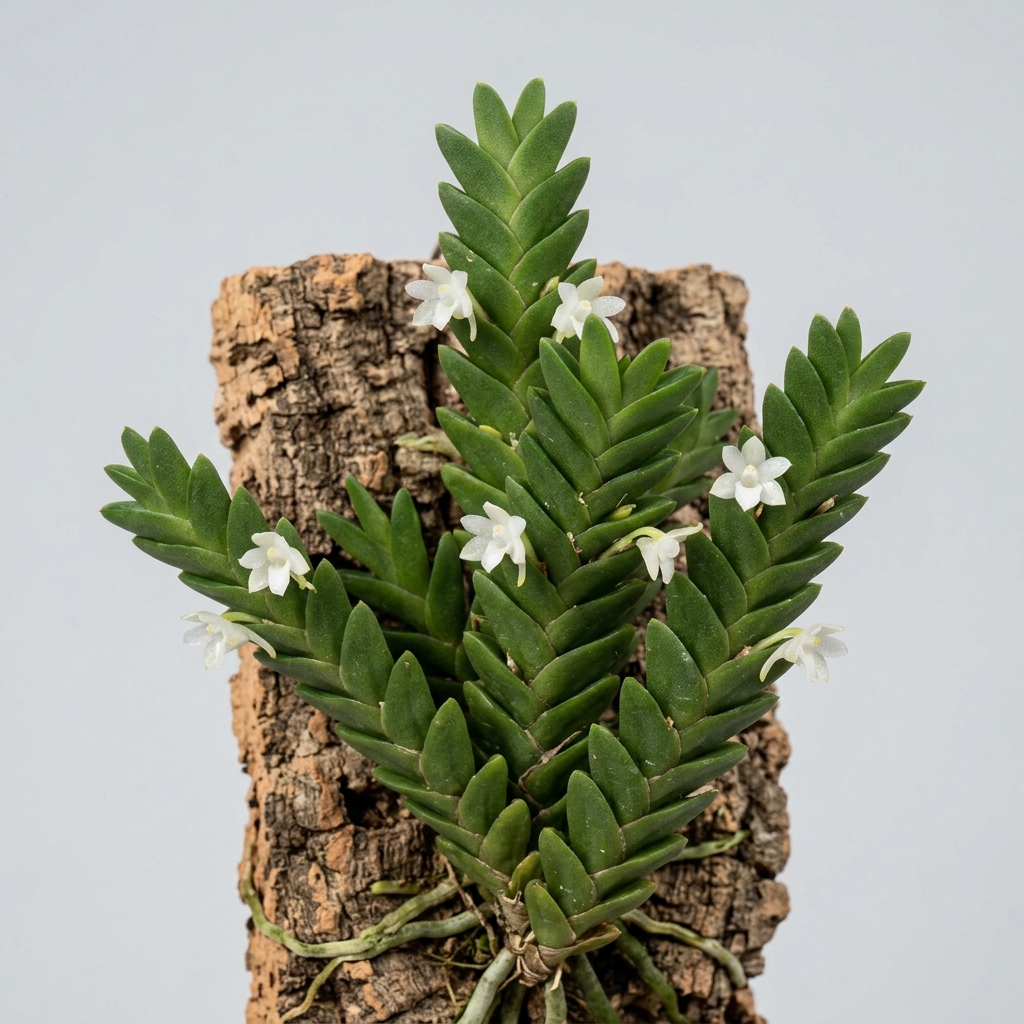
Angraecum Distichum is a captivating miniature epiphytic orchid native to the tropical forests of Central and West Africa. Highly prized by collectors, this species is distinguished less by showy blooms and more by its remarkable, succulent-like foliage that grows in a tightly overlapping, two-ranked pattern. The resulting stems resemble braided green chains or miniature conifer branches, making it an exceptionally decorative plant even when not in flower.
When it does bloom, this charming orchid produces tiny, glistening white flowers that emerge individually from the leaf axils along the stems. Though small, the blossoms display the classic star-like spur structure characteristic of the Angraecum genus. It is an ideal choice for terrarium culture, vivariums, or mounted displays where its unique growth habit and delicate flowers can be appreciated up close.
💡 Did You Know?
The specific epithet distichum refers to the distinctive two-ranked arrangement of its leaves. Unlike most orchids with flat, broad foliage, this species has evolved thick, overlapping, succulent-like leaves that help it store moisture in the tropical canopy, allowing it to survive brief dry spells between rains.
🌿 Botanical Overview
Angraecum Distichum is an epiphytic species native to the hot, humid lowlands and submontane forests of tropical Africa, spanning from Senegal to Uganda and south to Angola. In its natural habitat, it grows on the mossy branches of trees, where it is exposed to high humidity, frequent rainfall, and dappled shade. The plant forms dense, pendulous clumps over time as new stems emerge from the base.
The most striking botanical feature of this orchid is its distichous leaf arrangement. The leaves are small, fleshy, and compressed, clasping the stem in two alternating rows. This growth habit is highly efficient for water retention in canopy environments, giving the plant a distinctively geometric, architectural appearance that sets it apart from typical broad-leafed orchids.
🌸 Flower Characteristics
The flowers of Angraecum Distichum are small, typically measuring only about five to eight millimeters in diameter. They are pristine white or light cream, with a crystalline texture that glistens under bright light. The blossoms emerge singly from the leaf axils along the entire length of mature stems, often appearing in clusters when the plant is well-established.
Each flower features the classic spur at the base of the lip, a signature trait of the Angraecum genus. Because the flowers are so small, they do not dominate the plant visually; instead, they provide a delicate, starry contrast to the dense green foliage, rewarding close inspection by the grower.
Fragrance & Bloom Profile
Like many members of the subtribe Angraecinae, Angraecum Distichum is adapted for moth pollination and is known to produce a fragrance. The scent is typically described as faintly sweet or musky, becoming most noticeable during the evening and night hours. However, due to the diminutive size of the flowers, the fragrance is subtle and may not fill a room unless the plant is in heavy, synchronous bloom.
This species is an opportunistic bloomer, meaning it does not have a single, rigid flowering season. Instead, it can produce flowers intermittently throughout the year, with flushes often triggered by minor environmental shifts, such as a temporary drop in temperature or a brief increase in humidity.
Parentage & Hybrid Lineage
Angraecum Distichum is a naturally occurring species rather than a cultivated hybrid. In the orchid trade, it is grown and appreciated in its pure, wild form. Because of its highly specialized growth habit and small flower size, it has not been widely used in commercial hybridization programs, though it remains a prized species for collectors of miniature orchids.
When purchasing this plant, growers should ensure they are acquiring nursery-propagated specimens. Responsible propagation through division or flasking helps protect wild populations in its native African habitats.
🌱 Growing Conditions
To cultivate Angraecum Distichum successfully, growers should attempt to replicate its native tropical canopy environment. It thrives in bright, indirect light, similar to the conditions preferred by Phalaenopsis orchids. Direct sunlight should be avoided, as it can easily scorch the fleshy, succulent-like leaves.
💡 Care Tip
To mimic its natural canopy habitat, mount this orchid on a cork slab with a small pad of high-quality sphagnum moss. This setup ensures the roots receive the high and rapid wet-dry cycles they require to thrive without suffocating.
Temperature: wise, this orchid prefers warm to intermediate conditions, ideally ranging from 65°F to 85°F during the day, with a slight drop at night. High humidity is crucial for this species; maintaining a relative humidity level of sixty to eighty percent is recommended to prevent the foliage from drying out and dropping prematurely.
Watering, Feeding & Potting Media
Because of its epiphytic nature, Angraecum Distichum requires excellent drainage and airflow around its roots. It is ideally suited for mounting on cork bark or tree fern plaques, with a small pad of high-quality sphagnum moss to retain moisture. Mounted plants will require daily watering or heavy misting in warm weather, as they dry out rapidly.
If grown in a pot, a very open, fine-grade orchid bark mix or pure New Zealand sphagnum moss in a small, net-style pot is recommended. Water the plant thoroughly just as the medium begins to dry out, but never allow the roots to sit in stagnant water. Feed weekly with a highly diluted, balanced orchid fertilizer during periods of active growth.
Blooming Season & Care Notes
While blooms can appear at almost any time of year, the most prolific flowering typically occurs in the spring and summer months. To encourage blooming, maintain consistent humidity and avoid moving the plant frequently, as sudden changes in microclimate can cause developing buds to blast.
After flowering, do not cut back the stems. The flowers emerge from the leaf axils, and the same stems will continue to grow and produce blooms from new axils in later seasons. Repotting or remounting should only be done when the potting medium begins to break down, preferably during the spring when new root growth is active.
⚠️ Common Issues
⚠️ Common Mistake
A frequent error is growing this species in low- environments or standard potting soil. Without at least sixty percent relative and excellent air movement, the dense, overlapping foliage is highly susceptible to fungal rot, while dry air will cause rapid leaf drop.
- Leaf Drop: Often caused by low humidity or chronic underwatering, leading to dry, shriveled stems.
- Root Rot:
Occurs when the plant is grown in dense, poorly draining media or kept constantly soggy. - Bud Blast:
Developing buds may dry up and drop if the plant experiences sudden temperature drops or drafts. - Pests:
Mealybugs and scale can occasionally hide within the dense, overlapping foliage; treat promptly with insecticidal soap or neem oil.
❓ Frequently Asked Questions
How often should I water my Angraecum Distichum?
Watering frequency depends on your growing setup. Mounted plants generally require daily misting or watering, while potted plants should be watered just as the medium approaches dryness, typically every two to three days depending on home humidity.
Can Angraecum Distichum be grown in a terrarium?
Yes, this miniature orchid is exceptionally well-suited for terrariums and vivariums. The enclosed environment provides the high humidity it craves, though adequate internal air circulation must be maintained to prevent fungal issues.
Why are the leaves on my orchid turning yellow?
Yellowing leaves can indicate overwatering, poor drainage, or insufficient light. Ensure the roots are not sitting in water and that the plant is receiving bright, filtered light rather than deep shade.
Does this orchid require a winter rest period?
Angraecum Distichum does not require a strict, dry winter rest. However, reducing watering slightly during the cooler, darker winter months can help mimic natural seasonal cycles and encourage spring blooming.
⭐ Final Growing Notes
Angraecum Distichum is a rewarding and visually unique addition to any orchid collection. By focusing on high humidity, consistent moisture, and excellent air circulation, growers can enjoy both its fascinating, braided foliage and its delicate, starry white blossoms for many years.
⚕️ Health, Safety & Edibility
Understanding how a plant interacts with people, pets, and the surrounding environment is part of responsible cultivation. This section uses conservative, general guidance and does not replace professional medical or veterinary advice.
Human Safety: No published evidence currently identifies species-specific toxicity concerns for Angraecum Distichum during normal handling. As with most ornamental plants, it should not be intentionally consumed.
Pet Safety: Published information does not indicate that this orchid commonly poses a toxicity concern for cats or dogs. However, chewing leaves, flowers, roots, or potting media may still cause mild digestive upset.
Edibility: This orchid is cultivated for ornamental display rather than food. Ornamental plants may carry fertilizers, pesticides, or other horticultural treatments that make them unsuitable for consumption.
Skin Contact: Routine handling is not generally associated with skin irritation. Gardeners with sensitive skin may prefer wearing gloves when repotting, pruning, or handling potting media.
🌱 Propagation Tip
Propagation is typically achieved through careful division of mature, multi-stemmed clumps. Ensure each division has at least three to four healthy, active stems with established root systems, and perform the division during the active spring growing season to minimize transplant shock.
⭐ Expert Advice
For optimal blooming, maintain consistent intermediate temperatures and avoid letting the mounting medium dry out completely for extended periods. Providing a very slight reduction in during the cooler winter months can stimulate a more synchronized, abundant flush of white flowers in the spring.




Leave A Comment