
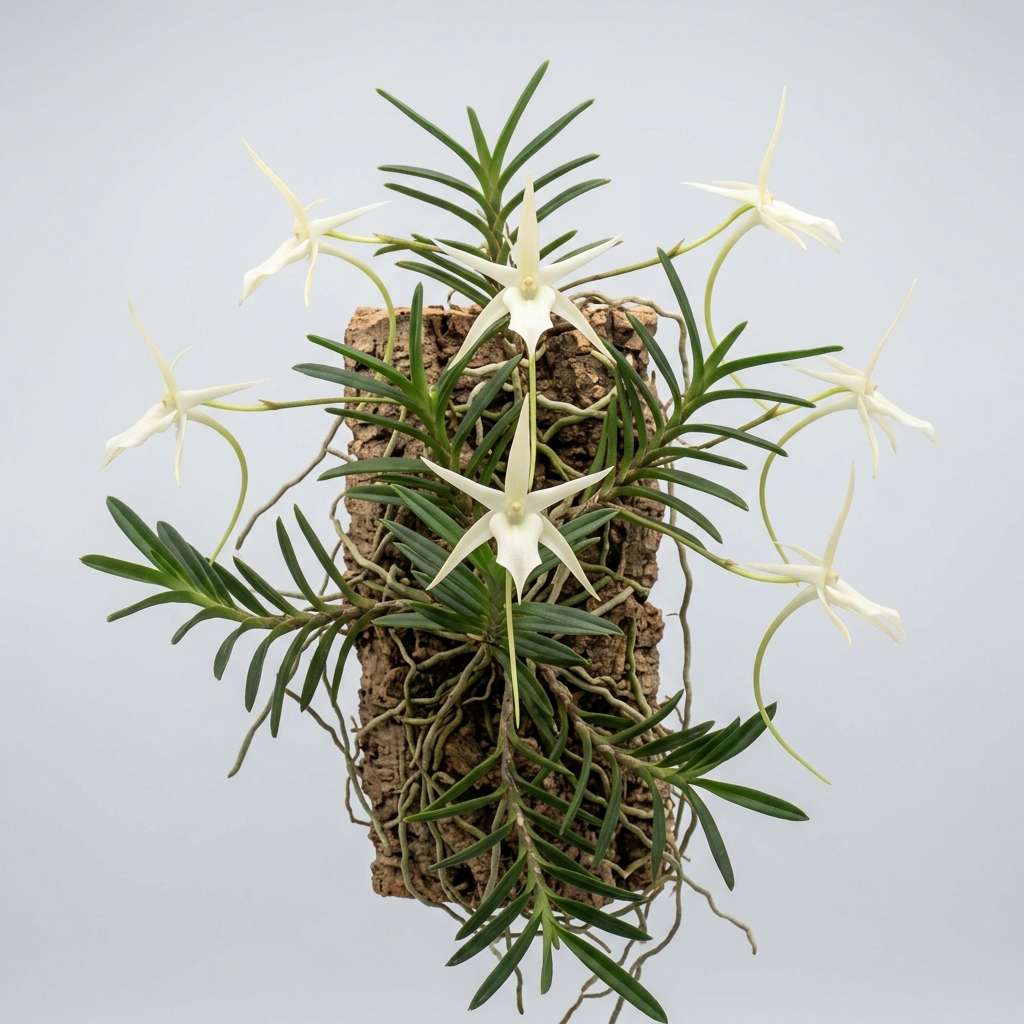
Angraecum Germinyanum is a highly prized orchid species native to the humid montane forests of Madagascar, celebrated among collectors for its distinctive, star-like floral morphology and scrambling growth habit. Unlike many of its more compact relatives, this monopodial orchid produces elongated, branching stems that can scramble or hang gracefully, making it an useful selection for mounted culture. Growers value this orchid for its elegant, ethereal blooms and its fascinating evolutionary adaptations.
In cultivation, this species rewards patient growers with delicate, pure white flowers that feature long, thread-like segments and a dramatic, elongated nectar spur. The blooms appear to float weightlessly among the narrow, dark green leaves, creating a striking visual display. While it requires specific attention to humidity and airflow, Angraecum Germinyanum is a rewarding addition to any intermediate orchid collection, offering a glimpse into the unique flora of Madagascar.
💡 Did You Know?
Angraecum Germinyanum relies on a highly specialized relationship with nocturnal hawkmoths for pollination. The moth must insert its long proboscis deep into the orchid's elongated nectar spur to reach the sweet reward, transferring pollen in the process. This evolutionary marvel makes the orchid's evening essential for its survival in the wild.
🌿 Botanical Overview
Angraecum Germinyanum is a monopodial epiphytic orchid characterized by its thin, branching stems and distichous, leathery leaves. In its natural habitat, it grows on mossy tree trunks and branches in high-elevation forests, where it benefits from constant air movement and high atmospheric moisture. Over time, the plant can form large, loose clumps with a somewhat pendulous or scrambling habit, producing numerous aerial roots along the length of its stems.
The foliage is relatively small and narrow compared to larger Angraecum species, allowing the plant to maintain a delicate, airy appearance even when mature. This growth habit means that the orchid is often grown on mounts or in open baskets, where its roots can ramify freely and dry quickly after watering.
🌸 Flower Characteristics
The flowers of Angraecum Germinyanum are singularly beautiful, showcasing the classic star-like shape characteristic of the genus. Each bloom features narrow, elongated sepals and petals that curve gracefully backward, framing a prominent, shell-shaped lip. The most dramatic feature is the long, slender green-to-white spur that extends from the back of the flower, which in nature holds nectar accessible only to specialized pollinating moths.
The flowers are typically pristine white or pale cream, sometimes with subtle green undertones near the base of the segments. They are produced singly on short inflorescences that emerge from the leaf axils, often appearing to nestle directly against the foliage.
Fragrance & Bloom Profile
True to its evolutionary lineage, Angraecum Germinyanum is highly fragrant, with a scent profile that intensifies significantly after dusk. The fragrance is often described as sweet, spicy, or jasmine-like, designed to attract nocturnal moth pollinators. During the day, the scent is minimal or absent, making the evening transformation a delightful experience for indoor growers.
Individual flowers are long-lasting, often remaining in perfect condition for several weeks if kept in cool, humid conditions. The blooming cycle can occur at various times of the year, though it is most frequently observed in late spring or summer.
Parentage & Hybrid Lineage
Angraecum Germinyanum is a naturally occurring species rather than a man-made hybrid. While it is occasionally used in hybridizing programs to introduce its pendulous habit and delicate flower form to other Angraecoid orchids, registered hybrids remain relatively uncommon in the general trade. In horticultural literature, it is treated as a distinct species, and growers generally seek out pure species specimens to appreciate its natural, wild form.
🌱 Growing Conditions
To cultivate Angraecum Germinyanum successfully, growers should aim to replicate its montane forest habitat. It thrives in bright, filtered light, similar to conditions preferred by Cattleyas, but should be protected from direct, midday sun which can scorch the leaves. An east- or shaded south-facing window is often ideal for indoor cultivation.
💡 Care Tip
To keep your Angraecum Germinyanum thriving, prioritize air movement. Placing a small fan near your growing area prevents stagnant air, which is the primary cause of fungal leaf spots and root rot in high- environments.
Temperature: wise, this orchid prefers intermediate to cool conditions. Daytime temperatures should ideally range between 70 and 80 degrees Fahrenheit, with a distinct drop of 10 to 15 degrees at night to encourage healthy growth and blooming. High humidity, ideally between 60% and 80%, is crucial, accompanied by strong, continuous air movement to prevent fungal pathogens.
Watering, Feeding & Potting Media
Because of its epiphytic nature, Angraecum Germinyanum requires a potting medium that drains rapidly and allows maximum airflow to the roots. Mounting the orchid on cork bark or tree fern slabs with a small pad of sphagnum moss is highly recommended, as this closely mimics its natural growing style. If grown in pots, a very coarse bark mix or an open wooden basket is essential.
Watering should be frequent and thorough, especially during the active growing season. Mounted plants may require daily misting or soaking in warm weather. During the winter, watering should be reduced slightly, allowing the plant to dry out more between applications, but it should never be left completely dry for extended periods. Apply a balanced, diluted orchid fertilizer weekly during periods of active growth.
Blooming Season & Care Notes
The primary blooming season for Angraecum Germinyanum typically spans from late spring through summer, though well-established plants may produce occasional flowers at other times of the year. To encourage robust blooming, ensure the plant receives a slight cooling period in the autumn and winter, along with a modest reduction in watering.
Avoid cutting the short flower spikes after the blooms fade, as they do not typically rebloom from the same spike, but allowing them to dry naturally prevents introducing pathogens. Repotting or remounting should be done only when absolutely necessary, as Angraecums are notorious for resentful root disturbance.
⚠️ Common Issues
⚠️ Common Mistake
The most common mistake is potting this orchid in heavy, dense soil or fine bark. Angraecum Germinyanum has thick, aerial roots that require rapid drying and constant oxygen; keeping them in compacted media will quickly lead to root decay.
- Root Rot: Caused by waterlogged, poorly draining media or lack of adequate airflow around the root zone.
- Leaf Spotting: Often a result of water sitting on the foliage overnight in cool, stagnant conditions.
- Dehydration: Indicated by shriveled leaves and dry, brittle roots, usually due to insufficient humidity or infrequent watering of mounted specimens.
- Pests: Scale and mealybugs can occasionally hide in the leaf axils; treat promptly with insecticidal soap or horticultural oil.
- Bud Blast: Sudden dropping of buds before opening, often triggered by rapid changes in temperature, humidity, or drafty conditions.
❓ Frequently Asked Questions
How often should I water my mounted Angraecum Germinyanum?
Mounted specimens typically require daily watering or misting during the warm spring and summer months, as the roots dry out very quickly. In winter, reduce watering to every two to three days, depending on your indoor humidity levels.
Can Angraecum Germinyanum be grown under LED lights?
Yes, this orchid adapts well to artificial lighting. Position the plant under broad-spectrum LED grow lights, ensuring it receives moderate to bright intensity for 12 to 14 hours a day, while keeping a safe distance to prevent heat stress.
Why are the leaves on my orchid turning yellow and dropping?
Yellowing leaves can indicate overwatering, poor drainage, or root rot. Check the root system immediately; if the roots are mushy and brown, repot the plant into fresh, airy media and adjust your watering schedule.
Does Angraecum Germinyanum require a winter rest period?
It does not require a severe dry rest, but it benefits from a slight reduction in water and fertilizer during the cooler winter months, along with cooler night temperatures, to stimulate the next season’s blooms.
⭐ Final Growing Notes
Angraecum Germinyanum is an exquisite orchid that rewards the attentive grower with its unique, starry blooms and haunting evening fragrance. By providing high humidity, excellent air circulation, and a free-draining root environment, you can enjoy the wild, elegant beauty of this Madagascan treasure in your own home.
⚕️ Health, Safety & Edibility
Understanding how a plant interacts with people, pets, and the surrounding environment is part of responsible cultivation. This section uses conservative, general guidance and does not replace professional medical or veterinary advice.
Human Safety: No published evidence currently identifies species-specific toxicity concerns for Angraecum Germinyanum during normal handling. As with most ornamental plants, it should not be intentionally consumed.
Pet Safety: Published information does not indicate that this orchid commonly poses a toxicity concern for cats or dogs. However, chewing leaves, flowers, roots, or potting media may still cause mild digestive upset.
Edibility: This orchid is cultivated for ornamental display rather than food. Ornamental plants may carry fertilizers, pesticides, or other horticultural treatments that make them unsuitable for consumption.
Skin Contact: Routine handling is not generally associated with skin irritation. Gardeners with sensitive skin may prefer wearing gloves when repotting, pruning, or handling potting media.
🌱 Propagation Tip
This species is best propagated by division or by carefully removing basal keikis once they have developed several strong roots of their own. Avoid dividing the plant too frequently, as Angraecums prefer to grow into large, undisturbed clumps.
⭐ Expert Advice
When remounting or repotting, try to preserve as many active root tips as possible. Soak the roots in warm water beforehand to make them more pliable, and secure the plant firmly to its new mount to prevent movement, which halts new root growth.




Leave A Comment