
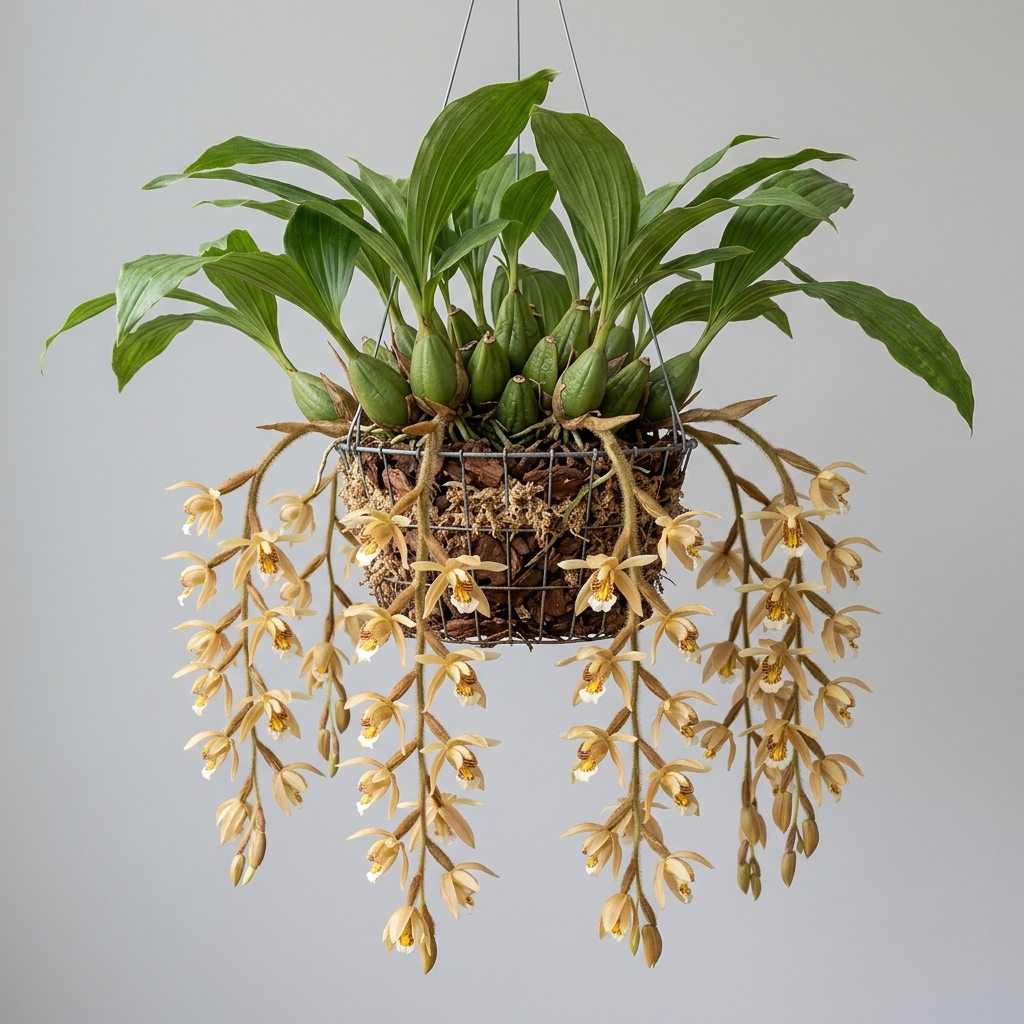
Coelogyne Tomentosa is a highly sought-after epiphytic orchid species celebrated for its dramatic, cascading floral displays. Often referred to as the necklace orchid, this plant produces long, pendulous inflorescences that drape elegantly over the sides of its container, making it a favorite choice for hanging baskets and elevated displays.
Cultivators value this orchid for its vigorous growth habit and the sheer volume of blooms it can produce under the right conditions. Its striking combination of warm-toned petals and intricate lip markings, paired with a relatively robust nature, makes it an excellent choice for intermediate orchid enthusiasts looking to expand their collection with a classic pendulous species.
💡 Did You Know?
The species name tomentosa refers to the fine, velvety, brownish hairs that cover the pendulous flower spikes of this orchid. This fuzzy coating, known as tomentum, helps protect the developing buds from excess moisture and pests in its native tropical rainforest canopy before they open into spectacular cascading chains.
🌿 Botanical Overview
Coelogyne Tomentosa is native to the rainforests of Southeast Asia, particularly Malaysia and Sumatra, where it grows as an epiphyte on moss-covered tree branches. It features prominent, pear-shaped pseudobulbs that are tightly clustered, each bearing one or two pleated, leathery green leaves. These pseudobulbs act as water storage organs, helping the plant survive brief dry spells in its natural canopy habitat.
The most defining botanical feature of this species is its pendulous inflorescence, which emerges from the base of mature pseudobulbs. The flower spikes are covered in fine, brownish hairs, which gives the species its botanical name. These spikes can grow up to several feet in length, carrying dozens of closely spaced flowers that open simultaneously for a spectacular display.
🌸 Flower Characteristics
The flowers of Coelogyne Tomentosa are moderately sized, typically measuring around two to three inches across. The sepals and petals are narrow and elegant, presenting in shades of pale yellow, cream, or light tan. This subtle background color contrasts beautifully with the highly detailed, three-lobed lip, which features intricate veins of dark brown, rust, and bright yellow.
The cascading presentation of the flowers is truly dramatic. Because the spikes hang straight down, the flowers are oriented to face outward and downward, creating a dense chain of blooms. The overall structure of the lip is designed to attract specific pollinators in the wild, featuring raised ridges and a textured surface that adds depth to each individual blossom.
Fragrance & Bloom Profile
The fragrance of Coelogyne Tomentosa is a subject of much discussion among growers, as its scent profile can vary based on environmental factors and individual plant clones. Many cultivators report a sweet, spicy, or slightly musky aroma that is most pronounced during the morning hours when humidity is high and temperatures begin to rise.
Individual blooms generally last for two to three weeks, provided they are kept in cool, draft-free conditions. Because the entire spike tends to open almost all at once, the visual impact is concentrated and highly rewarding. To maximize the lifespan of the flowers, growers should avoid getting water directly on the petals during routine misting or watering.
Parentage & Hybrid Lineage
As a naturally occurring species rather than a man-made hybrid, Coelogyne Tomentosa carries a pure genetic lineage that has evolved to thrive in specific tropical microclimates. In historical botanical literature, it has occasionally been confused with or classified alongside Coelogyne massangeana, though modern taxonomists generally treat them as distinct or closely related entities within the genus.
While primarily grown as a species, Coelogyne Tomentosa has been used occasionally in hybridization programs to introduce its pendulous blooming habit and robust growth to new crosses. However, registered hybrids utilizing this species are relatively uncommon in the mass market, and most plants found in cultivation today are species selections maintained by division or seed propagation.
🌱 Growing Conditions
To cultivate Coelogyne Tomentosa successfully, mimicking its native canopy environment is essential. It thrives in bright, filtered light, similar to the conditions preferred by many Cattleya orchids. Direct midday sunlight must be avoided to prevent the thin, pleated leaves from scorching, but insufficient light will result in weak pseudobulbs and a lack of flowers.
💡 Care Tip
Always grow this orchid in a hanging basket or a highly elevated position. Because the flower spikes emerge from the base of the pseudobulbs and grow straight downward, standard pots will trap the spikes, causing the buds to rot or fail to open properly.
Temperature: wise, this orchid prefers intermediate to warm conditions, with daytime temperatures ranging from 75 to 85 degrees Fahrenheit and a slight drop at night to stimulate healthy growth. High humidity of at least 60% is critical, especially when the plant is actively growing. Good air circulation is equally important to prevent stagnant air from encouraging fungal pathogens on the leaves and roots.
Watering, Feeding & Potting Media
During the active spring and summer growing season, Coelogyne Tomentosa requires abundant water and should not be allowed to dry out completely. The potting medium should remain evenly moist but never waterlogged. A balanced, diluted orchid fertilizer applied every two weeks will support the rapid development of new pseudobulbs and prepare the plant for its blooming cycle.
Because of its strictly pendulous flowering habit, this orchid is best grown in open wooden baskets or net pots lined with coconut fiber or sphagnum moss. This allows the flower spikes to emerge from the base of the plant and hang naturally without obstruction. A well-draining medium consisting of medium-grade fir bark, perlite, and chopped sphagnum moss works exceptionally well to retain moisture while ensuring excellent aeration.
Blooming Season & Care Notes
The primary blooming season for Coelogyne Tomentosa occurs from late spring through autumn, often triggered by the maturity of the current season’s pseudobulbs. Once the flower spikes begin to emerge from the base of the pseudobulbs, growers must exercise caution not to let water accumulate in the developing sheath, as this can cause the buds to rot before they open.
After flowering is complete, the plant enters a semi-dormant period during the cooler winter months. During this time, watering should be reduced significantly, allowing the medium to dry out slightly between waterings, and fertilizer should be withheld entirely. Repotting or dividing should only be performed in the spring when new root growth is visible at the base of the newest pseudobulbs.
⚠️ Common Issues
⚠️ Common Mistake
A frequent error is overwatering during the winter rest period. While this orchid loves abundant moisture during active summer growth, keeping the medium wet in winter when the plant is dormant will quickly lead to root rot and the loss of the plant.
- Root rot: Caused by overwatering or compacted, poorly draining potting media that suffocates the roots.
- Bud blast: Occurs when developing flower spikes experience sudden drops in humidity, extreme temperature fluctuations, or water accumulation on the buds.
- Leaf spotting: Fungal or bacterial spots can develop on the pleated leaves if air circulation is inadequate in high-humidity environments.
- Dehydration: Indicated by shriveled pseudobulbs and wrinkled leaves, usually due to underwatering or a compromised root system.
- Pests: Spider mites, mealybugs, and scale insects can occasionally colonize the undersides of the leaves and the crevices of the pseudobulbs.
❓ Frequently Asked Questions
Why is my Coelogyne Tomentosa not blooming?
The most common reason for a lack of blooms is insufficient light during the growing season, which prevents the pseudobulbs from storing enough energy. Ensure the plant receives bright, filtered light and a slight drop in night temperatures to encourage spike initiation.
Can I grow Coelogyne Tomentosa in a standard plastic pot?
While possible, growing this orchid in a standard plastic pot is not recommended because its flower spikes grow straight downward from the base of the pseudobulbs. A hanging basket, net pot, or mount is highly preferred to allow the spikes to cascade naturally without getting trapped or damaged.
How often should I water Coelogyne Tomentosa in the winter?
During the winter rest period, reduce watering significantly. Water just enough to prevent the pseudobulbs from shriveling excessively. Typically, watering once every ten to fourteen days is sufficient, depending on your indoor humidity levels.
What should I do if the pseudobulbs start to shrivel?
Slight shriveling of older pseudobulbs is normal during the winter rest or during active flowering. However, severe shriveling of new growth indicates dehydration. Check the roots first; if they are healthy, increase watering frequency. If the roots are dead and mushy, repot the plant in fresh media and reduce watering until new roots emerge.
⭐ Final Growing Notes
Coelogyne Tomentosa remains one of the most rewarding pendulous orchids for indoor and greenhouse growers alike. By providing high humidity, bright indirect light, and a hanging container that accommodates its cascading habit, you can enjoy spectacular chains of fragrant, intricately detailed flowers year after year.
⚕️ Health, Safety & Edibility
Understanding how a plant interacts with people, pets, and the surrounding environment is part of responsible cultivation. This section uses conservative, general guidance and does not replace professional medical or veterinary advice.
Human Safety: No published evidence currently identifies species-specific toxicity concerns for Coelogyne Tomentosa during normal handling. As with most ornamental plants, it should not be intentionally consumed.
Pet Safety: Published information does not indicate that this orchid commonly poses a toxicity concern for cats or dogs. However, chewing leaves, flowers, roots, or potting media may still cause mild digestive upset.
Edibility: This orchid is cultivated for ornamental display rather than food. Ornamental plants may carry fertilizers, pesticides, or other horticultural treatments that make them unsuitable for consumption.
Skin Contact: Routine handling is not generally associated with skin irritation. Gardeners with sensitive skin may prefer wearing gloves when repotting, pruning, or handling potting media.
🌱 Propagation Tip
Propagate this orchid by division during the spring when new root growth begins. Ensure each division has at least three to four healthy, mature pseudobulbs to provide the energy needed for the plant to establish itself and bloom in the following season.
⭐ Expert Advice
To achieve the most dramatic floral display, avoid repotting this species too frequently. It prefers to grow into a crowded specimen, and a tightly packed basket of pseudobulbs will produce a spectacular, synchronized cascade of multiple flower spikes simultaneously.

Leave A Comment