
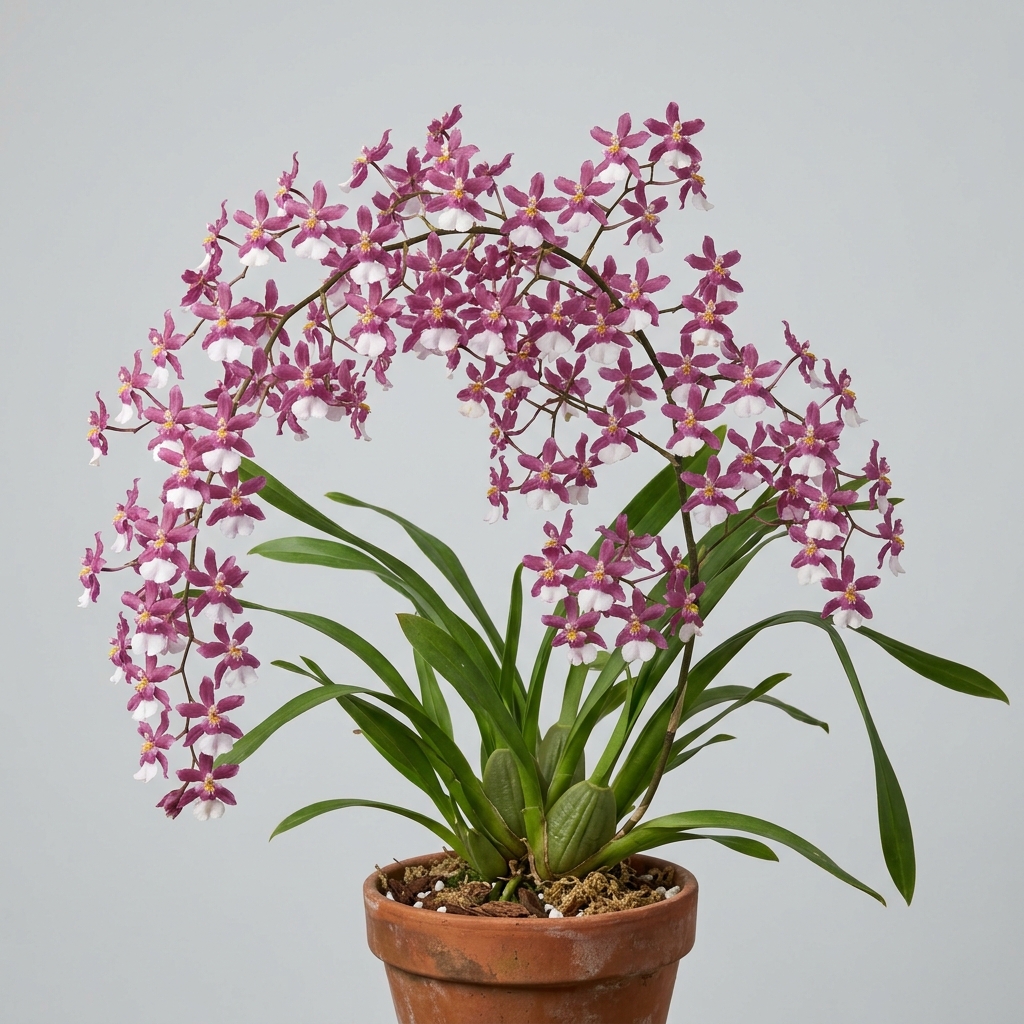
Oncidium Incurvum is a highly celebrated orchid species within the Oncidium genus, cherished by collectors for its spectacular, arching flower spikes and delicate, multi-colored blooms. Originating from the mountainous regions of Mexico, this epiphytic orchid produces elegant pseudobulbs that support long, grassy leaves, creating an attractive structural profile even when not in bloom. Growers particularly value this orchid for its reliable growth habit and its ability to produce hundreds of small, fragrant flowers on a single, branching inflorescence.
In cultivation, Oncidium Incurvum is recognized as an adaptable and rewarding plant, making it an excellent choice for intermediate orchid enthusiasts looking to expand their collection. Its cascading sprays of rose, purple, and white blossoms provide a dramatic visual display that can last for several weeks. By understanding its natural montane habitat, growers can easily replicate the cool-to-intermediate conditions this orchid needs to thrive and bloom abundantly year after year.
💡 Did You Know?
Oncidium Incurvum is capable of producing over one hundred flowers on a single, highly branched inflorescence. In its native Mexican habitat, these massive, cascading floral sprays drape elegantly from tree branches, creating a spectacular natural display that fills the surrounding forest air with a sweet, vanilla-like to attract local pollinators.
🌿 Botanical Overview
Oncidium Incurvum is an epiphytic orchid native to the damp, montane forests of Mexico, where it typically grows on tree branches at elevations ranging from 1,300 to 2,200 meters. This elevation dictates its preference for cooler to intermediate temperatures compared to lowland tropical orchids. The plant features compressed, ovate pseudobulbs that are closely grouped, each topped with two to three linear, arching leaves that can reach up to 45 centimeters in length.
The root system of Oncidium Incurvum is fine and fibrous, designed to cling to mossy bark and rapidly absorb moisture and nutrients from passing rain and mist. In its native habitat, the plant experiences distinct seasonal shifts in moisture and temperature, which influence its growth and flowering cycles. Understanding this epiphytic nature is key to successful container cultivation, as the roots require excellent aeration and must never remain in stagnant water.
🌸 Flower Characteristics
The defining feature of Oncidium Incurvum is its magnificent, branched inflorescence, which can grow up to 1.5 meters in length and carry dozens, sometimes hundreds, of individual flowers. The flowers themselves are relatively small, typically measuring around 2 to 3 centimeters across, but their sheer quantity creates a stunning, cloud-like effect. The sepals and petals are narrow, wavy, and reflexed, exhibiting a beautiful combination of rose-purple and pure white banding.
The lip, or labellum, is three-lobed and prominently displayed, featuring a bright white base with rose-colored markings near the callus. The column is short and curved, which is a characteristic feature that contributes to the specific epithet “incurvum.” The overall presentation of the flower spike is arching or pendulous, requiring staking in cultivation to support the weight of the massive bloom display.
Fragrance & Bloom Profile
Oncidium Incurvum is widely celebrated for its sweet, pleasant fragrance, which is often described as reminiscent of vanilla, honey, or fresh wildflowers. The scent is typically most intense during the morning hours when temperatures begin to rise and light levels increase, filling the growing space with a delicate perfume. This fragrance, combined with the visual impact of the dense flower sprays, makes it a highly desirable addition to indoor growing spaces and greenhouses.
The blooms are remarkably long-lasting, often remaining fresh for six to eight weeks under optimal environmental conditions. To maximize the lifespan of the flowers, growers should maintain stable temperatures and avoid spraying water directly onto the delicate petals, which can cause spotting or premature decline.
Parentage & Hybrid Lineage
As a naturally occurring species rather than a man-made hybrid, Oncidium Incurvum possesses a pure genetic lineage that has been used extensively in orchid breeding. It is a parent to numerous popular Oncidium intergeneric hybrids, valued for passing down its vigorous growth habit, multi-branched inflorescences, and sweet fragrance. In historical botanical literature, it is sometimes classified under various synonyms, but modern horticultural taxonomy firmly recognizes it as a distinct species within the Oncidium genus.
When purchasing this orchid, growers should look for reputable nurseries that propagate plants via tissue culture or division rather than wild collection. This ensures genetic stability, healthier plants, and the preservation of wild populations in their native Mexican habitats.
🌱 Growing Conditions
To cultivate Oncidium Incurvum successfully, growers should aim to replicate its native montane forest environment. It thrives in bright, indirect light, similar to the dappled sunlight found under a forest canopy. An east- or shaded south-facing window is ideal, or growers can use modern LED grow lights to provide consistent illumination. The leaves should be a healthy, light green color; dark green leaves indicate insufficient light, while yellow or reddish leaves suggest the light is too intense.
💡 Care Tip
Provide gentle, continuous air circulation around your Oncidium Incurvum. Good airflow mimics its native montane forest habitat, helping to dry excess moisture on the leaves and preventing fungal spotting, while also keeping the fine root system healthy.
Temperature management is crucial for this species. It prefers intermediate to cool conditions, with daytime temperatures ranging from 18 to 24 degrees Celsius and a distinct drop at night to around 12 to 15 degrees Celsius. This diurnal temperature fluctuation is essential for triggering the development of flower spikes. High humidity, ideally between 50% and 70%, combined with gentle, continuous airflow, will prevent fungal issues and keep the plant vigorous.
Watering, Feeding & Potting Media
Watering Oncidium Incurvum requires a balanced approach that keeps the potting medium evenly moist but never waterlogged. During the active growing season in spring and summer, the plant should be watered thoroughly as soon as the top inch of the medium dries out. In the winter, when growth slows, watering frequency should be reduced, allowing the medium to dry out slightly more between waterings, though the pseudobulbs should never be allowed to shrivel severely.
A high-quality, free-draining potting mix is essential for this orchid’s fine root system. A mixture of fine to medium fir bark, perlite, and a small amount of sphagnum moss works exceptionally well in plastic or clay pots. Feeding should be done weekly with a balanced, diluted orchid fertilizer at one-quarter to one-half strength during the active growth phase, followed by a monthly flush with pure water to remove accumulated mineral salts.
Blooming Season & Care Notes
Oncidium Incurvum typically initiates its blooming cycle in late summer or autumn, with the flower spikes developing over several weeks before opening. As the long inflorescence grows, it is highly recommended to provide a sturdy stake to support the weight of the developing buds and prevent the spike from bending or breaking. Once the flowers have completely faded, the entire spike should be cut back close to the base of the pseudobulb using sterilized cutting tools.
Repotting is best performed in the spring, just as new growth and fresh root tips begin to emerge from the base of the newest pseudobulbs. This species resents having its roots disturbed, so repotting should only be done every two to three years, or when the potting medium begins to decompose and lose its structure.
⚠️ Common Issues
⚠️ Common Mistake
A frequent mistake is keeping the potting medium constantly soggy. Oncidium Incurvum has fine roots that rot easily if deprived of oxygen. Always allow the top inch of the medium to dry out before again, and never let the pot sit in standing water.
- Root Rot:
Caused by overwatering or compacted potting media that deprives the fine roots of oxygen. - Pseudobulb Shriveling: Indicates severe dehydration, which can be due to underwatering or a loss of roots from root rot.
- Leaf Spotting: Fungal or bacterial spots can develop if water is left on the foliage overnight or if air circulation is inadequate.
- Bud Blast:
The sudden drying and dropping of unopened flower buds, often triggered by sudden changes in temperature, low humidity, or drafts. - Pests:
Spider mites, mealybugs, and scale can occasionally infest the crevices of the pseudobulbs and leaves; treat promptly with insecticidal soap or neem oil.
❓ Frequently Asked Questions
How often should I water my Oncidium Incurvum?
Watering frequency depends on your home’s environment, but generally, you should water when the top inch of the potting medium feels dry. During the active spring and summer growing season, this may be every 5 to 7 days, while in the winter rest period, it can be reduced to once every 10 to 14 days.
Why are the pseudobulbs on my orchid shriveling?
Shriveled pseudobulbs usually indicate that the plant is not absorbing enough water. This can be caused by simple underwatering or, conversely, by overwatering which has rotted the root system, leaving the plant unable to take up moisture. Check the roots to determine the exact cause.
Does Oncidium Incurvum require a winter rest?
Yes, Oncidium Incurvum benefits from a slight winter rest. During the cooler winter months, reduce watering frequency and suspend fertilizer applications. Keep the plant in a cool location with bright light to mimic its natural seasonal cycle, which helps promote healthy spring growth.
Can I grow this orchid under artificial LED lights?
Yes, Oncidium Incurvum adapts very well to indoor cultivation under LED grow lights. Position the plant so it receives moderate to high light levels, ensuring the light source is not close enough to cause heat damage or leaf scorch. Monitor leaf color to ensure it remains a healthy light green.
⭐ Final Growing Notes
Oncidium Incurvum remains a timeless favorite among orchid enthusiasts due to its spectacular floral displays and delightful fragrance. While it requires a bit of attention to temperature fluctuations and watering consistency, its robust nature makes it a highly rewarding species to cultivate. By providing bright indirect light, cool-to-intermediate temperatures, and excellent air movement, you can enjoy the cascading, vanilla-scented blooms of this magnificent Mexican orchid for many years to come.
⚕️ Health, Safety & Edibility
Understanding how a plant interacts with people, pets, and the surrounding environment is part of responsible cultivation. This section uses conservative, general guidance and does not replace professional medical or veterinary advice.
Human Safety: No published evidence currently identifies species-specific toxicity concerns for Oncidium Incurvum during normal handling. As with most ornamental plants, it should not be intentionally consumed.
Pet Safety: Published information does not indicate that this orchid commonly poses a toxicity concern for cats or dogs. However, chewing leaves, flowers, roots, or potting media may still cause mild digestive upset.
Edibility: This orchid is cultivated for ornamental display rather than food. Ornamental plants may carry fertilizers, pesticides, or other horticultural treatments that make them unsuitable for consumption.
Skin Contact: Routine handling is not generally associated with skin irritation. Gardeners with sensitive skin may prefer wearing gloves when repotting, pruning, or handling potting media.
🌱 Propagation Tip
Propagate Oncidium Incurvum by division during spring repotting. Ensure each division has at least three to four healthy, mature pseudobulbs with active new growth. Use sterilized tools to make clean cuts and pot them in a fresh, fine-grade orchid mix.
⭐ Expert Advice
To trigger reliable blooming, ensure your orchid experiences a distinct drop of about 5 to 8 degrees Celsius at night during the late summer. This natural cooling cue, combined with bright indirect , is essential for initiating the development of its spectacular flower spikes.

Leave A Comment