
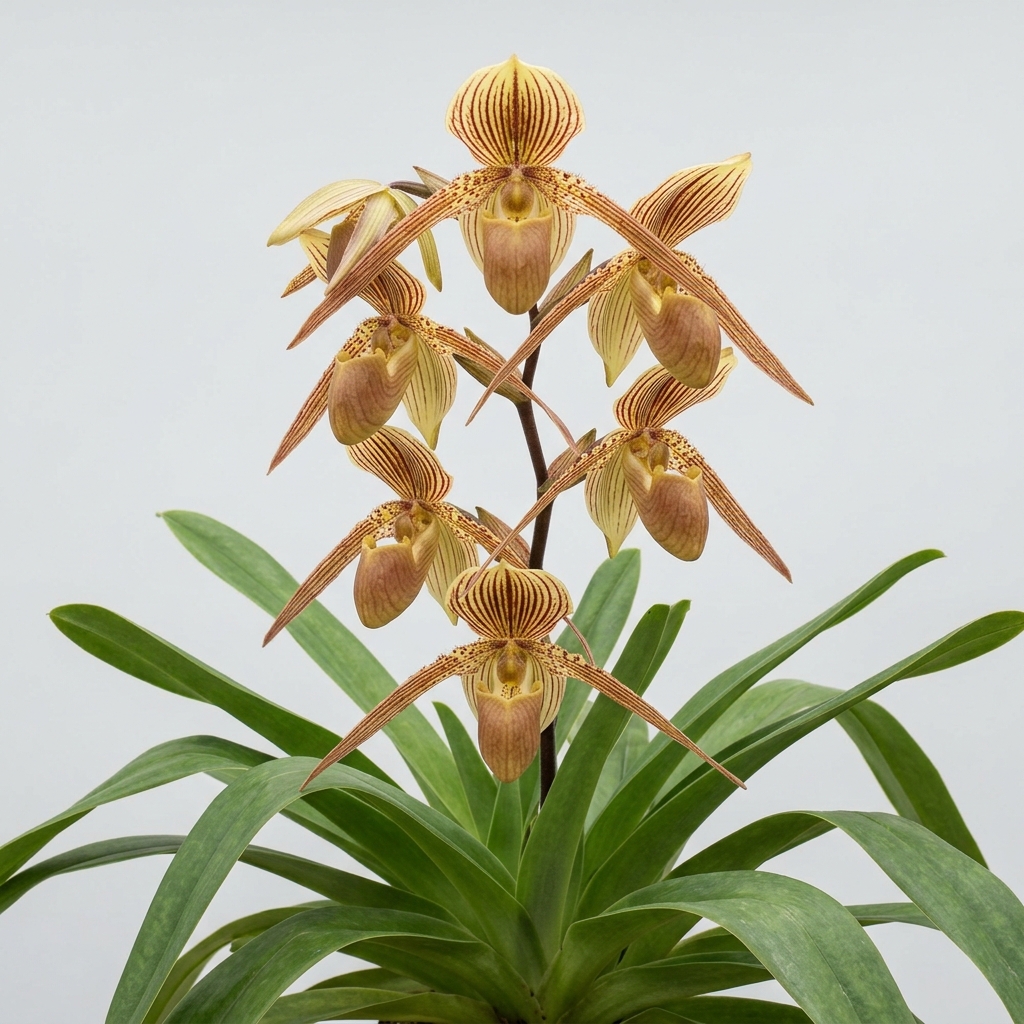
Paphiopedilum Kolopakingii stands as one of the most majestic and visually striking members of the slipper orchid genus. Highly prized by collectors for its impressive scale and multi-flowered presentation, this orchid is native to the humid riverine forests of Borneo. Unlike smaller, single-flowered slipper orchids, this species is celebrated for its ability to produce massive, arching flower spikes that command attention in any greenhouse or indoor growing space.
Cultivating this remarkable orchid requires patience and an understanding of its specific environmental preferences. Because of its large vegetative growth and multi-floral blooming habit, it demands consistent care, stable humidity, and careful watering. For dedicated orchid enthusiasts, the reward of a fully mature specimen in bloom is well worth the investment of time and space required to accommodate its grand proportions.
💡 Did You Know?
Paphiopedilum Kolopakingii is part of the Paphiopedilum orchid group, a favorite among growers because its flowers, growth habit, and care needs make it useful for comparing cultivated orchids within the same . Observing its leaves, roots, and bloom spikes can help growers understand how this cultivar responds to indoor conditions.
🌿 Botanical Overview
Paphiopedilum Kolopakingii is a terrestrial or lithophytic orchid characterized by its massive vegetative size. The strap-shaped, leathery leaves can grow exceptionally long, often reaching up to three feet in length on mature specimens. These light green, glossy leaves grow in a fan-shaped arrangement, creating a substantial footprint that requires ample bench space.
In its natural habitat, this orchid grows in shaded, humid environments, often near watercourses where its roots can access constant moisture and high atmospheric humidity. This evolutionary background dictates its care requirements in cultivation, where mimicking these stable, humid conditions is key to maintaining healthy foliage and encouraging successful blooming cycles.
🌸 Flower Characteristics
The defining feature of Paphiopedilum Kolopakingii is its spectacular multifloral inflorescence. A single, robust flower spike can emerge and bear anywhere from six to over a dozen flowers simultaneously, presenting a dramatic tiered display. The flowers themselves are moderately sized, featuring a distinctive creamy-yellow or pale green dorsal sepal adorned with vertical reddish-brown stripes.
The petals are long, narrow, and slightly twisted, extending outward and downward with similar dark striping. The pouch, or labellum, is typically a tawny-brown or copper hue, shaped like a delicate slipper. This intricate color pattern and structural complexity make each bloom a fascinating subject for close study.
Fragrance & Bloom Profile
While some slipper orchids possess subtle scents, the fragrance of Paphiopedilum Kolopakingii is not consistently documented in common grower references. Most cultivators report that the flowers are essentially unscented, or carry only a very faint, earthy aroma that is difficult to detect.
The lack of a strong fragrance is easily overlooked given the sheer longevity of the bloom cycle. Individual flowers open sequentially or nearly simultaneously and can remain in pristine condition for several weeks. A well-managed spike can provide an impressive display that lasts for up to two months, making it a highly rewarding addition to an orchid collection.
Parentage & Hybrid Lineage
Paphiopedilum Kolopakingii is a naturally occurring species rather than a man-made hybrid, though select line-bred cultivars exist within the horticultural trade. In orchid breeding, it is highly valued as a parent plant due to its ability to pass down its multi-flowered habit and robust growth characteristics to its offspring.
Hybrids derived from this species often exhibit increased flower counts and larger overall plant sizes. When researching specific plants, growers should note that while the species itself is distinct, various awarded clonal selections may display slight variations in flower color intensity, petal length, and overall vigor.
🌱 Growing Conditions
To cultivate this orchid successfully, providing bright, filtered light is essential. It generally prefers slightly higher light levels than single-flowered Paphiopedilum species, but direct afternoon sunlight must be avoided to prevent leaf scorch. East- or shaded south-facing windows, or professional LED grow lights, are typically ideal.
💡 Care Tip
For best results, grow Paphiopedilum Kolopakingii in bright filtered with steady and gentle airflow. Avoid placing the plant in harsh midday sun, but do not keep it in a dark corner; weak is one of the most common reasons cultivated orchids refuse to rebloom.
Temperature ranges should be kept warm to intermediate, ideally between 70°F and 85°F during the day, with a slight drop of 10°F at night to stimulate growth. High humidity of 60% to 80% is crucial, accompanied by gentle, continuous airflow to prevent stagnant air, which can invite fungal pathogens to settle on the large leaves.
Watering, Feeding & Potting Media
Unlike some orchids that require a distinct dry period, Paphiopedilum Kolopakingii prefers to remain evenly moist throughout the year. The potting medium should never be allowed to dry out completely, nor should it remain soggy. Watering should be adjusted based on seasonal evaporation rates, ensuring the roots receive fresh, oxygenated water regularly.
A well-draining potting mix is vital to prevent root rot. A combination of medium-grade fir bark, perlite, charcoal, and a small amount of chopped sphagnum moss works exceptionally well. Feed the plant with a diluted, balanced orchid fertilizer weekly during the active growing season, flushing the pot with pure water once a month to prevent salt buildup.
Blooming Season & Care Notes
The primary blooming season typically occurs during the spring and summer months, though mature plants under optimal conditions may occasionally bloom at other times. The development of the flower spike is a slow process that requires patience; it can take several months from the first appearance of the sheath to the opening of the first buds.
Once the blooming cycle is complete, the old flower spike should be cut back to the base of the growth. Repotting is best performed every two years, immediately after flowering has finished and new root growth is initiated. This ensures the potting medium remains fresh and does not break down, which would restrict oxygen to the roots.
⚠️ Common Issues
⚠️ Common Mistake
The most common mistake is by calendar instead of root and potting-media condition. Paphiopedilum roots need moisture and air at the same time, so constantly wet bark or sphagnum can lead to root loss even when the leaves still look healthy.
- Root Rot:
Caused by overwatering or compacted, decaying potting media that deprives roots of oxygen. - Leaf Scorch: Appears as bleached or brown patches on the leaves, resulting from exposure to direct, unfiltered sunlight.
- Bud Blast:
The premature drying and dropping of flower buds, often triggered by sudden drops in humidity or temperature fluctuations. - Mealybugs and Scale: Pests that tend to hide in the tight crevices of the leaf fans and beneath the flower bracts.
- Bacterial Soft Rot: Can develop if water is allowed to sit in the crown of the plant, especially in cool or stagnant conditions.
❓ Frequently Asked Questions
How often should I water my Paphiopedilum Kolopakingii?
Watering frequency depends on your specific growing environment, but as a general rule, the potting medium should remain consistently damp. Typically, this means watering every five to seven days, ensuring that water drains freely through the pot and never pools around the base of the plant.
Does this orchid require a winter rest period?
No, this species does not require a dry winter rest. It should be kept evenly moist and warm throughout the year, though you may slightly reduce the frequency of watering and fertilizer applications during the darker winter months when growth naturally slows down.
Why are the leaf tips of my orchid turning brown?
Brown leaf tips are often a sign of low humidity, underwatering, or a buildup of fertilizer salts in the potting medium. Ensure your humidity levels remain above 60%, and flush the potting mix thoroughly with pure, distilled, or rainwater once a month to remove excess salts.
Is Paphiopedilum Kolopakingii suitable for beginners?
Due to its large physical size and specific requirements for high humidity and consistent moisture, this orchid is generally considered moderate to advanced in difficulty. It is best suited for growers who have some experience with basic slipper orchid care and have the space to accommodate its growth.
⭐ Final Growing Notes
Paphiopedilum Kolopakingii is a true showstopper that rewards the dedicated grower with an unparalleled display of architectural foliage and magnificent, multi-flowered spikes. While its space requirements and environmental needs are more demanding than those of common hybrid orchids, the sheer presence of a mature, blooming specimen makes it an incredibly satisfying species to master. By maintaining high humidity, consistent moisture, and bright, filtered light, you can enjoy the majestic beauty of this Bornean treasure for many years.
⚕️ Health, Safety & Edibility
Understanding how a plant interacts with people, pets, and the surrounding environment is part of responsible cultivation. This section uses conservative, general guidance and does not replace professional medical or veterinary advice.
Human Safety: No published evidence currently identifies species-specific toxicity concerns for Paphiopedilum Kolopakingii during normal handling. As with most ornamental plants, it should not be intentionally consumed.
Pet Safety: Published information does not indicate that this orchid commonly poses a toxicity concern for cats or dogs. However, chewing leaves, flowers, roots, or potting media may still cause mild digestive upset.
Edibility: This orchid is cultivated for ornamental display rather than food. Ornamental plants may carry fertilizers, pesticides, or other horticultural treatments that make them unsuitable for consumption.
Skin Contact: Routine handling is not generally associated with skin irritation. Gardeners with sensitive skin may prefer wearing gloves when repotting, pruning, or handling potting media.
🌱 Propagation Tip
Propagation should be approached patiently. Most home growers should wait for natural keikis or divide only mature, healthy plants when the orchid type allows it. Never remove a young growth until it has strong roots and enough leaves to support itself away from the parent plant.
⭐ Expert Advice
Repot after flowering when fresh root tips begin to appear. This timing helps the plant anchor quickly into new bark or sphagnum and reduces stress, especially for orchids grown indoors where airflow, , and drying speed can change from season to season.

Leave A Comment