
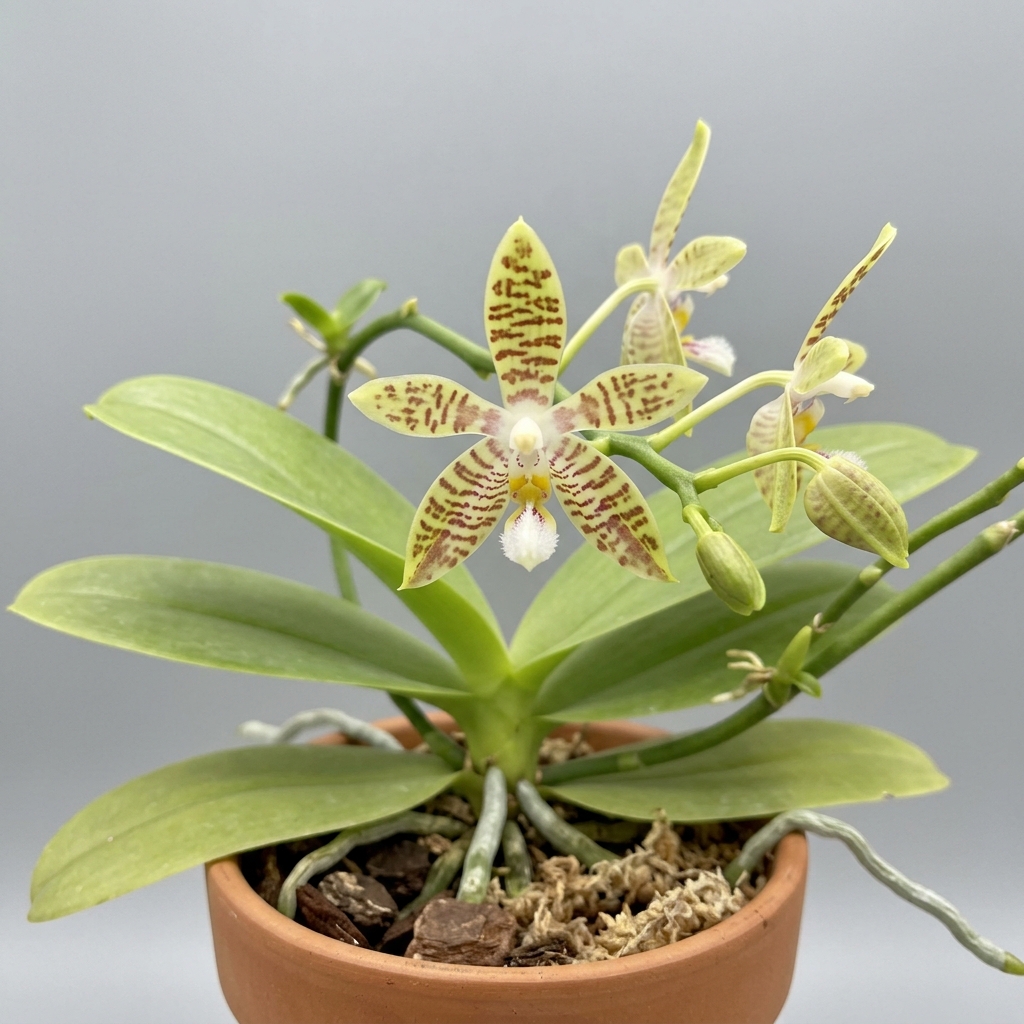
Phalaenopsis Pallens is a captivating orchid species native to the Philippines, highly prized by collectors for its delicate charm and distinct botanical features. Unlike the mass-produced, large-flowered hybrids common in retail stores, this species offers a more intimate growing experience with its star-shaped blossoms and compact growth habit. Orchid enthusiasts value it not only for its unique aesthetic but also for its fascinating tendency to produce offshoots, making it a rewarding addition to any indoor collection.
This epiphytic orchid typically grows on moss-covered tree trunks in shaded, humid forest environments. In cultivation, it retains these ancestral preferences, thriving under indirect light and consistent warmth. Its relatively modest size and manageable care requirements make it an excellent choice for growers looking to transition from common commercial hybrids to authentic species orchids.
💡 Did You Know?
Unlike many hybrid orchids that discard their flower spikes after blooming, Phalaenopsis Pallens frequently uses its old, green spikes to produce clonal baby plants known as keikis. This natural survival mechanism allows growers to easily propagate the plant without complex laboratory equipment, making it a favorite for those looking to expand their collection naturally.
🌿 Botanical Overview
Phalaenopsis Pallens is characterized by its short stems and fleshy, obovate-oblong leaves that grow in a neat, alternating pattern. The foliage is typically a vibrant, light green, providing an attractive backdrop even when the plant is not in bloom. In its natural habitat, the roots are thick and covered in velamen, allowing the plant to cling securely to tree bark while absorbing moisture and nutrients from the air.
This species is well-adapted to the warm, humid lowlands of its native range. Because it does not experience a harsh dormant season in the wild, it maintains active growth throughout much of the year when kept in stable indoor conditions. Understanding this natural growth cycle is key to providing the consistent care it needs to thrive.
🌸 Flower Characteristics
The blossoms of Phalaenopsis Pallens are distinctly star-shaped, featuring narrow, pointed petals and sepals that set them apart from the rounded flowers of modern hybrids. The base color of the petals ranges from a pale, creamy yellow to a soft greenish-yellow, decorated with delicate, transverse bars of light brown or reddish-brown. The lip, or labellum, is white with subtle yellow and purple markings, often displaying a slightly hairy or tufted texture at its center.
Flowers are typically small to medium, measuring approximately four to five centimeters in diameter. They are produced on arching or pendulous inflorescences that can carry several blooms simultaneously. The spikes themselves are relatively short but can branch, presenting the flowers in an elegant, natural cascade.
Fragrance & Bloom Profile
While fragrance can vary among individual specimens, Phalaenopsis Pallens is often reported by growers to produce a mild, sweet scent. This fragrance is typically most noticeable during the morning hours when warmth and light stimulate the release of volatile compounds. However, because fragrance intensity is highly dependent on environmental factors like humidity and temperature, some growers may find the scent to be very subtle or virtually undetectable.
The blooms are relatively long-lasting, often remaining fresh for several weeks under optimal conditions. Unlike some orchids that shed their flower spikes immediately after blooming, this species frequently keeps its spikes green, which can lead to later flower production or the development of new plantlets in future seasons.
Parentage & Hybrid Lineage
Phalaenopsis Pallens is a naturally occurring species rather than a man-made hybrid. In the taxonomic registry, it is classified within the genus Phalaenopsis, section Zebrinae, which is known for species with barred or striped floral patterns. Because of its distinct markings and compact habit, it has occasionally been used in hybridizing programs to introduce yellow coloration and banding patterns to new grexes.
In historical literature, there has been some confusion regarding its exact relationship to similar species like Phalaenopsis lueddemanniana, but modern botanical consensus treats Phalaenopsis Pallens as a distinct species. When purchasing this orchid, growers should look for reputable nurseries that propagate from verified species stock to ensure authenticity.
🌱 Growing Conditions
To cultivate Phalaenopsis Pallens successfully, growers should aim to replicate its native tropical canopy environment. It thrives in moderate to bright indirect light, ideally between 1,000 and 1,500 foot-candles. Direct sunlight must be avoided, as it can quickly scorch the tender, light-green leaves. East-facing windows or filtered southern exposures are often ideal locations.
💡 Care Tip
Maintain constant air movement around your orchid using a small, gentle fan. Good ventilation prevents moisture from pooling in the leaf crown, which significantly reduces the risk of fungal and bacterial rot in humid environments.
Temperature: wise, this orchid prefers warm to intermediate conditions. Daytime temperatures should ideally range between 75°F and 85°F (24°C to 29°C), with a slight drop at night to around 65°F to 70°F (18°C to 21°C). High humidity is crucial, ideally maintained between 60% and 80%. Good air movement is equally important to prevent stagnant moisture from settling on the leaves and causing fungal issues.
Watering, Feeding & Potting Media
Watering should be frequent enough to keep the potting medium slightly damp but never waterlogged. In practice, this usually means watering just as the medium approaches dryness. Because the roots require excellent oxygenation, the choice of potting media is critical. A high-quality, medium-grade fir bark mix blended with perlite and charcoal works exceptionally well, though some growers prefer sphagnum moss in drier climates.
During the active growing season, apply a balanced, water-soluble orchid fertilizer diluted to one-quarter or one-half strength every two to three weeks. It is highly beneficial to flush the pot with pure water between fertilizer applications to prevent harmful mineral salts from building up in the substrate. If grown on a mount, such as cork bark, the orchid will require daily misting or soaking to maintain adequate hydration.
Blooming Season & Care Notes
Phalaenopsis Pallens can bloom at various times throughout the year, though peak flowering often occurs in the spring and summer months. A slight drop in night temperatures during the autumn can sometimes help trigger the initiation of new flower spikes. Once a spike emerges, avoid changing the plant’s orientation relative to the light source, as this can cause the developing buds to twist or misalign.
A unique characteristic of this species is its tendency to produce keikis—small clonal plantlets—directly on old, green flower spikes. For this reason, it is highly recommended to leave green spikes intact even after the flowers have faded. Repotting should only be done when the potting medium begins to break down, typically every two years, and is best performed just as new root growth begins after a blooming cycle.
⚠️ Common Issues
⚠️ Common Mistake
A frequent error is cutting down green flower spikes immediately after the blossoms fade. Because this species can bloom repeatedly from the same spike or use it to grow new plantlets, removing active green spikes deprives you of future flowers and propagation opportunities.
- Root Rot:
Caused by overwatering or a degraded potting medium that retains too much moisture and suffocates the roots. - Bud Blast:
The sudden drying and dropping of flower buds, often triggered by rapid changes in temperature, low humidity, or drafts. - Leaf Scorching: Bleached or brown patches on the leaves resulting from exposure to direct, unfiltered sunlight.
- Pests:
Mealybugs and scale insects can occasionally hide in the leaf joints or under flower buds; treat promptly with insecticidal soap or horticultural oil. - Fungal Spotting: Dark spots on the leaves caused by high humidity combined with poor air circulation.
❓ Frequently Asked Questions
How do I encourage my Phalaenopsis Pallens to rebloom?
To encourage reblooming, ensure the plant receives adequate indirect light and a slight drop in nighttime temperatures of about 10°F to 15°F for a few weeks in the autumn. Consistent feeding with a balanced orchid fertilizer during the growing season also provides the energy needed for spike production.
What should I do with the flower spike after the blooms fall?
Do not cut the flower spike if it remains green. Phalaenopsis Pallens frequently produces secondary blooms or develops keikis (baby plants) on old, green spikes. Only cut the spike back to the base of the plant if it turns completely brown and dry.
Why are the leaves on my orchid turning yellow?
Yellowing leaves can indicate several issues. If only the oldest bottom leaf turns yellow and drops, it is likely a natural aging process. However, widespread yellowing can be a sign of overwatering, root rot, or exposure to excessive direct sunlight. Check the roots to ensure they are firm and healthy.
Can I grow Phalaenopsis Pallens mounted on bark?
Yes, this species is well-suited to mounted cultivation on cork bark or tree fern plaques, which mimics its natural epiphytic habit. However, mounted orchids dry out very quickly and typically require daily watering or misting, making this method best suited for high-humidity environments or greenhouses.
⭐ Final Growing Notes
Phalaenopsis Pallens is a delightful species that rewards attentive growers with its charming, star-shaped flowers and unique growth habits. By providing warm temperatures, high humidity, and filtered light, you can enjoy its delicate blooms and potential keikis for many years. It stands as a testament to the diverse beauty of the orchid world, offering a rewarding step up for any dedicated indoor gardener.
⚕️ Health, Safety & Edibility
Understanding how a plant interacts with people, pets, and the surrounding environment is part of responsible cultivation. This section uses conservative, general guidance and does not replace professional medical or veterinary advice.
Human Safety: No published evidence currently identifies species-specific toxicity concerns for Phalaenopsis Pallens during normal handling. As with most ornamental plants, it should not be intentionally consumed.
Pet Safety: Published information does not indicate that this orchid commonly poses a toxicity concern for cats or dogs. However, chewing leaves, flowers, roots, or potting media may still cause mild digestive upset.
Edibility: This orchid is cultivated for ornamental display rather than food. Ornamental plants may carry fertilizers, pesticides, or other horticultural treatments that make them unsuitable for consumption.
Skin Contact: Routine handling is not generally associated with skin irritation. Gardeners with sensitive skin may prefer wearing gloves when repotting, pruning, or handling potting media.
🌱 Propagation Tip
If your orchid produces a keiki on an old flower spike, leave it attached until it has developed at least three healthy roots that are two inches long. At that point, carefully snip the spike on either side of the plantlet and pot it in a fine bark mix.
⭐ Expert Advice
When repotting, choose a pot that just fits the root mass rather than a larger one. Orchids prefer to be slightly root-bound, and excess holds too much water, which can lead to root suffocation and decay.

Leave A Comment