
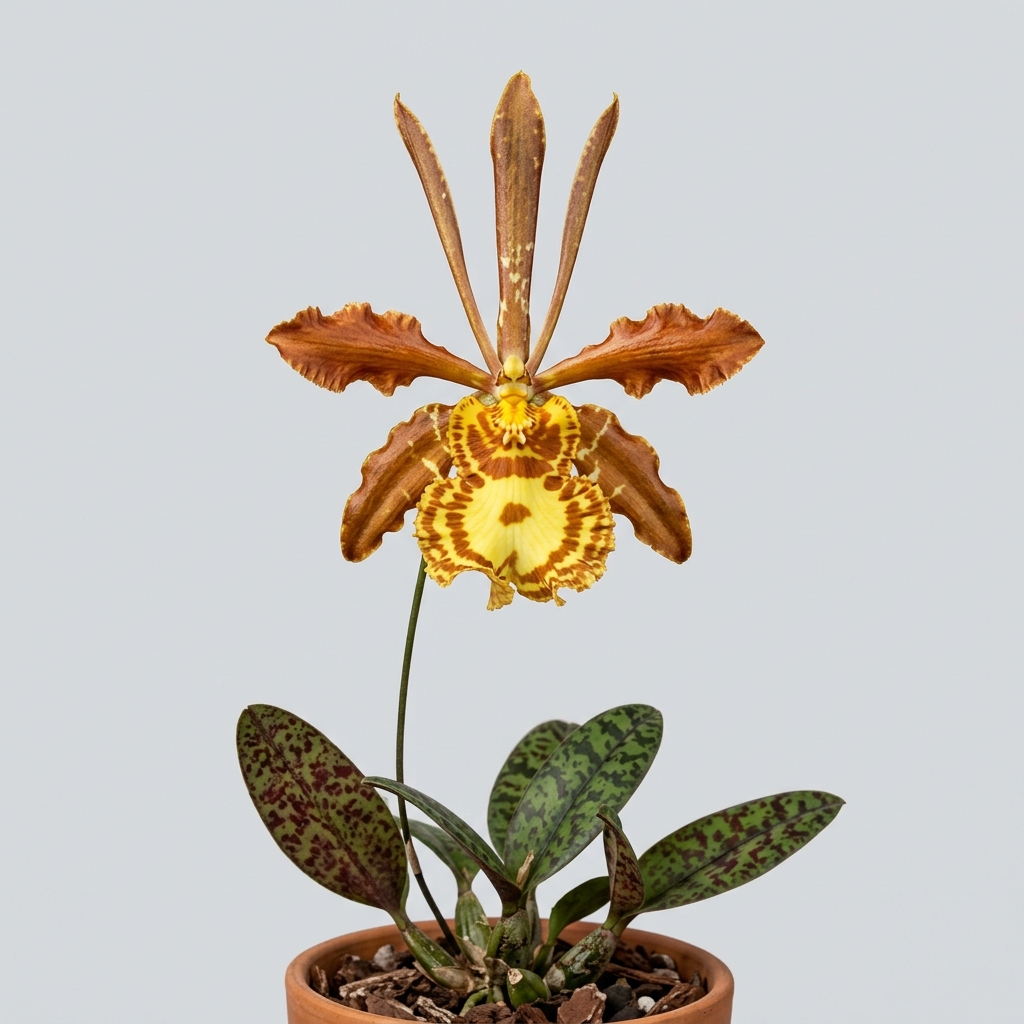
Psychopsis Papilio, commonly known as the Butterfly Orchid, is an extraordinary epiphytic orchid species native to the tropical forests of South America and the Caribbean. Celebrated for its striking resemblance to a large, brightly colored butterfly in flight, this orchid features distinctive mottled foliage and tall, wiry spikes. It is a prized centerpiece in any indoor orchid collection, offering a dramatic visual display that rarely fails to captivate onlookers.
Growers value this orchid not only for its mimicry-based floral presentation but also for its remarkably long-lived flower spikes. Unlike many orchids that require seasonal cutting, the spikes of this species should remain untouched as they continuously generate new buds over several years. This sequential blooming habit provides a reliable and captivating display for dedicated hobbyists who can meet its specific cultural requirements.
💡 Did You Know?
This orchid is historically famous for triggering the Victorian 'orchidmania' craze. In 1823, the Duke of Devonshire saw a blooming specimen of Psychopsis Papilio at the Horticultural Society of London and was so captivated by its butterfly-like appearance that he dedicated immense resources to collecting exotic orchids, sparking a worldwide obsession.
Quick Facts
| Property | Details |
|---|---|
| Psychopsis Papilio | |
| Orchids (Epiphyte) | |
| Psychopsis | |
| Orchidaceae | |
| Copper, bronze, yellow, and brown markings | |
| Generally absent or extremely faint | |
| Sequential, year-round under optimal conditions | |
| Medium to bright indirect light | |
| Warm to intermediate (65°F to 85°F) | |
| 50% to 70% | |
| Allow media to approach dryness between waterings | |
| Fine to medium fir bark mix, charcoal, and perlite | |
| Moderate | |
| Generally considered non-toxic to pets and humans |
🌿 Botanical Overview
Botanically, Psychopsis Papilio is characterized by its compact, pseudobulbous growth habit. The pseudobulbs are tightly clustered, flattened, and dark green to purplish-brown in color. Each pseudobulb bears a single, leathery, oblong leaf that features a beautiful mottled pattern of reddish-brown or purple spots on a dark green background. This attractive foliage ensures the plant remains ornamentally appealing even when it is not in bloom.
In its natural habitat, this orchid grows as an epiphyte on the trunks and lower branches of trees, where it enjoys excellent air circulation and filtered sunlight. The root system is relatively fine and sensitive to stagnant moisture, requiring a highly porous substrate that mimics the rapid wet-and-dry cycles of its native canopy environment.
🌸 Flower Characteristics
The flowers of Psychopsis Papilio are a marvel of natural mimicry. The dorsal sepal and the two upper petals are long, narrow, and antenna-like, colored in shades of reddish-brown. In contrast, the lateral sepals are broad, wavy-edged, and spread out like wings, featuring bright yellow coloration with bold bronze or brown bands. The large, fan-shaped lip is yellow with a wide, reddish-brown border, completing the convincing illusion of a hovering butterfly.
These flowers are produced individually at the apex of extremely long, slender, and wiry spikes that can reach up to three feet in height. The spikes are wind-tolerant and flexible, allowing the flower to dance gently in the breeze, which further enhances its insect-like appearance to potential pollinators.
Fragrance & Bloom Profile
This species is primarily grown for its visual appeal rather than its scent. While some growers report a very faint, elusive sweet fragrance under warm, humid conditions, it is generally considered unscented by most horticultural authorities. The lack of a strong fragrance does not diminish its popularity, as the sheer drama of the bloom more than compensates for the absence of perfume.
The blooming profile is strictly sequential. A single flower opens at the tip of the spike, remains open for several weeks, and then drops. Shortly thereafter, a new bud begins to swell directly behind the old attachment point, producing another bloom. This cycle can repeat continuously on the same spike for several years if the plant remains healthy.
Parentage & Hybrid Lineage
Psychopsis Papilio is a naturally occurring species rather than a man-made hybrid. It has been widely used in hybridization to create popular grexes, such as Psychopsis Mendenhall, which inherit the parent species’ dramatic butterfly form and sequential blooming habit. Its historical significance is profound, as it is widely credited with sparking the “orchidmania” craze in Victorian England after being exhibited to the public in the early 19th century.
Because it is a true species, preserving its genetic purity is a priority for many conservation-minded growers. When purchasing, enthusiasts should look for reputable nurseries that propagate plants from seed or tissue culture rather than collecting them from the wild, where populations remain vulnerable.
🌱 Growing Conditions
To cultivate Psychopsis Papilio successfully, growers must replicate its warm, humid tropical origin. It thrives in medium to bright indirect light, similar to the light levels preferred by Cattleyas. Direct midday sunlight must be avoided, as it can easily scorch the mottled leaves and cause permanent damage to the plant’s photosynthetic capacity.
💡 Care Tip
Provide consistent, gentle air movement around your orchid at all times. Because this species thrives in high , stagnant air can quickly lead to leaf spotting or fungal issues on the beautifully mottled foliage, especially during cooler winter nights.
Temperature: wise, this orchid prefers intermediate to warm conditions. Ideal daytime temperatures range from 75°F to 85°F, with a night-time drop to around 65°F. High humidity between 50% and 70% is essential for healthy leaf development and to prevent the emerging flower buds from drying out before they can open.
Watering, Feeding & Potting Media
Watering should be approached with caution. The potting medium should be allowed to dry out almost completely between waterings, but the plant should not be left dry for extended periods. When watering, flush the pot thoroughly with tepid water, ensuring that no water pools in the crown of the plant or the crevices of the new growths, which can invite rot.
During the active growing season, apply a balanced, highly diluted orchid fertilizer every second or third watering. A “weakly, weekly” approach works best. For potting media, a highly porous mix of medium-grade fir bark, charcoal, and perlite is ideal. Some growers successfully cultivate this species on mounts, provided they can maintain the necessary high humidity and water the plant daily.
Blooming Season & Care Notes
Psychopsis Papilio does not have a strict, calendar-defined blooming season. Instead, it can produce flowers at almost any time of the year, often blooming continuously through the spring, summer, and autumn. The most critical care rule for this species is to never cut the flower spike unless it has completely dried up, turned brown, and become brittle. A single green spike can produce flowers for several years.
Repotting should be done only when absolutely necessary, typically every two to three years when the potting medium begins to break down. This species highly dislikes root disturbance, so repotting should be timed to coincide with the emergence of new roots from the base of a developing pseudobulb, allowing the plant to establish quickly in its new container.
⚠️ Common Issues
⚠️ Common Mistake
The most frequent error is cutting off green flower spikes after the blossom drops. These spikes are sequential bloomers and will continue to produce flowers from the tip for years. Only remove a spike if it turns completely brown and dry.
- Root Rot:
Caused by overwatering or compacted potting media that retains too much moisture around the sensitive root system. - Bud Blast:
Occurs when sudden drops in humidity, drafts, or temperature fluctuations cause developing buds to yellow and drop before opening. - Leaf Spotting: Fungal or bacterial spots can develop on the foliage if air circulation is inadequate in high-humidity environments.
- Wrinkled Pseudobulbs: A sign of dehydration, which can be caused by underwatering or by root loss due to overwatering.
- Pests:
Scale insects and mealybugs can occasionally hide in the crevices of the pseudobulbs and beneath the leaf sheaths.
❓ Frequently Asked Questions
Why is my Psychopsis Papilio not producing flowers?
The most common reason for a lack of blooms is insufficient light. While this orchid should be protected from direct sunlight, it requires bright, filtered light to trigger spike development. Ensure your plant is receiving adequate light and that its pseudobulbs are plump and mature.</p
Should I cut the flower spike after the blossom falls off?
No, you should never cut a green flower spike on a Psychopsis Papilio. This species is a sequential bloomer, meaning a single spike will continue to produce new buds and flowers from its tip for several years. Only cut the spike if it turns completely brown and dry.</p
How do I know if my orchid needs to be repotted?
Repot only when the potting medium has degraded and no longer drains well, or when the plant has completely outgrown its container. Because this species is highly sensitive to root disturbance, it is best to wait until new root growth is visible at the base of the newest pseudobulb.</p
Can I grow this orchid under artificial LED lights?
Yes, Psychopsis Papilio adapts very well to indoor cultivation under high-quality LED grow lights. Position the plant at a distance where it receives bright, indirect light for 12 to 14 hours a day, and monitor the leaves to ensure they do not become overly warm or scorched.
⭐ Final Growing Notes
Growing Psychopsis Papilio is a deeply rewarding experience for any orchid enthusiast willing to accommodate its preference for warmth, high humidity, and minimal root disturbance. By preserving its long-lived flower spikes and providing consistent, bright indirect light, you will be rewarded with a near-constant display of spectacular, butterfly-like blooms that bring a touch of exotic tropical wonder into your home.
⚕️ Health, Safety & Edibility
Understanding how a plant interacts with people, pets, and the surrounding environment is part of responsible cultivation. This section uses conservative, general guidance and does not replace professional medical or veterinary advice.
Human Safety: Species-specific human toxicity data for Psychopsis Papilio is limited. Use conservative handling practices and avoid intentional consumption.
Pet Safety: Pet-specific safety information for Psychopsis Papilio is limited, so keep it away from animals that commonly chew plants.
Edibility: Psychopsis Papilio should not be treated as edible. Ornamental specimens may contain natural irritants or horticultural residues that make them unsuitable for consumption.
Skin Contact: Skin irritation is not well documented for this plant, but gloves are sensible when repotting, pruning, or handling potting media.
🌱 Propagation Tip
Propagation is best achieved through division of mature specimens during repotting. Ensure each division has at least three to four healthy, mature pseudobulbs with active root systems to support new growth, as smaller divisions often struggle to recover.
⭐ Expert Advice
When repotting, choose a pot that just fits the root mass, as this species prefers to be slightly root-bound. Use a highly porous bark mix and avoid disturbing the roots unnecessarily, as root damage can stall growth for an entire season.

Leave A Comment