
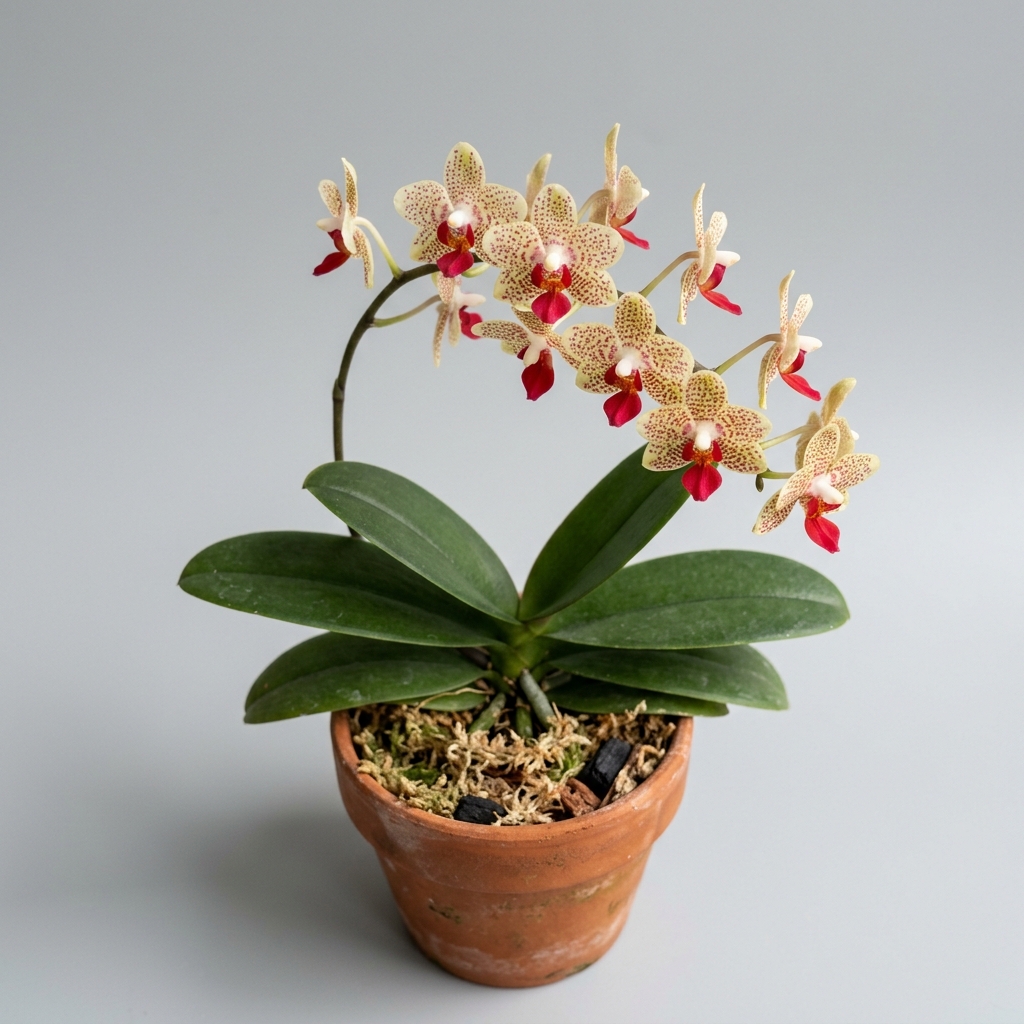
Phalaenopsis Maculata is a highly prized miniature orchid species celebrated by collectors for its distinctive, intricately patterned blossoms and compact growth habit. Native to the warm, humid forests of Southeast Asia, this epiphytic orchid brings a unique wild elegance to indoor collections. Growers value it not only for its manageable size, which makes it ideal for terrariums and limited windowsill spaces, but also for the striking contrast of its spotted flowers.
Unlike many larger, mass-market hybrid moth orchids, this species retains its natural wild characteristics, requiring slightly more specialized attention to humidity and temperature. Its charmingly small stature and reliable blooming habit make it a rewarding challenge for intermediate hobbyists looking to expand their collection beyond standard grocery store varieties.
💡 Did You Know?
The specific epithet maculata is derived from the Latin word for spotted, directly referencing the beautiful reddish-brown markings on the petals and sepals. This miniature species is highly prized in hybridizing for passing down its intense spotting and vibrant red lip to its offspring.
🌿 Botanical Overview
Phalaenopsis Maculata is naturally found as an epiphyte in the lower canopy of tropical rainforests, particularly in Borneo and Sumatra. It typically grows on moss-covered tree trunks where it receives dappled light and constant moisture. Its growth habit is characterized by short stems and relatively small, fleshy, elliptic-oblong leaves that rarely exceed a few inches in length.
The root system of this species is highly adapted to its epiphytic nature, featuring thick, silvery-green roots covered in velamen to absorb moisture and nutrients rapidly from the humid air. Because of its native habitat, it thrives in conditions that mimic the warm, shaded, and constantly humid understory of a tropical forest.
🌸 Flower Characteristics
The blossoms of Phalaenopsis Maculata are small but visually arresting, usually measuring between two to three centimeters in diameter. The sepals and petals are typically a creamy white to pale greenish-yellow, heavily marked with bold, horizontal bars or spots of reddish-brown or deep crimson. The most striking feature is the vibrant, contrasting red or bright pink lip (labellum), which draws the eye directly to the center of the flower. The flowers are produced on short, sometimes branched inflorescences that emerge from the leaf axils, presenting the blooms close to the foliage.
Fragrance & Bloom Profile
The fragrance of Phalaenopsis Maculata is a subject of much discussion among orchid enthusiasts, as its scent profile can be highly variable or subtle. Some growers report a sweet, spicy, or slightly musky aroma that is most noticeable during the warm morning hours, while others find the scent to be faint or virtually undetectable. The blooms are relatively long-lasting, often remaining fresh for several weeks, provided the plant is kept in a stable environment free from sudden drafts or temperature drops.
Parentage & Hybrid Lineage
As a naturally occurring species rather than a man-made hybrid, Phalaenopsis Maculata possesses a pure genetic lineage that has made it a valuable parent in orchid breeding. Hybridizers frequently use this species to introduce compact growth habits, intense spotting patterns, and vibrant red lip coloration to new Phalaenopsis grexes. While its exact historical registration details in early hybridization are complex, it remains a cornerstone species for creating novelty miniature hybrids.
🌱 Growing Conditions
To cultivate Phalaenopsis Maculata successfully, growers must replicate its warm, shaded native environment. It thrives in low to medium light conditions, ideally receiving bright, filtered light while being strictly protected from direct afternoon sunlight, which can easily scorch its tender leaves. Temperatures should remain warm year-round, ideally ranging between 75 and 85 degrees Fahrenheit during the day, with a slight drop at night that does not fall below 65 degrees Fahrenheit. High humidity is crucial, ideally maintained between 60% and 80%, accompanied by gentle, continuous air movement to prevent stagnant air pockets.
💡 Care Tip
To maintain the high Phalaenopsis Maculata craves without risking root rot, place the pot on a tray filled with pebbles and water. Ensure the bottom of the pot does not touch the water directly, and use a small fan to keep the air gently circulating around the foliage.
Watering, Feeding & Potting Media
This species prefers to remain consistently moist but never waterlogged. Watering should be frequent enough to prevent the potting medium from drying out completely, yet the roots must have access to oxygen to prevent rot. A potting mix consisting of fine-grade New Zealand sphagnum moss or a blend of fine fir bark, perlite, and charcoal works exceptionally well. Feeding should be light and regular, using a balanced, highly diluted orchid fertilizer applied weekly during the active growing season, followed by a flush with pure water to prevent salt buildup.
Blooming Season & Care Notes
Phalaenopsis Maculata typically initiates its blooming cycle in the late spring or summer months, though it can occasionally bloom at other times of the year if environmental conditions are stable. Once the flower spike emerges, growers should avoid moving the plant or changing its orientation to prevent bud blast. After the blooming cycle is complete, the old flower spikes can be left intact if they remain green, as they may occasionally produce secondary branches or even keikis, though removing completely brown, dried spikes is recommended to maintain plant hygiene.
⚠️ Common Issues
⚠️ Common Mistake
A frequent error is treating this species like a standard grocery store hybrid by letting it dry out completely between waterings. Phalaenopsis Maculata lacks large pseudobulbs to store water and will quickly suffer from dehydration and leaf wrinkling if kept dry for too long.
- Root rot caused by overwatering or compacted, poorly draining potting media.
- Bud blast, where developing buds shrivel and drop, often triggered by sudden temperature fluctuations or dry air.
- Leaf spotting or fungal infections resulting from water sitting on the leaves overnight without adequate air circulation.
- Spider mites and mealybugs, which can hide in the crevices of the compact foliage and under the leaves.
- Dehydration, indicated by wrinkled, limp leaves, usually due to underwatering or a compromised root system.
❓ Frequently Asked Questions
How often should I water my Phalaenopsis Maculata?
Watering frequency depends on your growing environment, but Phalaenopsis Maculata generally prefers to stay consistently moist. Typically, watering every few days is necessary when grown in bark, or when the top layer of sphagnum moss begins to feel slightly dry to the touch. Never let the roots sit in standing water.
Can Phalaenopsis Maculata be grown under LED lights?
Yes, this miniature species adapts exceptionally well to indoor cultivation under LED grow lights. Because it naturally prefers low to medium light, place the plant toward the edges of your light setup or adjust the intensity to avoid leaf scorch, ensuring it receives about 10 to 12 hours of light daily.
Why are the flower buds on my orchid falling off before opening?
This issue, known as bud blast, is usually caused by environmental stress. Common culprits include sudden drops in humidity, cold drafts from windows or air conditioners, or allowing the potting medium to dry out completely while the flower spike is actively developing.
Is Phalaenopsis Maculata suitable for a terrarium?
Yes, due to its miniature size and high humidity requirements, Phalaenopsis Maculata is an excellent candidate for a terrarium or vivarium. Ensure the enclosure has adequate ventilation or a small fan to maintain air movement, which is critical for preventing fungal issues in enclosed spaces.
⭐ Final Growing Notes
Phalaenopsis Maculata is an exquisite gem of the orchid world, offering a rewarding experience for growers who can accommodate its preference for warmth, high humidity, and consistent moisture. While it requires a bit more vigilance than standard hybrid orchids, its charmingly spotted blooms and compact, elegant presentation make it a standout addition to any dedicated orchid collection.
⚕️ Health, Safety & Edibility
Understanding how a plant interacts with people, pets, and the surrounding environment is part of responsible cultivation. This section uses conservative, general guidance and does not replace professional medical or veterinary advice.
Human Safety: No published evidence currently identifies species-specific toxicity concerns for Phalaenopsis Maculata during normal handling. As with most ornamental plants, it should not be intentionally consumed.
Pet Safety: Published information does not indicate that this orchid commonly poses a toxicity concern for cats or dogs. However, chewing leaves, flowers, roots, or potting media may still cause mild digestive upset.
Edibility: This orchid is cultivated for ornamental display rather than food. Ornamental plants may carry fertilizers, pesticides, or other horticultural treatments that make them unsuitable for consumption.
Skin Contact: Routine handling is not generally associated with skin irritation. Gardeners with sensitive skin may prefer wearing gloves when repotting, pruning, or handling potting media.
🌱 Propagation Tip
While Phalaenopsis Maculata is primarily propagated through laboratory flasking, mature plants may occasionally produce a keiki, or baby plant, on an old flower spike. Wait until the keiki has developed several strong roots at least two inches long before carefully detaching and potting it.
⭐ Expert Advice
When repotting Phalaenopsis Maculata, choose a pot that just fits the root system, as excess can retain too much moisture and lead to rot. Repot annually in spring using fresh, high-quality sphagnum moss or fine bark to ensure excellent aeration for the roots.

Leave A Comment