
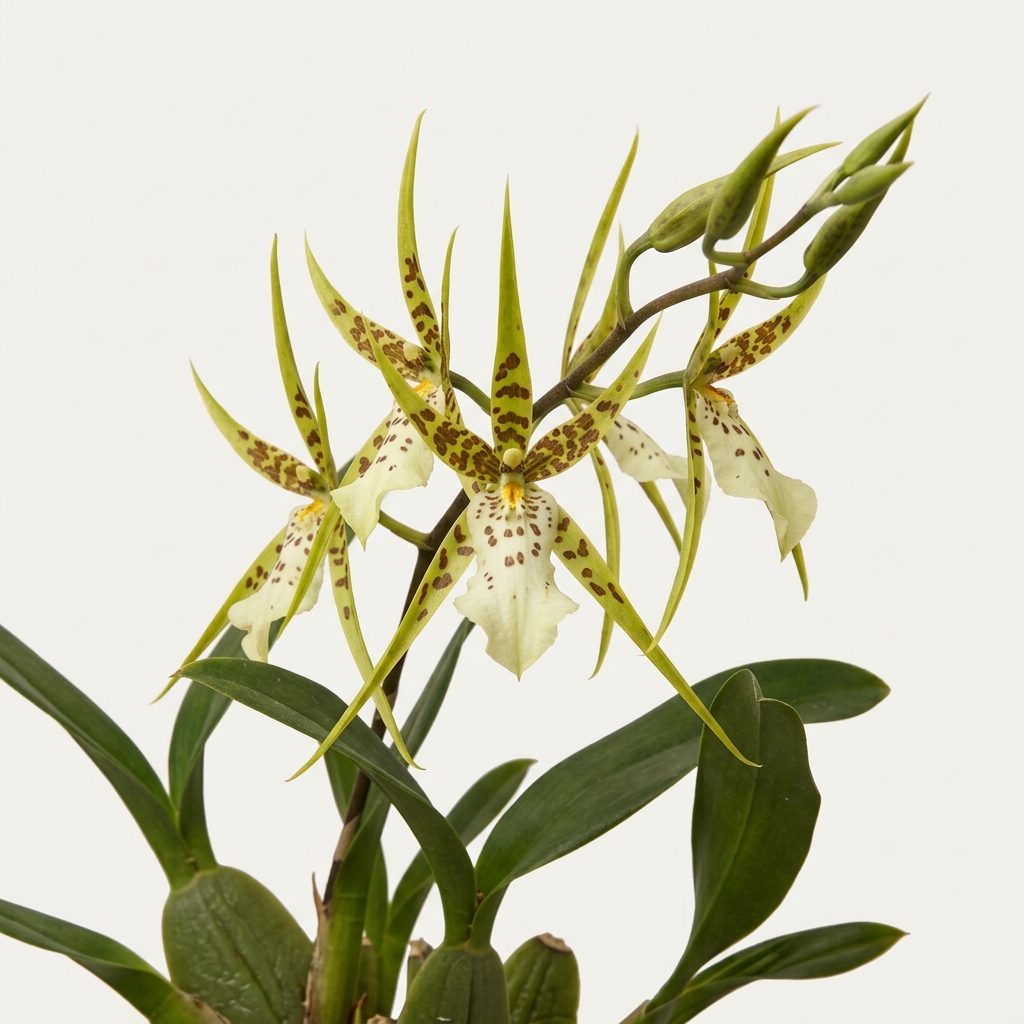
Brassia Maculata, commonly known as the spotted spider orchid, is a captivating species highly prized by orchid enthusiasts for its dramatic, spider-like floral display. Native to Central America and parts of the Caribbean, this epiphytic orchid features elongated, slender petals and sepals that mimic the legs of an arachnid, a natural adaptation designed to attract specific wasp pollinators. Its robust growth habit and striking botanical architecture make it a standout addition to any indoor orchid collection or greenhouse.
Growers value Brassia Maculata not only for its exotic appearance but also for its relatively forgiving nature compared to more delicate orchid genera. The plant produces large pseudobulbs that store moisture and nutrients, allowing it to withstand minor variations in care. When provided with bright, filtered light and consistent humidity, this resilient orchid rewards keepers with long-lasting, fragrant blooms that bring a touch of the tropical canopy into the home.
💡 Did You Know?
Brassia Maculata belongs to the Brassia orchid group, where flower presentation is often just as important as . White-flowered cultivars are especially valued indoors because their pale blooms reflect well and pair easily with many home, greenhouse, and display settings.
🌿 Botanical Overview
Brassia Maculata is characterized by its large, flattened pseudobulbs, which typically grow in clusters along a short rhizome. Each pseudobulb produces one or two strap-like, leathery leaves that remain evergreen under optimal conditions. The root system is vigorous, consisting of thick, fleshy roots covered in velamen, which efficiently absorbs moisture and nutrients from the surrounding air and substrate.
In its native habitat, this epiphyte grows on tree trunks and branches in wet tropical forests, often at low to medium elevations. This natural environment dictates its preference for excellent air circulation and a wet-to-dry moisture cycle. Understanding these botanical origins is key to successfully cultivating the species in a domestic environment.
🌸 Flower Characteristics
The flowers of Brassia Maculata are the defining feature of the plant, showcasing a classic spider-like morphology. The sepals and petals are exceptionally long, narrow, and tapered, extending outward to create a wide, airy silhouette. The base color is typically a pale greenish-yellow or chartreuse, heavily marked with bold, irregular spots of dark brown, maroon, or reddish-purple.
At the center of the bloom is a prominent, broad labellum (lip) that is usually white or cream-colored, adorned with smaller dark spots near the column. The flowers are arranged alternately along a gracefully arching inflorescence that emerges from the base of the mature pseudobulb, often carrying up to a dozen or more individual blooms per spike.
Fragrance & Bloom Profile
One of the most appealing aspects of Brassia Maculata is its distinct fragrance, which is typically described as sweet, spicy, or slightly musky. The scent is most pronounced during the morning and early afternoon hours, filling the growing space with a pleasant tropical aroma.
The blooms are remarkably long-lasting, often remaining fresh on the plant for four to six weeks, depending on ambient temperatures and humidity levels. To maximize the lifespan of the flowers, growers should avoid getting water directly on the petals and maintain stable environmental conditions while the plant is in spike.
Parentage & Hybrid Lineage
As a naturally occurring species rather than an artificial hybrid, Brassia Maculata does not have parentage in the traditional cultivar sense. However, it has played a significant role in orchid hybridization. Breeders have frequently crossed this species with other genera within the Oncidiinae subtribe, such as Miltonia and Oncidium, to create popular intergeneric hybrids like Miltassia and Brassidium.
These hybrid descendants often inherit the spider-like floral form of Brassia Maculata along with enhanced temperature tolerance and varied color palettes. In historical records, the exact collection details and early cultivation history of specific wild clones are not always consistently documented, but the species remains a cornerstone of modern spider orchid breeding.
🌱 Growing Conditions
To thrive, Brassia Maculata requires bright, indirect light. An east- or shaded south-facing window is often ideal, providing the necessary intensity without risking sunburn on the foliage. The leaves should maintain a light, grassy green color; dark green leaves suggest insufficient light, while yellowing or reddish tints indicate excess exposure.
💡 Care Tip
For best results, grow Brassia Maculata in bright filtered with steady and gentle airflow. Avoid placing the plant in harsh midday sun, but do not keep it in a dark corner; weak is one of the most common reasons cultivated orchids refuse to rebloom.
This orchid prefers intermediate to warm temperatures, ideally ranging from 65°F to 85°F (18°C to 29°C) during the day, with a slight drop at night to stimulate blooming. High humidity levels between 50% and 70% are highly beneficial. To prevent stagnant air and fungal issues, growers must provide continuous, gentle air movement using a small fan.
Watering, Feeding & Potting Media
Watering should be frequent and thorough during the active growing season, typically spring and summer. The potting medium should be allowed to approach dryness but not dry out completely before the next watering. During the winter rest period, watering frequency should be reduced, allowing the medium to dry out more thoroughly between applications while preventing the pseudobulbs from shriveling.
A well-draining potting mix is essential to prevent root rot. A medium-grade fir bark mixed with perlite, charcoal, and a small amount of sphagnum moss works exceptionally well. Alternatively, mature plants with robust root systems can be mounted on cork bark or tree fern plaques if high humidity can be maintained. Feed the plant regularly with a balanced orchid fertilizer diluted to quarter- or half-strength during active growth.
Blooming Season & Care Notes
Brassia Maculata typically blooms in the spring or summer, though occasional autumn flowering can occur depending on local growing conditions. The development of the flower spike begins at the base of the newly matured pseudobulb. Once the spike emerges, it is important to avoid moving the plant or changing its orientation to the light source, as this can cause the buds to twist or fail to open properly.
After the blooming cycle is complete, the old flower spike can be cut back to the base of the pseudobulb. Repotting should be performed every two to three years, or when the potting medium begins to break down and retain too much moisture. The best time to repot is immediately after flowering, just as new root growth begins to emerge from the base of the newest pseudobulb.
⚠️ Common Issues
⚠️ Common Mistake
The most common mistake is by calendar instead of root and potting-media condition. Brassia roots need moisture and air at the same time, so constantly wet bark or sphagnum can lead to root loss even when the leaves still look healthy.
- Root Rot:
Caused by overwatering or a degraded potting medium that holds too much moisture, leading to mushy, black roots. - Pseudobulb Shriveling: A sign of dehydration, which can result from either underwatering or root loss due to rot.
- Spider Mites and Mealybugs: Common pests that hide in the crevices of the leaves and pseudobulbs; treat promptly with insecticidal soap or horticultural oil.
- Leaf Spotting: Fungal or bacterial spots can develop if water sits on the foliage in stagnant air; improve air circulation and water early in the day.
- Bud Blast:
Sudden dropping of unopened flower buds, often triggered by rapid temperature fluctuations, low humidity, or drafts.
❓ Frequently Asked Questions
How often should I water Brassia Maculata?
Watering frequency depends on your environmental conditions, but generally, Brassia Maculata should be watered every 5 to 7 days during the active growing season. Allow the potting medium to become nearly dry before watering again, and reduce this frequency during the cooler winter months.
Why are the pseudobulbs on my orchid shriveling?
Shriveled pseudobulbs indicate that the plant is not absorbing enough water. This can be caused by underwatering or, conversely, by overwatering which has rotted the root system, leaving the orchid unable to take up moisture. Inspect the roots to determine the correct cause.
Can I grow Brassia Maculata under artificial lights?
Yes, Brassia Maculata can be successfully grown under artificial lights, such as high-output T5 fluorescent bulbs or full-spectrum LED grow lights. Position the lights to provide moderate to high intensity, ensuring the plant receives 12 to 14 hours of light daily.
When is the best time to repot this orchid?
The ideal time to repot Brassia Maculata is in the spring or summer, immediately after the blooming cycle has finished. This timing coincides with the emergence of new roots from the base of the newest pseudobulb, allowing the plant to establish quickly in its new medium.
⭐ Final Growing Notes
Brassia Maculata remains a classic favorite among orchid collectors due to its dramatic spider-like flowers, pleasant fragrance, and robust growth habit. By mimicking its native tropical canopy environment with bright, filtered light, high humidity, and excellent air movement, growers can enjoy annual displays of these exotic blooms. With a little patience and attention to watering cycles, this rewarding species will thrive and multiply for many years.
⚕️ Health, Safety & Edibility
Understanding how a plant interacts with people, pets, and the surrounding environment is part of responsible cultivation. This section uses conservative, general guidance and does not replace professional medical or veterinary advice.
Human Safety: No published evidence currently identifies species-specific toxicity concerns for Brassia Maculata during normal handling. As with most ornamental plants, it should not be intentionally consumed.
Pet Safety: Published information does not indicate that this orchid commonly poses a toxicity concern for cats or dogs. However, chewing leaves, flowers, roots, or potting media may still cause mild digestive upset.
Edibility: This orchid is cultivated for ornamental display rather than food. Ornamental plants may carry fertilizers, pesticides, or other horticultural treatments that make them unsuitable for consumption.
Skin Contact: Routine handling is not generally associated with skin irritation. Gardeners with sensitive skin may prefer wearing gloves when repotting, pruning, or handling potting media.
🌱 Propagation Tip
Propagation should be approached patiently. Most home growers should wait for natural keikis or divide only mature, healthy plants when the orchid type allows it. Never remove a young growth until it has strong roots and enough leaves to support itself away from the parent plant.
⭐ Expert Advice
Repot after flowering when fresh root tips begin to appear. This timing helps the plant anchor quickly into new bark or sphagnum and reduces stress, especially for orchids grown indoors where airflow, , and drying speed can change from season to season.

Leave A Comment