
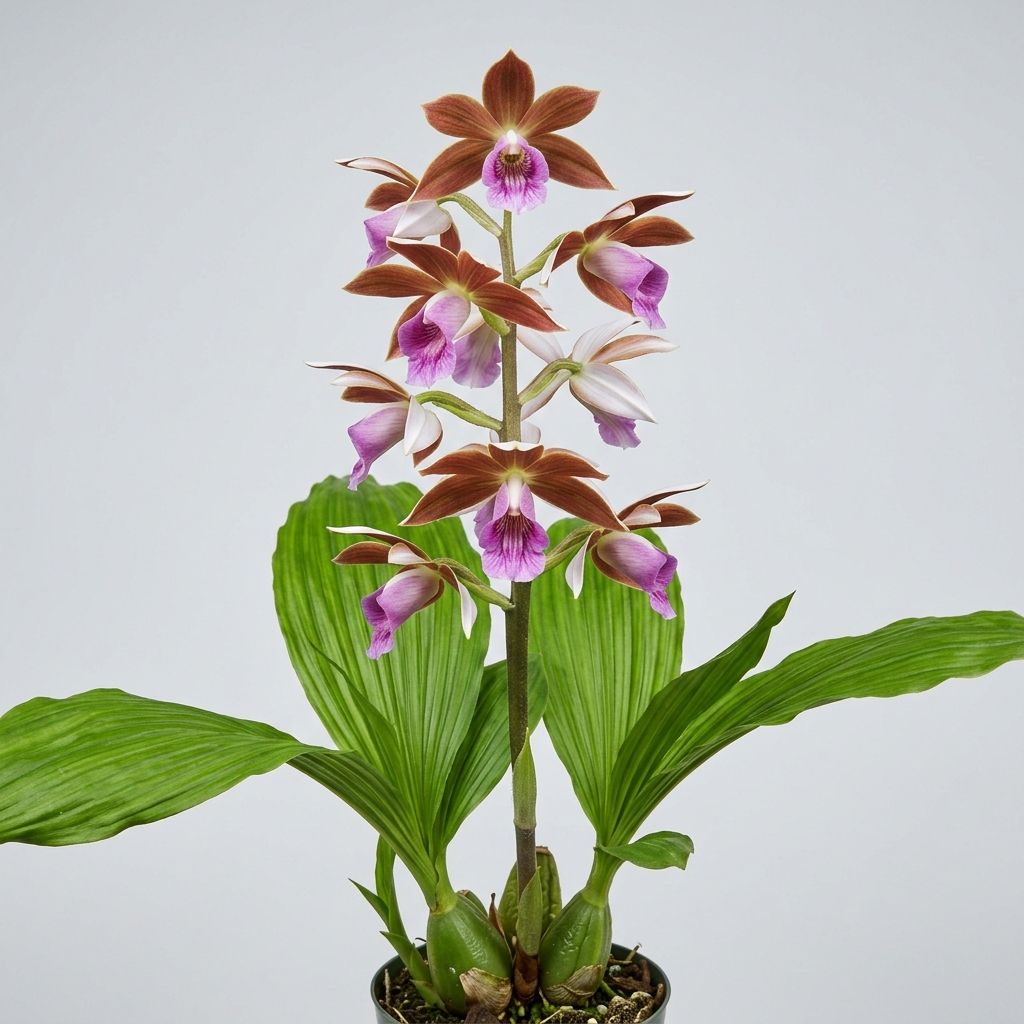
Phaius Tankervilleae, commonly known as the Nun’s Orchid or Nun’s Hood Orchid, is a robust, terrestrial orchid species native to the tropical and subtropical regions of Asia, Australia, and the Pacific Islands. Highly valued for its impressive stature, large pleated leaves, and exceptionally tall flower spikes, this orchid brings a dramatic, tropical presence to indoor collections and warm-climate gardens alike.
Unlike many epiphytic orchids that grow on trees, Phaius Tankervilleae grows directly in the ground, utilizing its large pseudobulbs to store moisture and nutrients. The striking flowers feature a beautiful contrast of warm brown, bronze, and white tones, with a distinctively hooded lip that gives the plant its common name. Cultivators appreciate its relatively straightforward care requirements, making it an excellent bridge species for growers transitioning from terrestrial houseplants to more specialized orchids.
💡 Did You Know?
Phaius Tankervilleae was one of the very first tropical orchids to be cultivated in Europe, arriving in England from China in the late 18th century. Its common name, Nun's Orchid, comes from the hooded shape of the flower's lip, which resembles a nun's cowl or hood draped over the delicate reproductive structures inside.
Quick Facts
| Property | Details |
|---|---|
| Phaius Tankervilleae | |
| Terrestrial Orchid | |
| Phaius | |
| Orchidaceae | |
| Reddish-brown, bronze, white, and purple-pink | |
| Mildly fragrant, sweet and spicy | |
| Late winter to spring | |
| Bright, filtered light (partial shade) | |
| Warm to intermediate (60°F to 85°F) | |
| Moderate to high (50% to 70%) | |
| Keep consistently moist but not waterlogged | |
| Rich, well-draining terrestrial mix | |
| Easy to moderate | |
| Generally considered non-toxic to pets and humans |
🌿 Botanical Overview
Phaius Tankervilleae is a large-statured terrestrial orchid characterized by its prominent, egg-shaped pseudobulbs and large, thin, deeply pleated leaves that can reach up to three feet in length. The foliage emerges in a lush, fan-like arrangement, providing year-round ornamental value even when the plant is not in bloom.
In its natural habitat, this species thrives in swampy areas, forest floors, and damp grasslands where it enjoys rich, organic soil and constant moisture. Its root system is adapted to soil conditions rather than clinging to tree bark, which dictates its unique cultivation requirements compared to typical epiphytic orchids like Phalaenopsis or Cattleya.
🌸 Flower Characteristics
The inflorescence of Phaius Tankervilleae is a spectacular sight, with upright flower spikes rising up to four feet tall from the base of the pseudobulbs. Each spike can carry anywhere from 10 to 30 large, showy flowers, which open sequentially over several weeks to prolong the display.
The individual flowers typically measure three to four inches across. The sepals and petals are a striking reddish-brown or bronze on the inside, contrasting sharply with their silvery-white backsides. The lip, or labellum, is trumpet-shaped and hooded, showing shades of pink, purple, and white, which creates a highly dimensional and elegant appearance.
Fragrance & Bloom Profile
The blooms of Phaius Tankervilleae are known to emit a delicate, sweet fragrance that is most noticeable during the warmer hours of the day. While some growers describe the scent as mildly spicy, others note a soft, floral perfume that complements the visual grandeur of the flowers.
Individual flowers can last for several weeks, and because they open from the bottom of the spike upward, the overall blooming period can extend for up to two months. This long-lasting display makes it a highly rewarding species for indoor display or greenhouse cultivation.
Parentage & Hybrid Lineage
Phaius Tankervilleae is a naturally occurring species rather than a man-made hybrid, first described in the late 18th century. It has been widely used in hybridization programs to introduce size, terrestrial growth habits, and unique color patterns to other orchid genera, particularly in crosses with Calanthe and Gastrorchis.
While several selected color forms and regional variants exist, the primary species remains the most widely cultivated form. Growers should note that historical nomenclature occasionally refers to this plant under various synonyms, but Phaius Tankervilleae remains the accepted botanical name in modern horticulture.
🌱 Growing Conditions
To cultivate Phaius Tankervilleae successfully, provide bright, indirect light. Direct afternoon sun can easily scorch the thin, pleated leaves, while too much shade will result in weak growth and a failure to bloom. A spot near an east- or west-facing window with sheer curtains is often ideal.
💡 Care Tip
Keep this terrestrial orchid consistently moist but never soggy. Unlike epiphytic orchids, its root system should not dry out completely. Water the plant thoroughly as soon as the top inch of the potting medium feels dry to the touch, and ensure your container has excellent drainage to prevent root rot.
This orchid prefers intermediate to warm temperatures, ideally ranging from 65°F to 80°F during the day and dropping slightly at night. It can tolerate cooler temperatures down to 50°F for short periods, which can actually help initiate the winter bloom cycle, but it must be protected from freezing conditions. Moderate humidity of 50% to 70% and good air circulation are essential to prevent fungal leaf spots.
Watering, Feeding & Potting Media
Unlike epiphytic orchids that require their media to dry out completely between waterings, Phaius Tankervilleae prefers to stay consistently moist. Water the plant thoroughly as soon as the top inch of the medium begins to feel dry. Avoid letting the pot sit in standing water, as this can lead to pseudobulb rot.
During the active growing season in spring and summer, feed the orchid bi-weekly with a balanced, water-soluble orchid fertilizer diluted to half strength. Because it is a terrestrial grower, it thrives in a rich, well-draining potting mix. A combination of fine fir bark, peat moss, perlite, and a small amount of composted organic matter works well to retain moisture while ensuring adequate drainage.
Blooming Season & Care Notes
The primary blooming season for Phaius Tankervilleae occurs from late winter through spring. As the flower spike begins to emerge from the base of the pseudobulb, keep watering consistent and avoid moving the plant to a location with drastically different light or temperature, which can cause bud drop.
Once the blooming cycle is complete, cut the spent flower spike back to the base of the plant. This is also the ideal time to consider repotting, which is typically required every two years as the plant outgrows its container or the potting medium begins to break down.
⚠️ Common Issues
⚠️ Common Mistake
Treating this terrestrial orchid like an epiphyte is a common mistake. Potting it in coarse, dry bark and allowing the medium to dry out completely will severely dehydrate the plant. It requires a richer, moisture-retentive potting mix that mimics forest floor soils.
- Leaf Spotting: Fungal or bacterial leaf spots can occur if water sits on the foliage or if air circulation is poor. Avoid overhead watering and ensure good airflow.
- Root and Pseudobulb Rot: Caused by overwatering or compacted potting media that retains too much water. Ensure the pot has excellent drainage.
- Spider Mites and Mealybugs: These pests can hide in the crevices of the pleated leaves and pseudobulbs. Treat promptly with insecticidal soap or neem oil.
- Bud Blast:
Sudden changes in temperature, drafty locations, or extreme dryness can cause developing flower buds to yellow and drop before opening.
❓ Frequently Asked Questions
How do I trigger blooms on my Phaius Tankervilleae?
To encourage blooming, provide a slight drop in night temperatures (around 55°F to 60°F) during the late autumn and early winter months, along with slightly reduced watering. This cool period mimics its natural seasonal shift and stimulates spike development.
Can I grow Phaius Tankervilleae outdoors?
Yes, Phaius Tankervilleae can be grown outdoors year-round in USDA hardiness zones 9b through 11. In cooler climates, it must be grown in containers and brought indoors before the first frost of autumn.
What type of pot is best for this orchid?
A deep plastic or clay pot with ample drainage holes is ideal. Because it is a terrestrial orchid with a substantial root system and large foliage, a heavier clay pot can provide the necessary stability to prevent the top-heavy plant from tipping over.
Why are the tips of my orchid’s leaves turning brown?
Brown leaf tips are typically caused by low humidity, inconsistent watering, or a buildup of fertilizer salts in the potting medium. Flush the pot thoroughly with pure water periodically and maintain humidity levels above 50%.
⭐ Final Growing Notes
Phaius Tankervilleae is a rewarding and majestic addition to any orchid collection, offering a dramatic botanical display with minimal fuss compared to more delicate species. By respecting its terrestrial nature, providing consistent moisture, and ensuring bright, filtered light, growers can enjoy its spectacular, hooded blooms year after year.
⚕️ Health, Safety & Edibility
Understanding how a plant interacts with people, pets, and the surrounding environment is part of responsible cultivation. This section uses conservative, general guidance and does not replace professional medical or veterinary advice.
Human Safety: Species-specific human toxicity data for Phaius Tankervilleae is limited. Use conservative handling practices and avoid intentional consumption.
Pet Safety: Pet-specific safety information for Phaius Tankervilleae is limited, so keep it away from animals that commonly chew plants.
Edibility: Phaius Tankervilleae should not be treated as edible. Ornamental specimens may contain natural irritants or horticultural residues that make them unsuitable for consumption.
Skin Contact: Skin irritation is not well documented for this plant, but gloves are sensible when repotting, pruning, or handling potting media.
🌱 Propagation Tip
Propagate Phaius Tankervilleae by division during the spring repotting process after flowering has finished. Gently separate the pseudobulbs, ensuring each new division has at least three healthy, mature pseudobulbs and an active root system to support successful establishment in its new container.
⭐ Expert Advice
To prevent mature, top-heavy specimens from tipping over, always use a heavy clay or ceramic pot. The massive pleated foliage and tall flower spikes of a healthy Phaius Tankervilleae require a sturdy, weighted base to remain upright and stable throughout the blooming season.

Leave A Comment