

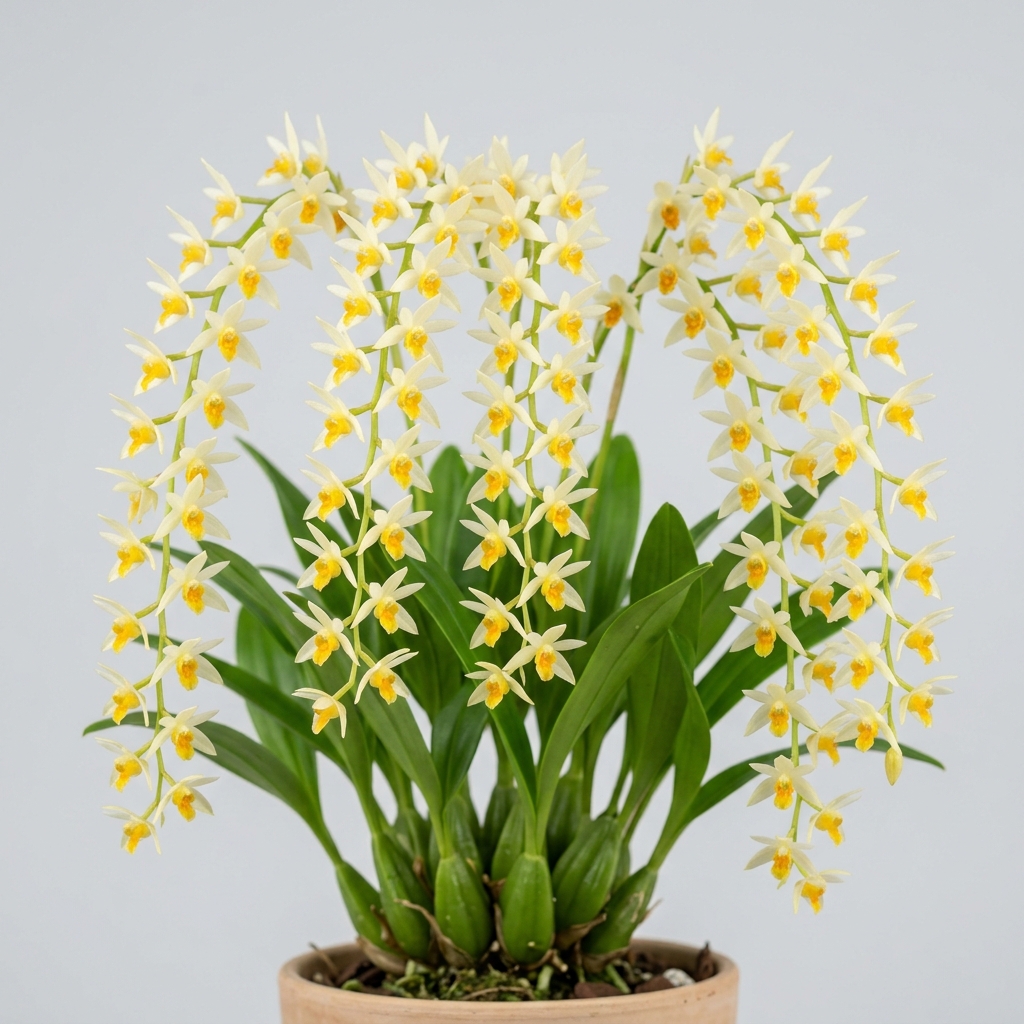
Dendrochilum Glumaceum, commonly known as the hay-scented orchid or chain orchid, is a highly prized sympodial species native to the mountainous regions of the Philippines. Renowned for its elegant, arching flower spikes that resemble delicate chains of wheat, this orchid brings a unique architectural form to any collection. Growers value it not only for its prolific blooming habit but also for its compact growth, making it an excellent choice for indoor cultivation and greenhouse benches alike.
Unlike many large-flowered orchid genera, this species captivates onlookers through the sheer abundance of its miniature blossoms. A single mature specimen can produce dozens of pendulous inflorescences simultaneously, creating a spectacular fountain-like display of cream-white flowers. Its ease of care and reliable seasonal performance have secured its status as a favorite among both novice orchid enthusiasts and seasoned collectors.
💡 Did You Know?
The specific epithet glumaceum comes from the Latin word gluma, which refers to the chaffy bracts or husks found on grasses and grains. This perfectly describes the unique, wheat-like appearance of the orchid's flower spikes before the tiny, star-shaped blossoms fully open.
🌿 Botanical Overview
Dendrochilum Glumaceum is an epiphytic, and occasionally lithophytic, orchid species native to the humid montane forests of the Philippines, typically found at elevations ranging from 700 to over 2,000 meters. This wide altitudinal range contributes to the plant’s adaptability in cultivation, allowing it to tolerate a broader spectrum of temperatures than more specialized equatorial orchids. Structurally, the plant features tightly clustered, pear-shaped pseudobulbs, each topped with a single, erect, leathery leaf that remains attractive throughout the year.
The growth habit is sympodial, meaning it expands horizontally by producing new pseudobulbs from a creeping rhizome. As the new growths emerge in the spring, they develop a protective sheath from which both the leaf and the flower spike emerge simultaneously. This synchronized development is a hallmark of the genus and requires consistent care to ensure the emerging spikes are not stunted by environmental stress.
🌸 Flower Characteristics
The inflorescence of Dendrochilum Glumaceum is a gracefully arching, pendulous raceme that can reach up to 30 centimeters in length. Each spike carries two neat, alternating rows of small, star-shaped flowers, numbering anywhere from 30 to 50 blossoms per stem. The individual flowers are typically cream-colored, white, or pale yellow, featuring narrow, pointed sepals and petals that frame a tiny, contrasting orange or yellow lip.
The arrangement of the flowers gives the spike a distinct, braided appearance reminiscent of ornamental grass or grain husks, which inspired its specific epithet, “glumaceum” (meaning husk-like). The flowers open nearly simultaneously along the spike, creating an immediate and highly coordinated visual impact that lasts for several weeks.
Fragrance & Bloom Profile
One of the most defining characteristics of Dendrochilum Glumaceum is its powerful and distinctive fragrance. The flowers emit a sweet, spicy scent that is widely compared to anise, clean hay, vanilla, or sweet woodruff. This fragrance is most intense during the morning and early afternoon hours, filling the surrounding growing space with a pleasant, clean aroma.
The blooms typically last for three to four weeks, depending on ambient temperatures and humidity levels. Cooler conditions will generally prolong the lifespan of the flowers, while excessive heat or dry air can cause the delicate blossoms to fade prematurely.
Parentage & Hybrid Lineage
As a distinct species rather than a man-made hybrid, Dendrochilum Glumaceum represents a pure wild lineage. While some taxonomists have recently proposed moving the genus Dendrochilum into the broader genus Coelogyne, it remains widely labeled and traded under its traditional name in horticultural circles.
Because of its desirable traits—namely its compact growth habit, floriferous nature, and strong fragrance—this species has occasionally been used in hybridizing programs. However, documented hybrids remain relatively uncommon in the mass market, and the species itself remains far more popular among collectors than any of its derivative crosses.
🌱 Growing Conditions
To cultivate Dendrochilum Glumaceum successfully, growers should aim to replicate its native montane forest environment. It thrives in medium to bright indirect light, similar to the light levels preferred by Cattleyas or stronger Miltoniopsis. Protection from direct midday sun is essential to prevent the thin, leathery leaves from scorching.
💡 Care Tip
To maintain the high this orchid craves without risking root rot, place the pot on a tray filled with pebbles and water. Ensure the bottom of the pot rests above the water line to prevent water from wicking upward into the media.
The orchid prefers intermediate to warm temperatures, ideally ranging from 18°C to 26°C (65°F to 80°F) during the day, with a slight drop of 4°C to 6°C at night to stimulate healthy growth and future blooming. High humidity is crucial, ideally maintained between 60% and 80%, accompanied by gentle, continuous air movement to prevent fungal pathogens from settling on the dense foliage.
Watering, Feeding & Potting Media
This species does not possess large water-storing pseudobulbs, meaning it has a lower tolerance for prolonged drought than some other orchid genera. The potting medium should be kept consistently moist but never waterlogged. During the active growing season, water the plant thoroughly as soon as the top layer of the medium begins to dry.
A well-draining, moisture-retentive medium is ideal. A mix of fine-grade fir bark, perlite, and chopped sphagnum moss works exceptionally well in plastic or clay pots. Alternatively, the plant can be grown in shallow baskets to accommodate its spreading growth habit. Feed the orchid weekly with a highly diluted, balanced orchid fertilizer during the spring and summer, flushing the pot with pure water once a month to prevent salt buildup.
Blooming Season & Care Notes
Dendrochilum Glumaceum typically blooms in late winter or early spring, though well-grown specimens may occasionally produce a secondary flush of flowers later in the year. The flower spikes emerge from the center of the developing new growths, so any disruption to the plant during this critical phase can abort the buds.
Repotting should only be performed immediately after flowering has finished and before the new roots have grown too long. This species resents root disturbance, so choose a pot size that allows for at least two years of growth, and handle the fine, delicate roots with extreme care during the transition.
⚠️ Common Issues
⚠️ Common Mistake
A frequent error is allowing the potting medium to dry out completely between waterings. Unlike thick-leaved orchids, this species has thin foliage and small pseudobulbs that cannot tolerate prolonged drought, which quickly leads to leaf drop and aborted flower spikes.
- Root Rot:
Caused by overwatering or compacted, decomposing potting media that deprives the roots of oxygen. - Leaf Tip Burn: Often a sign of low humidity, underwatering, or excessive mineral buildup from hard water or over-fertilizing.
- Bud Blast:
Sudden drops in humidity, drafty locations, or extreme temperature fluctuations can cause the developing flower buds to dry up and drop before opening. - Spider Mites:
These pests can target the undersides of the thin leaves, especially in warm, dry environments with poor air circulation. - Fungal Spotting: High humidity combined with stagnant air can lead to unsightly black or brown spots on the foliage.
❓ Frequently Asked Questions
How often should I water my Dendrochilum Glumaceum?
Watering frequency depends on your growing environment, but the medium should remain consistently damp. Typically, this means watering two to three times a week during the active growing season, reducing slightly in winter while ensuring the pseudobulbs do not shrivel.
Why are the leaves on my orchid turning yellow?
Yellowing leaves can indicate several issues, including natural shedding of old pseudobulb foliage, excessive direct sunlight, or root damage from overwatering. Inspect the root system to ensure it is healthy and white rather than brown and mushy.
Can I grow Dendrochilum Glumaceum under LED grow lights?
Yes, this species adapts exceptionally well to artificial lighting. Position the plant under moderate-intensity LED grow lights for 12 to 14 hours a day, ensuring the light source is far enough away to avoid overheating the foliage.
Does this orchid require a winter rest period?
Dendrochilum Glumaceum does not require a strict, dry winter rest. However, it benefits from a slight reduction in watering and fertilizer during the darkest winter months to match its slower metabolic rate before the spring growth surge.
⭐ Final Growing Notes
Dendrochilum Glumaceum is a rewarding and highly fragrant addition to any indoor orchid collection. By providing consistent moisture, high humidity, and bright indirect light, growers can enjoy an annual display of elegant, chain-like flower spikes that fill the home with a delightful herbal aroma. Its compact size and robust nature make it an enduring classic of the orchid world.
⚕️ Health, Safety & Edibility
Understanding how a plant interacts with people, pets, and the surrounding environment is part of responsible cultivation. This section uses conservative, general guidance and does not replace professional medical or veterinary advice.
Human Safety: Species-specific human toxicity data for Dendrochilum Glumaceum is limited. Use conservative handling practices and avoid intentional consumption.
Pet Safety: Pet-specific safety information for Dendrochilum Glumaceum is limited, so keep it away from animals that commonly chew plants.
Edibility: Dendrochilum Glumaceum should not be treated as edible. Ornamental specimens may contain natural irritants or horticultural residues that make them unsuitable for consumption.
Skin Contact: Skin irritation is not well documented for this plant, but gloves are sensible when repotting, pruning, or handling potting media.
🌱 Propagation Tip
This species is best propagated by division during repotting. Ensure each division contains at least three to four healthy, mature pseudobulbs with active lead growths. Avoid dividing the plant too frequently, as larger specimens produce far more impressive flower displays.
⭐ Expert Advice
If your plant is growing rapidly but failing to bloom, try increasing the levels gradually and ensuring a distinct drop of about 5 degrees Celsius between day and night during the autumn months to trigger bud initiation.

Leave A Comment