
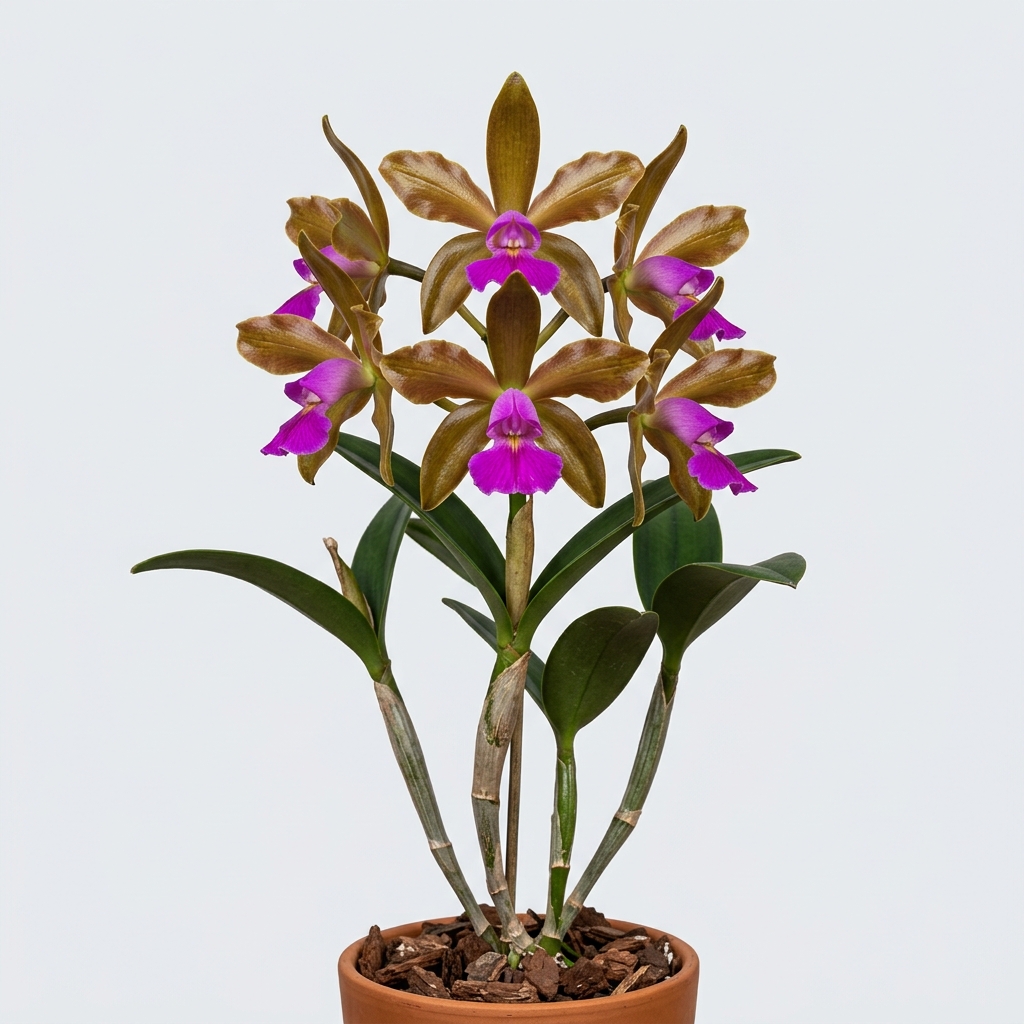
Cattleya Dormaniana is a highly prized bifoliate orchid celebrated for its striking color contrast and elegant growth habit. Native to the humid mountain forests of Brazil, this orchid captures the attention of collectors with its unique coppery-bronze sepals and petals, which frame a brilliant, saturated magenta-purple lip. Its compact size makes it an excellent choice for indoor growers and greenhouse enthusiasts alike who appreciate the classic beauty of Cattleya orchids but have limited space.
While historically debated as either a distinct species or a natural hybrid, Cattleya Dormaniana remains a standout representative of the bifoliate Cattleya group. It produces slender, cane-like pseudobulbs topped with two dark green leaves, presenting a tidy and upright silhouette. Cultivating this orchid successfully requires a balance of bright, filtered light, consistent humidity, and a distinct wet-to-dry cycle that mimics its natural montane habitat.
💡 Did You Know?
Cattleya Dormaniana is native to the Organ Mountains of Brazil, where it grows as an epiphyte at elevations of 2,000 to 3,000 feet. This specific montane habitat exposes the orchid to cool night breezes and high , which is why providing excellent air circulation is so critical for its success in home cultivation.
🌿 Botanical Overview
Cattleya Dormaniana is native to the organ-pipe mountains of Brazil, where it grows as an epiphyte at moderate elevations. This environment provides the orchid with bright, dappled sunlight, regular rainfall, and constant air movement. The plant features slender, cylindrical pseudobulbs that typically reach between six and ten inches in height, each bearing two narrow, leathery leaves at the apex.
The growth habit of this orchid is distinctly upright and compact compared to larger, labiate Cattleya species. Its root system is highly sensitive to stagnant moisture, relying on the rapid drainage provided by its epiphytic lifestyle on mossy tree branches. Understanding these native conditions is key to establishing a successful care routine in a home or greenhouse setting.
🌸 Flower Characteristics
The blossoms of Cattleya Dormaniana are renowned for their dramatic and unusual color palette. The sepals and petals are typically a glossy, coppery-brown, olive, or bronze hue, sometimes displaying subtle green undertones. This earthy background contrasts sharply with the prominent, three-lobed lip, which features a vibrant amethyst or deep magenta-purple coloration.
Each flower spike emerges from a green sheath at the apex of the matured pseudobulb, usually bearing one to three flowers. The individual blooms generally measure between three and four inches in diameter. Their flat presentation and heavy substance give them a refined, sculptural appearance that lasts for several weeks under optimal conditions.
Fragrance & Bloom Profile
The fragrance of Cattleya Dormaniana is often described as light, delicate, and pleasantly sweet or spicy, though its intensity can vary depending on environmental factors. The scent is typically most noticeable during the morning hours when temperatures begin to rise and light levels increase.
A single bloom cycle can last anywhere from three to five weeks, provided the plant is kept in a cool, draft-free location away from direct sunlight. Because fragrance and bloom longevity are highly dependent on cultural conditions, maintaining stable humidity and avoiding sudden temperature fluctuations will help maximize the sensory appeal of the flowers.
Parentage & Hybrid Lineage
The taxonomic status and origin of Cattleya Dormaniana have been the subject of botanical discussion for over a century. In early horticultural literature, it was frequently suggested to be a natural hybrid between Cattleya bicolor and Cattleya pumila (formerly Laelia pumila) due to its intermediate physical characteristics.
However, modern taxonomic authorities and grower references often classify it as a distinct species within the genus Cattleya. Because historical documentation can be inconsistent, growers should approach parentage claims with caution and appreciate the plant for its unique, stable characteristics rather than definitive lineage.
🌱 Growing Conditions
To thrive, Cattleya Dormaniana requires intermediate to warm temperatures, ideally ranging from 70°F to 85°F during the day, with a night drop to around 60°F to 65°F. This diurnal temperature variation is crucial for stimulating healthy growth and future bud development.
💡 Care Tip
Always place your Cattleya Dormaniana in a location with active air movement. A small, oscillating fan nearby can prevent stagnant air pockets, which significantly reduces the risk of fungal leaf spots and root rot in high- environments.
Bright, filtered light is essential for this orchid. A location near an east- or shaded south-facing window is usually ideal. The leaves should maintain a healthy mid-green color; dark green leaves indicate insufficient light, while yellowing or reddish-purple tinting suggests the light is too intense. High humidity of 60% to 80% combined with strong, continuous air movement will prevent leaf spotting and fungal issues.
Watering, Feeding & Potting Media
Watering should be frequent and thorough during the active growing season, allowing the potting medium to dry out almost completely between applications. During the cooler winter months, watering frequency should be reduced, though the pseudobulbs should never be allowed to shrivel severely.
A well-draining potting mix is critical. A combination of medium-grade fir bark, horticultural charcoal, and perlite works exceptionally well in clay pots, which promote rapid drying. Alternatively, this orchid can be mounted on cork bark or tree fern slabs if high humidity can be maintained. Feed the plant weekly with a diluted, balanced orchid fertilizer during active growth, flushing the pot with pure water once a month to prevent salt buildup.
Blooming Season & Care Notes
Cattleya Dormaniana typically initiates its blooming cycle in the autumn or early winter, shortly after the new pseudobulbs have fully matured. As the flower sheath develops at the top of the pseudobulb, avoid changing the plant’s orientation to the light source, as this can cause the developing buds to twist or present poorly.
Once blooming is complete, the orchid enters a brief period of rest. This is the ideal time to inspect the plant for repotting needs. Repotting should only be performed when new root tips begin to emerge from the base of the lead pseudobulb, ensuring the plant establishes quickly in its new medium with minimal transplant shock.
⚠️ Common Issues
⚠️ Common Mistake
A frequent mistake is repotting this orchid at the wrong time of year. Avoid repotting during active dormancy; instead, wait until you see fresh green root tips emerging from the base of the newest pseudobulb to ensure rapid recovery.
- Root Rot:
Caused by overwatering or a decomposing potting medium that retains too much moisture. - Bud Blast:
The sudden drying and dropping of buds, often triggered by low humidity, drafty conditions, or sudden temperature shifts. - Leaf Spotting: Fungal or bacterial spots arising from poor air circulation in high-humidity environments.
- Scale and Mealybugs: Common pests that hide in the dry sheaths of the pseudobulbs or under the leaves.
- Dehydration:
Indicated by shriveled pseudobulbs and wrinkled leaves, usually due to a compromised root system or underwatering.
❓ Frequently Asked Questions
How often should I water my Cattleya Dormaniana?
Watering frequency depends on your growing environment, but generally, you should water thoroughly once the potting medium is nearly dry. During the active summer growth phase, this may be every few days, while in the winter rest period, it may be reduced to once a week or less.
Can Cattleya Dormaniana be grown under LED lights?
Yes, this orchid adapts well to artificial lighting. High-output LED grow lights positioned at an appropriate distance can provide the bright, full-spectrum light required for robust growth and blooming, provided you monitor leaf color to prevent burning.
Why are the pseudobulbs on my orchid shriveling?
Shriveled pseudobulbs usually indicate water stress. This can be caused by underwatering or, conversely, by overwatering which has rotted the root system, leaving the plant unable to absorb moisture. Inspect the roots to determine the exact cause.
When is the best time to repot Cattleya Dormaniana?
The optimal time to repot is immediately after flowering when new root growth is just beginning to emerge from the base of the newest pseudobulb. Repotting at this stage minimizes transplant shock and allows the orchid to establish quickly.
⭐ Final Growing Notes
Cattleya Dormaniana is a rewarding orchid that brings a touch of exotic sophistication to any collection. By providing it with bright, filtered light, excellent air movement, and a highly porous potting medium that dries rapidly, growers can enjoy its striking, coppery-bronze and magenta blooms year after year. Patience and attentive care are amply rewarded when this Brazilian treasure displays its unique, contrasting flowers.
⚕️ Health, Safety & Edibility
Understanding how a plant interacts with people, pets, and the surrounding environment is part of responsible cultivation. This section uses conservative, general guidance and does not replace professional medical or veterinary advice.
Human Safety: No published evidence currently identifies species-specific toxicity concerns for Cattleya Dormaniana during normal handling. As with most ornamental plants, it should not be intentionally consumed.
Pet Safety: Published information does not indicate that this orchid commonly poses a toxicity concern for cats or dogs. However, chewing leaves, flowers, roots, or potting media may still cause mild digestive upset.
Edibility: This orchid is cultivated for ornamental display rather than food. Ornamental plants may carry fertilizers, pesticides, or other horticultural treatments that make them unsuitable for consumption.
Skin Contact: Routine handling is not generally associated with skin irritation. Gardeners with sensitive skin may prefer wearing gloves when repotting, pruning, or handling potting media.
🌱 Propagation Tip
Propagate Cattleya Dormaniana by division only when the plant has grown large, ensuring each division has at least three to four healthy, mature pseudobulbs with active lead growths to support successful establishment.
⭐ Expert Advice
To encourage abundant blooming, ensure your orchid experiences a distinct drop of 10 to 15 degrees Fahrenheit between day and night during the late summer and early autumn. This natural cooling cue triggers the development of flower sheaths.

Leave A Comment