
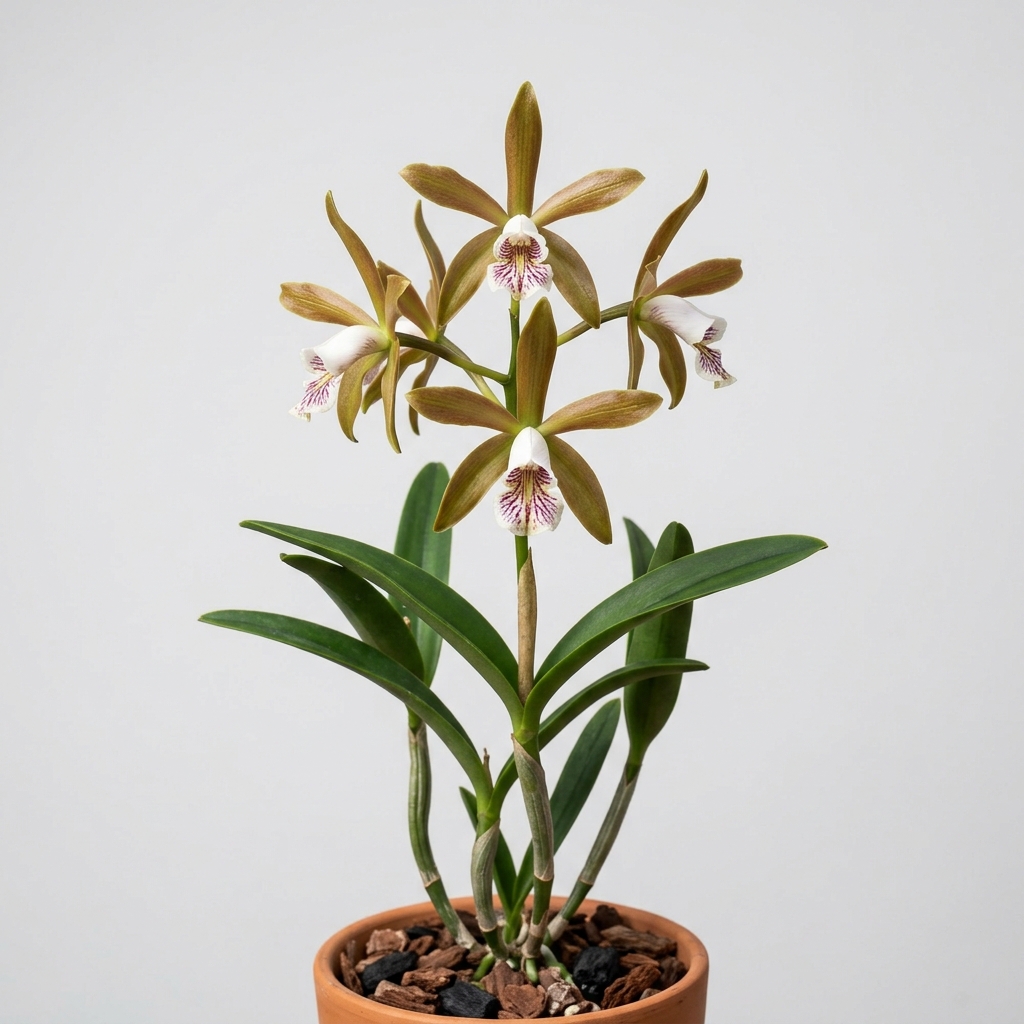
Cattleya Araguaiensis is a highly distinctive orchid species cherished by collectors for its unique vegetative habit and star-shaped blossoms. Unlike the large, showy labiate Cattleyas typically associated with the genus, this Brazilian native features slender, pencil-like pseudobulbs and narrow foliage that give it an elegant, minimalist silhouette. It is particularly valued by intermediate and advanced growers who appreciate its unconventional form and wild, natural beauty.
When in bloom, this species produces striking flowers that contrast beautifully with its understated foliage. The blossoms feature narrow, elongated sepals and petals in shades of bronze, olive green, or warm brown, surrounding a prominent, tubular white lip adorned with rich purple or reddish-brown markings. Cultivating this orchid successfully requires replicating its warm, seasonally dry native habitat, making it a rewarding challenge for dedicated enthusiasts.
💡 Did You Know?
Cattleya Araguaiensis is named after the Araguaia River in Brazil, where it was originally discovered growing as an epiphyte in the gallery forests. Unlike most of its relatives in the Cattleya , which feature thick, club-shaped pseudobulbs, this species has evolved extremely slender, pencil-like stems that help it blend seamlessly into the surrounding twigs and branches of its native canopy.
🌿 Botanical Overview
Cattleya Araguaiensis is native to the riparian forests of Brazil, specifically along the margins of the Araguaia River. In its natural habitat, it grows as an epiphyte on trees in warm, humid environments that experience distinct seasonal fluctuations in moisture. This evolutionary background has equipped the plant with a resilient nature, provided its specific environmental preferences are met in cultivation.
Vegetatively, this orchid is highly atypical for the genus Cattleya. Instead of the thick, club-shaped pseudobulbs common to many of its relatives, it produces exceptionally slender, cylindrical pseudobulbs that resemble stiff pencils. Each pseudobulb is topped by a single, narrow, upright leaf, creating a compact and vertical growth habit that takes up minimal space in a greenhouse or indoor growing area.
🌸 Flower Characteristics
The flowers of Cattleya Araguaiensis are a striking departure from standard orchid forms. They are star-shaped, or stellate, with narrow, elongated sepals and petals that often exhibit a slight twist or reflexed posture. The color palette of the segments ranges from warm bronze and ochre to a subtle olive green, giving the bloom an earthy, exotic appearance.
The true highlight of the blossom is the lip, or labellum. It is tubular and wraps tightly around the column, flaring slightly at the apex. The base color of the lip is a clean, contrasting white, which is beautifully decorated with bold, transverse stripes of deep purple, magenta, or reddish-brown. Each flowering stem typically produces a single, long-lasting bloom that stands out despite its modest size.
Fragrance & Bloom Profile
The fragrance of Cattleya Araguaiensis is not as intensely sweet or pervasive as that of the larger labiate Cattleya species. Many growers report a very mild, pleasant scent that is most noticeable during the warm morning hours, while others find the blooms to be virtually unscented. Because fragrance intensity can vary based on individual genetics and environmental conditions, it is not consistently documented as a primary feature of the species.
The blooms emerge from a short, protective sheath at the apex of the newly matured pseudobulb. While the plant typically produces one flower per growth, a well-established specimen with multiple active leads can put on a beautiful, multi-directional display during its blooming cycle.
Parentage & Hybrid Lineage
As a distinct, naturally occurring species rather than a man-made hybrid, Cattleya Araguaiensis represents a unique evolutionary branch within the Orchidaceae family. It does not have parentage in the traditional sense, as it has evolved independently in its native Brazilian river basins.
In orchid breeding, this species has occasionally been used by hybridizers seeking to introduce its slender, compact vegetative habit and unique, striped lip patterns into new crosses. However, because its star-shaped flower form is dominant, hybrids derived from it often retain a more starry, wild appearance rather than the round, full shape favored in traditional exhibition orchids.
🌱 Growing Conditions
To cultivate Cattleya Araguaiensis successfully, growers must provide conditions that mimic its warm, tropical riverine origin. It thrives in bright, filtered light, similar to the dappled sunlight it would receive through a forest canopy. Direct, intense midday sun should be avoided, as it can easily scorch the narrow foliage.
💡 Care Tip
Ensure excellent air circulation around your Cattleya Araguaiensis, especially if grown in high . Stagnant air combined with moisture can quickly lead to bacterial or fungal rot on the slender pseudobulbs and delicate new growths.
Temperature management is crucial for this species. It prefers warm to intermediate conditions, with daytime temperatures ranging between 75°F and 85°F (24°C to 29°C) and a moderate drop at night to stimulate healthy growth. High humidity, ideally between 60% and 80%, is essential, along with constant, gentle air movement to prevent moisture from stagnating on the leaves and roots.
Watering, Feeding & Potting Media
Watering should be frequent and thorough during the active growing season, which typically spans spring and summer. However, the potting medium must be allowed to dry out almost completely between waterings. The roots of Cattleya Araguaiensis require rapid wet-to-dry cycles and will quickly deteriorate if kept constantly wet or waterlogged.
A balanced, water-soluble orchid fertilizer should be applied weakly at every second or third watering during the growing phase. For potting media, a coarse, highly porous mix of fir bark, charcoal, and perlite works well. Alternatively, because of its epiphytic nature, this species performs exceptionally well when mounted on cork bark or tree fern plaques, provided the grower can maintain adequate humidity and water the plant daily.
Blooming Season & Care Notes
Cattleya Araguaiensis typically enters its blooming season in late summer or early autumn, once the new pseudobulbs have fully matured. After the flowering cycle is complete, the plant enters a period of semi-dormancy during the cooler winter months. During this rest period, watering should be significantly reduced, and fertilizer should be withheld entirely.
Repotting or remounting should only be performed when new root growth is observed emerging from the base of the newest pseudobulb, usually in early spring. This ensures the plant can quickly establish itself in its new medium with minimal transplant shock.
⚠️ Common Issues
⚠️ Common Mistake
A frequent error is overwatering during the winter rest period. Because Cattleya Araguaiensis has slender pseudobulbs with limited water storage capacity compared to larger Cattleyas, growers often overcompensate, leading to root rot when the plant is not actively growing.
- Root rot caused by overwatering, compacted potting media, or poor drainage.
- Dehydration, indicated by severe shriveling of the slender, pencil-like pseudobulbs.
- Bud blast, where developing flower buds turn yellow and drop due to sudden changes in humidity or temperature.
- Pests such as scale or mealybugs, which can hide under the dry, papery sheaths of the pseudobulbs.
❓ Frequently Asked Questions
How often should I water Cattleya Araguaiensis?
Watering frequency depends on your growing environment and media. During the active growing season, water thoroughly when the potting medium is nearly dry. In winter, reduce watering significantly, providing just enough moisture to prevent the slender pseudobulbs from shriveling excessively.
Can Cattleya Araguaiensis be grown under LED lights?
Yes, this species can be grown successfully under high-quality, full-spectrum LED grow lights. Position the plant so it receives bright, indirect light, and monitor the leaves to ensure they do not become overly warm or show signs of light stress.
Why are the pseudobulbs on my orchid shriveling?
Shriveling pseudobulbs usually indicate dehydration. This can be caused by underwatering or, conversely, by root rot from overwatering, which destroys the roots and prevents the plant from absorbing moisture. Check the root system to determine the cause.
Is Cattleya Araguaiensis suitable for beginners?
This species is generally considered intermediate to advanced. Because of its slender growth habit and sensitivity to overwatering, it requires a more careful balance of humidity, watering, and air circulation than some of the more forgiving, robust Cattleya hybrids.
⭐ Final Growing Notes
Cattleya Araguaiensis is a captivating species that offers a rewarding departure from conventional orchid aesthetics. Its minimalist, pencil-like growth habit and exotic, star-shaped bronze flowers make it a standout addition to any collection. By providing bright light, excellent air movement, and a strict wet-to-dry watering cycle, growers can enjoy the unique charm of this Brazilian treasure for years to come.
⚕️ Health, Safety & Edibility
Understanding how a plant interacts with people, pets, and the surrounding environment is part of responsible cultivation. This section uses conservative, general guidance and does not replace professional medical or veterinary advice.
Human Safety: No published evidence currently identifies species-specific toxicity concerns for Cattleya Araguaiensis during normal handling. As with most ornamental plants, it should not be intentionally consumed.
Pet Safety: Published information does not indicate that this orchid commonly poses a toxicity concern for cats or dogs. However, chewing leaves, flowers, roots, or potting media may still cause mild digestive upset.
Edibility: This orchid is cultivated for ornamental display rather than food. Ornamental plants may carry fertilizers, pesticides, or other horticultural treatments that make them unsuitable for consumption.
Skin Contact: Routine handling is not generally associated with skin irritation. Gardeners with sensitive skin may prefer wearing gloves when repotting, pruning, or handling potting media.
🌱 Propagation Tip
This species is best propagated by division during repotting, ensuring that each division has at least three to four healthy, mature pseudobulbs and active root growth. Avoid dividing the plant too frequently, as it prefers to grow into established clumps.
⭐ Expert Advice
If you struggle to keep the roots healthy in traditional pots, try mounting this species on a cork plaque with a small pad of sphagnum moss. This closely mimics its natural epiphytic habit, allowing the roots to dry rapidly after and preventing rot.

Leave A Comment