
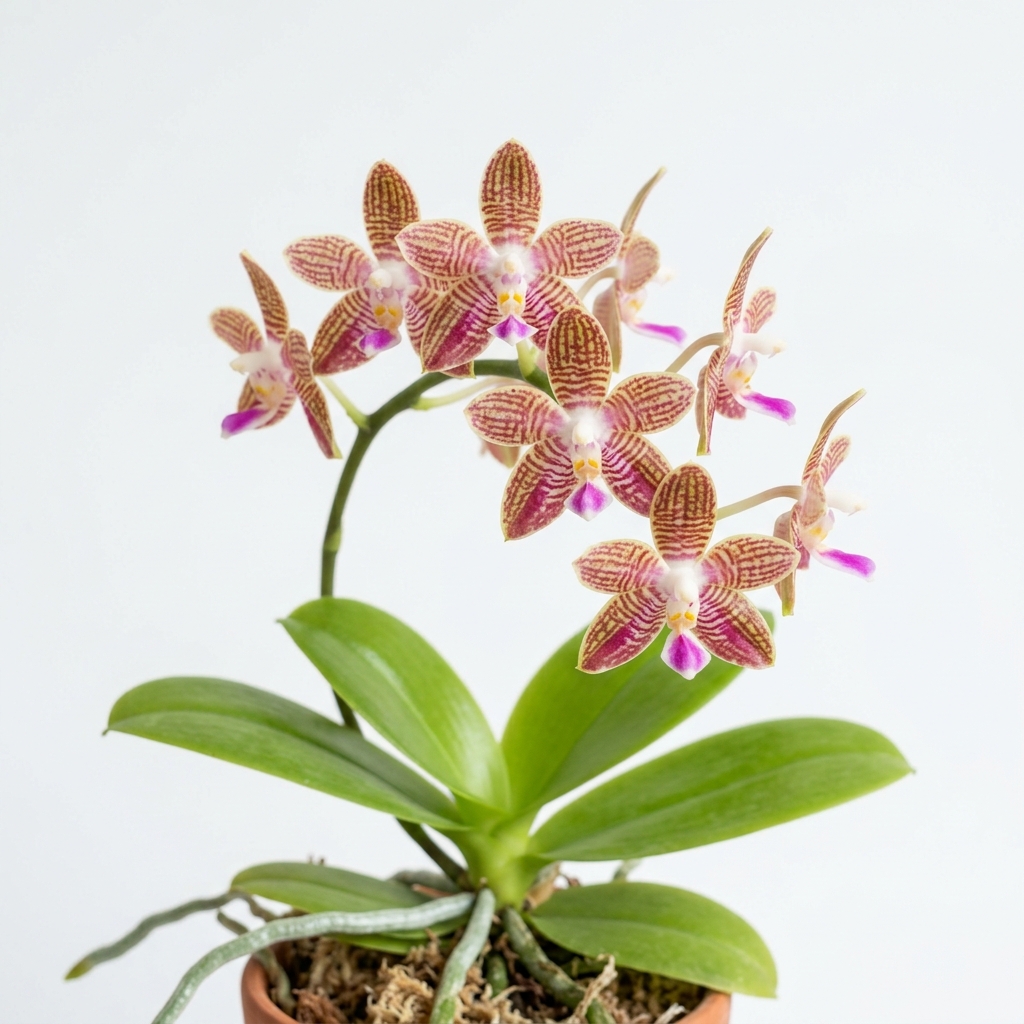
Phalaenopsis Javanica is a highly prized orchid species native to the island of Java, celebrated by collectors for its distinctively patterned blooms and compact growth habit. Unlike the large, showy hybrid moth orchids commonly found in mass markets, this species offers a more delicate, botanical aesthetic that appeals to dedicated orchid enthusiasts. Its compact size makes it an excellent candidate for indoor growers with limited space who still wish to cultivate a classic wild orchid form.
Cultivating this orchid requires a slight shift from standard hybrid care, as it thrives under more specific warm, humid conditions. Growers value Phalaenopsis Javanica not only for its striking, striping floral patterns but also for its historical contribution to modern Phalaenopsis breeding. When provided with the proper balance of filtered light, consistent moisture, and high humidity, it rewards keepers with charming, long-lasting displays.
💡 Did You Know?
Phalaenopsis Javanica is highly valued in orchid hybridizing for its ability to pass down its distinct, longitudinal striping pattern to its offspring. While many modern hybrids feature spots or solid colors, the precise, lined patterning of this species remains relatively rare and sought after in breeding programs.
🌿 Botanical Overview
Phalaenopsis Javanica is a monopodial epiphytic orchid native to the humid, tropical forests of Java, Indonesia. In its natural habitat, it grows on tree trunks and branches where it receives dappled shade and constant air movement. The plant features relatively short stems clothed in fleshy, obovate to elliptic leaves that are bright green and slightly glossy, typically reaching up to eight inches in length.
The root system of this species is adapted to clinging to damp bark, consisting of thick, silvery-green aerial roots covered in velamen to absorb moisture and nutrients from the air. Because it lacks pseudobulbs, the plant relies entirely on its thick leaves and roots to store water, making it more sensitive to prolonged dry spells than some other orchid genera.
🌸 Flower Characteristics
The blossoms of Phalaenopsis Javanica are relatively small, usually measuring between one to one and a half inches in diameter, but they make up for their size with intricate detailing. The sepals and petals are fleshy, star-shaped, and display a creamy-white or pale yellow background. This base color is heavily marked with longitudinal lines of reddish-brown, violet, or deep magenta dots and stripes, creating a striking, almost hand-painted appearance.
The lip, or labellum, is small and features a white base with bright magenta or purple markings and a small tuft of hairs near the center. The flowers are borne on short, suberect to pendulous inflorescences that emerge from the leaf axils, often carrying several flowers clustered closely together.
Fragrance & Bloom Profile
The fragrance of Phalaenopsis Javanica is a subject of some variation among growers, with reports ranging from a faint, sweet floral scent to a slightly spicy aroma. This variation is common in species orchids, where individual clones may exhibit different levels of scent production depending on environmental factors like temperature, humidity, and time of day.
The blooms are known for their heavy, waxy substance, which contributes to their longevity. Individual flowers can remain fresh on the spike for several weeks. Unlike some hybrids that bloom all at once, this species may open its flowers sequentially, extending the overall blooming period over a month or more.
Parentage & Hybrid Lineage
As a naturally occurring species rather than a man-made hybrid, Phalaenopsis Javanica does not have a hybrid parentage. It was formally described in the nineteenth century and has since been used as a parent in primary and complex hybrid breeding programs to introduce its unique striping patterns and compact growth habit to new cultivars.
In orchid registration records, crosses involving this species are highly valued for maintaining the star-like shape and intense patterning of the wild form. When purchasing this plant, growers should look for reputable nurseries that propagate through seed or tissue culture to ensure they are receiving a true species specimen rather than a complex hybrid lookalike.
🌱 Growing Conditions
To successfully grow Phalaenopsis Javanica indoors or in a greenhouse, one must replicate its native tropical forest understory environment. It requires low to medium indirect light, similar to the light levels preferred by jewel orchids or standard ferns. Direct sunlight must be avoided, as the tender green leaves burn easily, leading to unsightly brown patches and systemic stress.
💡 Care Tip
To maintain the high Phalaenopsis Javanica craves without risking root rot, place the pot on a tray filled with pebbles and water. Ensure the bottom of the pot does not touch the water directly, and use a small fan nearby to keep the air gently moving.
Temperature ranges should remain warm to hot, ideally between 70°F and 85°F during the day, with a slight drop of 5°F to 10°F at night to encourage healthy growth and eventual spiking. High humidity is crucial, ideally maintained between 60% and 80%. Adequate air circulation is equally important to prevent stagnant air from causing fungal or bacterial leaf spots in these humid conditions.
Watering, Feeding & Potting Media
Watering Phalaenopsis Javanica requires a careful balance; the potting medium should remain consistently damp but never waterlogged. Because it lacks water-storing pseudobulbs, the plant should not be allowed to dry out completely between waterings. When the top half-inch of the medium feels dry to the touch, it is time to water thoroughly with tepid, low-mineral water.
A potting mix of high-quality New Zealand sphagnum moss or a fine-grade fir bark mix works best to retain the necessary moisture while allowing oxygen to reach the roots. Feeding should be light and consistent; use a balanced, water-soluble orchid fertilizer diluted to one-quarter strength every second or third watering during the active growing season, flushing the pot with pure water occasionally to prevent salt buildup.
Blooming Season & Care Notes
Phalaenopsis Javanica typically initiates its blooming cycle in the spring and summer, though well-established plants under stable indoor conditions may bloom at other times of the year. The flower spikes emerge from the base of the leaves and should be left intact even after the flowers fade, as they can sometimes produce secondary branches or keikis from the nodes.
Repotting is best done in the spring, just as new root growth begins and after the main flowering flush has finished. Avoid disturbing the roots unnecessarily, as this species can be sensitive to root damage. Choose a pot that just fits the root mass, as overpotting leads to excess moisture retention and later root rot.
⚠️ Common Issues
⚠️ Common Mistake
A frequent error is treating Phalaenopsis Javanica exactly like a standard grocery store hybrid by letting it dry out completely between waterings. This species lacks water-storing pseudobulbs and has thinner leaves, meaning prolonged dryness will quickly lead to leaf dehydration and root loss.
- Root Rot: Caused by overwatering, poor drainage, or decomposing potting media that suffocates the roots.
- Leaf Burn: Bleached or dry brown patches on the leaves resulting from exposure to direct sunlight.
- Bud Blast: Premature dropping of flower buds due to sudden changes in temperature, low humidity, or drafts.
- Spider Mites and Mealybugs: Common pests that hide in the leaf joints and underside of leaves; treat early with insecticidal soap or neem oil.
- Bacterial Soft Rot: Wet, mushy spots on leaves caused by water sitting in the crown or leaf axils overnight.
❓ Frequently Asked Questions
How often should I water my Phalaenopsis Javanica?
Watering frequency depends on your home’s humidity and temperature, but generally, Phalaenopsis Javanica should be watered just as the potting medium begins to approach dryness. Unlike hybrid moth orchids, it prefers to remain evenly moist and should not dry out completely. Check the moisture level of the moss or bark weekly.
Can I grow Phalaenopsis Javanica under artificial LED lights?
Yes, Phalaenopsis Javanica adapts very well to indoor growing under artificial LED setups. Because it prefers lower light levels than many other orchid genera, place it near the edges of your light setup or adjust the intensity to moderate levels, ensuring the leaves do not feel warm to the touch.
Why are the flower buds on my orchid falling off before opening?
This issue, known as bud blast, is typically caused by environmental shock. Sudden drops in humidity, cold drafts from air conditioners, or letting the potting medium dry out completely while the buds are developing can cause the plant to abort its blooms. Maintain stable conditions to prevent this.
Is Phalaenopsis Javanica suitable for beginners?
While it is not as forgiving as mass-market hybrid Phalaenopsis, it is an excellent choice for intermediate growers or ambitious beginners who can commit to maintaining high humidity and consistent moisture. Understanding its need for warmth and shaded conditions is key to success.
⭐ Final Growing Notes
Phalaenopsis Javanica remains a jewel among species orchids, offering a rewarding challenge for those willing to accommodate its tropical requirements. Its exquisite, striped blossoms and compact growth habit make it a standout addition to any indoor orchid collection or terrarium setup. By focusing on high humidity, gentle warmth, and careful watering, you can enjoy the unique charm of this Indonesian native for many years to come.
⚕️ Health, Safety & Edibility
Understanding how a plant interacts with people, pets, and the surrounding environment is part of responsible cultivation. This section uses conservative, general guidance and does not replace professional medical or veterinary advice.
Human Safety: No published evidence currently identifies species-specific toxicity concerns for Phalaenopsis Javanica during normal handling. As with most ornamental plants, it should not be intentionally consumed.
Pet Safety: Published information does not indicate that this orchid commonly poses a toxicity concern for cats or dogs. However, chewing leaves, flowers, roots, or potting media may still cause mild digestive upset.
Edibility: This orchid is cultivated for ornamental display rather than food. Ornamental plants may carry fertilizers, pesticides, or other horticultural treatments that make them unsuitable for consumption.
Skin Contact: Routine handling is not generally associated with skin irritation. Gardeners with sensitive skin may prefer wearing gloves when repotting, pruning, or handling potting media.
🌱 Propagation Tip
While this species is primarily grown from seed in sterile laboratory conditions, mature plants may occasionally produce a keiki, or baby plant, on an old flower spike. Wait until the keiki has developed several healthy roots at least two inches long before carefully detaching and potting it.
⭐ Expert Advice
When repotting this species, try to preserve as many of the active root tips as possible, as they can be sensitive to disturbance. Using a mix of high-quality sphagnum moss and fine bark allows for excellent moisture retention while still providing the essential aeration that prevents root suffocation.

Leave A Comment