
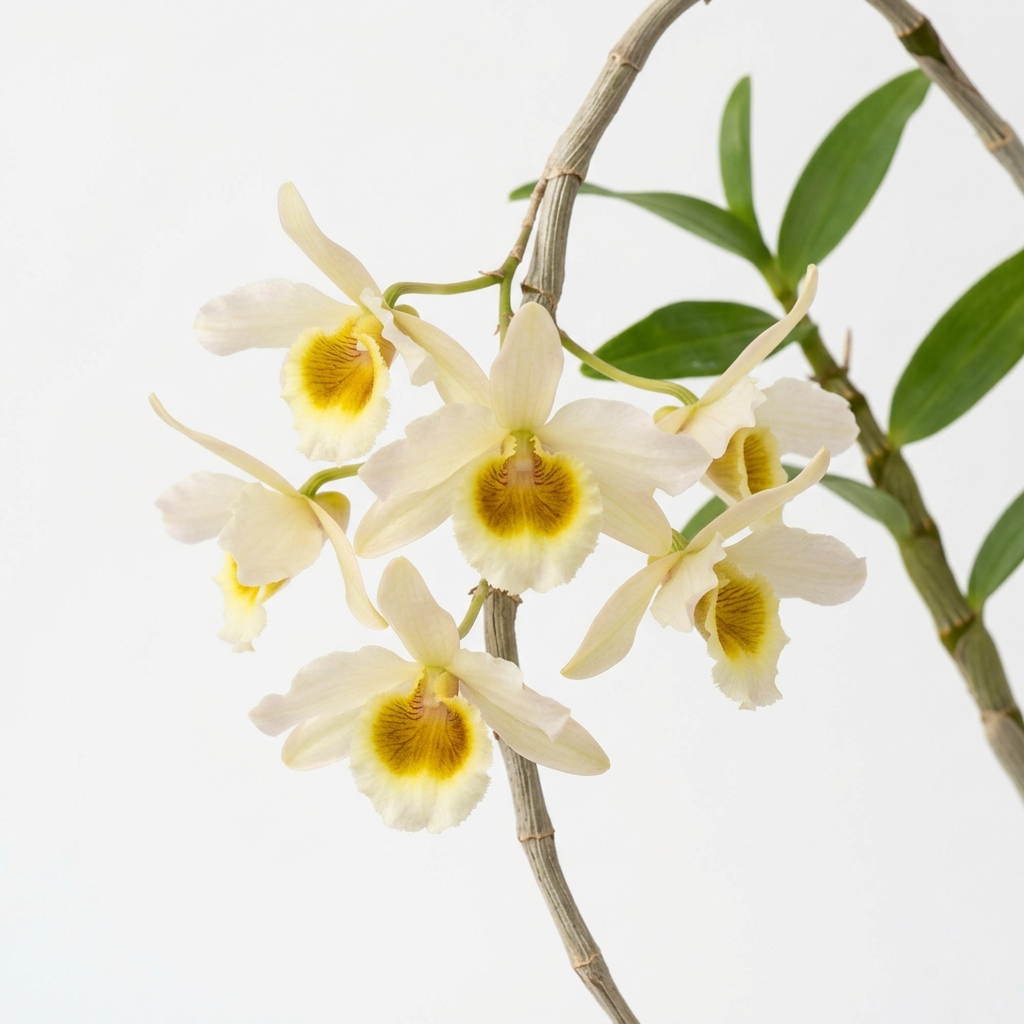
Dendrobium Signatum is a highly valued orchid species within the vast Dendrobium genus, appreciated by collectors for its elegant, pastel-toned blooms and pendulous growth habit. Native to the seasonally dry forests of Southeast Asia, this epiphytic orchid produces slender, cane-like pseudobulbs that drape gracefully as they mature, making it an useful selection for mounted culture or hanging baskets.
Growers prize this orchid for its striking floral display, which typically emerges during the late winter and spring months. The delicate flowers feature a beautiful contrast between pale cream or soft yellow petals and a distinctively marked lip, bringing a refined, natural aesthetic to any indoor greenhouse or intermediate growing space.
💡 Did You Know?
Dendrobium Signatum belongs to the Dendrobium orchid group, where flower presentation is often just as important as . White-flowered cultivars are especially valued indoors because their pale blooms reflect well and pair easily with many home, greenhouse, and display settings.
🌿 Botanical Overview
Dendrobium Signatum is characterized by its deciduous to semi-deciduous nature, a common trait among many species in the Dendrobium section. The plant produces upright to arching, cane-like pseudobulbs that can reach moderate lengths under optimal conditions. These canes are leafy during the active growing season but often shed their foliage prior to blooming, concentrating the plant’s energy into floral production.
In its native habitat, this orchid experiences distinct seasonal shifts, transitioning from a warm, wet summer monsoon period to a cooler, significantly drier winter. Understanding this natural cycle is key to successfully cultivating the species, as the dry winter rest triggers the initiation of flower buds along the nodes of the mature, leafless canes.
🌸 Flower Characteristics
The flowers of Dendrobium Signatum are moderately sized, usually measuring between 4 to 6 centimeters in diameter. They are borne in short racemes that emerge from the upper nodes of both leafy and leafless canes. The sepals and petals are typically linear-oblong, presenting a delicate, slightly twisted or wavy appearance with coloration ranging from pure white to a soft, buttery yellow.
The most defining feature of the bloom is its prominent, trumpet-shaped lip or labellum. The lip is generally pale yellow or white on the exterior, but features a rich, golden-yellow to orange-yellow blotch in the throat, sometimes accompanied by faint reddish-brown markings deep within the column. This contrasting eye-like pattern serves as a visual guide for natural pollinators.
Fragrance & Bloom Profile
While fragrance can vary slightly depending on individual specimens and environmental conditions, Dendrobium Signatum is widely reported to possess a pleasant, mild scent. The fragrance is most pronounced during the morning hours when temperatures begin to rise, offering a sweet, subtly honey-like or floral aroma that fills the immediate growing area.
Individual flowers are relatively long-lasting, often remaining in pristine condition for three to four weeks if kept in a cool, draft-free environment. A well-grown specimen with multiple mature canes can produce dozens of flowers simultaneously, creating a spectacular cascade of pastel blooms that marks the transition from winter to spring.
Parentage & Hybrid Lineage
As a naturally occurring species rather than a man-made hybrid, Dendrobium Signatum does not have a complex pedigree of parental cultivars. Instead, it represents a distinct genetic lineage within the Dendrobium genus. It has, however, been used occasionally in hybridizing programs to introduce its soft coloration, compact flower clusters, and pendulous growth habit to new Dendrobium grexes.
In historical orchid literature, the species has sometimes been confused with or compared to closely related species such as Dendrobium tortile or Dendrobium hildebrandii. Growers should consult updated taxonomic databases to verify the accepted status of specific collected clones or line-bred varieties.
🌱 Growing Conditions
To cultivate Dendrobium Signatum successfully, growers must replicate its native tropical environment. It thrives in bright, filtered light, similar to the dappled canopy of deciduous forests. Direct midday sun should be avoided to prevent leaf scorch, but high light levels are essential during the summer growing season to build up the energy reserves needed for blooming.
💡 Care Tip
For best results, grow Dendrobium Signatum in bright filtered with steady and gentle airflow. Avoid placing the plant in harsh midday sun, but do not keep it in a dark corner; weak is one of the most common reasons cultivated orchids refuse to rebloom.
Temperature requirements are intermediate to warm. During the active summer growth phase, daytime temperatures of 75°F to 85°F (24°C to 29°C) are ideal, with a slight drop at night. In the winter rest period, cooler night temperatures dropping to 55°F to 60°F (13°C to 16°C) help stimulate bud development. Good air circulation is vital at all times to prevent stagnant air pockets around the foliage and roots.
Watering, Feeding & Potting Media
Watering practices must be strictly adjusted according to the season. During the spring and summer, when new leads and roots are actively developing, the plant requires frequent, thorough watering. The potting medium should remain moist but never waterlogged. Weekly applications of a balanced, diluted orchid fertilizer support this rapid vegetative growth.
As autumn approaches, watering should be gradually reduced, and fertilization should be stopped entirely. During the winter rest, water should be provided sparingly—only enough to prevent the pseudobulbs from shriveling excessively. Epiphytic culture on cork mounts or in open, slatted wooden baskets with coarse fir bark or tree fern fiber is highly recommended, as these setups allow the roots to dry rapidly after watering.
Blooming Season & Care Notes
The primary blooming season occurs from late winter through early spring. As the flower buds begin to swell at the nodes of the canes, growers should slightly increase humidity but keep watering minimal until the buds are fully formed. Moving the plant to a slightly cooler location out of direct sunlight once the flowers open will prolong the life of the blooms.
After the flowering cycle is complete, new vegetative shoots will emerge from the base of the old canes. This is the ideal time to repot or remount the orchid if the potting medium has begun to decompose. Avoid cutting away old, leafless canes unless they are completely dry, brown, and hollow, as they continue to store water and nutrients that support the new growth.
⚠️ Common Issues
⚠️ Common Mistake
The most common mistake is by calendar instead of root and potting-media condition. Dendrobium roots need moisture and air at the same time, so constantly wet bark or sphagnum can lead to root loss even when the leaves still look healthy.
- Root Rot:
Caused by overwatering during the winter rest period or using a decomposed, water-retentive potting medium. - Bud Blast:
Sudden dropping of flower buds before they open, often triggered by abrupt changes in temperature, low humidity, or drafts. - Pseudobulb Shriveling: Excessive wrinkling of the canes during the winter rest. While minor shriveling is normal, severe dehydration indicates the plant needs a light misting.
- Pests:
Spider mites and scale insects can occasionally colonize the undersides of leaves or hide within the dry sheaths of the canes. - Foliar Spotting: Fungal or bacterial spots may develop on the leaves if air circulation is inadequate when humidity levels are high.
❓ Frequently Asked Questions
Why is my Dendrobium Signatum losing its leaves?
It is entirely natural for this species to shed its leaves, particularly from older canes, as it enters its winter dormancy. This deciduous behavior is a survival mechanism from its native dry-season habitat and typically precedes the spring blooming cycle.
How long should the winter rest period last?
The winter rest should begin in late autumn (usually November) and continue until new growth or flower buds appear in late winter or early spring. During this time, withhold fertilizer and water only sparingly to prevent severe cane shriveling.
Can I grow this orchid under artificial LED lights?
Yes, it can be grown successfully under high-output LED grow lights. Ensure the lights are positioned to provide bright, filtered intensity, and adjust the day length seasonally to mimic natural photoperiods, which helps trigger blooming.
What is the best potting medium for this species?
A highly draining medium is essential. Coarse fir bark mixed with charcoal and perlite works well in pots. However, because of its pendulous growth habit, mounting the orchid on a cork slab or planting it in a slatted wooden basket is often preferred.
⭐ Final Growing Notes
Dendrobium Signatum is a rewarding species that bridges the gap between wild orchid beauty and manageable indoor cultivation. By respecting its seasonal need for a dry winter rest and providing bright, airy conditions during the summer, growers can enjoy a reliable annual display of delicate, honey-scented blossoms that epitomize the elegance of epiphytic orchids.
⚕️ Health, Safety & Edibility
Understanding how a plant interacts with people, pets, and the surrounding environment is part of responsible cultivation. This section uses conservative, general guidance and does not replace professional medical or veterinary advice.
Human Safety: No published evidence currently identifies species-specific toxicity concerns for Dendrobium Signatum during normal handling. As with most ornamental plants, it should not be intentionally consumed.
Pet Safety: Published information does not indicate that this orchid commonly poses a toxicity concern for cats or dogs. However, chewing leaves, flowers, roots, or potting media may still cause mild digestive upset.
Edibility: This orchid is cultivated for ornamental display rather than food. Ornamental plants may carry fertilizers, pesticides, or other horticultural treatments that make them unsuitable for consumption.
Skin Contact: Routine handling is not generally associated with skin irritation. Gardeners with sensitive skin may prefer wearing gloves when repotting, pruning, or handling potting media.
🌱 Propagation Tip
Propagation should be approached patiently. Most home growers should wait for natural keikis or divide only mature, healthy plants when the orchid type allows it. Never remove a young growth until it has strong roots and enough leaves to support itself away from the parent plant.
⭐ Expert Advice
Repot after flowering when fresh root tips begin to appear. This timing helps the plant anchor quickly into new bark or sphagnum and reduces stress, especially for orchids grown indoors where airflow, , and drying speed can change from season to season.

Leave A Comment