
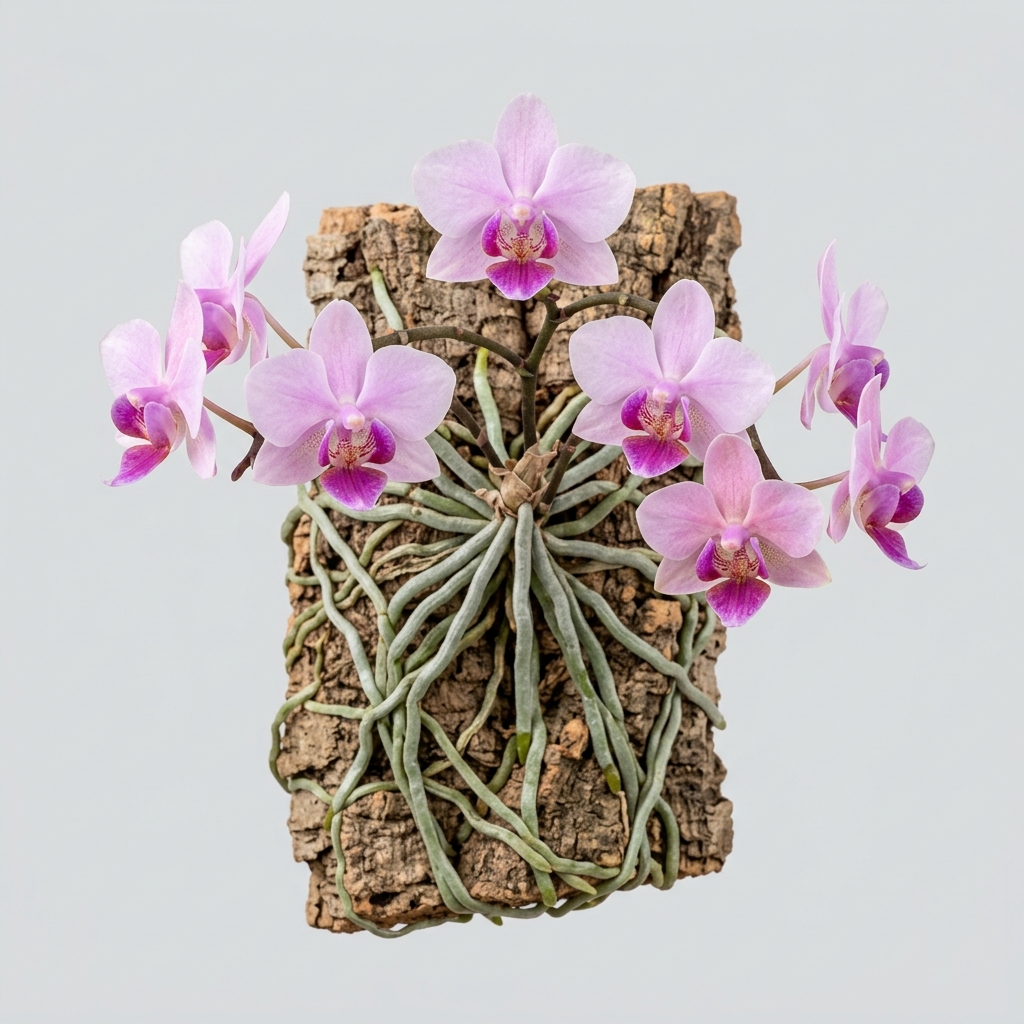
Phalaenopsis Wilsonii is a fascinating miniature orchid species highly prized by collectors for its unique growth habit and delicate, pastel blooms. Unlike many of its larger, evergreen hybrid relatives, this remarkable orchid is known for its semi-deciduous to fully deciduous nature, often shedding its leaves during the dry season to rely on its extensive network of photosynthetic roots.
Native to the mountainous regions of China and Vietnam, this species produces charming, fragrant flowers that range from soft pink to pale lavender. Growers value Phalaenopsis Wilsonii not only for its beautiful spring display but also for the horticultural challenge and reward of managing its distinct seasonal growth cycles.
💡 Did You Know?
Phalaenopsis Wilsonii is one of the few deciduous species in the . In the wild, it survives harsh, dry winters by shedding its leaves entirely. During this dormant period, its flat, green roots take over all photosynthetic duties, acting as both the plant's anchor and its primary energy source until new leaves emerge in the spring.
🌿 Botanical Overview
Phalaenopsis Wilsonii is a miniature, epiphytic or lithophytic orchid species native to damp, mossy forests in southern China, Vietnam, and Myanmar. In its natural habitat, it grows on moss-covered rocks or tree trunks at elevations ranging from 800 to 2,200 meters. This elevation profile exposes the plant to cooler temperatures and distinct seasonal variations that dictate its growth cycle.
The most striking botanical feature of Phalaenopsis Wilsonii is its root system. The roots are flat, greenish, and highly photosynthetic. During the dry winter months, the plant often sheds its small, fleshy leaves entirely. This deciduous behavior is a survival mechanism, allowing the orchid to conserve moisture while the roots continue to produce energy from ambient light.
🌸 Flower Characteristics
The flowers of Phalaenopsis Wilsonii are small but exceptionally beautiful, typically measuring between 2 to 4 centimeters in diameter. They feature delicate, rounded petals and sepals that display shades of soft rose-pink, pale lavender, or occasionally pure white. The lip, or labellum, is deeply three-lobed and often shows a darker magenta or purple coloration with yellow accents near the column.
Blooms are produced on short, arching inflorescences that emerge from the base of the plant. A single spike can carry several flowers, presenting them in a loose, elegant cluster. The contrast between the delicate blooms and the rugged, leafless root mass during the flowering season creates a highly dramatic and sought-after aesthetic.
Fragrance & Bloom Profile
Phalaenopsis Wilsonii is celebrated for its sweet, subtle fragrance, which is often described as citrusy or floral. The scent is most pronounced during the morning hours when warmth and light stimulate the release of volatile oils from the petals.
The blooming cycle typically begins in early spring as temperatures start to rise and daylight increases. Individual flowers can remain fresh for several weeks, and a well-established specimen with multiple spikes can put on a display that lasts for up to two months. Because the plant may be leafless at the time of flowering, the blooms appear to float gracefully above the mounted substrate.
Parentage & Hybrid Lineage
As a naturally occurring species rather than a man-made hybrid, Phalaenopsis Wilsonii possesses a pure genetic lineage. It belongs to the subgenus Parishianae, a group of miniature Phalaenopsis species known for their deciduous tendencies and distinctive lip structures.
While it is a species in its own right, Phalaenopsis Wilsonii has been used by orchid hybridizers to introduce miniature growth habits, cold tolerance, and delicate pink coloration into modern novelty hybrids. However, in the collector community, the pure species remains highly favored over its hybrid descendants due to its unique natural form.
🌱 Growing Conditions
To cultivate Phalaenopsis Wilsonii successfully, growers must replicate its montane forest habitat. It thrives in bright, filtered indirect light, similar to the dappled shade found under a forest canopy. Direct sunlight should be avoided as it can easily scorch the sensitive roots and leaves.
💡 Care Tip
Always prioritize air movement when growing Phalaenopsis Wilsonii. Because this species requires high , stagnant air can quickly lead to fungal infections on the roots and crown. A small, gentle fan running nearby is highly beneficial.
Temperature management is critical for this species. It prefers cool to intermediate conditions, with summer daytime temperatures ranging from 70°F to 78°F (21°C to 26°C) and winter night temperatures dropping to 50°F to 55°F (10°C to 13°C). High humidity of 60% to 80% is essential year-round, accompanied by excellent air movement to prevent stagnant moisture from causing rot.
Watering, Feeding & Potting Media
During the active growing season in spring and summer, Phalaenopsis Wilsonii requires regular watering. The mounting medium or roots should be allowed to dry slightly between waterings but never remain bone-dry for extended periods. In contrast, the winter rest period demands a significant reduction in water; the plant should only be misted occasionally to keep the roots from shriveling.
Fertilization should be light and frequent during active growth. Use a balanced, water-soluble orchid fertilizer diluted to one-quarter strength every second or third watering. Suspend all feeding during the winter rest.
Because of its flat, photosynthetic roots and deciduous nature, Phalaenopsis Wilsonii is best grown mounted on cork bark, tree fern plaques, or cedar slabs with a small pad of sphagnum moss to retain moisture around the crown. Potting in traditional bark mixes is generally not recommended as it can suffocate the roots.
Blooming Season & Care Notes
The blooming season for Phalaenopsis Wilsonii occurs in late winter to spring, closely tied to the end of its dry winter rest. To trigger flower spike initiation, the orchid requires a distinct drop in night temperatures and a reduction in watering during the late autumn months.
Once the flower spikes begin to emerge, gradually increase watering and humidity to support bloom development. Avoid moving the plant or changing its orientation during spike development, as sudden environmental shifts can cause bud blast. After flowering is complete, the plant will enter its active vegetative growth phase, which is the ideal time to adjust mounts or perform minimal maintenance.
⚠️ Common Issues
⚠️ Common Mistake
The most common mistake is panic- or discarding the orchid when it sheds its leaves in winter. New growers often assume the plant is dying, but this leaf drop is a natural, healthy phase of its annual growth cycle.
- Root Rot:
Occurs when the orchid is overwatered during its winter rest or grown in poorly draining potting media. - Bud Blast:
The premature dropping of flower buds, usually caused by sudden temperature fluctuations, low humidity, or drafts. - Dehydration:
Indicated by severely shriveled, silvery roots during the growing season, often due to inadequate misting on mounted specimens. - Pests:
Mealybugs and spider mites can occasionally target the tender new growth or hide within the crevices of the root mass. - Fungal Spotting: Can develop on leaves or roots if humidity is high but air circulation is insufficient.
❓ Frequently Asked Questions
Why is my Phalaenopsis Wilsonii losing its leaves in winter?
It is completely natural for Phalaenopsis Wilsonii to shed its leaves during the autumn and winter. This deciduous behavior is a survival adaptation to conserve moisture during the dry season. The green roots will continue to photosynthesize, so do not discard the plant thinking it has died.
Can I grow Phalaenopsis Wilsonii in a plastic pot?
While possible, growing this species in a plastic pot is highly discouraged. Its flat, photosynthetic roots require exposure to light and air. Mounting the orchid on cork bark or a tree fern slab is the most successful cultivation method.
How often should I water a mounted Phalaenopsis Wilsonii?
During the active spring and summer growth phases, mounted plants may need daily misting or soaking, depending on your ambient humidity. In winter, reduce watering to light misting once or twice a week just to prevent the roots from shriveling.
What triggers blooming in this orchid species?
Blooming is triggered by a combination of shorter day lengths, cooler night temperatures (around 50°F to 55°F), and a marked reduction in watering during the late autumn and winter months.
⭐ Final Growing Notes
Phalaenopsis Wilsonii is an extraordinary species that rewards patient growers with a spectacular display of delicate, fragrant blooms emerging from a sculptural mass of bare roots. By respecting its natural deciduous cycle, providing cool to intermediate temperatures, and maintaining high humidity on a mounted substrate, you can enjoy the unique botanical drama of this miniature montane orchid for many years.
⚕️ Health, Safety & Edibility
Understanding how a plant interacts with people, pets, and the surrounding environment is part of responsible cultivation. This section uses conservative, general guidance and does not replace professional medical or veterinary advice.
Human Safety: No published evidence currently identifies species-specific toxicity concerns for Phalaenopsis Wilsonii during normal handling. As with most ornamental plants, it should not be intentionally consumed.
Pet Safety: Published information does not indicate that this orchid commonly poses a toxicity concern for cats or dogs. However, chewing leaves, flowers, roots, or potting media may still cause mild digestive upset.
Edibility: This orchid is cultivated for ornamental display rather than food. Ornamental plants may carry fertilizers, pesticides, or other horticultural treatments that make them unsuitable for consumption.
Skin Contact: Routine handling is not generally associated with skin irritation. Gardeners with sensitive skin may prefer wearing gloves when repotting, pruning, or handling potting media.
🌱 Propagation Tip
Propagation of Phalaenopsis Wilsonii is typically achieved through the production of keikis (baby plants) on old flower spikes or the base of the parent plant. Allow the keiki to develop several robust roots before carefully detaching and mounting it.
⭐ Expert Advice
When mounting Phalaenopsis Wilsonii, use only a very thin layer of sphagnum moss under the roots. Too much moss will retain excessive moisture during the winter rest, which can easily rot the root system when temperatures are cool.

Leave A Comment