
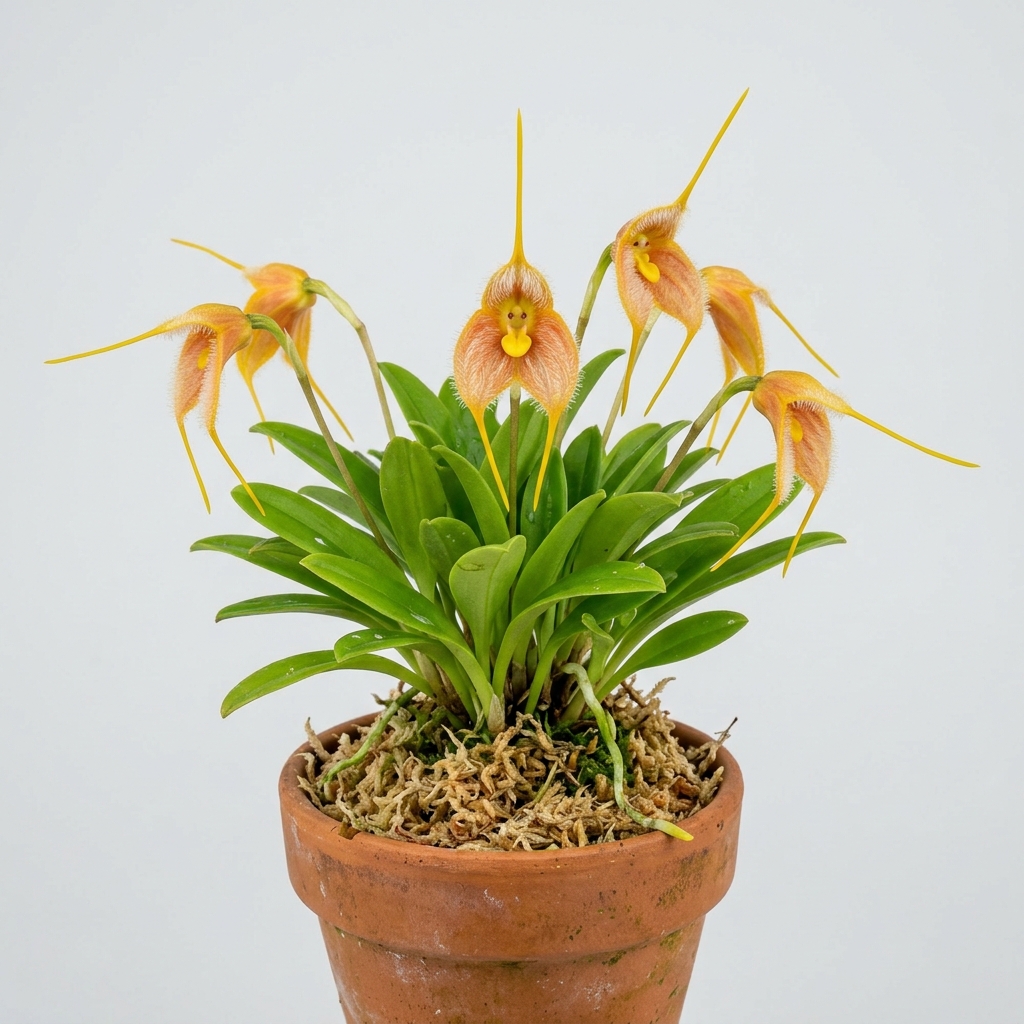
Masdevallia Strobelii is a highly celebrated miniature orchid species native to the high-altitude cloud forests of Ecuador and Peru. Renowned among collectors for its striking, fuzzy blossoms and compact growth habit, this epiphytic gem brings a touch of montane elegance to indoor growing spaces. Unlike many of its relatives in the Pleurothallidinae subtribe, this species is particularly famous for its delightful fragrance, making it a prized addition to terrariums, Wardian cases, and cool-growing orchid collections.
Growers value Masdevallia Strobelii not only for its unique aesthetic but also for its manageable size, typically reaching only a few inches in height. Its tufted leaves produce short, single-flowered inflorescences that present bright, eye-catching blooms. While it requires specific environmental conditions to thrive—namely high humidity, cool temperatures, and consistent moisture—the reward of its fuzzy, sweet-scented flowers makes it an exceptionally satisfying species for dedicated orchid enthusiasts.
💡 Did You Know?
Masdevallia Strobelii belongs to the Masdevallia orchid group, where flower presentation is often just as important as . White-flowered cultivars are especially valued indoors because their pale blooms reflect well and pair easily with many home, greenhouse, and display settings.
🌿 Botanical Overview
Masdevallia Strobelii is a miniature epiphyte that naturally grows on moss-covered tree branches in wet, montane forests at elevations ranging from 1,400 to 1,700 meters. Structurally, the plant lacks pseudobulbs, which is characteristic of the genus Masdevallia. Instead, it relies on short, erect ramicauls wrapped in basal sheaths, each bearing a single, fleshy, oblanceolate leaf. These bright green leaves form dense, tufted clumps that remain attractive even when the orchid is not in bloom.
Because it lacks water-storing pseudobulbs, the plant has very little tolerance for drought. In its native habitat, it is constantly bathed in mist, fog, and gentle rain, which keeps the root system hydrated and cool. Understanding this cloud-forest origin is key to successfully cultivating the species, as it dictates the high humidity and constant moisture levels required in a home or greenhouse environment.
🌸 Flower Characteristics
The blossoms of Masdevallia Strobelii are truly distinctive, characterized by fused sepals that form a bell-shaped tube, opening into three spreading lobes. The inner surfaces of the sepals are a vibrant orange-yellow, heavily coated with dense, white, glandular hairs that give the flower a frosted or crystalline appearance. Each sepal terminates in a slender, reflexed yellow tail, or cauda, which can extend several centimeters, adding dramatic flair to the miniature bloom.
The petals and lip (labellum) are highly reduced and hidden deep within the sepaline tube, a common trait among Masdevallia species designed to facilitate specific insect pollination. The flowers are produced singly on suberect to horizontal peduncles that emerge from the base of the ramicauls, typically positioning the blooms just around or slightly below the foliage canopy.
Fragrance & Bloom Profile
One of the most remarkable features of Masdevallia Strobelii is its intense, sweet fragrance, which is highly unusual for the genus. The scent is frequently described as a combination of sweet coconut, honey, and vanilla. This fragrance is strongest during the warmer hours of the day, filling small growing areas or terrariums with a rich, tropical aroma.
The blooms are relatively long-lasting, often remaining pristine for three to four weeks if temperatures are kept cool and humidity remains high. A mature, well-grown specimen can produce multiple flowers simultaneously, creating a spectacular display of fuzzy, bright orange and white stars nestled against the emerald-green foliage.
Parentage & Hybrid Lineage
Masdevallia Strobelii is a naturally occurring species rather than a man-made hybrid. First described in the late 20th century, it has been used extensively by orchid hybridizers to introduce both its compact growth habit and its rare, sweet fragrance into new Masdevallia grexes.
When crossed with other species, it frequently passes on its characteristic fuzzy sepal texture and warm color palette. However, because hybrid lineage and registration details can vary, growers looking for pure species should purchase from reputable nurseries that verify the botanical origin of their stock.
🌱 Growing Conditions
To cultivate Masdevallia Strobelii successfully, growers must replicate its cool, humid cloud-forest habitat. It thrives in cool to intermediate temperatures, ideally ranging from 50°F to 65°F (10°C to 18°C) at night, with daytime temperatures not exceeding 75°F (24°C). Prolonged exposure to high temperatures can cause rapid decline, leaf drop, and vulnerability to pests.
💡 Care Tip
For best results, grow Masdevallia Strobelii in bright filtered with steady and gentle airflow. Avoid placing the plant in harsh midday sun, but do not keep it in a dark corner; weak is one of the most common reasons cultivated orchids refuse to rebloom.
Light levels should be kept low to moderate, mimicking the dappled shade of the forest canopy. Bright, indirect light is ideal, while direct sunlight must be strictly avoided to prevent leaf scorching. High humidity of 70% to 90% is essential, paired with continuous, gentle air movement to prevent stagnant air from harboring fungal pathogens.
Watering, Feeding & Potting Media
Watering is the most critical aspect of Masdevallia Strobelii care. The potting medium must remain consistently moist but never waterlogged. High-quality water, such as rainwater, distilled water, or reverse osmosis water, is highly recommended, as the fine, sensitive roots are easily damaged by dissolved minerals and salts found in tap water.
The orchid is commonly grown in small plastic pots filled with high-grade New Zealand sphagnum moss or a very fine bark mix that retains moisture while allowing air to reach the roots. Alternatively, it can be mounted on cork bark or tree fern plaques, provided the grower can maintain the necessary high humidity and water multiple times daily. Fertilization should be extremely light; a weak, balanced orchid fertilizer applied at one-quarter strength every two weeks during active growth is sufficient.
Blooming Season & Care Notes
While Masdevallia Strobelii typically shows its primary blooming flush during the autumn and winter months, healthy plants can produce flowers sporadically throughout the year. To encourage robust blooming, maintain a distinct drop between day and night temperatures, which mimics the natural daily fluctuations of its native montane environment.
After the flowers fade, the old flower spikes can be cut back to the base of the leaf. Repotting is best performed in the spring or early autumn when temperatures are mild and the plant is actively producing new roots. Avoid repotting during the heat of summer, as the added stress can be detrimental to the orchid's recovery.
⚠️ Common Issues
⚠️ Common Mistake
The most common mistake is by calendar instead of root and potting-media condition. Masdevallia roots need moisture and air at the same time, so constantly wet bark or sphagnum can lead to root loss even when the leaves still look healthy.
- Leaf Drop: Often caused by excessively high temperatures or low humidity, which stresses the plant.
- Root Rot:
Occurs when the potting medium degrades, becomes compacted, or lacks adequate drainage. - Fungal Spotting: Dark spots on the leaves can develop if air circulation is poor in a high-humidity environment.
- Bud Blast:
Sudden changes in humidity or temperature can cause developing buds to yellow and fall off before opening. - Pests:
Spider mites and aphids can occasionally target the tender new growth and flowers; treat promptly with gentle, orchid-safe insecticidal soap.
❓ Frequently Asked Questions
Can Masdevallia Strobelii be grown under LED lights?
Yes, Masdevallia Strobelii adapts well to indoor cultivation under LED grow lights. Because it requires low to moderate light, position the plant toward the edges of the light footprint or adjust the intensity to avoid leaf burn. A light cycle of 12 to 14 hours is generally sufficient.
Why are the leaf tips of my Masdevallia turning black?
Black or brown leaf tips are usually a sign of salt buildup in the potting medium, often caused by using tap water or over-fertilizing. It can also indicate low humidity. Switch to pure water sources like distilled or rainwater, flush the pot thoroughly, and ensure humidity remains above 70%.
How often should I repot this orchid?
Masdevallia Strobelii should typically be repotted every one to two years, or when the potting medium (especially sphagnum moss) begins to break down and retain too much water. Always repot during cool seasons, such as spring or autumn, to minimize transplant shock.
Is this orchid suitable for a terrarium?
Yes, its miniature size and high humidity requirements make it an excellent candidate for a terrarium or vivarium. However, you must ensure adequate ventilation, perhaps using a small internal fan, to prevent stagnant air and later fungal issues on the foliage.
⭐ Final Growing Notes
Masdevallia Strobelii is a captivating miniature orchid that rewards the attentive grower with an abundance of unique, fuzzy, and wonderfully fragrant flowers. While its environmental demands for cool temperatures, high humidity, and pure water require a bit more effort than standard windowsill orchids, its compact size and reliable blooming nature make it a highly achievable and delightful project for any enthusiast looking to venture into the world of cloud-forest species.
⚕️ Health, Safety & Edibility
Understanding how a plant interacts with people, pets, and the surrounding environment is part of responsible cultivation. This section uses conservative, general guidance and does not replace professional medical or veterinary advice.
Human Safety: No published evidence currently identifies species-specific toxicity concerns for Masdevallia Strobelii during normal handling. As with most ornamental plants, it should not be intentionally consumed.
Pet Safety: Published information does not indicate that this orchid commonly poses a toxicity concern for cats or dogs. However, chewing leaves, flowers, roots, or potting media may still cause mild digestive upset.
Edibility: This orchid is cultivated for ornamental display rather than food. Ornamental plants may carry fertilizers, pesticides, or other horticultural treatments that make them unsuitable for consumption.
Skin Contact: Routine handling is not generally associated with skin irritation. Gardeners with sensitive skin may prefer wearing gloves when repotting, pruning, or handling potting media.
🌱 Propagation Tip
Propagation should be approached patiently. Most home growers should wait for natural keikis or divide only mature, healthy plants when the orchid type allows it. Never remove a young growth until it has strong roots and enough leaves to support itself away from the parent plant.
⭐ Expert Advice
Repot after flowering when fresh root tips begin to appear. This timing helps the plant anchor quickly into new bark or sphagnum and reduces stress, especially for orchids grown indoors where airflow, , and drying speed can change from season to season.

Leave A Comment