
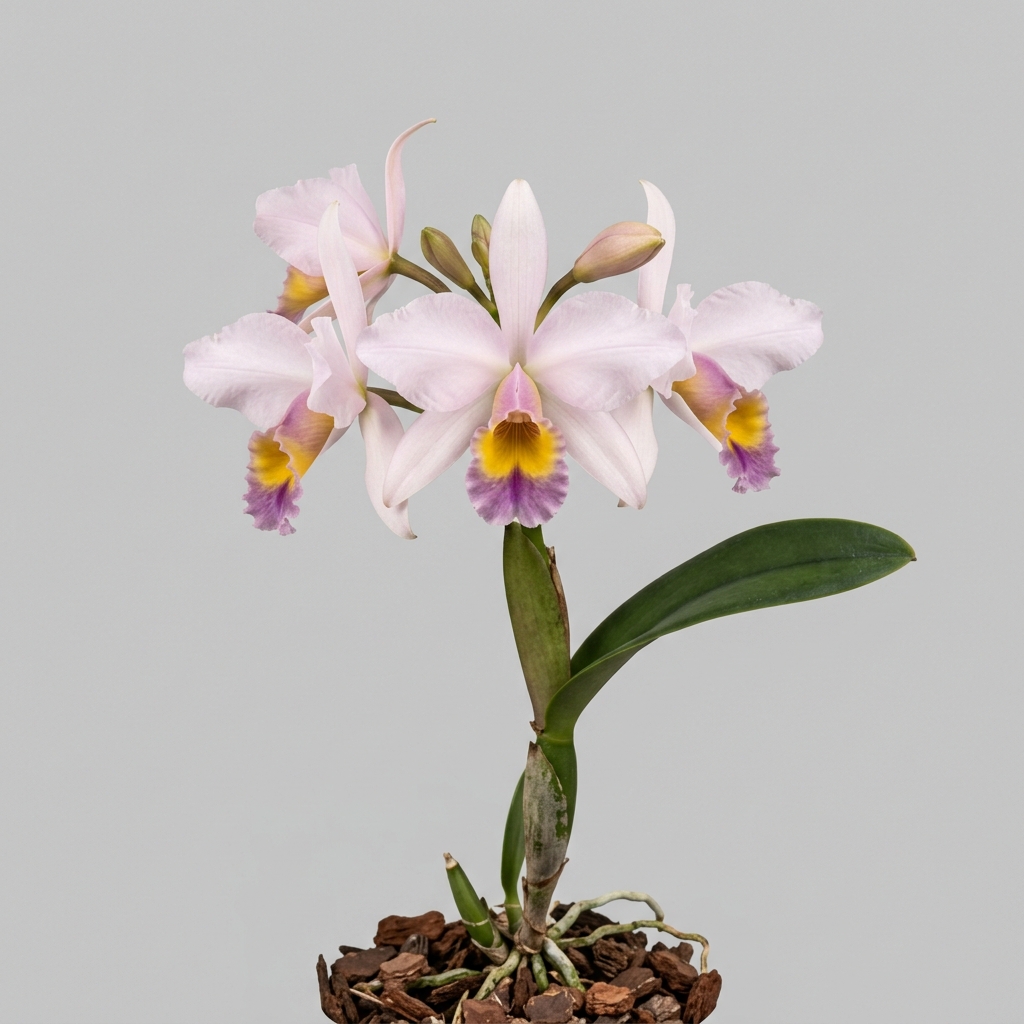
Cattleya Eldorado, also recognized by many taxonomists as Cattleya wallisii, is a highly esteemed orchid species native to the warm, humid river basins of northern Brazil. Renowned for its elegant, pastel-toned blossoms, this unifoliate orchid has captivated collectors for generations. Its flowers typically exhibit soft rose-pink to pristine white hues, beautifully contrasted by a tubular lip painted with a rich gold-yellow throat.
Growers value this orchid not only for its striking visual presentation but also for its exceptionally sweet, honey-like fragrance. As a moderate-sized grower, it fits comfortably into home greenhouses and indoor growing setups, provided its specific humidity and temperature requirements are met. Understanding its natural Amazonian habitat is the key to unlocking successful, recurring blooms year after year.
💡 Did You Know?
Cattleya Eldorado is native to the Rio Negro region of the Amazon, where it often grows on trees in sandy, humid forest environments known as campinas. This unique habitat means it appreciates slightly warmer temperatures and higher than many other unifoliate Cattleya species.
🌿 Botanical Overview
Cattleya Eldorado is characterized by its slender, cylindrical pseudobulbs, each topped by a single, rigid, leathery leaf. This unifoliate growth habit is typical of many warm-growing Cattleya species native to equatorial South America. In the wild, these plants grow epiphytically high in the canopy, where they are exposed to bright light and constant tropical breezes.
Unlike some of its montane relatives, this species thrives in lowland conditions where temperatures remain consistently warm throughout the year. The root system is robust but highly sensitive to stagnant moisture, requiring a substrate that drains rapidly after rainfall. Its growth cycle is closely tied to the seasonal rains of the Amazon basin.
🌸 Flower Characteristics
The blossoms of Cattleya Eldorado are a masterclass in delicate coloration. The sepals and petals are typically a soft, pale lavender-pink, though pure white forms are highly sought after by collectors. The flowers generally measure between ten and fifteen centimeters in diameter, presenting a well-proportioned and elegant display.
The defining feature of the bloom is its tubular lip. The interior of the tube is painted with a vibrant, golden-yellow disc, which is often ringed by a band of white and tipped with a rich purple or magenta spot. This striking contrast serves as a visual guide for natural pollinators in the wild.
Fragrance & Bloom Profile
One of the most compelling reasons to cultivate Cattleya Eldorado is its sweet, penetrating fragrance. The scent is typically described as a blend of honey and fresh floral notes, becoming most pronounced during the warm morning hours. A single blooming plant can easily fill an entire growing space with its perfume.
The flowers are produced from a green sheath at the apex of the newly matured pseudobulb. Under optimal environmental conditions, the blooms will remain fresh and vibrant for three to four weeks. To maximize bloom longevity, keep the plant in a slightly cooler, draft-free location once the flowers have fully expanded.
Parentage & Hybrid Lineage
Cattleya Eldorado is a naturally occurring species rather than a man-made hybrid. While historically classified under various names, modern botanical consensus often groups it as Cattleya wallisii. Because of its distinct fragrance and beautiful lip pattern, it has been used selectively in hybridizing programs to introduce these desirable traits to modern Cattleya grexes.
When researching its lineage, growers may find conflicting historical documentation due to past taxonomic reclassifications. It is always best to approach older hybrid registrations with a degree of caution, as the name Eldorado was sometimes applied to various regional color forms of related species.
🌱 Growing Conditions
To cultivate this species successfully, growers must replicate its warm, humid native environment. It thrives in warm to intermediate temperatures, ideally ranging from seventy-five to eighty-five degrees Fahrenheit during the day, with a night drop to around sixty to sixty-five degrees. High humidity levels between sixty and eighty percent are essential for healthy leaf and root development.
💡 Care Tip
Provide strong, filtered and excellent air circulation. If the leaves are a dark, forest green, the orchid is not receiving enough to bloom successfully; aim for a healthy -green hue.
Bright, filtered light is crucial for stimulating flower production. While it enjoys strong light, direct midday sun will scorch the foliage. A location with eastern exposure or shaded southern exposure is generally ideal. Constant, gentle air movement is vital to prevent fungal pathogens from settling on the damp foliage.
Watering, Feeding & Potting Media
During the active spring and summer growing season, Cattleya Eldorado requires frequent and thorough watering. The potting medium should be allowed to dry out almost completely between waterings, as waterlogged roots will quickly rot. A coarse potting mix consisting of fir bark, horticultural charcoal, and perlite provides the rapid drainage this orchid demands.
Apply a balanced, water-soluble orchid fertilizer weekly at one-quarter strength during active growth. Flush the pot with pure water once a month to wash away accumulated fertilizer salts. As the winter months approach and growth slows, significantly reduce watering frequency and suspend fertilizing to allow the plant its natural rest period.
Blooming Season & Care Notes
This orchid typically initiates its blooming cycle in the mid-to-late summer or early autumn. As the new pseudobulb matures, a flower sheath will emerge from the leaf base. During this period, avoid shifting the plant’s orientation to the light source, as this can cause the developing buds to twist or grow awkwardly.
Once the blooming cycle is complete, the orchid enters a semi-dormant phase. This is the ideal time to assess if the plant requires repotting. Repotting should only be performed when new root tips begin to emerge from the base of the newest pseudobulb, ensuring the plant establishes quickly in its new container.
⚠️ Common Issues
⚠️ Common Mistake
Overwatering during the cooler winter rest period is a frequent mistake. Significantly reducing water and halting fertilizer when the plant is inactive prevents root rot and mimics its natural seasonal dry cycle.
- Root Rot:
Caused by overwatering or a decomposing potting medium that retains too much moisture. - Bud Blast:
The sudden yellowing and dropping of flower buds, often triggered by low humidity or sudden temperature fluctuations. - Scale and Mealybugs: Common pests that hide in the dry sheaths of the pseudobulbs; inspect the plant regularly and treat with insecticidal soap.
- Leaf Scorch: Yellow or black patches on the leaves caused by exposure to direct, unfiltered sunlight.
❓ Frequently Asked Questions
How often should I water my Cattleya Eldorado?
Water thoroughly when the potting medium is almost completely dry. During the active summer growth phase, this may be every few days, while in the winter rest period, it may be reduced to once every two weeks.
What is the ideal light level for Cattleya Eldorado?
This orchid prefers bright, indirect light. The leaves should maintain a light, grassy green color. Dark green leaves indicate insufficient light, while yellow or red-tinted leaves suggest too much light.
Why are the flower buds blasting before opening?
Bud blast is typically caused by environmental stress, such as a sudden drop in humidity, cold drafts, or underwatering while the buds are developing inside the sheath.
Can I grow Cattleya Eldorado mounted on cork bark?
Yes, mounting on cork bark is highly successful if you can maintain high humidity. Mounted plants require daily watering during the hot summer months to prevent dehydration.
⭐ Final Growing Notes
Cattleya Eldorado is a rewarding species that brings the exotic beauty and fragrance of the Amazon rainforest into the home greenhouse. While it requires a bit more attention to humidity and watering cycles than mass-market hybrids, its stunning, sweet-scented blossoms make it an essential addition to any serious orchid collection.
⚕️ Health, Safety & Edibility
Understanding how a plant interacts with people, pets, and the surrounding environment is part of responsible cultivation. This section uses conservative, general guidance and does not replace professional medical or veterinary advice.
Human Safety: No published evidence currently identifies species-specific toxicity concerns for Cattleya Eldorado during normal handling. As with most ornamental plants, it should not be intentionally consumed.
Pet Safety: Published information does not indicate that this orchid commonly poses a toxicity concern for cats or dogs. However, chewing leaves, flowers, roots, or potting media may still cause mild digestive upset.
Edibility: This orchid is cultivated for ornamental display rather than food. Ornamental plants may carry fertilizers, pesticides, or other horticultural treatments that make them unsuitable for consumption.
Skin Contact: Routine handling is not generally associated with skin irritation. Gardeners with sensitive skin may prefer wearing gloves when repotting, pruning, or handling potting media.
🌱 Propagation Tip
Propagate this orchid during spring repotting by carefully dividing mature clumps. Ensure each new division has at least three to four healthy, mature pseudobulbs with active eye buds to support new growth and minimize transplant shock.
⭐ Expert Advice
To encourage robust blooming, maintain a distinct drop between day and night temperatures, ideally around ten to fifteen degrees Fahrenheit. This natural differential triggers the development of strong flower spikes within the sheath.

Leave A Comment