
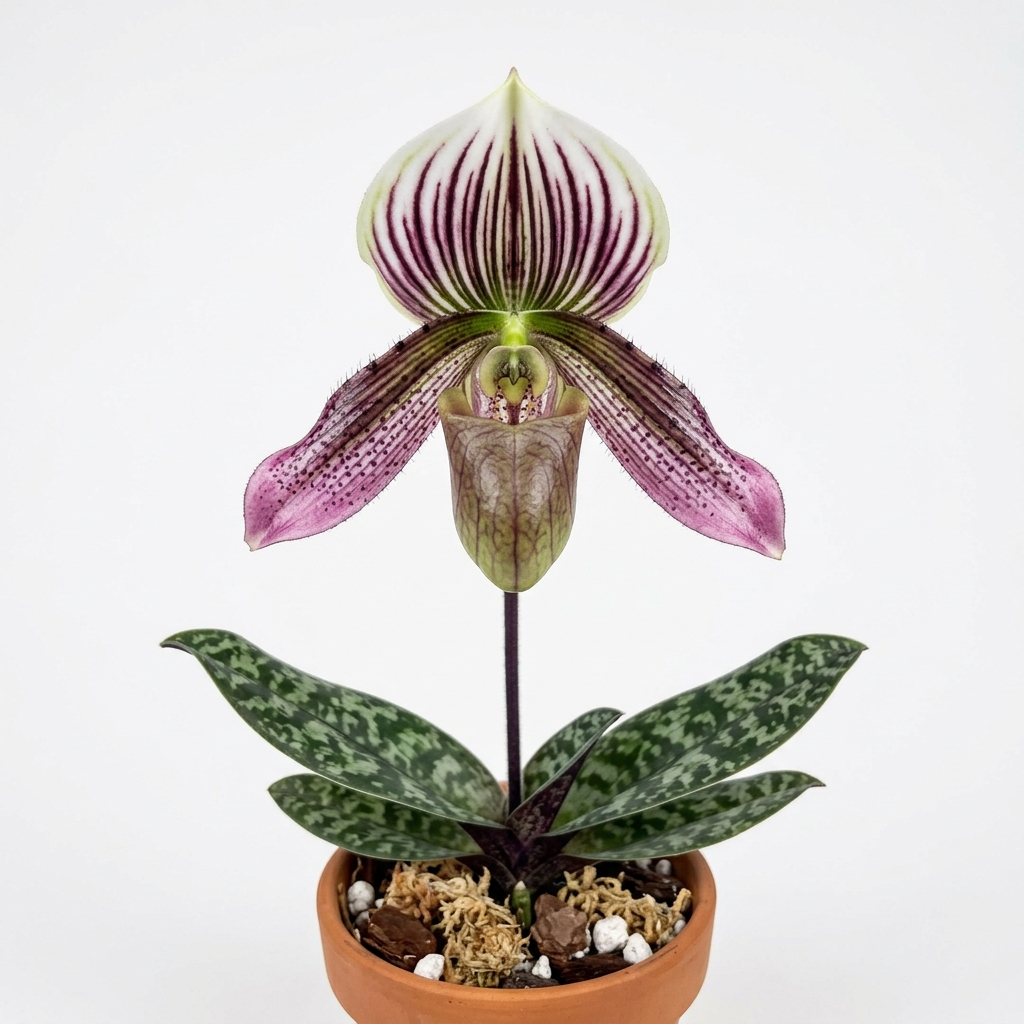
Paphiopedilum Acmodontum is an intriguing and highly sought-after slipper orchid species native to the Philippines. Renowned among collectors for its distinctive horned or toothed floral structure and beautifully mottled foliage, this species belongs to the subgenus Sigmatopetalum. Its striking combination of green, white, and pink hues makes it a standout addition to any indoor orchid collection, offering a touch of exotic elegance that captures the eye of novice and experienced growers alike.
In its natural habitat, this orchid grows as a terrestrial or lithophytic plant in the warm, shaded understory of tropical forests. Because it lacks pseudobulbs for water storage, it relies on a consistent level of moisture and high humidity to thrive. While it presents a highly specialized appearance, its care requirements are remarkably straightforward and align closely with other mottled-leaf slipper orchids, making it an accessible and rewarding species to cultivate at home.
💡 Did You Know?
The specific epithet acmodontum translates to 'anvil-toothed,' which directly references the unique three-pronged or tooth-like projections on the staminodal shield at the center of the flower. This fascinating botanical feature helps distinguish it from other closely related slipper orchids in the subgenus Sigmatopetalum.
🌿 Botanical Overview
Paphiopedilum Acmodontum is native to the Philippine islands, particularly Negros, where it typically grows in leaf litter over limestone formations. This specific ecological niche dictates much of its care in cultivation, as the plant appreciates a well-drained, slightly alkaline to neutral growing medium. In the wild, it is found at relatively low elevations, which explains its preference for warm to intermediate temperatures throughout the year.
One of the most appealing features of this orchid, even when it is not in bloom, is its striking foliage. The leaves are oblong, tessellated with a beautiful mosaic pattern of dark forest green and pale silvery-green. This mottled patterning is a classic trait of the subgenus Sigmatopetalum and serves as an evolutionary adaptation to capture filtered light on the forest floor, making the plant highly decorative year-round.
🌸 Flower Characteristics
The flowers of Paphiopedilum Acmodontum are a masterclass in botanical complexity. Each bloom is supported by a tall, upright, pubescent green inflorescence that displays the flower well above the foliage. The dorsal sepal is broadly ovate, featuring a clean white background decorated with prominent vertical green veins and a soft pink blush near the base. The pouch, or labellum, is deeply cupped, displaying a warm greenish-brown to olive hue with a glossy texture.
What truly sets this species apart, however, are its petals and staminode. The petals extend horizontally before curving gently downward, ending in distinct, vibrant pinkish-purple tips. Small, dark, raised warts line the upper margins of the petals, adding texture and contrast. At the center of the flower sits the staminodal shield, which features three small, tooth-like projections at its apex, giving the species its unique botanical name.
Fragrance & Bloom Profile
Like many members of the Paphiopedilum genus, Paphiopedilum Acmodontum is generally considered to be unscented. While it lacks a sweet perfume to attract pollinators, it compensates with the exceptional longevity of its flowers. A single bloom can remain in pristine condition for six to eight weeks, and sometimes even longer under ideal, cool indoor conditions.
The blooming cycle typically occurs once a year, with the plant producing a single flower per growth. Because the flowers open slowly and hold their shape remarkably well, they provide a long-lasting and reliable display. The absence of fragrance also makes this orchid an excellent choice for growers who are sensitive to strong floral scents in enclosed living spaces.
Parentage & Hybrid Lineage
Paphiopedilum Acmodontum is a naturally occurring species rather than a man-made hybrid. Consequently, it does not have a complex pedigree of parent cultivars. In the orchid world, maintaining the purity of species plants is highly valued, and growers often seek out selfed or sibling-crossed lines to preserve the distinct characteristics of the wild population.
Despite being a species, it has been utilized by hybridizers to introduce its desirable traits into new slipper orchid crosses. Breeders value it for its ability to pass on its compact growth habit, beautifully mottled foliage, and the intense pink coloration on the petal tips. When researching hybrids with this species in their lineage, growers can generally expect plants that inherit a robust constitution and a unique, horned floral presentation.
🌱 Growing Conditions
To cultivate Paphiopedilum Acmodontum successfully, one must replicate the filtered, humid conditions of its native tropical forest understory. It thrives in low to moderate indirect light, similar to the light levels preferred by Phalaenopsis orchids. Direct sunlight must be strictly avoided, as it will quickly scorch the delicate mottled leaves and cause permanent damage to the plant’s aesthetic and health.
💡 Care Tip
Because Paphiopedilum Acmodontum lacks pseudobulbs to store water, it is crucial to maintain consistent moisture in the root zone. Never allow the potting medium to dry out completely, but ensure the pot has excellent drainage to prevent stagnant water from suffocating the roots.
Temperature: wise, this species prefers a warm to intermediate range. Ideal daytime temperatures should hover between 75°F and 85°F (24°C to 29°C), with a slight drop at night to around 60°F to 65°F (15°C to 18°C). High humidity between 50% and 70% is highly beneficial. To prevent fungal issues in such humid environments, maintaining gentle, continuous air movement around the foliage is essential.
Watering, Feeding & Potting Media
Because Paphiopedilum Acmodontum is a sympodial orchid without pseudobulbs, it has no capacity to store water for prolonged periods. Therefore, the potting medium should remain consistently damp but never waterlogged. Water the plant thoroughly when the top half-inch of the medium begins to feel slightly dry to the touch. Using rainwater, distilled water, or reverse osmosis water is highly recommended, as slipper orchids can be sensitive to dissolved salts in tap water.
The ideal potting medium is a fine-grade mix that retains moisture while allowing excellent drainage. A combination of fine fir bark, perlite, charcoal, and a small amount of chopped sphagnum moss works exceptionally well. Feeding should be done with a balanced, highly diluted orchid fertilizer applied weakly, weekly during the active growing season, followed by a flush with pure water once a month to wash away any accumulated salts.
Blooming Season & Care Notes
The primary blooming season for Paphiopedilum Acmodontum spans from late spring through the summer months, though occasional off-season blooms can occur. The flower spike emerges slowly from the center of a mature leaf span. Once the flower eventually fades and falls, the spike should be cut down to the base of the growth, as slipper orchids do not rebloom from old spikes.
After flowering, the plant will focus its energy on producing new vegetative growths from the base of the old fan. Repotting is best performed during this post-bloom period, typically every one to two years. Fresh media ensures that the roots have access to adequate oxygen and prevents the souring of the mix, which can lead to rapid root decline.
⚠️ Common Issues
While generally robust, Paphiopedilum Acmodontum can encounter several common cultivation challenges if its environmental needs are not met:
⚠️ Common Mistake
A frequent error is allowing water to collect and remain in the center of the leaf crown, especially overnight. This standing water easily triggers crown rot, which can quickly destroy the growth point of the orchid. Always water early in the day and use a paper towel to blot any accidental moisture from the crown.
- Root Rot: Caused by overwatering or a decomposing potting medium that suffocates the roots. Symptoms include limp, yellowing leaves and a lack of firm, hairy roots.
- Crown Rot: Occurs when water is allowed to sit in the center of the leaf crown overnight. This bacterial infection can destroy the growth point rapidly.
- Bud Blast: The sudden drying and dropping of developing buds, usually triggered by a sharp drop in humidity, drafty conditions, or underwatering.
- Pests: Mealybugs and scale insects can occasionally hide in the tight crevices of the leaf bases. Treat promptly with insecticidal soap or horticultural oil.
❓ Frequently Asked Questions
How do I know when to water my Paphiopedilum Acmodontum?
Water your orchid when the top layer of the potting medium feels dry to the touch, but before the mix dries out completely. You can gauge this by inserting a wooden skewer into the pot; if it comes out barely damp, it is time to water. Slipper orchids prefer to remain evenly moist.
Why are the tips of my orchid’s leaves turning brown?
Brown leaf tips are often a sign of low humidity, underwatering, or a buildup of fertilizer salts in the potting medium. Ensure your humidity levels remain above 50%, and flush the pot thoroughly with pure water once a month to wash away excess minerals.
Does this species require a winter rest period to bloom?
No, Paphiopedilum Acmodontum does not require a dry or cold winter rest period. It prefers relatively stable, warm to intermediate temperatures year-round. However, a slight, natural drop in nighttime temperatures during the autumn can help stimulate the initiation of new flower spikes.
Can I grow Paphiopedilum Acmodontum under artificial LED lights?
Yes, this orchid adapts beautifully to indoor cultivation under artificial LED grow lights. Position the plant under moderate light levels, ensuring the leaves do not feel hot to the touch. If the mottled pattern on the leaves begins to fade or turn pale yellow, the light may be too intense.
⭐ Final Growing Notes
Paphiopedilum Acmodontum remains a true gem of the slipper orchid world, offering a captivating blend of exotic, tooth-tipped blooms and highly decorative foliage. By providing consistent moisture, moderate humidity, and shaded conditions, growers can easily enjoy the long-lasting beauty of this Philippine species. It is an excellent choice for collectors looking to expand their species collection or for any indoor gardener seeking a unique, low-light orchid that delivers year-round visual interest.
⚕️ Health, Safety & Edibility
Understanding how a plant interacts with people, pets, and the surrounding environment is part of responsible cultivation. This section uses conservative, general guidance and does not replace professional medical or veterinary advice.
Human Safety: No published evidence currently identifies species-specific toxicity concerns for Paphiopedilum Acmodontum during normal handling. As with most ornamental plants, it should not be intentionally consumed.
Pet Safety: Published information does not indicate that this orchid commonly poses a toxicity concern for cats or dogs. However, chewing leaves, flowers, roots, or potting media may still cause mild digestive upset.
Edibility: This orchid is cultivated for ornamental display rather than food. Ornamental plants may carry fertilizers, pesticides, or other horticultural treatments that make them unsuitable for consumption.
Skin Contact: Routine handling is not generally associated with skin irritation. Gardeners with sensitive skin may prefer wearing gloves when repotting, pruning, or handling potting media.
🌱 Propagation Tip
Slipper orchids like Paphiopedilum Acmodontum are propagated primarily through division. Wait until the plant has formed a large clump with multiple mature growths, then carefully separate them during repotting, ensuring each new division has at least two to three healthy growths and an active root system.
⭐ Expert Advice
To mimic its natural limestone habitat, consider incorporating a small amount of agricultural lime, crushed oyster shells, or dolomite to the potting mix. This helps maintain a stable, slightly alkaline to neutral pH in the root zone, which supports optimal nutrient uptake and stronger root development over time.

Leave A Comment