
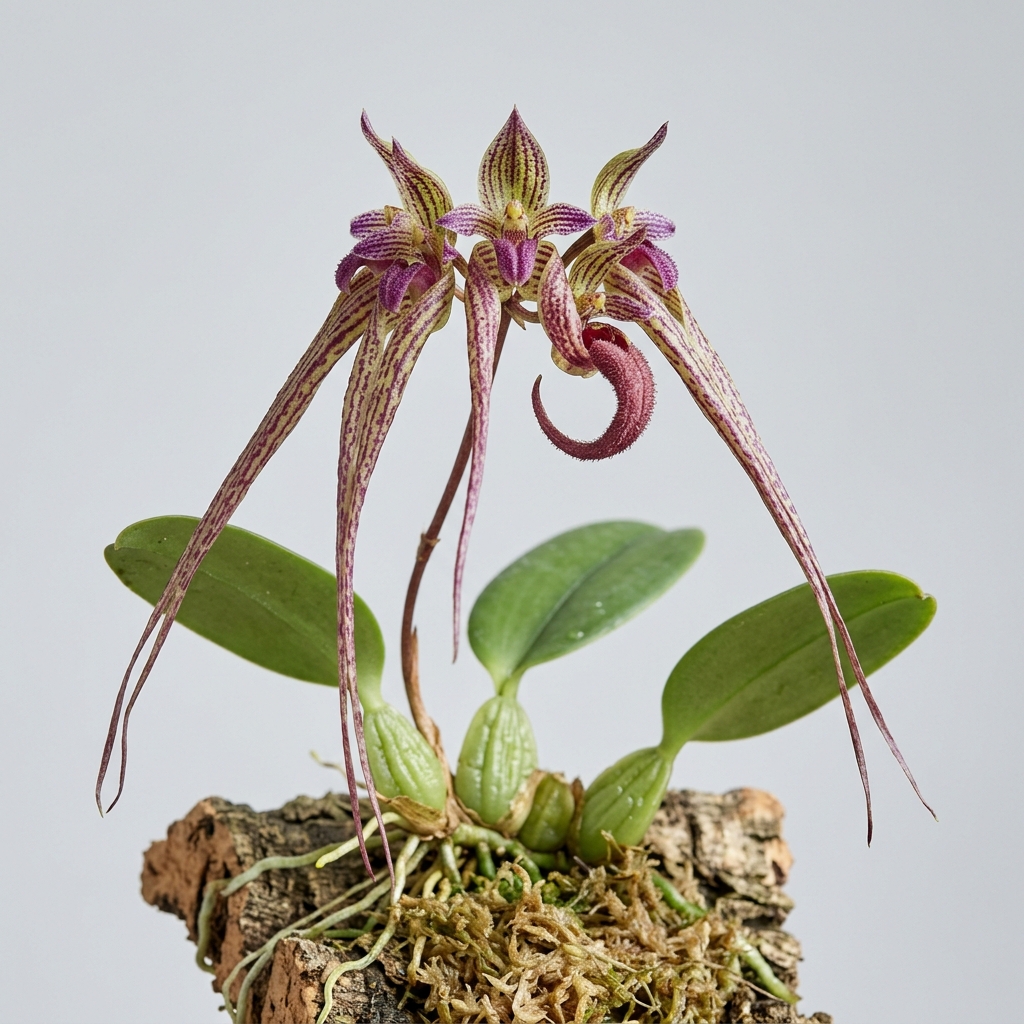
Bulbophyllum Fascinator is a captivating epiphytic orchid highly prized by collectors for its extraordinarily unusual, alien-like floral morphology. Characterized by elongated lateral sepals that drape downward like elegant ribbons, this orchid exemplifies the bizarre and wonderful adaptations of the diverse Bulbophyllum genus. It features a creeping rhizome growth habit with distinct, egg-shaped pseudobulbs, each supporting a single leathery leaf that remains attractive even when the plant is not in bloom.
Hobbyists value this orchid primarily for its dramatic, wind-sensitive flowers, which feature a hinged, moving labellum designed to attract specific pollinators in its native tropical environments. While it requires specialized care—particularly regarding humidity and moisture retention—it is a rewarding species for intermediate to advanced growers who can replicate its warm, humid forest canopy origins.
💡 Did You Know?
Bulbophyllum Fascinator is part of the Bulbophyllum orchid group, a favorite among growers because its flowers, growth habit, and care needs make it useful for comparing cultivated orchids within the same . Observing its leaves, roots, and bloom spikes can help growers understand how this cultivar responds to indoor conditions.
🌿 Botanical Overview
Bulbophyllum Fascinator belongs to the vast Bulbophyllum genus, which is one of the largest groups in the orchid family. This particular orchid is native to the warm, humid forests of Southeast Asia, where it grows as an epiphyte on tree trunks and branches, absorbing moisture and nutrients from the surrounding air and organic debris.
The growth habit is characterized by a creeping rhizome that produces small, clustered pseudobulbs. These pseudobulbs act as water storage organs, allowing the plant to survive brief periods of lower moisture, though it prefers a consistently damp environment. The single, dark green leaf emerging from each pseudobulb is thick and rigid, helping the plant conserve moisture in its natural canopy habitat.
🌸 Flower Characteristics
The flowers of Bulbophyllum Fascinator are a marvel of evolutionary engineering. The most prominent feature is the pair of lateral sepals, which are greatly elongated and fused along their edges, tapering into long, thread-like tails that can reach several inches in length. These sepals are typically decorated with intricate patterns of maroon, purple, or deep red veins against a cream or greenish-yellow background.
At the center of the flower sits a small, highly mobile lip (labellum). This lip is delicately hinged, allowing it to rock back and forth with the slightest breeze or movement. This motion, combined with the flower’s unique coloration and scent, mimics the appearance of insects to facilitate pollination.
Fragrance & Bloom Profile
Like many members of its genus, Bulbophyllum Fascinator produces a fragrance that is adapted to attract carrion flies and other specific insect pollinators. The scent is generally described as musky, slightly putrid, or reminiscent of decaying organic matter, though its intensity can vary depending on environmental conditions and the specific clone.
The blooms typically appear individually on slender, upright spikes that emerge from the base of the mature pseudobulbs. While the individual flowers are relatively short-lived compared to some other orchid genera—usually lasting between one to two weeks—a healthy, mature specimen can produce multiple spikes in succession, extending the overall display.
Parentage & Hybrid Lineage
In botanical literature, Bulbophyllum Fascinator is often classified as a distinct species, though some taxonomists consider it a synonym or a close relative of Bulbophyllum putidum or Bulbophyllum appendiculatum. In the horticultural trade, it is frequently labeled as a species or a selected cultivar form.
Because of its striking appearance, it has been used in hybridizing programs to introduce elongated sepals and vibrant patterning to new Bulbophyllum hybrids. However, because taxonomic distinctions within this section of the genus can be complex, growers should note that plants sold under this name may exhibit slight variations in floral structure and color intensity.
🌱 Growing Conditions
To cultivate Bulbophyllum Fascinator successfully, growers must replicate its native tropical forest environment. It thrives in low to medium indirect light, similar to the dappled shade of a forest understory. Direct sunlight should be avoided, as it can easily scorch the thin leaves and overheat the plant.
💡 Care Tip
For best results, grow Bulbophyllum Fascinator in bright filtered with steady and gentle airflow. Avoid placing the plant in harsh midday sun, but do not keep it in a dark corner; weak is one of the most common reasons cultivated orchids refuse to rebloom.
Temperature: wise, this orchid prefers warm to intermediate conditions. Ideal daytime temperatures range from 75°F to 85°F (24°C to 29°C), with a slight drop at night to around 65°F (18°C). High humidity is critical; maintaining a relative humidity level of 70% to 90% is highly recommended to prevent the pseudobulbs from shriveling and to support healthy root development. Good air circulation is essential to prevent fungal and bacterial issues in such humid conditions.
Watering, Feeding & Potting Media
Unlike many orchids that require a distinct dry period between waterings, Bulbophyllum Fascinator prefers to remain consistently moist. The potting medium should never be allowed to dry out completely. Watering frequency will depend on the growing method; mounted plants may require daily watering or misting, while those in pots or baskets will need watering as soon as the top layer of media begins to dry.
A high-quality New Zealand sphagnum moss is an excellent medium for this orchid, as it retains moisture while remaining airy. Alternatively, a mix of fine fir bark and perlite can be used in shallow pots or net baskets. During the active growing season, apply a balanced, highly diluted orchid fertilizer weekly (the “weakly, weekly” method) to support new vegetative growth.
Blooming Season & Care Notes
The primary blooming season for Bulbophyllum Fascinator is autumn, though flowers can occasionally appear at other times of the year if growing conditions are optimal. As the weather cools and day lengths shorten, keep a close eye on the bases of the pseudobulbs for emerging flower spikes.
During the blooming cycle, avoid getting water directly on the developing buds or open flowers, as this can cause premature spotting or bud drop. Once the flowers fade, the spikes can be cut back to the base. Repotting or remounting is best done in the spring, just as new root growth begins to emerge from the base of the newest pseudobulbs.
⚠️ Common Issues
⚠️ Common Mistake
The most common mistake is by calendar instead of root and potting-media condition. Bulbophyllum roots need moisture and air at the same time, so constantly wet bark or sphagnum can lead to root loss even when the leaves still look healthy.
- Shriveled Pseudobulbs: Often a sign of under-watering or low humidity. Ensure the media remains damp and increase ambient humidity.
- Leaf Spotting: Fungal or bacterial spots can develop if air circulation is poor in high-humidity environments. Improve airflow around the plant.
- Root Rot:
Occurs when the potting medium becomes compacted, sour, or waterlogged. Repot in fresh, airy media immediately. - Bud Blast:
Sudden changes in temperature, drafty conditions, or low humidity can cause developing buds to yellow and drop before opening. - Pests:
Mealybugs and spider mites can occasionally hide in the crevices of the pseudobulbs and under leaves. Treat promptly with insecticidal soap or horticultural oil.
❓ Frequently Asked Questions
How do I know if my Bulbophyllum Fascinator needs more water?
Watch the pseudobulbs; if they begin to wrinkle or shrivel, the plant is likely not receiving enough moisture or the humidity is too low. Healthy pseudobulbs should be plump and firm.
Can I grow Bulbophyllum Fascinator mounted on wood?
Yes, mounting on cork bark or tree fern plaques is highly successful and mimics its natural epiphytic habit. However, mounted plants dry out quickly and will require daily watering or misting in most home environments.
Does the flower of Bulbophyllum Fascinator smell bad?
The flower produces a mild, musky, or slightly unpleasant scent designed to attract flies. However, the fragrance is typically not overpowering and is usually only noticeable when standing very close to the bloom.
What is the best light level for this orchid?
It prefers bright, filtered light or partial shade. Avoid direct afternoon sun, which can scorch the foliage. East-facing windows or shaded grow lights are often ideal.
⭐ Final Growing Notes
Bulbophyllum Fascinator is a rewarding addition to any orchid collection, offering a glimpse into the highly specialized world of tropical epiphytes. By prioritizing high humidity, consistent moisture, and gentle air movement, growers can enjoy the spectacular and unusual display of its wind-dancing flowers year after year.
⚕️ Health, Safety & Edibility
Understanding how a plant interacts with people, pets, and the surrounding environment is part of responsible cultivation. This section uses conservative, general guidance and does not replace professional medical or veterinary advice.
Human Safety: No published evidence currently identifies species-specific toxicity concerns for Bulbophyllum Fascinator during normal handling. As with most ornamental plants, it should not be intentionally consumed.
Pet Safety: Published information does not indicate that this orchid commonly poses a toxicity concern for cats or dogs. However, chewing leaves, flowers, roots, or potting media may still cause mild digestive upset.
Edibility: This orchid is cultivated for ornamental display rather than food. Ornamental plants may carry fertilizers, pesticides, or other horticultural treatments that make them unsuitable for consumption.
Skin Contact: Routine handling is not generally associated with skin irritation. Gardeners with sensitive skin may prefer wearing gloves when repotting, pruning, or handling potting media.
🌱 Propagation Tip
Propagation should be approached patiently. Most home growers should wait for natural keikis or divide only mature, healthy plants when the orchid type allows it. Never remove a young growth until it has strong roots and enough leaves to support itself away from the parent plant.
⭐ Expert Advice
Repot after flowering when fresh root tips begin to appear. This timing helps the plant anchor quickly into new bark or sphagnum and reduces stress, especially for orchids grown indoors where airflow, , and drying speed can change from season to season.

Leave A Comment