
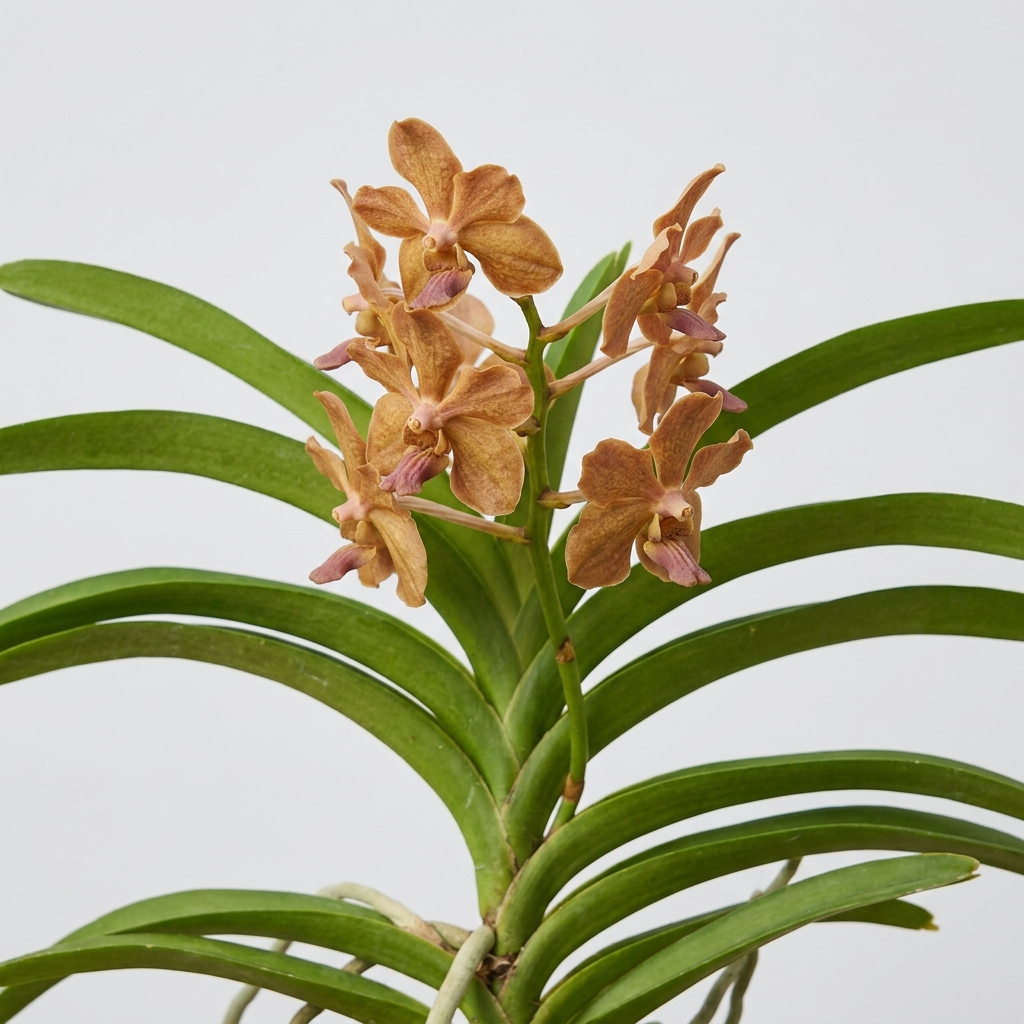
Vanda Helvola is a captivating orchid highly prized by collectors for its unique color palette and classic monopodial growth habit. Unlike many of the brightly colored modern hybrids, this species features distinctive warm-toned flowers that range from amber to deep reddish-brown, offering a more natural and earthy aesthetic. It demands specific environmental conditions typical of the Vanda genus, but its rewarding blooms make it a standout addition to any tropical orchid collection.
As an epiphytic orchid, Vanda Helvola thrives with its roots exposed to the air, absorbing moisture and nutrients directly from its humid surroundings. Growers value this orchid not only for its exotic floral display but also for its architectural presence, featuring strap-like leaves that stack neatly along a central stem. Understanding its specific cultural needs is key to unlocking its full blooming potential and maintaining long-term plant health.
💡 Did You Know?
The species name helvola is derived from Latin, meaning pale yellow or dun-colored, which perfectly describes the unique, warm amber and brownish hues of its blossoms. Unlike many brightly colored modern hybrids, this orchid retains a highly natural, earthy aesthetic that is deeply appreciated by species collectors.
🌿 Botanical Overview
Vanda Helvola shows a classic monopodial growth habit, meaning it grows upward from a single stem rather than spreading horizontally via pseudobulbs. The thick, leathery, strap-like leaves are arranged in two alternating ranks, creating a fan-like appearance. This structural form allows the plant to efficiently capture light and channel rainwater down toward its central stem and root system.
The root system of this orchid is particularly robust, consisting of thick, fleshy aerial roots covered in a specialized silver-gray layer called velamen. This velamen acts like a sponge, rapidly absorbing atmospheric moisture and nutrients when exposed to rain or high humidity. In its natural habitat, the plant anchors itself to tree branches, basking in the dappled sunlight of the tropical canopy.
🌸 Flower Characteristics
The blossoms of Vanda Helvola are celebrated for their distinctive, earthy coloration, which sets them apart from more common, brightly colored hybrids. The petals and sepals typically display shades of amber, rust, and pale brownish-purple, often with a glossy or slightly waxy texture that catches the light. The flowers are moderately sized and are arranged on axillary inflorescences that emerge from the leaf joints.
A key feature of the bloom is its complex lip, or labellum, which often presents a contrasting hue, sometimes with subtle yellow or cream markings. The lateral lobes of the lip are finely detailed, guiding potential pollinators toward the column. The flowers are held relatively flat, presenting a striking, symmetrical face that stands out when the plant is in full bloom.
Fragrance & Bloom Profile
Many growers report that Vanda Helvola produces a pleasing, sweet fragrance that is particularly noticeable during the warmer hours of the day. The scent is often described as a delicate blend of floral sweetness with a warm, spicy undertone, though the intensity of the fragrance can vary depending on environmental factors such as temperature and humidity.
The blooms are relatively long-lasting, often remaining fresh on the spike for several weeks under optimal growing conditions. To maximize the duration of the bloom cycle, it is important to avoid getting the open flowers wet during watering, as excess moisture on the petals can lead to premature spotting or decay.
Parentage & Hybrid Lineage
In botanical records, Vanda Helvola is recognized as a distinct species rather than a complex artificial hybrid, though it has been used in breeding programs to introduce its unique warm coloration and compact growth habit to newer Vandaceous grexes. Because its natural history and exact regional variations are not always consistently documented in general retail grower references, buyers should source plants from reputable nurseries to ensure authentic lineage.
When used in hybridization, this orchid tends to pass on its robust monopodial structure and its tolerance for intermediate temperatures. While it may not have the massive flower size of some modern polyploid Vanda hybrids, its genetic contribution is highly valued by breeders seeking to create unusual color forms and fragrant offspring.
🌱 Growing Conditions
To cultivate Vanda Helvola successfully, growers must replicate its native tropical environment. This orchid requires bright, filtered light to thrive and bloom. While it can tolerate some direct morning sun, harsh afternoon sunlight can easily scorch the leaves, so a location with bright, dappled shade or high-quality LED grow lights is ideal.
💡 Care Tip
Ensure your growing area has a small fan running continuously. Vandas thrive on high , but without active air movement, the moist air can settle on the leaves and invite fungal infections.
Temperature management is equally critical. This orchid prefers warm to intermediate conditions, ideally ranging from 65°F to 85°F during the day, with a slight drop at night to stimulate growth. High humidity levels of 70% to 80% are essential, coupled with strong, continuous air movement to prevent stagnant air from harboring fungal or bacterial pathogens.
Watering, Feeding & Potting Media
Because Vanda Helvola is typically grown bare-root in open wooden baskets or suspended in the air, its watering requirements are unique. The exposed roots must be watered thoroughly—often daily during the hot summer months—by soaking or heavy misting until the silver velamen turns a vibrant green, indicating complete hydration.
Feeding should be done regularly using a balanced, water-soluble orchid fertilizer diluted to quarter or half strength. This “weakly weekly” approach ensures the plant receives consistent nutrients without risking root burn. Since there is no potting media to retain salts, flushing the roots with pure water between fertilizer applications is highly recommended to maintain root health.
Blooming Season & Care Notes
The primary blooming season for Vanda Helvola typically spans from late spring through the summer months, though healthy plants may occasionally produce spikes at other times of the year. As the flower spike begins to emerge from the leaf axils, care should be taken not to disturb the plant’s orientation, as sudden changes in light direction can cause the developing buds to twist or fail to open properly.
Once the blooming cycle is complete, the old flower spike should be cut back close to the main stem using sterilized cutting tools. Repotting or basket maintenance is rarely needed unless the wooden basket begins to decay, in which case the entire basket can often be placed inside a larger one to avoid disturbing the sensitive, clinging aerial roots.
⚠️ Common Issues
⚠️ Common Mistake
Avoid planting this orchid in standard potting soil or fine orchid bark. Suffocating the thick aerial roots in dense media is the quickest way to cause root rot and kill the plant.
- Dehydrated Roots: Shriveled, dry, or brittle roots indicate insufficient watering or low ambient humidity.
- Leaf Spotting: Dark spots on the foliage can be caused by cold water droplets remaining on the leaves overnight.
- Bud Blast:
Developing buds may yellow and drop prematurely due to sudden temperature drops or low humidity. - Pests:
Mealybugs and scale insects can hide in the tight crevices between the strap-like leaves. - Root Rot:
If grown in heavy, poorly draining media, the roots will quickly suffocate and rot.
❓ Frequently Asked Questions
How often should I water Vanda Helvola?
When grown bare-root in a basket, this orchid typically requires daily watering or heavy misting during the warm growing season. In cooler winter months, watering can be reduced to every other day, but the roots should always be monitored to ensure they do not remain dry and shriveled for extended periods.
Can I grow Vanda Helvola indoors?
Yes, but it requires careful attention to humidity and light. Growing it near a bright south or east-facing window with a humidifier nearby, or under dedicated high-output LED grow lights with an oscillating fan for air circulation, will help replicate its necessary tropical conditions.
Why are the leaves on my orchid turning yellow?
Yellowing leaves can indicate several issues, including overexposure to direct sunlight, natural aging of the lowest leaves, or root rot caused by stagnant water. Inspect the root system immediately; if the roots are firm and green when wet, adjust the light levels.
What is the best potting mix for this orchid?
This orchid performs best with no potting mix at all. Growing it bare-root in a slatted teak basket or mounted on a cork plaque allows the aerial roots to receive the maximum airflow they require. If media must be used, choose extremely large pieces of charcoal or coarse fir bark.
⭐ Final Growing Notes
While Vanda Helvola requires a more hands-on watering routine and higher humidity than standard grocery-store orchids, its unique amber-toned flowers and sweet fragrance make it an incredibly rewarding species to cultivate. By providing bright, filtered light, consistent warmth, and excellent air circulation around its bare roots, you can enjoy the exotic beauty of this tropical treasure for many years to come.
⚕️ Health, Safety & Edibility
Understanding how a plant interacts with people, pets, and the surrounding environment is part of responsible cultivation. This section uses conservative, general guidance and does not replace professional medical or veterinary advice.
Human Safety: No published evidence currently identifies species-specific toxicity concerns for Vanda Helvola during normal handling. As with most ornamental plants, it should not be intentionally consumed.
Pet Safety: Published information does not indicate that this orchid commonly poses a toxicity concern for cats or dogs. However, chewing leaves, flowers, roots, or potting media may still cause mild digestive upset.
Edibility: This orchid is cultivated for ornamental display rather than food. Ornamental plants may carry fertilizers, pesticides, or other horticultural treatments that make them unsuitable for consumption.
Skin Contact: Routine handling is not generally associated with skin irritation. Gardeners with sensitive skin may prefer wearing gloves when repotting, pruning, or handling potting media.
🌱 Propagation Tip
This monopodial orchid is best propagated by waiting for a keiki, or baby plant, to develop naturally along the main stem. Only separate the keiki once it has produced several robust roots of its own.
⭐ Expert Advice
To stimulate blooming, try to provide a slight drop of about ten degrees Fahrenheit at night. This natural diurnal shift closely mimics its native canopy environment and reliably encourages spike development.

Leave A Comment