
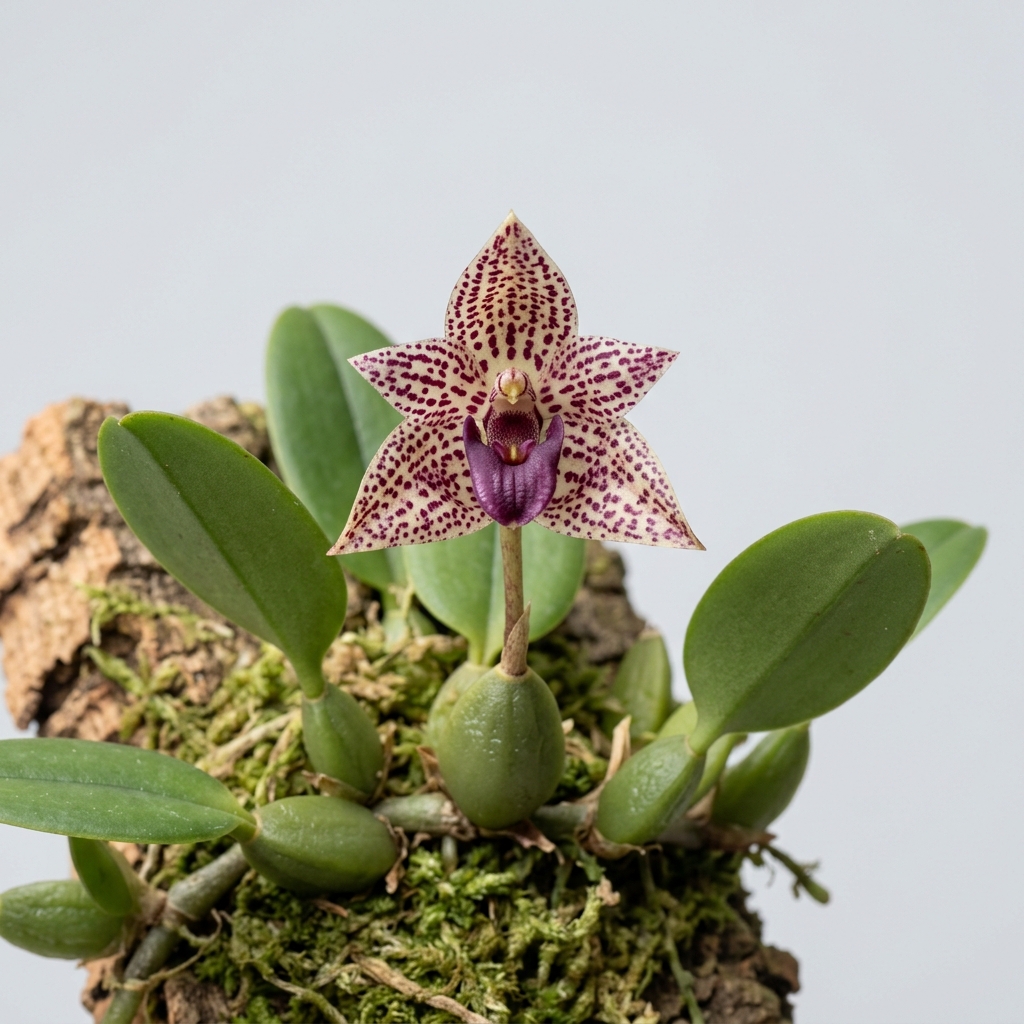
Bulbophyllum Patens is a fascinating epiphytic orchid species native to the tropical forests of Southeast Asia, highly prized by collectors for its intriguing floral morphology and creeping growth habit. Belonging to one of the largest and most diverse genera in the orchid family, this species is characterized by its small, single-leafed pseudobulbs spaced along a wandering rhizome, which allows it to quickly colonize mounting plaques or shallow baskets.
Orchid enthusiasts are particularly drawn to Bulbophyllum Patens for its relatively large, solitary flowers that emerge from the base of the pseudobulbs. The blooms feature a striking combination of cream, yellow, and reddish-purple spotting, complete with the signature hinged, mobile lip characteristic of the genus. Its manageable size and unique flowering presentation make it an excellent choice for terrariums, wardian cases, or dedicated indoor growing spaces.
💡 Did You Know?
The hinged lip of Bulbophyllum Patens is so sensitive that even a gentle breeze can cause it to rock back and forth. This motion mimics the movement of insects, helping to lure specific pollinators to the flower's reproductive structures.
🌿 Botanical Overview
Bulbophyllum Patens is naturally distributed across lower-elevation rainforests in regions such as Thailand, Malaysia, Sumatra, and Borneo. In its native habitat, it grows as an epiphyte on moss-covered tree trunks and branches, where it benefits from constant air movement, high humidity, and dappled shade. The plant features small, slightly flattened pseudobulbs that produce a single, leathery, oblong leaf.
The growth habit of this orchid is distinctly creeping, with a relatively long rhizome separating each pseudobulb. This sprawling architecture means the plant tends to wander outside the confines of traditional pots, making mounting or wide, shallow baskets the preferred cultivation methods. This growth form allows the roots to access maximum airflow while absorbing moisture from the humid surrounding air.
🌸 Flower Characteristics
The flowers of Bulbophyllum Patens are typically produced singly on short, basal inflorescences that arise from the rhizome near the base of mature pseudobulbs. Each bloom is relatively large compared to the size of the individual pseudobulbs, often measuring between one and two inches in diameter. The sepals and petals are widely spread, giving the flower an open, star-like appearance.
Coloration consists of a pale yellow or cream background heavily speckled or flushed with dark reddish-purple dots. The defining feature of the flower is its prominent, fleshy lip, which is delicately hinged. This mobile lip moves with the slightest breeze or vibration, an evolutionary adaptation designed to attract and assist specific insect pollinators in their natural habitat.
Fragrance & Bloom Profile
The fragrance of Bulbophyllum Patens is a subject of interest among growers, as many species within the genus are known for unusual or unpleasant scents. However, Bulbophyllum Patens is generally reported to have a pleasant, sweet, and slightly spicy or fruity aroma, sometimes compared to almonds or cut grass. The intensity of the fragrance can vary depending on temperature, light levels, and the time of day.
Individual flowers typically remain open for one to two weeks, depending on environmental conditions. While the blooms are not exceptionally long-lived compared to some other orchid genera, a well-established specimen with multiple active growth points can produce a succession of flowers over several weeks, extending the overall display period.
Parentage & Hybrid Lineage
Bulbophyllum Patens is a naturally occurring species rather than a man-made hybrid. In orchid nomenclature, it is recognized as a distinct species within the section Sestochilos. Because it is a species, its genetic makeup is stable and represents the wild form found in Southeast Asian jungles, though select cultivars may exist with superior flower size or intense coloration.
While not as heavily hybridized as genera like Phalaenopsis or Cattleya, Bulbophyllum Patens has occasionally been used in breeding programs to introduce its compact growth habit, unique spotting, and pleasant fragrance to new Bulbophyllum hybrids. However, documented hybrid lineage involving this species remains relatively limited in mainstream commercial orchid registries.
🌱 Growing Conditions
To cultivate Bulbophyllum Patens successfully, growers should attempt to replicate its tropical forest canopy environment. It thrives in warm to intermediate temperatures, ideally ranging from 75 to 85 degrees Fahrenheit during the day, with a slight drop of 10 degrees at night to encourage healthy growth and eventual blooming.
💡 Care Tip
Because of its creeping rhizome, mounting Bulbophyllum Patens on a cork bark plaque wrapped with a thin layer of high-quality sphagnum moss is often more successful than traditional potting.
Light should be bright but filtered, avoiding direct midday sunlight which can easily scorch the thin leaves. High humidity is crucial for this species, ideally maintained between 70% and 90%. Excellent air circulation must be provided to prevent stagnant air, which can lead to fungal infections in high-humidity environments.
Watering, Feeding & Potting Media
Bulbophyllum Patens does not possess large water-storing pseudobulbs, meaning it has a low tolerance for drought. The potting medium or mount should be kept consistently moist but never waterlogged. Watering frequency will depend heavily on the growing setup; mounted plants may require daily misting or soaking, while those in baskets or pots with sphagnum moss will need watering just as the medium begins to approach dryness.
Fertilization should be light and frequent, using a balanced orchid fertilizer diluted to one-quarter or one-eighth strength. Apply this weak solution every week or two during the active growing season, flushing the medium with pure water periodically to prevent mineral salt buildup. High-quality New Zealand sphagnum moss, tree fern fiber, or cork mounts are highly recommended media.
Blooming Season & Care Notes
Blooming typically occurs during the warmer months of summer and early autumn, though flowers can occasionally appear at other times of the year if stable greenhouse conditions are maintained. To trigger blooming, ensure the plant receives adequate light and a slight drop in night temperatures during the late spring.
Once the flower spike begins to emerge from the base of the pseudobulb, avoid moving the plant or changing its orientation to the light source, as this can cause the developing bud to blast. After flowering is complete, the old flower stem can be cut back close to the rhizome. Repotting or remounting is best done in early spring when new root growth is just beginning to emerge.
⚠️ Common Issues
⚠️ Common Mistake
Allowing the potting medium to dry out completely is a common mistake. Unlike some orchids, Bulbophyllum Patens lacks large water-storing pseudobulbs and requires consistent moisture.
- Dehydration: Indicated by shriveled pseudobulbs and wrinkled leaves, usually caused by underwatering or low humidity.
- Root Rot: Caused by compacted, poorly draining media or overwatering, leading to black, mushy roots.
- Bud Blast: Premature dropping of flower buds, often triggered by sudden changes in temperature, drafts, or low humidity.
- Pests: Spider mites, mealybugs, and scale can hide under leaves and around the rhizome; treat promptly with insecticidal soap or neem oil.
- Fungal Leaf Spotting: Dark spots on leaves caused by high humidity combined with inadequate air movement.
❓ Frequently Asked Questions
Can Bulbophyllum Patens be grown in a traditional plastic pot?
While it is possible to grow Bulbophyllum Patens in a plastic pot, its creeping rhizome habit makes it challenging. The plant will quickly grow over the edges of the pot. Shallow bulb pans, net baskets, or cork mounts are much better suited to its natural growth pattern.
How do I know if my Bulbophyllum Patens is getting enough light?
The leaves should be a healthy, light-to-medium green. If the leaves turn dark green, the plant is likely receiving too little light, which may prevent blooming. If the leaves develop a yellowish tint or reddish-purple freckling, the light may be too intense.
Why are the pseudobulbs on my orchid shriveling?
Shriveled pseudobulbs are a sign of water stress. This can be caused by underwatering, extremely low humidity, or conversely, root rot. If the roots have rotted due to soggy media, the plant can no longer absorb water, leading to dehydration symptoms.
Is Bulbophyllum Patens suitable for a terrarium?
Yes, Bulbophyllum Patens is an excellent candidate for medium to large terrariums or vivariums. Its compact size, love for high humidity, and creeping habit allow it to thrive when mounted on background walls or branches inside an enclosed setup with adequate ventilation.
⭐ Final Growing Notes
Bulbophyllum Patens is a rewarding species that brings a touch of exotic tropical flair to any orchid collection. By focusing on high humidity, consistent moisture, and excellent air movement, growers can enjoy the unique, spotted blooms and fascinating mobile lip of this Southeast Asian treasure for years to come.
⚕️ Health, Safety & Edibility
Understanding how a plant interacts with people, pets, and the surrounding environment is part of responsible cultivation. This section uses conservative, general guidance and does not replace professional medical or veterinary advice.
Human Safety: No published evidence currently identifies species-specific toxicity concerns for Bulbophyllum Patens during normal handling. As with most ornamental plants, it should not be intentionally consumed.
Pet Safety: Published information does not indicate that this orchid commonly poses a toxicity concern for cats or dogs. However, chewing leaves, flowers, roots, or potting media may still cause mild digestive upset.
Edibility: This orchid is cultivated for ornamental display rather than food. Ornamental plants may carry fertilizers, pesticides, or other horticultural treatments that make them unsuitable for consumption.
Skin Contact: Routine handling is not generally associated with skin irritation. Gardeners with sensitive skin may prefer wearing gloves when repotting, pruning, or handling potting media.
🌱 Propagation Tip
Propagate this orchid by dividing the rhizome during spring repotting. Ensure each division has at least three to four healthy, mature pseudobulbs and active root growth.
⭐ Expert Advice
To encourage robust blooming, provide a slight drop of about 10 degrees Fahrenheit at night during the late spring, while keeping levels consistently high.

Leave A Comment