

Calanthe Triplicata is a highly esteemed terrestrial orchid prized for its striking, pure white blossoms and elegant, pleated foliage. Often referred to as the Christmas Orchid in its native southern hemispheres, this robust grower brings a touch of refined elegance to shade gardens and indoor collections alike. Its tall, upright flower spikes emerge from lush, evergreen pseudobulbs, making it a favorite among collectors who appreciate terrestrial orchid species.
Unlike many epiphytic orchids that cling to tree branches, this species thrives in rich, organic forest floors. Growers value it not only for its long-lasting floral display but also for its relatively straightforward care requirements compared to more delicate orchid genera. With its broad, attractive leaves and reliable blooming habit, it serves as an excellent bridge species for gardeners transitioning from traditional houseplants to the rewarding world of orchid cultivation.
💡 Did You Know?
Calanthe Triplicata is commonly known as the Christmas Orchid in Australia because its striking white flowers often reach peak bloom during the southern hemisphere's midsummer festive season. Its botanical name, triplicata, refers to the three-lobed structure of its highly detailed floral lip, which features a bright, contrasting callus that acts as a visual beacon for local insect pollinators.
🌿 Botanical Overview
Calanthe Triplicata is widely distributed across tropical and subtropical Asia, Australia, and various Pacific islands. It is characterized by its large, fleshy, pseudobulbous stems that sit just below or at the soil surface. These pseudobulbs support several large, lanceolate, deeply pleated (plicate) leaves that remain attractive year-round under proper growing conditions.
The root system of this terrestrial orchid is adapted to organic-rich, damp forest litter rather than open air. Its thick, fleshy roots spread laterally to absorb moisture and nutrients from decaying organic matter. Understanding this terrestrial growth habit is fundamental to successfully maintaining the plant in a container environment.
🌸 Flower Characteristics
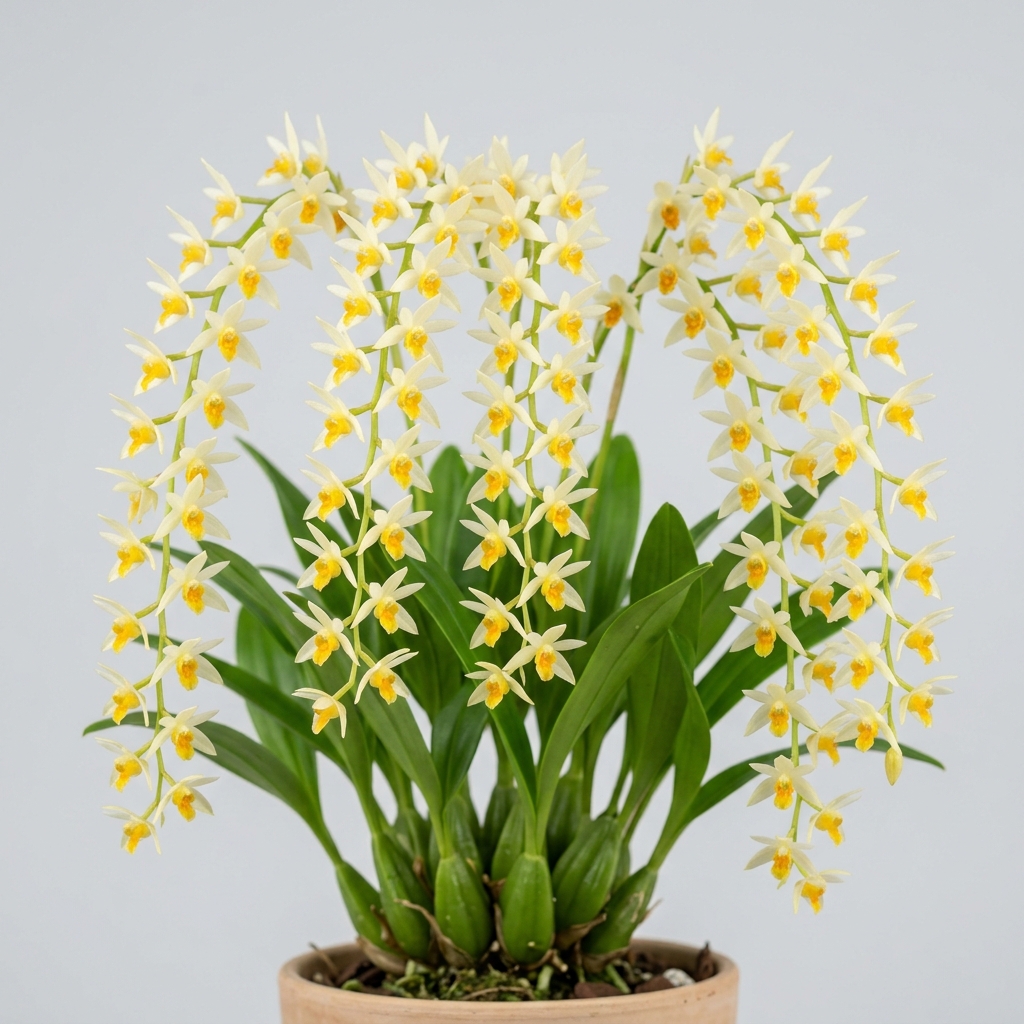
The inflorescence of Calanthe Triplicata is a spectacular, erect raceme that can reach up to one meter in height, carrying dozens of crowded, pristine white flowers. Each individual blossom is approximately three to five centimeters across, featuring spreading sepals and petals that frame a deeply three-lobed lip.
A defining feature of the flower is the prominent, bright yellow, orange, or reddish-orange callus located at the base of the lip. This vivid contrast serves as a natural guide for pollinators. The flowers open sequentially from the bottom of the spike upward, ensuring a prolonged and highly decorative display that can last for several weeks.
Fragrance & Bloom Profile
The fragrance profile of Calanthe Triplicata is subject to some variation among individual specimens and grower observations. While many plants are reported to produce a very subtle, sweet, or grassy scent during the warmest hours of the day, others appear to be entirely unscented.
Because fragrance intensity can be highly dependent on ambient temperature, humidity, and clone-specific genetics, it is best enjoyed primarily for its visual elegance. The blooms are remarkably durable, resisting fading and maintaining their crisp white coloration throughout their lifespan, provided they are kept away from direct, scorching sunlight.
Parentage & Hybrid Lineage
As a naturally occurring species, Calanthe Triplicata does not possess a complex hybrid lineage, though it has been used as a parent in various artificial crosses within the genus Calanthe. Its genetic stability makes it a reliable performer, exhibiting consistent traits across generations.
In the horticultural trade, select clones may be propagated for superior flower count, larger bloom size, or more intense callus coloration. When purchasing this orchid, growers should note that variations in flower size and leaf width are common, reflecting the wide geographical range of its wild ancestors rather than hybrid intervention.
🌱 Growing Conditions
To replicate its natural forest floor habitat, Calanthe Triplicata requires bright, filtered light or moderate shade. Direct afternoon sunlight must be avoided, as it will quickly scorch the broad, thin leaves, leading to unsightly brown patches and compromised plant health.
💡 Care Tip
Keep this terrestrial orchid in a location with gentle, continuous air movement. Good ventilation is crucial for preventing fungal leaf spot diseases on its broad, pleated foliage, especially when maintaining the high levels this species prefers.
Temperature: wise, this orchid prefers intermediate to warm conditions. Ideal daytime temperatures range from twenty to twenty-eight degrees Celsius, with a slight drop at night to stimulate healthy growth. High humidity levels of sixty to eighty percent, coupled with gentle, continuous air movement, will prevent leaf tip burn and discourage fungal pathogens.
Watering, Feeding & Potting Media
Unlike epiphytic orchids, Calanthe Triplicata should never be allowed to dry out completely. The potting medium should remain consistently damp but never waterlogged or soggy. During the active growing season in spring and summer, water the plant thoroughly as soon as the top centimeter of the medium feels dry to the touch.
A suitable potting mix consists of a well-draining terrestrial blend, such as fine orchid bark mixed with peat moss, perlite, and a small amount of decomposed leaf mold or charcoal. Feed the orchid regularly during the growing season with a diluted, balanced orchid fertilizer applied at half or quarter strength every two weeks, flushing the pot with pure water periodically to prevent salt buildup.
Blooming Season & Care Notes
The primary blooming season typically spans from late spring through summer, though regional climate variations can shift this window. As the flower spike begins to emerge from the center of the new growth, maintain stable environmental conditions and avoid moving the plant to prevent bud drop.
Once the blooming cycle is complete, the plant enters a brief period of semi-dormancy during the cooler winter months. During this time, reduce watering frequency slightly, allowing the medium to dry out a bit more between waterings, and suspend fertilizer applications until new vegetative growth appears in the spring. Repotting is best performed just as new growth begins.
⚠️ Common Issues
⚠️ Common Mistake
A frequent error is treating Calanthe Triplicata like an epiphytic orchid by letting the potting medium dry out completely between waterings. Unlike Phalaenopsis, this terrestrial species lacks water-storing capabilities to survive prolonged drought and requires consistently damp soil.
- Leaf Tip Burn: Often caused by low humidity or excessive mineral buildup from hard water or over-fertilization.
- Root Rot:
Occurs when the potting medium is too dense, lacks drainage, or is kept constantly saturated. - Spider Mites:
These pests favor dry, warm conditions and can quickly infest the undersides of the broad, pleated leaves. - Fungal Leaf Spotting: Caused by stagnant air and water sitting on the foliage overnight; ensure good air circulation.
- Bud Blast:
Premature dropping of flower buds due to sudden temperature fluctuations, drafts, or severe dehydration.
❓ Frequently Asked Questions
How often should I repot my Calanthe Triplicata?
Repotting is generally recommended every one to two years, ideally in early spring just as new growth and fresh roots begin to emerge. Use this opportunity to refresh the organic potting medium, which naturally degrades over time, and to divide large clumps if desired.
Can Calanthe Triplicata be grown outdoors?
Yes, in mild, frost-free subtropical or tropical climates, this orchid can be grown outdoors in a shaded, well-draining garden bed rich in organic matter. In cooler temperate regions, it must be grown in pots and brought indoors before temperatures drop below ten degrees Celsius.
Why are the leaves on my orchid turning yellow and dropping?
While it is normal for older, lower leaves on mature pseudobulbs to yellow and shed naturally over time, widespread yellowing often indicates overwatering, poor drainage, or a lack of essential nutrients. Check the root system immediately to ensure it is healthy and white.
Does this orchid require a dry winter rest period?
Unlike deciduous Calanthe species, Calanthe Triplicata is evergreen and does not require a severe, bone-dry winter rest. However, it does benefit from a slight reduction in watering and a complete pause in fertilization during the cooler, darker winter months to respect its natural growth cycle.
⭐ Final Growing Notes
Calanthe Triplicata is a rewarding and highly ornamental terrestrial orchid that brings a lush, tropical aesthetic to any collection. By respecting its preference for consistent moisture, filtered shade, and a rich, well-draining potting medium, growers can enjoy its spectacular white flower spikes year after year. It stands as a testament to the diverse beauty of the orchid family, offering a delightful alternative to standard epiphytic varieties.
⚕️ Health, Safety & Edibility
Understanding how a plant interacts with people, pets, and the surrounding environment is part of responsible cultivation. This section uses conservative, general guidance and does not replace professional medical or veterinary advice.
Human Safety: Species-specific human toxicity data for Calanthe Triplicata is limited. Use conservative handling practices and avoid intentional consumption.
Pet Safety: Pet-specific safety information for Calanthe Triplicata is limited, so keep it away from animals that commonly chew plants.
Edibility: Calanthe Triplicata should not be treated as edible. Ornamental specimens may contain natural irritants or horticultural residues that make them unsuitable for consumption.
Skin Contact: Skin irritation is not well documented for this plant, but gloves are sensible when repotting, pruning, or handling potting media.
🌱 Propagation Tip
Propagate mature specimens by division during the spring repotting process. Ensure each divided clump contains at least three healthy pseudobulbs with active root systems, and pot them into a fresh, moisture-retentive terrestrial mix to encourage rapid establishment.
⭐ Expert Advice
To maximize the flower count on your next bloom spike, apply a weak, nitrogen-rich fertilizer during the early vegetative growth phase in spring, then transition to a phosphorus-heavy formula as the summer approaches to stimulate robust bud development.

Leave A Comment