
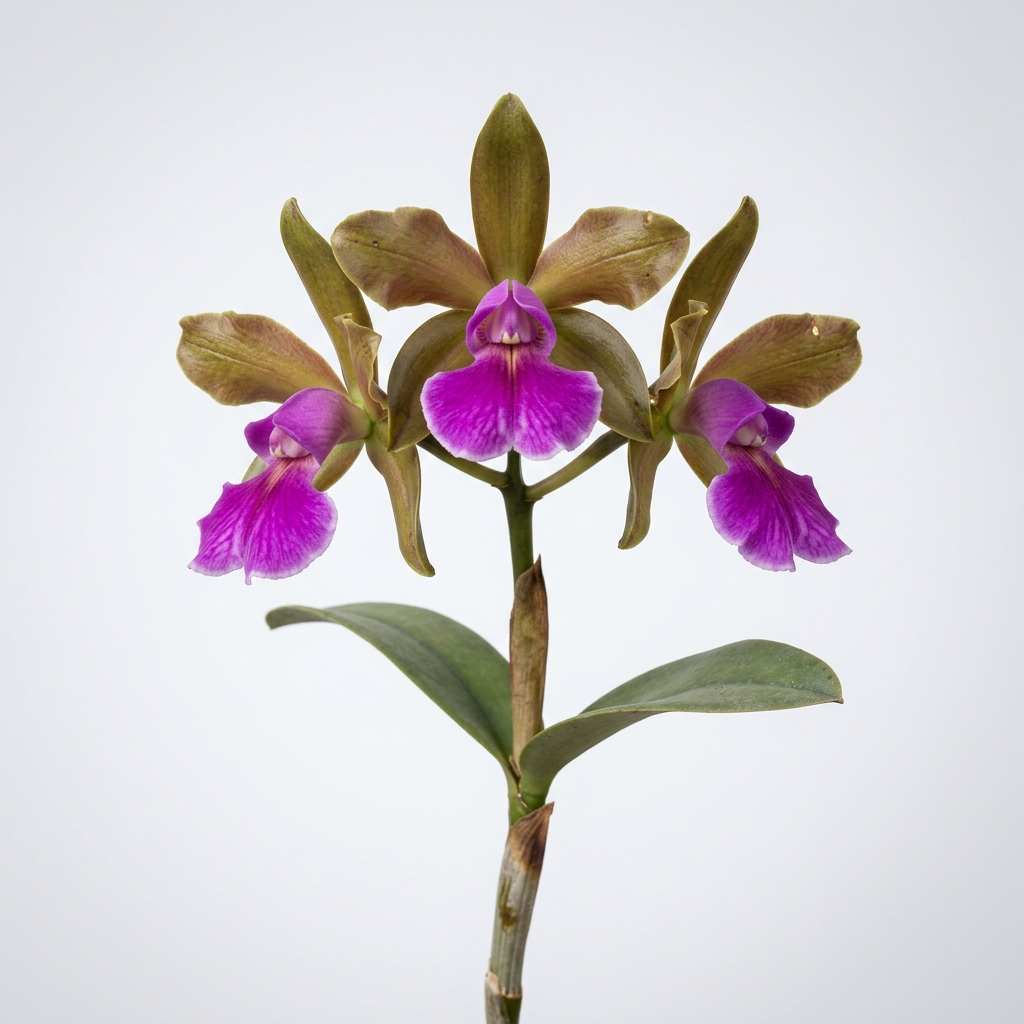
Cattleya Bicolor is a highly distinctive bifoliate orchid species native to Brazil, celebrated by collectors for its striking color contrast and unique floral structure. Unlike many traditional Cattleya orchids, this species features slender, cane-like pseudobulbs that can reach impressive heights, topped with two leathery leaves. It is particularly valued for its architectural growth habit and its ability to produce long-lasting, waxy flowers that stand out in any greenhouse or indoor collection.
Horticulturists appreciate Cattleya Bicolor not only for its botanical significance but also for its role in orchid hybridization. The species has contributed its heavy substance, unusual bronze-green coloration, and spade-shaped lip to numerous modern hybrids. While it requires some attention to watering cycles and light levels, successful cultivation rewards growers with a dramatic display of summer-to-autumn blooms that carry a pleasant, spicy fragrance.
💡 Did You Know?
Cattleya Bicolor belongs to the Cattleya orchid group, where flower presentation is often just as important as . White-flowered cultivars are especially valued indoors because their pale blooms reflect well and pair easily with many home, greenhouse, and display settings.
🌿 Botanical Overview
Cattleya Bicolor is native to the warm, seasonally dry forests of Brazil, where it primarily grows as an epiphyte on trees or occasionally as a lithophyte on rocky outcrops. In its natural habitat, it experiences a distinct wet season followed by a cooler, drier winter rest. This environmental rhythm dictates its growth cycle in cultivation, where it produces new vegetative growth in the spring and matures its pseudobulbs by mid-summer.
The vegetative structure of this orchid is notably different from unifoliate (single-leaf) Cattleyas. The pseudobulbs are slender, cylindrical, and cane-like, often growing between 12 to 30 inches tall under optimal conditions. Each pseudobulb is topped by two (and occasionally three) rigid, oblong leaves that help the plant store moisture and withstand periods of high light intensity.
🌸 Flower Characteristics
The flowers of Cattleya Bicolor are renowned for their heavy, waxy substance and unusual color palette. The sepals and petals typically range from olive-green to warm bronze or copper-brown, sometimes exhibiting subtle mahogany undertones. This earthy background contrasts sharply with the vibrant, spade-shaped lip, which is usually a brilliant magenta, purple, or crimson.
A defining botanical feature of Cattleya Bicolor is the structure of its lip, which lacks the lateral lobes that typically wrap around the column in other Cattleya species. This leaves the white or pale pink column completely exposed, creating a striking visual focal point. The flowers are borne on a short terminal inflorescence arising from the top of the mature pseudobulb, usually carrying between two and ten blooms per spike, depending on the maturity and vigor of the plant.
Fragrance & Bloom Profile
This species is highly regarded for its fragrance, which is generally described as a sweet, spicy, or musky scent reminiscent of clover, iris, or nutmeg. The fragrance is most pronounced during the morning hours when temperatures begin to rise and light levels increase. Individual flowers are exceptionally long-lasting due to their thick, waxy texture, often remaining in pristine condition for four to six weeks if kept in a cool, draft-free environment.
Parentage & Hybrid Lineage
As a distinct species rather than a man-made cultivar, Cattleya Bicolor does not have a hybrid parentage. However, it has been extensively used in breeding programs since the 19th century. Hybridizers value the species for its ability to pass on its heavy floral substance, intense lip coloration, and upright growth habit. While its dominant bronze-green petal color can sometimes suppress brighter pastel tones in primary hybrids, it remains a cornerstone species for creating complex, warm-toned Cattleya intergeneric crosses.
🌱 Growing Conditions
To cultivate Cattleya Bicolor successfully, growers must replicate its native Brazilian habitat. This orchid requires bright, filtered light, similar to the conditions preferred by brassavolas or other high-light Cattleyas. A slight yellowing of the foliage indicates that the plant is receiving the maximum acceptable amount of light, which is necessary to stimulate robust blooming.
💡 Care Tip
For best results, grow Cattleya Bicolor in bright filtered with steady and gentle airflow. Avoid placing the plant in harsh midday sun, but do not keep it in a dark corner; weak is one of the most common reasons cultivated orchids refuse to rebloom.
Temperature: wise, Cattleya Bicolor thrives in intermediate to warm conditions. Daytime temperatures should ideally range between 75°F and 85°F (24°C to 29°C), with a nighttime drop to 60°F or 65°F (15°C to 18°C). High humidity between 50% and 70% is essential, accompanied by strong, continuous air movement to prevent fungal pathogens from settling on the leaves or roots.
Watering, Feeding & Potting Media
Active growth phases require frequent watering, but the roots must dry out rapidly after each application. Cattleya Bicolor is highly intolerant of stale, soggy potting media, which quickly leads to root rot. Coarse fir bark, charcoal, and perlite mixtures work exceptionally well in clay pots, which promote faster drying. Alternatively, larger specimens can be mounted on cork bark slabs if high humidity can be maintained.
During the spring and summer, apply a balanced, water-soluble orchid fertilizer weekly at a diluted strength (such as one-quarter to one-half of the manufacturer’s recommended dose). Flush the potting medium with pure water once a month to prevent fertilizer salts from accumulating, which can burn the sensitive root tips.
Blooming Season & Care Notes
Cattleya Bicolor typically blooms from mid-summer to early autumn, shortly after the new pseudobulbs have fully matured. Unlike some other species, it does not require a prolonged winter rest to initiate buds, but reducing water and fertilizer slightly after blooming helps the plant transition into its semi-dormant winter phase. Avoid repotting or dividing the plant during the blooming cycle; the ideal time to repot is in early spring when new root tips are just beginning to emerge from the base of the newest pseudobulb.
⚠️ Common Issues
⚠️ Common Mistake
The most common mistake is by calendar instead of root and potting-media condition. Cattleya roots need moisture and air at the same time, so constantly wet bark or sphagnum can lead to root loss even when the leaves still look healthy.
- Root Rot: Caused by overwatering or compacted, decomposing potting media that retains too much moisture.
- Scale and Mealybugs: These pests often hide in the dry sheaths surrounding the cane-like pseudobulbs.
- Bud Blast: Sudden changes in temperature, low humidity, or drafts can cause developing buds to yellow and drop before opening.
- Leaf Scorch: Direct, unfiltered midday sunlight can cause black or bleached patches on the foliage.
❓ Frequently Asked Questions
How often should I water my Cattleya Bicolor?
Watering frequency depends on your growing environment, but as a general rule, water thoroughly and then allow the potting medium to dry out completely before watering again. During the active summer growth phase, this may mean watering two to three times a week, whereas in the winter, watering once every seven to ten days is usually sufficient.
Why is my Cattleya Bicolor not blooming?
The most common reason for a lack of flowers is insufficient light. Cattleya Bicolor requires very bright, indirect light to produce the energy needed for blooming. If the leaves are a dark, forest green, gradually move the plant to a brighter location where the foliage takes on a lighter, grassy-green hue.
When is the best time to repot this orchid?
The absolute best time to repot Cattleya Bicolor is when new root growth is actively initiating from the base of the newest pseudobulb, typically in the spring. Repotting at other times can severely shock the plant, as the older roots rarely adapt well to being disturbed.
Can Cattleya Bicolor be grown mounted on wood?
Yes, Cattleya Bicolor adapts exceptionally well to being mounted on cork bark or hardwood plaques. However, mounted plants dry out very quickly and will require daily watering or misting, making this method best suited for high-humidity greenhouses or outdoor growing in tropical climates.
⭐ Final Growing Notes
Cattleya Bicolor is a rewarding and architecturally stunning orchid that brings a touch of classical Brazilian beauty to any collection. By providing bright light, excellent air circulation, and a strict wet-to-dry watering regime, growers can enjoy its unique, waxy blooms and spicy fragrance year after year. While its tall growth habit requires some physical space, its reliable performance and striking floral contrast make it an essential species for both intermediate and advanced orchid enthusiasts.
⚕️ Health, Safety & Edibility
Understanding how a plant interacts with people, pets, and the surrounding environment is part of responsible cultivation. This section uses conservative, general guidance and does not replace professional medical or veterinary advice.
Human Safety: No published evidence currently identifies species-specific toxicity concerns for Cattleya Bicolor during normal handling. As with most ornamental plants, it should not be intentionally consumed.
Pet Safety: Published information does not indicate that this orchid commonly poses a toxicity concern for cats or dogs. However, chewing leaves, flowers, roots, or potting media may still cause mild digestive upset.
Edibility: This orchid is cultivated for ornamental display rather than food. Ornamental plants may carry fertilizers, pesticides, or other horticultural treatments that make them unsuitable for consumption.
Skin Contact: Routine handling is not generally associated with skin irritation. Gardeners with sensitive skin may prefer wearing gloves when repotting, pruning, or handling potting media.
🌱 Propagation Tip
Propagation should be approached patiently. Most home growers should wait for natural keikis or divide only mature, healthy plants when the orchid type allows it. Never remove a young growth until it has strong roots and enough leaves to support itself away from the parent plant.
⭐ Expert Advice
Repot after flowering when fresh root tips begin to appear. This timing helps the plant anchor quickly into new bark or sphagnum and reduces stress, especially for orchids grown indoors where airflow, , and drying speed can change from season to season.




Leave A Comment