
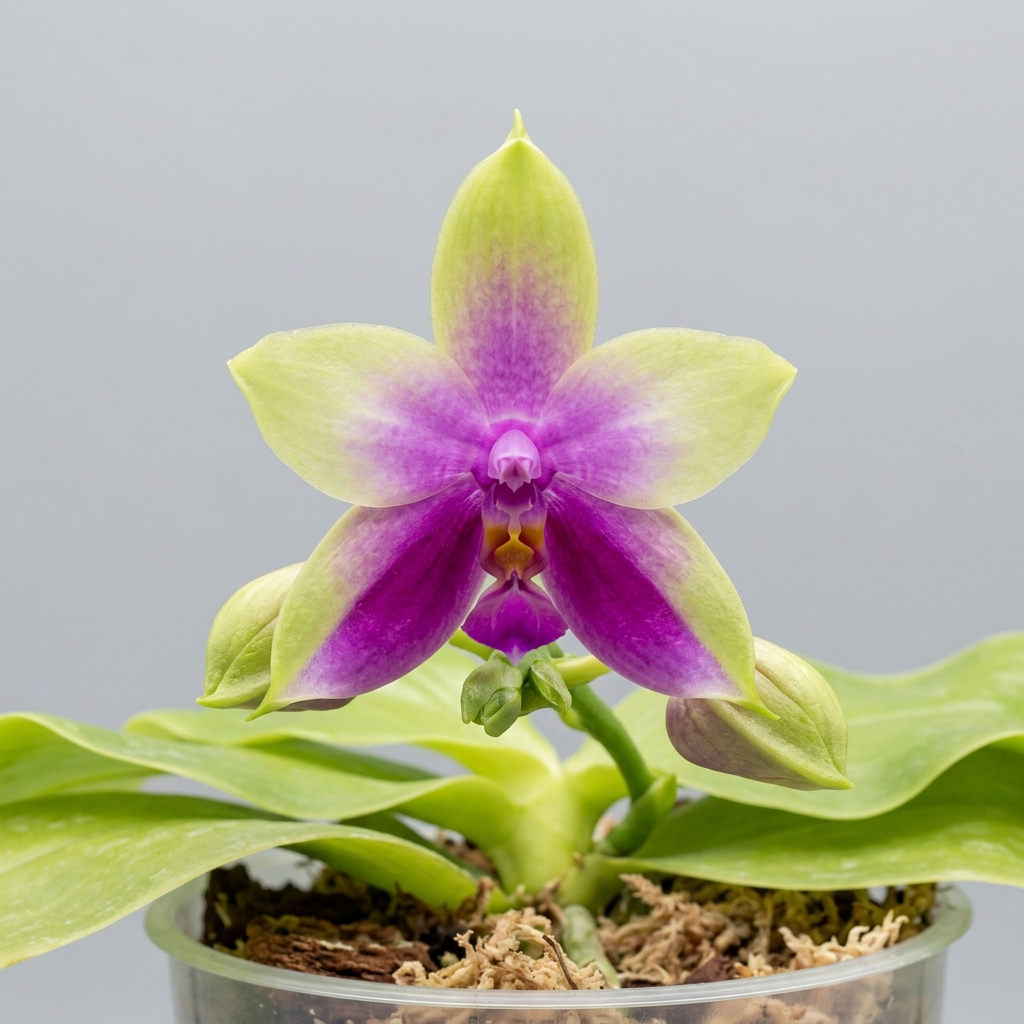
Phalaenopsis Bellina is a highly celebrated warm-growing orchid renowned for its exceptional fragrance and striking, star-shaped blossoms. Native to the canopy shadows of Borneo, this species stands out from standard commercial moth orchids due to its distinct growth habit and intensely colorful, concentrated blooms. Orchid enthusiasts highly value this plant for its ability to produce sequential flowers that fill entire growing spaces with a rich, sweet aroma.
Unlike many hybrid Phalaenopsis that produce long, arching sprays of unscented flowers, Phalaenopsis Bellina features compact, downward-reaching spikes that bear flowers nestled close to its broad, light-green foliage. Its slow-growing but rewarding nature makes it a centerpiece of specialized collections. Cultivating this orchid successfully requires a shift from standard houseplant care toward conditions that mimic a humid, warm tropical rainforest canopy.
💡 Did You Know?
Phalaenopsis Bellina was originally classified as a variety of Phalaenopsis violacea due to their similar appearance. However, it was later recognized as a distinct species because of its unique sweet-citrus , broader wavy leaves, and subtle differences in the shape and color distribution of its petals.
🌿 Botanical Overview
Phalaenopsis Bellina belongs to the subgenus Polychilos, a group of Phalaenopsis orchids characterized by star-shaped flowers, fleshy petals, and sequential blooming habits. For many years, it was classified as a variety of Phalaenopsis violacea, but botanical consensus eventually established it as a distinct species due to differences in floral morphology, fragrance profile, and geographic distribution.
The plant features broad, rounded, light-green leaves that are notably wavy along the margins and have a glossy, almost succulent texture. These leaves grow slowly, typically producing only one or two new leaves per season under optimal conditions. The root system is robust, with thick, silvery-green aerial roots that cling tightly to mounting surfaces or potting media to absorb moisture and nutrients from the air.
🌸 Flower Characteristics
The flowers of Phalaenopsis Bellina are uniquely star-shaped, measuring approximately two to three inches in diameter. The sepals and petals are thick, waxy, and highly durable, presenting a base color of pale chartreuse or creamy white. The inner portions of the lateral sepals and the base of the petals are saturated with a vivid, glowing magenta-violet hue that concentrates heavily toward the center of the blossom.
The lip, or labellum, is a deep purple-magenta, intricately structured to attract specific pollinators in its native habitat. Flowers are borne on short, zig-zagging spikes that emerge from the leaf axils. Because the spikes are relatively short and grow horizontally or slightly downward, the flowers are often nestled closely against the lush green foliage, creating a compact and highly integrated visual display.
Fragrance & Bloom Profile
The fragrance of Phalaenopsis Bellina is arguably its most famous attribute, frequently described by growers as an intense blend of sweet citrus, fruit loops, and lily-of-the-valley. This powerful scent is strongest during the morning and early afternoon hours, activated by warmth and light, and can easily perfume an entire room.
Unlike standard hybrids that open all their buds simultaneously, Phalaenopsis Bellina is a sequential bloomer. A single flower spike will produce one or two blossoms at a time, which remain fresh for several weeks. As older flowers fade, new buds develop at the tip of the same spike, extending the overall blooming period over several months throughout the summer and autumn.
Parentage & Hybrid Lineage
Phalaenopsis Bellina is a naturally occurring species rather than an artificial hybrid, though numerous select cultivars and line-bred variations exist in the horticultural trade. Growers have selectively bred outstanding individuals to enhance flower size, color saturation, and ease of growth, resulting in highly sought-after clonal selections.
In orchid hybridization, Phalaenopsis Bellina is highly prized as a parent plant. It has been used extensively to introduce fragrance, waxy substance, and rich violet tones into modern novelty Phalaenopsis hybrids. Because its genetic traits are dominant for fragrance and color, its influence can be seen in hundreds of registered primary and complex hybrids.
🌱 Growing Conditions
Replicating the warm, humid environment of the Bornean rainforest is key to successfully growing Phalaenopsis Bellina. It thrives in low to moderate indirect light, requiring less light than many other orchid genera. Direct sunlight will quickly scorch its sensitive, light-green leaves, while too little light will inhibit blooming. An east-facing window or shaded southern exposure is typically ideal.
💡 Care Tip
Position your Phalaenopsis Bellina in a location with excellent air movement, especially if you maintain high . Good ventilation prevents stagnant air, which can lead to fungal and bacterial infections on the broad, fleshy leaves.
Temperature control is critical; this orchid is strictly warm-growing and does not tolerate cold drafts or temperatures below 60°F (15°C). Ideal daytime temperatures range between 75°F and 85°F (24°C to 29°C), with a slight drop at night. High relative humidity of 60% to 80% is essential to support healthy leaf development and prevent bud blast, making humidity trays or humidifiers highly beneficial.
Watering, Feeding & Potting Media
Unlike standard Phalaenopsis hybrids that prefer to dry out slightly between waterings, Phalaenopsis Bellina prefers to remain consistently moist but never waterlogged. The potting medium should be kept damp to the touch. High-quality New Zealand sphagnum moss is highly recommended, as it retains even moisture, though a fine bark mix with added perlite can also yield excellent results in humid environments.
Feeding should be frequent but light, using a balanced orchid fertilizer diluted to one-quarter strength with every watering. Flushing the pot with pure water once a month is recommended to prevent mineral salt buildup, which can damage the sensitive root tips. Ensure excellent drainage and air circulation around the roots to prevent rot.
Blooming Season & Care Notes
The primary blooming season occurs during the warm summer months and can extend well into autumn. A crucial rule for Phalaenopsis Bellina care is to never cut off green flower spikes, even after the blossoms have fallen. These spikes are perennial and will continue to produce flowers year after year, alongside newly emerged spikes. Only remove spikes that have turned completely brown and dry.
Repotting should be performed only when the potting medium begins to break down, typically every one to two years, or when the plant has completely outgrown its container. The best time to repot is in the spring, just as active root growth resumes and before the summer blooming cycle begins.
⚠️ Common Issues
⚠️ Common Mistake
A frequent error is allowing water to pool in the crown or leaf joints of the orchid. Because Phalaenopsis Bellina grows horizontally in nature, water naturally drains away. In upright pots, standing water can cause crown rot overnight. Always water the media directly or use a fan to dry the foliage.
- Root Rot:
Caused by overwatering or compacted, decaying potting media that suffocates the roots. - Bud Blast:
Occurs when sudden drops in humidity, temperature fluctuations, or dry drafts cause developing buds to yellow and drop before opening. - Leaf Scorch: Appears as bleached or black patches on the leaves due to exposure to direct sunlight.
- Pests:
Spider mites and mealybugs can hide in the crevices of the broad leaves and flower spikes; treat promptly with insecticidal soap. - Bacterial Soft Rot: Can develop rapidly if water is allowed to sit in the crown or leaf axils overnight, especially in cool conditions.
❓ Frequently Asked Questions
Why are the buds on my Phalaenopsis Bellina falling off before opening?
This issue, known as bud blast, is typically caused by a sudden environmental shock. The most common culprits are low humidity levels (below 50%), dry drafts from heating or cooling vents, or underwatering. Maintaining stable temperatures and high humidity around the plant will help prevent this problem.
Should I cut the flower spike off after my Phalaenopsis Bellina finishes blooming?
No, you should not cut green flower spikes. Phalaenopsis Bellina is a sequential bloomer, meaning the same spike can produce flowers for multiple seasons. Only cut the spike if it turns completely brown, dry, and woody, indicating that it is no longer active.
Can I grow Phalaenopsis Bellina mounted instead of in a pot?
Yes, Phalaenopsis Bellina grows exceptionally well when mounted on cork bark or tree fern plaques. This method mimics its natural epiphytic growth habit and prevents root rot. However, mounted plants require daily watering and very high ambient humidity to prevent dehydration.
Why are the leaves on my Phalaenopsis Bellina turning pale yellow?
Pale yellow leaves usually indicate that the plant is receiving too much light. Phalaenopsis Bellina prefers shaded, indirect light. Move the orchid further away from the window or add a sheer curtain to filter the light. If the yellowing is accompanied by soft spots, it may indicate overwatering or rot.
⭐ Final Growing Notes
While Phalaenopsis Bellina demands more attention to humidity and temperature than mass-market hybrids, its legendary fragrance and exquisite, waxy blooms make it an incredibly rewarding orchid to grow. By providing consistent warmth, even moisture, and filtered light, you can enjoy its sweet, citrusy perfume and vibrant colors summer after summer.
🌱 Propagation Tip
While Phalaenopsis Bellina is typically grown from seed in sterile flasks, mature plants may occasionally produce a 'keiki'—a genetically identical baby plant—along the flower spike or at the base of the mother plant. Allow the keiki to develop several strong roots before carefully detaching and potting it.
⭐ Expert Advice
To maximize blooms, maintain a consistent warm year-round. Unlike cool-growing orchids that require a drop to initiate flowering, Phalaenopsis Bellina relies on sustained warmth and high during the spring and summer to trigger its sequential blooming cycle.

Leave A Comment