
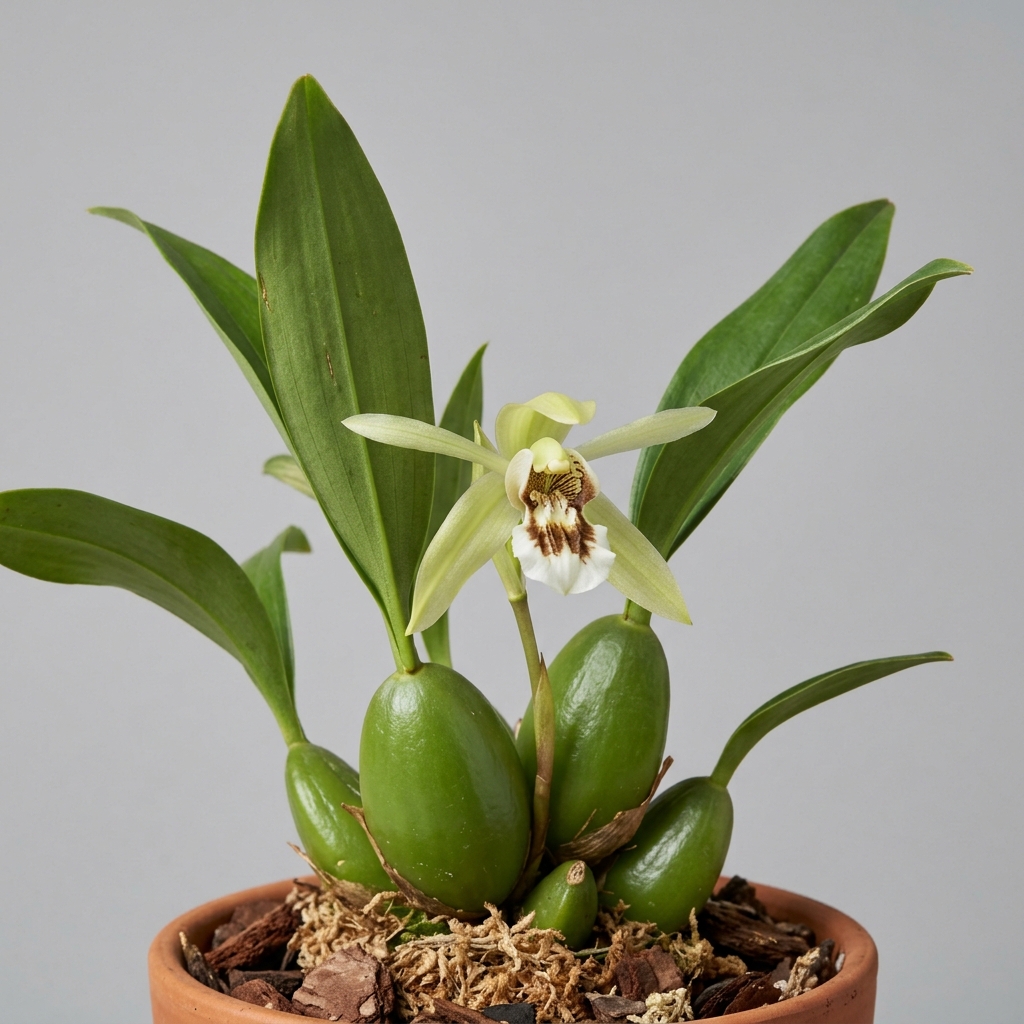
Coelogyne Rumphii is a captivating epiphytic orchid species native to the tropical rainforests of the Maluku Islands. Highly prized by collectors of unusual botanical orchids, this species is celebrated for its distinctive, solitary flowers that emerge from the base of mature pseudobulbs. Its elegant growth habit and striking floral presentation make it a standout addition to any warm-growing orchid collection.
While less common in mass cultivation than some of its relatives, this orchid rewards dedicated growers with a unique architectural beauty. Its moderate size and preference for high humidity make it well-suited for greenhouse cultivation, indoor grow tents, or dedicated humid spaces where its specific environmental needs can be consistently met.
💡 Did You Know?
Coelogyne Rumphii belongs to the Coelogyne orchid group, where flower presentation is often just as important as . White-flowered cultivars are especially valued indoors because their pale blooms reflect well and pair easily with many home, greenhouse, and display settings.
🌿 Botanical Overview
Coelogyne Rumphii shows a classic sympodial growth habit, producing prominent, glossy green pseudobulbs along a creeping rhizome. Each pseudobulb is topped by a single, large, plicate leaf that is leathery and deep green. This foliage provides year-round visual interest even when the plant is not in bloom.
The root system is relatively fine and fibrous, adapted for clinging to mossy tree branches in its native habitat. Because it spreads via a creeping rhizome, mature specimens can develop a beautiful, sprawling specimen habit over time, making them excellent candidates for wide baskets or shallow pots.
🌸 Flower Characteristics
The flowers of Coelogyne Rumphii are singularly produced on short, upright to arching inflorescences that emerge from the base of the pseudobulbs. The sepals and petals are typically lanceolate, presenting a pale yellowish-green, cream, or tan hue.
The defining feature of the bloom is its highly detailed lip or labellum. The lip features prominent lateral lobes and is adorned with intricate, dark brown to near-black veins and markings contrasted against a white or cream background. This dramatic contrast creates a striking visual focal point that draws immediate attention.
Fragrance & Bloom Profile
The fragrance of Coelogyne Rumphii is a subject of some variation among growers, as is common with many wild orchid species. Some cultivated specimens are reported to emit a mild, sweet, or slightly musky scent during the warmest hours of the day, while others may have no detectable fragrance.
Each flower typically lasts for two to three weeks under optimal conditions. Because the inflorescences are usually single-flowered, the blooming display is intimate rather than showy, encouraging close inspection of the intricate floral anatomy.
Parentage & Hybrid Lineage
Coelogyne Rumphii is a naturally occurring species rather than a man-made hybrid. It belongs to the genus Coelogyne, which comprises over 200 species distributed throughout Southeast Asia and the Pacific Islands.
While it is primarily grown as a species by collectors, its unique lip coloration and compact flower presentation make it a subject of interest for hybridizers. However, registered hybrids utilizing Coelogyne Rumphii remain relatively rare and are not widely documented in mainstream commercial trade.
🌱 Growing Conditions
To cultivate Coelogyne Rumphii successfully, growers should attempt to replicate its native tropical forest canopy environment. It thrives in medium to bright indirect light, similar to the light levels preferred by many Phalaenopsis or Paphiopedilum species. Direct sunlight should be avoided, as it can easily scorch the pleated leaves.
💡 Care Tip
For best results, grow Coelogyne Rumphii in bright filtered with steady and gentle airflow. Avoid placing the plant in harsh midday sun, but do not keep it in a dark corner; weak is one of the most common reasons cultivated orchids refuse to rebloom.
Temperature ranges should remain warm to intermediate, ideally between 65°F and 85°F (18°C to 29°C) during the day, with a slight drop at night to encourage healthy metabolic processes. High humidity is crucial, ideally maintained between 60% and 80%, coupled with gentle, continuous air movement to prevent fungal pathogens.
Watering, Feeding & Potting Media
During the active growing season in spring and summer, Coelogyne Rumphii requires consistent moisture. The potting medium should never be allowed to dry out completely, though it must remain highly aerated to prevent root rot. Watering should be reduced slightly during the cooler winter months when growth slows.
A high-quality, free-draining medium is essential. A mix of medium-grade orchid bark, perlite, and chopped sphagnum moss works exceptionally well in pots or baskets. Alternatively, plants can be mounted on cork bark or tree fern plaques if high humidity can be guaranteed. Feed regularly with a diluted, balanced orchid fertilizer during periods of active growth.
Blooming Season & Care Notes
Blooms typically appear in the spring or early summer, though opportunistic flowering can occur at other times of the year if environmental conditions are stable. The emerging flower spikes are delicate and should not be disturbed or subjected to sudden shifts in temperature or humidity.
Repotting is best performed just as new growth and fresh root tips begin to emerge, usually in the spring. Because Coelogyne species can be sensitive to root disturbance, repotting should only be done when the potting medium begins to break down or the plant has physically outgrown its container.
⚠️ Common Issues
⚠️ Common Mistake
The most common mistake is by calendar instead of root and potting-media condition. Coelogyne roots need moisture and air at the same time, so constantly wet bark or sphagnum can lead to root loss even when the leaves still look healthy.
- Root rot caused by compacted, poorly draining potting media or overwatering.
- Leaf scorch or yellowing from exposure to direct, unfiltered sunlight.
- Bud blast, where developing flower buds dry up and drop due to sudden drops in humidity or drafts.
- Spider mites and mealybugs, which can hide in the crevices of the pleated leaves and pseudobulb bases.
- Fungal leaf spotting resulting from high humidity combined with stagnant air.
❓ Frequently Asked Questions
How often should I water Coelogyne Rumphii?
Watering frequency depends on your growing environment, but the medium should remain consistently damp during the active growing season. Typically, this means watering two to three times a week in summer, reducing to once a week or less during the winter rest period.
Can Coelogyne Rumphii be grown under LED lights?
Yes, this orchid adapts well to indoor cultivation under modern LED grow lights. Position the plant at a distance where it receives moderate, diffused light, ensuring the leaves do not feel warm to the touch, which indicates excessive light intensity.
Why are the tips of my orchid’s leaves turning brown?
Brown leaf tips are commonly caused by low humidity, mineral buildup from hard water or over-fertilization, or inconsistent watering. Using pure water, such as rainwater or reverse osmosis water, and maintaining humidity above 60% can help resolve this issue.
Is Coelogyne Rumphii suitable for beginners?
This species is generally considered intermediate in difficulty. While it is not as forgiving as some common mass-market orchids, growers who can consistently provide high humidity and warm temperatures will find it a rewarding and manageable species to cultivate.
⭐ Final Growing Notes
Coelogyne Rumphii stands as a testament to the diverse beauty of the orchid family. By providing warm temperatures, high humidity, and careful attention to moisture levels, growers can enjoy the striking, detailed blooms of this unique tropical species for years to come.
⚕️ Health, Safety & Edibility
Understanding how a plant interacts with people, pets, and the surrounding environment is part of responsible cultivation. This section uses conservative, general guidance and does not replace professional medical or veterinary advice.
Human Safety: No published evidence currently identifies species-specific toxicity concerns for Coelogyne Rumphii during normal handling. As with most ornamental plants, it should not be intentionally consumed.
Pet Safety: Published information does not indicate that this orchid commonly poses a toxicity concern for cats or dogs. However, chewing leaves, flowers, roots, or potting media may still cause mild digestive upset.
Edibility: This orchid is cultivated for ornamental display rather than food. Ornamental plants may carry fertilizers, pesticides, or other horticultural treatments that make them unsuitable for consumption.
Skin Contact: Routine handling is not generally associated with skin irritation. Gardeners with sensitive skin may prefer wearing gloves when repotting, pruning, or handling potting media.
🌱 Propagation Tip
Propagation should be approached patiently. Most home growers should wait for natural keikis or divide only mature, healthy plants when the orchid type allows it. Never remove a young growth until it has strong roots and enough leaves to support itself away from the parent plant.
⭐ Expert Advice
Repot after flowering when fresh root tips begin to appear. This timing helps the plant anchor quickly into new bark or sphagnum and reduces stress, especially for orchids grown indoors where airflow, , and drying speed can change from season to season.

Leave A Comment