
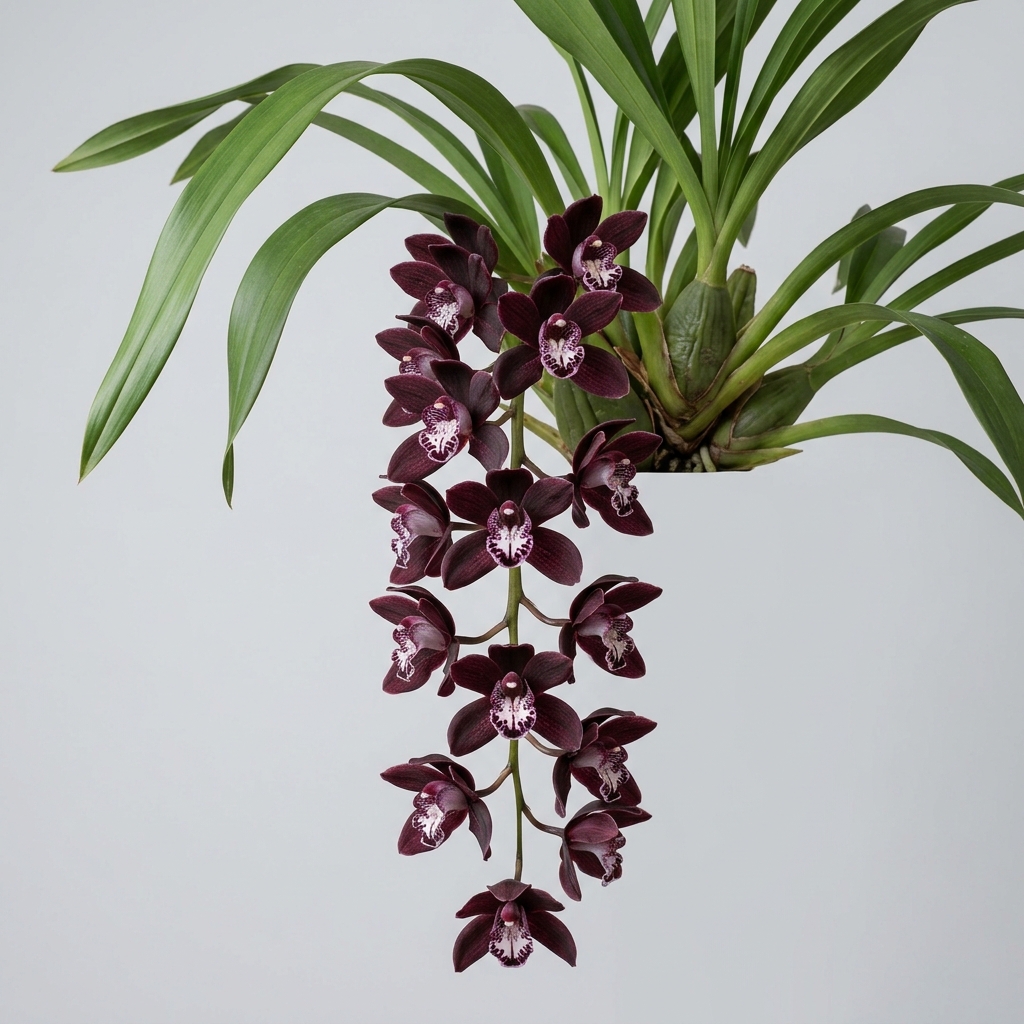
Cymbidium Atropurpureum is a captivating orchid species celebrated for its dramatic, deep-toned blossoms and elegant, cascading growth habit. Belonging to the highly esteemed Cymbidium genus, this plant stands out due to its striking, near-black coloration, which offers a stark and sophisticated contrast to the bright greens of typical tropical foliage. Collectors and orchid enthusiasts highly value this variety for its unique aesthetic and its ability to bring an air of exotic mystery to any indoor or greenhouse collection.
In addition to its visual appeal, this orchid is appreciated for its robust growth form, characterized by long, arching, strap-like leaves and pendulous flower spikes. Unlike many of its cool-growing relatives, it shows a preference for warmer conditions, making it an excellent choice for growers in regions where traditional Cymbidiums might struggle to thrive. Its manageable care requirements and spectacular floral display make it a rewarding addition for intermediate hobbyists and seasoned growers alike.
💡 Did You Know?
Unlike the majority of popular Cymbidium orchids that require cool autumn nights to initiate flower spikes, Cymbidium Atropurpureum is native to lowland tropical regions of Southeast Asia. This makes it exceptionally heat-tolerant and a favorite choice for growers in warmer climates who otherwise struggle with traditional cool-growing Cymbidium varieties.
🌿 Botanical Overview
Cymbidium Atropurpureum is a robust epiphytic or lithophytic orchid native to the tropical lowlands of Southeast Asia, including regions of Malaysia, Thailand, and the Philippines. Structurally, the plant features prominent, slightly compressed pseudobulbs that serve as storage organs for water and nutrients, helping the plant survive dry spells in its natural habitat. From these pseudobulbs emerge long, leathery, strap-shaped leaves that arch gracefully, providing a lush green backdrop even when the plant is not in bloom.
Unlike the more common montane Cymbidiums that require cool night temperatures to trigger flowering, this species has adapted to warmer, humid environments. This physiological adaptation makes it highly sought after by growers in tropical and subtropical climates. Its growth habit is vigorous, quickly forming dense clumps of pseudobulbs when provided with optimal care and adequate space to expand.
🌸 Flower Characteristics
The flowers of Cymbidium Atropurpureum are the primary draw for collectors, presenting a dramatic display of deep, rich colors. The sepals and petals are typically a dark, velvety maroon or deep purple, sometimes appearing almost black under indirect light. This intense coloration is beautifully offset by the labellum, or lip, which often features a striking contrast of white or pale yellow adorned with dark purple spots and ridges.
The blooms are arranged on pendulous or strongly arching inflorescences that emerge from the base of the pseudobulbs. A single spike can carry numerous flowers, creating a spectacular cascading effect. The flowers themselves are moderately sized, with a waxy texture that contributes to their long-lasting nature on the plant.
Fragrance & Bloom Profile
While visual appeal is its main attribute, Cymbidium Atropurpureum is also noted for its fragrance. Many growers report a pleasant, mildly sweet scent that is often compared to coconut or subtle vanilla. The fragrance is typically most pronounced during warm, bright mornings when the flowers are fully open and active.
The blooming cycle generally occurs from late spring into summer, though variations can occur based on local growing conditions. Once open, the individual flowers are remarkably durable, often remaining fresh and vibrant for several weeks, provided the plant is kept in a cool, draft-free location away from direct sunlight.
Parentage & Hybrid Lineage
Cymbidium Atropurpureum is recognized as a distinct, naturally occurring species rather than a man-made hybrid. In the wider world of orchid breeding, however, it has played a significant role. Hybridizers have frequently utilized this species to introduce its desirable dark pigmentation, heat tolerance, and pendulous blooming habit into modern Cymbidium hybrids.
Because its lineage is wild, its characteristics are relatively stable compared to complex artificial hybrids. When purchasing this orchid, growers are acquiring a piece of natural botanical history, though some cultivated selections may exhibit slight variations in flower size and color intensity depending on their specific geographic origin or selective breeding lines.
🌱 Growing Conditions
To cultivate Cymbidium Atropurpureum successfully, providing the correct balance of light, temperature, and air movement is essential. This orchid thrives in bright, filtered light. While it enjoys high light levels, direct midday sun should be avoided as it can easily scorch the leathery foliage. A location with morning sun and afternoon shade is often ideal.
💡 Care Tip
To mimic its natural epiphytic habitat, grow this orchid in a slatted wooden basket or a well-ventilated clay pot. This encourages excellent drainage and allows the dramatic, pendulous flower spikes to cascade naturally over the sides of the container.
Temperature management is simpler than with cool-growing Cymbidiums. This variety prefers intermediate to warm temperatures, ideally ranging between 75°F and 85°F (24°C to 29°C) during the day, with a modest drop at night. It is crucial to maintain good air circulation around the plant at all times to prevent stagnant air, which can encourage fungal and bacterial diseases.
Watering, Feeding & Potting Media
During the active growing season in spring and summer, Cymbidium Atropurpureum requires regular watering to keep the potting medium evenly moist but never waterlogged. As growth slows down in the winter months, watering should be reduced, allowing the medium to dry out slightly more between applications while ensuring the pseudobulbs do not shrivel.
Feeding should be consistent during the active growth phase. A balanced orchid fertilizer applied at quarter or half strength every week or two will support healthy leaf and pseudobulb development. Always flush the pot with pure water periodically to prevent harmful mineral salts from building up in the media.
The ideal potting medium must offer a balance of moisture retention and excellent drainage. A coarse mix consisting of medium-grade fir bark, horticultural charcoal, and perlite works exceptionally well. Growing this orchid in hanging baskets or slatted wooden containers is highly recommended to accommodate its natural pendulous flower spikes.
Blooming Season & Care Notes
The primary blooming season occurs during the warmer months of spring and summer. As the flower spikes begin to emerge from the base of the pseudobulbs, care should be taken not to disturb the plant excessively. If growing in a standard pot, the cascading spikes may require support, though allowing them to drape naturally over the edge of a hanging basket often yields the most stunning presentation.
After the blooming cycle is complete, the spent flower spikes should be cut back near the base with sterile shears. This is also the optimal time to assess whether the plant requires repotting. Repotting is generally recommended every two to three years, or when the potting medium begins to break down and lose its draining capabilities.
⚠️ Common Issues
⚠️ Common Mistake
A frequent error is treating this orchid like a terrestrial cool-climate Cymbidium by using heavy soil mixes and exposing it to near-freezing temperatures. This species requires a highly porous, bark-based medium and protection from cold drafts to prevent root loss and systemic rot.
- Root Rot:
Caused by overwatering or compacted, poorly draining potting media. Ensure the mix remains airy and fresh. - Leaf Tip Burn: Often a sign of low humidity or mineral buildup from tap water and fertilizers. Use pure water and maintain adequate humidity.
- Pests:
Spider mites, scale, and mealybugs can occasionally target the foliage, particularly in dry environments. Treat promptly with insecticidal soap or neem oil. - Bud Blast:
Sudden drops in temperature, dry drafts, or drastic changes in humidity can cause developing flower buds to yellow and drop prematurely.
❓ Frequently Asked Questions
How often should I water Cymbidium Atropurpureum?
Watering frequency depends on your environmental conditions, but generally, you should water when the top inch of the potting medium feels dry. During the active summer growth phase, this may mean watering once or twice a week, while winter requires a more conservative schedule.
Does this orchid require a cold drop to trigger blooms?
No, unlike many other Cymbidium species, Cymbidium Atropurpureum is a warm-tolerant orchid native to tropical lowlands. It does not require a dramatic drop in autumn temperatures to initiate flower spikes, making it much easier to bloom in warm climates.
Can I grow Cymbidium Atropurpureum indoors?
Yes, it can be grown successfully indoors if placed in a bright location, such as near an east- or south-facing window with sheer curtains. Utilizing a humidifier or a humidity tray will help maintain the necessary moisture levels in typical indoor environments.
What is the best potting mix for this orchid?
A highly porous, well-draining mix is essential. A combination of medium-grade fir bark, perlite, and horticultural charcoal provides the perfect balance of aeration and moisture retention, preventing the roots from suffocating.
⭐ Final Growing Notes
Cymbidium Atropurpureum is a magnificent orchid that rewards the grower with some of the most dramatic and richly colored blooms in the genus. By understanding its tropical origins and providing it with bright, filtered light, consistent moisture, and warm temperatures, you can enjoy its stunning cascading floral displays for many years. It remains an exceptional choice for any collector wishing to add a touch of dark, exotic elegance to their orchid collection.
⚕️ Health, Safety & Edibility
Understanding how a plant interacts with people, pets, and the surrounding environment is part of responsible cultivation. This section uses conservative, general guidance and does not replace professional medical or veterinary advice.
Human Safety: No published evidence currently identifies species-specific toxicity concerns for Cymbidium Atropurpureum during normal handling. As with most ornamental plants, it should not be intentionally consumed.
Pet Safety: Published information does not indicate that this orchid commonly poses a toxicity concern for cats or dogs. However, chewing leaves, flowers, roots, or potting media may still cause mild digestive upset.
Edibility: This orchid is cultivated for ornamental display rather than food. Ornamental plants may carry fertilizers, pesticides, or other horticultural treatments that make them unsuitable for consumption.
Skin Contact: Routine handling is not generally associated with skin irritation. Gardeners with sensitive skin may prefer wearing gloves when repotting, pruning, or handling potting media.
🌱 Propagation Tip
Propagate during repotting by dividing mature clumps. Ensure each new division has at least three healthy, active pseudobulbs with viable roots. Avoid dividing the plant too frequently, as larger specimens produce far more impressive and abundant flower spikes.
⭐ Expert Advice
To maximize the deep, velvety coloration of the blooms, provide bright but filtered throughout the year. If the foliage is a healthy -green color, the levels are ideal; dark green leaves suggest the plant needs more to bloom reliably.

Leave A Comment