
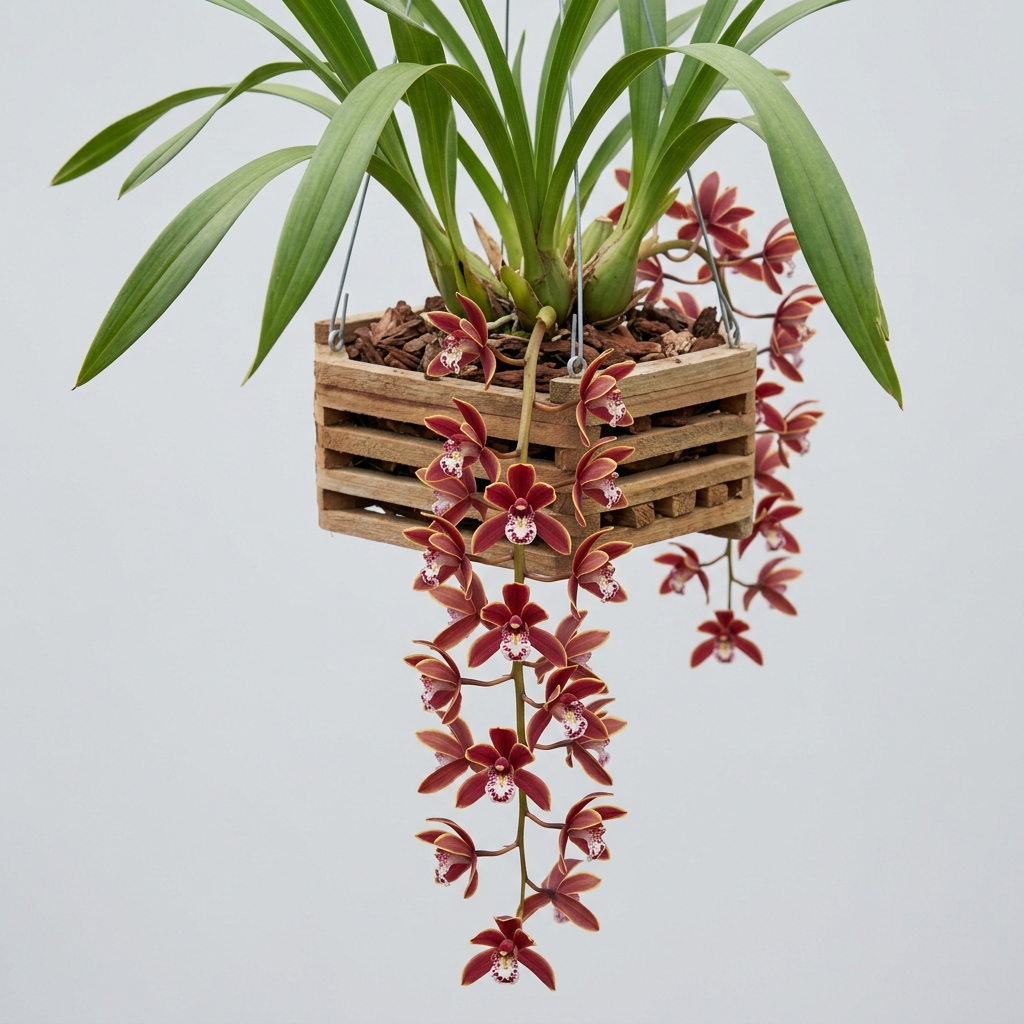
Cymbidium Bicolor is a highly distinctive orchid species celebrated for its dramatic, cascading floral displays and robust growth habit. Unlike many of its cool-growing montane relatives, this orchid brings a touch of tropical elegance to collections, producing long, pendulous spikes laden with uniquely colored blossoms. Its architectural foliage and graceful flowering habit make it a prized specimen for enthusiasts seeking an orchid with visual movement and structural appeal.
Cultivators particularly value this orchid for its adaptability to warmer climates, a trait that sets it apart from typical high-altitude Cymbidiums. When grown in hanging baskets or elevated pots, the cascading flower spikes create a curtain of color that can last for several weeks, making it a spectacular focal point in greenhouses, shade houses, or bright indoor spaces.
💡 Did You Know?
Unlike many of its montane Cymbidium relatives that require a sharp drop in night temperatures to trigger blooming, Cymbidium Bicolor is native to lower-elevation tropical regions of Asia. This adaptation makes it exceptionally tolerant of warm summer temperatures, allowing tropical and subtropical indoor growers to enjoy pendulous Cymbidium blooms without complex cooling setups.
🌿 Botanical Overview
Cymbidium Bicolor is primarily an epiphytic or lithophytic orchid native to the tropical forests of South and Southeast Asia. It features stout, slightly compressed pseudobulbs that are tightly clustered together. These pseudobulbs serve as vital water and nutrient storage organs, allowing the plant to withstand short periods of dryness in its natural habitat.
The foliage consists of long, strap-like, leathery leaves that emerge from the base of the pseudobulbs. These leaves are typically rigid and arching, providing a lush green backdrop even when the plant is not in bloom. The root system is thick, fleshy, and covered in velamen, which helps the orchid absorb moisture and nutrients efficiently from the surrounding air and organic debris.
🌸 Flower Characteristics
The defining feature of Cymbidium Bicolor is its pendulous inflorescence, which can carry numerous flowers on a single cascading spike. The individual flowers are medium-sized, typically measuring between one and two inches in diameter. They exhibit a striking color contrast that gives the orchid its descriptive name.
The sepals and petals are narrow, slightly reflexed, and display a deep reddish-brown or purple-maroon base color, often bordered by a clean yellow margin. This dark coloration contrasts beautifully with the prominent white lip, or labellum, which is adorned with vivid red or purple spots and markings. The overall presentation is highly graphic and elegant, especially when multiple spikes cascade simultaneously.
Fragrance & Bloom Profile
The fragrance of Cymbidium Bicolor is not consistently documented and can vary significantly depending on the specific clone, light levels, and time of day. Some growers report a subtle, sweet, or slightly musky scent that is most noticeable in the warmth of the morning sun. Other specimens may appear completely unscented to the human nose.
The blooms are remarkably long-lasting, often remaining fresh on the plant for four to six weeks under optimal conditions. Because the flowers open sequentially along the pendulous spike, the overall blooming period can extend over a month, providing a sustained and dramatic display in late spring or early summer.
Parentage & Hybrid Lineage
In botanical taxonomy, Cymbidium Bicolor is recognized as a distinct species rather than a man-made hybrid. It belongs to the section Aloifolium within the genus Cymbidium. While its exact natural variations are subject to ongoing study, several subspecies have been described based on geographic distribution and minor floral differences.
In hybridizing, this species is highly valued for introducing warm-tolerance and a pendulous flowering habit to modern Cymbidium lines. Breeders often use it to create compact, heat-tolerant cascading hybrids that can be grown successfully in tropical climates where traditional cool-growing Cymbidiums fail to initiate flower buds.
🌱 Growing Conditions
To cultivate Cymbidium Bicolor successfully, growers should aim to replicate its warm, tropical forest canopy habitat. It thrives in bright, filtered light. While it can tolerate some direct morning sun, harsh midday light should be avoided to prevent leaf scorch. A light green leaf color indicates optimal light levels, whereas dark green leaves suggest the plant needs more light.
💡 Care Tip
Because of its pendulous blooming habit, grow this orchid in a hanging basket or a tall, heavy clay pot. This allows the flower spikes to cascade naturally over the rim without touching the ground or getting damaged.
Unlike cool-growing terrestrial Cymbidiums, this species prefers warm to intermediate temperatures. Daytime temperatures between 75 and 85 degrees Fahrenheit are ideal, with a mild drop at night. It requires moderate to high humidity, ideally between 50% and 70%, coupled with excellent air circulation to prevent stagnant air and fungal issues.
Watering, Feeding & Potting Media
During the active growing season in spring and summer, Cymbidium Bicolor requires regular watering to keep the potting medium evenly moist but never waterlogged. As growth slows in the winter, watering should be reduced, allowing the medium to dry out slightly between waterings while ensuring the pseudobulbs do not shrivel.
A well-draining, coarse potting medium is essential to protect the fleshy roots from rot. A mix composed of medium-to-coarse fir bark, charcoal, and perlite works exceptionally well. Feeding should be consistent during the active growth phase; a balanced orchid fertilizer applied weekly at quarter or half strength will support robust foliage and future flower spikes.
Blooming Season & Care Notes
Cymbidium Bicolor typically initiates its flower spikes in late winter or early spring, with blooms opening in the warmer months of spring and summer. Because the spikes are naturally pendulous, they should be allowed to drape naturally over the side of the container. Staking them upright can cause unnatural stress and potential bud drop.
Repotting is best done shortly after the blooming cycle has finished and new vegetative growth is observed at the base of the pseudobulbs. This timing allows the active new roots to establish quickly in the fresh medium. Avoid over-potting, as this orchid prefers to be slightly snug in its container.
⚠️ Common Issues
⚠️ Common Mistake
Staking the flower spikes upright is a common error. The spikes of this orchid are naturally pendulous and meant to drape downward. Forcing them onto upright stakes can stress the stem, cause bud drop, or ruin the natural aesthetic of the cascade.
- Root Rot:
Caused by overwatering or compacted, poorly draining media. Fleshy roots will turn mushy and black. - Leaf Tip Burn: Often a result of low humidity, underwatering, or a buildup of fertilizer salts in the growing medium.
- Bud Blast:
Sudden drops in humidity or temperature can cause developing flower buds to yellow and drop before opening. - Spider Mites:
These pests thrive in dry, warm conditions, spinning fine webs on the undersides of the leathery leaves. - Scale Insects:
Often found hiding under the leaf sheaths or on the pseudobulbs, requiring prompt treatment with horticultural oil or insecticidal soap.
❓ Frequently Asked Questions
How do I encourage Cymbidium Bicolor to bloom?
To stimulate blooming, ensure the plant receives bright, filtered light throughout the year and a slight reduction in watering during its winter rest period. Unlike other Cymbidiums, it does not require a severe cold drop to bloom, but a slight day-to-night temperature fluctuation is beneficial.
Why are the leaves on my Cymbidium Bicolor turning yellow?
Yellowing leaves can indicate several issues, including overwatering, insufficient light, or natural aging of older foliage. If the yellowing is accompanied by soft, mushy pseudobulbs, inspect the roots immediately for signs of rot.
Can I grow Cymbidium Bicolor mounted instead of in a pot?
Yes, because of its epiphytic nature and pendulous growth habit, it can be grown successfully on large mounts or in open slatted wooden baskets. However, mounted plants will require much more frequent watering and high humidity to prevent dehydration.
How often should I repot this orchid?
Typically, repotting is required every two to three years, or when the potting medium begins to break down and retain too much moisture. Always wait until the blooming cycle is complete and new root growth is visible before repotting.
⭐ Final Growing Notes
Cymbidium Bicolor is a rewarding and resilient orchid that offers a stunning tropical alternative to traditional cool-climate Cymbidiums. By providing bright, filtered light, consistent warmth, and allowing its magnificent flower spikes to cascade naturally, growers can enjoy a spectacular and long-lasting floral display year after year.
⚕️ Health, Safety & Edibility
Understanding how a plant interacts with people, pets, and the surrounding environment is part of responsible cultivation. This section uses conservative, general guidance and does not replace professional medical or veterinary advice.
Human Safety: No published evidence currently identifies species-specific toxicity concerns for Cymbidium Bicolor during normal handling. As with most ornamental plants, it should not be intentionally consumed.
Pet Safety: Published information does not indicate that this orchid commonly poses a toxicity concern for cats or dogs. However, chewing leaves, flowers, roots, or potting media may still cause mild digestive upset.
Edibility: This orchid is cultivated for ornamental display rather than food. Ornamental plants may carry fertilizers, pesticides, or other horticultural treatments that make them unsuitable for consumption.
Skin Contact: Routine handling is not generally associated with skin irritation. Gardeners with sensitive skin may prefer wearing gloves when repotting, pruning, or handling potting media.
🌱 Propagation Tip
Propagate during repotting by dividing mature clumps. Ensure each division has at least three healthy, leafy pseudobulbs and a strong root system. Avoid separating backbulbs unless they are healthy and you have the patience to wait several years for blooms.
⭐ Expert Advice
To maximize bloom potential, provide high levels just short of burning the foliage. The leaves should be a , grassy green rather than a deep, dark green. A slight reduction in during the winter months can also help stimulate spring bud initiation.

Leave A Comment