
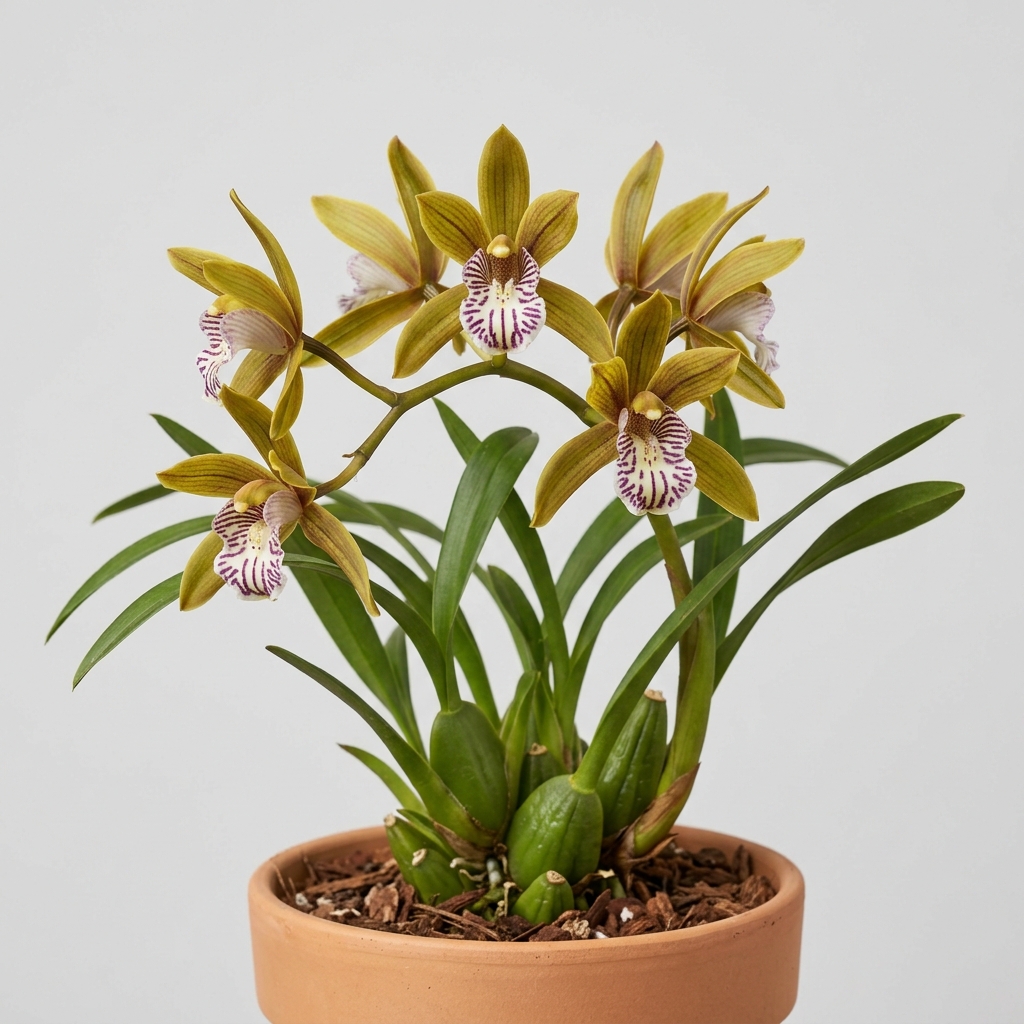
Cymbidium tigrinum, commonly known as the tiger-striped Cymbidium, is a highly prized miniature orchid species celebrated for its distinctive dwarf growth habit and strikingly patterned blossoms. Native to the cool, mountainous regions of Southeast Asia, this lithophytic orchid has captured the attention of collectors worldwide due to its compact size and exotic floral presentation. Unlike its larger, more unruly relatives, this plant fits comfortably on windowsills and in small greenhouse spaces, making it an exceptional choice for growers seeking maximum visual impact in a limited footprint.
Cultivators value this orchid primarily for its dramatic labellum, which features bold, tiger-like striping against a contrasting background. Its ease of culture under cool-to-intermediate conditions, combined with a reliable blooming cycle, makes it a rewarding subject for both intermediate hobbyists and advanced orchid enthusiasts. By mimicking its natural high-altitude environment, growers can enjoy a spectacular seasonal display of unique, long-lasting flowers that stand out in any diverse orchid collection.
💡 Did You Know?
Cymbidium tigrinum is a lithophytic orchid, meaning it naturally grows on rocks rather than in soil or on trees. In its native Himalayan habitats, it clings to mossy rock crevices at high elevations, which is why it requires exceptional root aeration and a distinct cool, dry winter rest to thrive and bloom in cultivation.
🌿 Botanical Overview
Cymbidium tigrinum is characterized by its small, globose to ovoid pseudobulbs that grow in tight clusters. Each pseudobulb typically produces two to five narrow, leathery, arching leaves that remain relatively short, rarely exceeding eight inches in length. This compact vegetative structure allows the plant to conserve moisture and nutrients in its native rocky habitats, where it often grows on moss-covered rocks or in shallow crevices.
In the wild, this species is found at elevations ranging from 1,500 to 2,700 meters, primarily in regions experiencing distinct seasonal shifts. The root system is adapted to secure the plant firmly to rocky substrates while absorbing moisture from frequent mountain mists. Understanding this lithophytic nature is key to successful cultivation, as it dictates the plant’s preference for excellent drainage and high root aeration.
🌸 Flower Characteristics
The inflorescence of Cymbidium tigrinum is typically arching or sub-erect, emerging from the base of the mature pseudobulb. Each flower spike generally carries three to six relatively large flowers compared to the overall size of the plant. The flowers are widely spaced, presenting a clean and uncluttered appearance that highlights the individual beauty of each bloom.
The sepals and petals are typically linear-lanceolate, displaying shades of olive-green, yellowish-green, or bronze-brown. The crown jewel of the flower is the prominent, three-lobed labellum. The lateral lobes are erect and marked with striking reddish-brown or purple stripes, while the mid-lobe is white or pale cream, adorned with bold, transverse purple-brown bands that give the orchid its tiger-striped common name.
Fragrance & Bloom Profile
This orchid is often reported to produce a delicate, sweet fragrance that is most noticeable during the warm midday hours. The scent is frequently described as honey-like or lightly floral, adding an extra layer of sensory appeal to its visual charm. However, fragrance intensity can vary depending on environmental factors such as temperature, humidity, and light levels.
The blooms are remarkably long-lasting, often remaining fresh on the plant for six to eight weeks under optimal conditions. To maximize the duration of the floral display, growers should keep the plant in a cool, draft-free location once the buds have fully opened.
Parentage & Hybrid Lineage
Cymbidium tigrinum is a distinct, naturally occurring species rather than a man-made hybrid. Because of its desirable dwarf habit and uniquely patterned lip, it has been widely used by hybridizers to introduce compact growth and striking lip coloration into modern miniature Cymbidium grexes.
While its direct parentage is simple—being a true species—its contributions to hybrid lineage are highly documented in orchid registry databases. When crossed with larger standard Cymbidiums, it consistently passes down its manageable size and distinctive lip markings, though exact hybrid outcomes can vary depending on the specific breeding partners used.
🌱 Growing Conditions
To cultivate Cymbidium tigrinum successfully, growers must provide cool to intermediate temperatures. Ideal daytime temperatures range from 65°F to 75°F (18°C to 24°C), with a significant drop at night to around 50°F to 55°F (10°C to 13°C). This diurnal temperature fluctuation is crucial, particularly in the autumn, to initiate the development of flower spikes.
💡 Care Tip
Provide a distinct drop in night temperatures down to 50°F during the autumn. This cool period, combined with reduced , is absolutely essential to trigger the development of its spectacular spring flower spikes.
Bright, filtered light is essential for robust growth and flowering. A location with eastern exposure or shaded southern exposure works well. The leaves should maintain a light, grassy-green color; dark green leaves indicate insufficient light, while yellow or scorched leaves suggest excessive direct sun. Good air movement is also vital to prevent stagnant air pockets around the foliage.
Watering, Feeding & Potting Media
During the active growing season in spring and summer, Cymbidium tigrinum requires regular watering to keep the potting medium evenly moist but never waterlogged. As a lithophytic species, its roots are highly sensitive to rot if kept in soggy conditions. A well-draining potting mix consisting of fine fir bark, perlite, and horticultural charcoal is highly recommended to ensure rapid drainage.
Fertilize weekly or bi-weekly with a balanced, diluted orchid fertilizer during the active growth phase. As autumn approaches, gradually reduce feeding and watering to prepare the plant for its winter rest. During this cooler rest period, water should be provided sparingly—only enough to prevent the pseudobulbs from shriveling excessively.
Blooming Season & Care Notes
The primary blooming season for Cymbidium tigrinum occurs from mid-spring to early summer. Flower spikes begin to emerge from the base of the newest pseudobulbs during the late winter months. Once the spikes are detected, avoid moving the plant or changing its orientation to the light source, as this can cause the developing buds to twist or drop.
Repotting should be performed only when necessary, typically every two to three years immediately after flowering has finished. Choose a pot that allows for two years of new growth, as this species prefers to be slightly under-potted. Take care not to damage the thick, brittle roots during the repotting process.
⚠️ Common Issues
⚠️ Common Mistake
Avoid overwatering during the winter rest period. While the pseudobulbs should not be allowed to shrivel completely, keeping the medium constantly wet in winter will quickly lead to root rot and loss of the plant.
- Root Rot: Caused by overwatering or a degraded, compacted potting medium that retains too much moisture.
- Pseudobulb Shriveling: A sign of severe dehydration, which can occur during an excessively dry winter rest or due to a compromised root system.
- Bud Blast: The premature dropping of flower buds, often triggered by sudden temperature fluctuations, low humidity, or drafts.
- Spider Mites: Common pests that thrive in dry, warm conditions, causing silvery webbing and stippling on the undersides of leaves.
- Leaf Tip Burn: Often caused by a buildup of fertilizer salts in the media; flush the pot thoroughly with pure water periodically.
❓ Frequently Asked Questions
How do I trigger blooming in Cymbidium tigrinum?
To trigger blooming, ensure the plant experiences a distinct drop in night temperatures to around 50°F (10°C) during the autumn months, combined with bright light and a reduction in watering. This seasonal chill mimics its natural high-altitude habitat and is essential for spike initiation.
Can Cymbidium tigrinum be grown indoors on a windowsill?
Yes, its compact size makes it an excellent candidate for windowsill culture. An east-facing window that receives bright morning sun is ideal. Ensure the room remains relatively cool at night, especially during the autumn, to encourage flowering.
What potting medium is best for this orchid?
A highly porous, free-draining medium is best. A mix of fine-grade fir bark, perlite, and a small amount of charcoal works exceptionally well. This mimics its natural lithophytic environment by providing excellent aeration while retaining just enough moisture.
Why are the leaves on my Cymbidium tigrinum turning yellow?
Yellowing leaves can indicate either excessive direct sunlight or root damage from overwatering. If the yellowing is accompanied by soft, brown roots, repot immediately into fresh media and reduce watering frequency.
⭐ Final Growing Notes
Cymbidium tigrinum remains a jewel among miniature orchids, offering a captivating blend of exotic, tiger-striped blooms and a highly manageable growth habit. While it requires some attention to seasonal temperature drops and watering cycles, its rewarding floral display and compact nature make it an indispensable addition to any cool-climate orchid collection.
🌱 Propagation Tip
Propagate during repotting by dividing mature clumps. Ensure each division has at least three healthy, leafy pseudobulbs and a strong root system to support new growth and prevent severe transplant shock.
⭐ Expert Advice
Flush the potting medium thoroughly with pure, low-mineral water once a month. This prevents the accumulation of fertilizer salts, which can cause unsightly leaf tip burn and damage the sensitive, fleshy roots of this miniature species.




Leave A Comment