

Dendrobium Discolor is a striking and robust member of the Dendrobium genus, highly prized by orchid enthusiasts for its unique, architectural flowers. Often referred to as an “antelope orchid” due to its twisted, horn-like petals, this species or cultivar group brings a dramatic presence to any collection with its tall, cane-like pseudobulbs and long-lasting blooms.
Native to warm, coastal regions of northern Australia and New Guinea, this orchid is adapted to bright light and seasonal moisture variations. While its impressive mature size requires adequate growing space, its resilience and spectacular floral displays make it a rewarding choice for intermediate to advanced growers seeking a distinctive tropical specimen.
💡 Did You Know?
The twisted, upright petals of Dendrobium Discolor have earned it the common name antelope orchid. This unique floral structure is an evolutionary adaptation designed to attract specific insect pollinators in its native tropical habitats, ensuring successful pollination in the wild.
🌿 Botanical Overview
Dendrobium Discolor is characterized by its robust, cane-like pseudobulbs that can reach impressive heights under optimal conditions. These canes are swollen at the base and carry leathery, dark green leaves arranged alternately along the upper portion of the stem. The foliage is durable, helping the plant withstand periods of high light and temporary dry spells in its natural habitat.
As a member of the Spatulata section, this orchid shows a growth habit that is both upright and sprawling. The root system is vigorous and adapted to grasping tree branches or rocky outcroppings, meaning it thrives when provided with excellent drainage and ample air circulation around the root zone.
🌸 Flower Characteristics
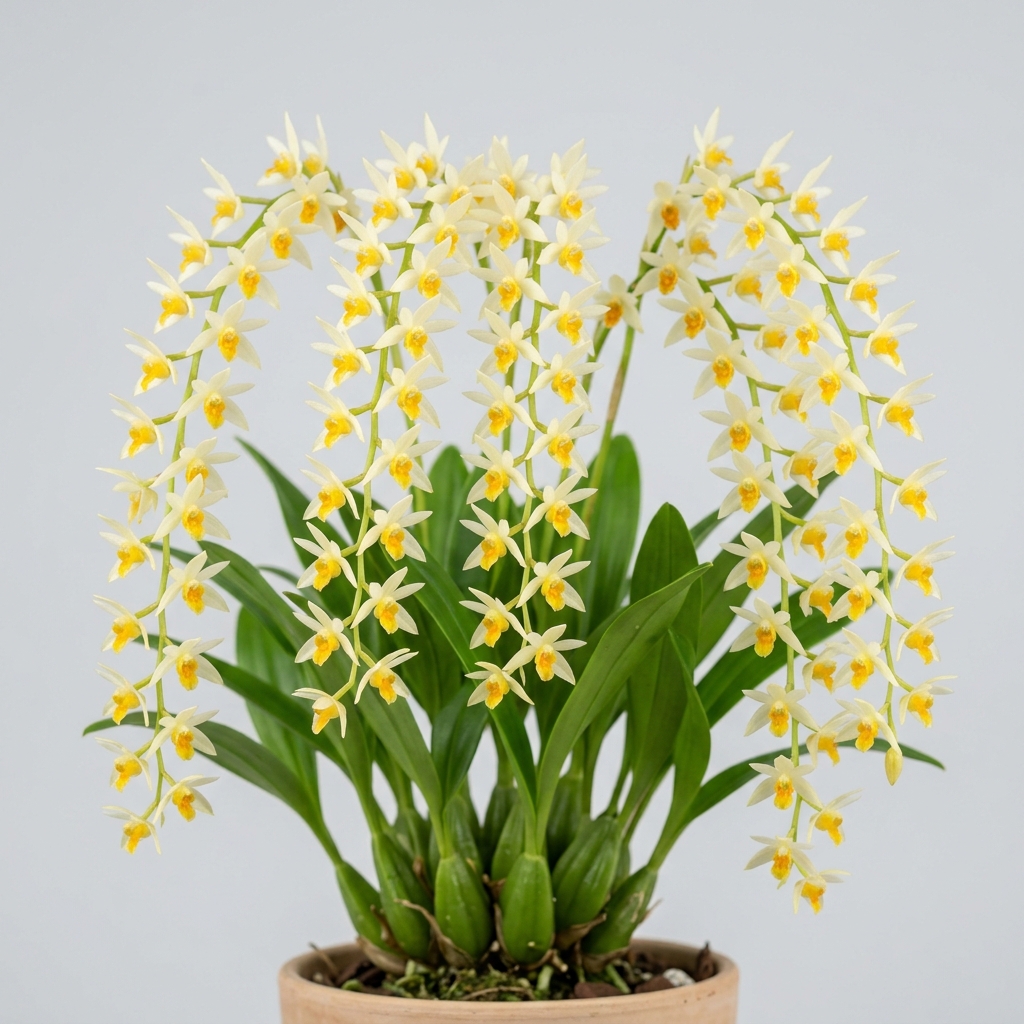
The blossoms of this orchid are celebrated for their highly unusual, twisted structure. The petals and sepals are typically narrow, wavy, and curled, resembling the horns of an antelope. Colors range from rich bronze and golden-yellow to deep tan, often with a lighter or contrasting hue on the ruffled lip (labellum).
Flowers are produced on long, arching racemes that emerge from the upper nodes of mature canes. A single inflorescence can carry dozens of individual blooms, creating a dense and highly decorative spray. The flowers are exceptionally long-lasting, often remaining fresh on the plant for several weeks or even months.
Fragrance & Bloom Profile
Many growers report that Dendrobium Discolor produces a distinct, pleasant fragrance, particularly during the warmest hours of the day. The scent is often described as sweet, honey-like, or slightly spicy, though the intensity can vary depending on the specific clone, light levels, and ambient humidity.
The blooming cycle is highly dependent on environmental cues. While spring and summer are the primary flowering periods, mature and well-established plants can bloom at various times of the year. The long-lasting nature of the flowers ensures a prolonged display that rewards the grower’s patience.
Parentage & Hybrid Lineage
In botanical terms, Dendrobium Discolor is recognized as a distinct species, though various selected color forms and cultivars exist within the horticultural trade. Because of its dominant physical traits and robust growth habit, it has been widely used in hybridization programs to create “antelope-type” Dendrobium hybrids.
The exact lineage of specific commercial selections is not always consistently documented in general grower references. When purchasing a named cultivar of this orchid, growers should note that variations in flower color and plant size are common, reflecting the natural diversity of its native populations.
🌱 Growing Conditions
To cultivate this orchid successfully, replicating its native tropical environment is key. It requires bright, filtered light, and can tolerate some direct morning or late afternoon sun once acclimated. Insufficient light often results in weak, floppy canes and a lack of flowers.
💡 Care Tip
Provide this orchid with excellent air circulation at all times. Strong movement of warm, humid air mimics its native coastal environment, helping to dry the foliage quickly after and significantly reducing the risk of fungal leaf spot.
Temperature ranges should remain warm to hot, ideally between 65°F and 90°F (18°C to 32°C). While it can tolerate brief temperature drops, it should be protected from frost and cold drafts. High humidity levels of 60% to 80%, combined with strong air movement, will prevent leaf spotting and encourage healthy root development.
Watering, Feeding & Potting Media
During the active spring and summer growing season, Dendrobium Discolor requires frequent and thorough watering. The potting medium should be allowed to dry out slightly between waterings, but never remain bone-dry for extended periods. Apply a balanced orchid fertilizer at quarter-strength weekly during this active phase.
A coarse, free-draining potting mix is essential. Large-grade fir bark mixed with charcoal and perlite works well to provide the necessary aeration. Alternatively, smaller specimens can be mounted on cork bark or tree fern slabs, provided they receive daily watering and high humidity.
Blooming Season & Care Notes
As winter approaches, the orchid enters a semi-dormant or resting phase. During this time, watering should be significantly reduced, and fertilizing should be suspended. This cooler, drier rest period is crucial for triggering the development of flower buds along the canes.
Avoid cutting old canes unless they are completely shriveled and dead, as they store vital nutrients and water for the plant. Repotting should only be done when new growth begins in the spring and new roots are actively emerging, as this minimizes transplant shock.
⚠️ Common Issues
⚠️ Common Mistake
A frequent error is keeping the potting medium constantly wet during the winter months. Without a distinct dry rest period, the orchid is highly susceptible to root rot and may fail to produce its signature flower spikes in the spring.
- Root rot: Caused by overwatering or compacted, poorly draining potting media.
- Bud blast: Sudden dropping of flower buds, often due to rapid changes in temperature, low humidity, or drafts.
- Dehydration: Shriveled canes and wrinkled leaves, indicating insufficient watering or a compromised root system.
- Pests: Scale insects, mealybugs, and spider mites can occasionally colonize the undersides of leaves and cane crevices.
- Leaf spotting: Fungal or bacterial spots arising from high humidity coupled with stagnant, still air.
❓ Frequently Asked Questions
How do I encourage my Dendrobium Discolor to bloom?
To trigger blooming, ensure the plant receives very bright light throughout the year and provide a distinct dry rest period during the cooler winter months. Reducing water and halting fertilizer during this time mimics its natural seasonal cycle, prompting the development of flower spikes in the spring.
Why are the leaves on my orchid turning yellow and falling off?
Occasional yellowing and shedding of older leaves on mature canes is a natural part of the plant’s aging process. However, widespread yellowing can indicate overwatering, poor drainage, or insufficient light. Check the root system to ensure it is healthy and dry out the medium between waterings.
Can I grow this orchid indoors under LED lights?
Yes, but because of its high light requirements and potential for tall growth, you will need powerful, full-spectrum LED grow lights positioned relatively close to the canopy. Ensure the lights are kept on for 12 to 14 hours a day during the growing season to simulate tropical day lengths.
How often should I repot this Dendrobium?
This orchid prefers to be slightly pot-bound and dislikes frequent root disturbance. Repot only every two to three years, or when the potting medium begins to break down and retain too much moisture. Always perform repotting in the spring when new root growth is just starting.
⭐ Final Growing Notes
While Dendrobium Discolor requires a bit of space and attention to seasonal watering cycles, its dramatic, antelope-like flowers and robust growth make it a standout addition to any tropical orchid collection. By providing bright light, warm temperatures, and a dedicated winter rest, growers can enjoy its spectacular, long-lasting golden-bronze blooms year after year.
⚕️ Health, Safety & Edibility
Understanding how a plant interacts with people, pets, and the surrounding environment is part of responsible cultivation. This section uses conservative, general guidance and does not replace professional medical or veterinary advice.
Human Safety: No published evidence currently identifies species-specific toxicity concerns for Dendrobium Discolor during normal handling. As with most ornamental plants, it should not be intentionally consumed.
Pet Safety: Published information does not indicate that this orchid commonly poses a toxicity concern for cats or dogs. However, chewing leaves, flowers, roots, or potting media may still cause mild digestive upset.
Edibility: This orchid is cultivated for ornamental display rather than food. Ornamental plants may carry fertilizers, pesticides, or other horticultural treatments that make them unsuitable for consumption.
Skin Contact: Routine handling is not generally associated with skin irritation. Gardeners with sensitive skin may prefer wearing gloves when repotting, pruning, or handling potting media.
🌱 Propagation Tip
This orchid can be propagated by dividing large, mature clumps, ensuring each division has at least three healthy canes. Occasionally, it may produce small plantlets called keikis along the canes; these can be carefully removed and potted once they develop several active roots.
⭐ Expert Advice
When repotting, choose a heavy clay pot rather than a plastic one. Mature specimens of this orchid can become top-heavy due to their tall, robust canes, and a weighted pot prevents the plant from tipping over and damaging its foliage.

Leave A Comment