
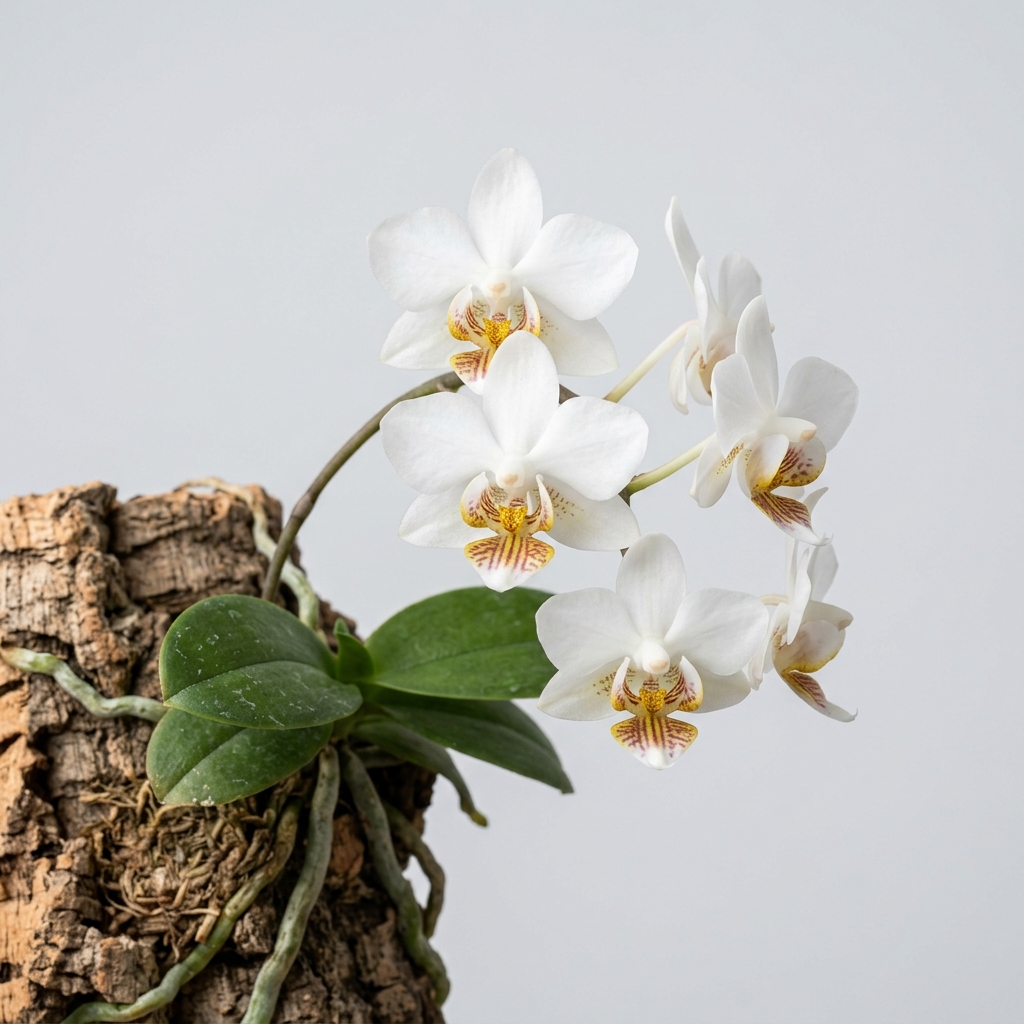
Phalaenopsis Lobbii is a captivating miniature epiphytic orchid species highly prized by collectors for its diminutive size and uniquely structured flowers. Native to the moss-draped forests of the eastern Himalayas and parts of Southeast Asia, this charming orchid brings a touch of wild elegance to indoor collections. Unlike its larger, mass-market hybrid relatives, this species maintains a compact growth habit that makes it an useful selection for terrarium culture, mounts, or small-space windowsill growing.
Horticulturists value Phalaenopsis Lobbii not only for its space-saving proportions but also for its fascinating floral morphology, particularly its distinctive, broad lip. While it requires slightly more attention to humidity and moisture consistency than standard grocery store orchids, its rewarding bloom display and elegant presentation make it a delightful addition for intermediate growers. Understanding its natural forest canopy habitat is the key to successfully cultivating this miniature gem in a home environment.
💡 Did You Know?
Phalaenopsis Lobbii features a unique, hinged labellum or lip that moves slightly when touched or blown by the wind. This fascinating evolutionary adaptation is designed to assist in pollination by mimicking the movement of insects or guiding pollinators precisely into the flower structure.
🌿 Botanical Overview
Phalaenopsis Lobbii is a miniature species characterized by its short stems and small, fleshy leaves that typically reach only a few inches in length. In its native habitat, it grows as an epiphyte on the mossy trunks and branches of trees, where it is subjected to high humidity, constant air movement, and dappled shade. The root system is relatively thick and fleshy for the size of the plant, adapted to clinging to bark and absorbing moisture rapidly from the humid air.
One notable botanical feature of this species is its semi-deciduous nature in the wild. During cooler, drier winter months in its native range, the plant may shed some or all of its leaves to conserve moisture, entering a brief period of semi-dormancy. In home cultivation, however, providing consistent moisture and warmth often allows the orchid to remain evergreen throughout the year.
🌸 Flower Characteristics
The blossoms of Phalaenopsis Lobbii are remarkably detailed despite their small size, which usually ranges from half an inch to nearly one inch in diameter. The sepals and petals are typically a clean, stark white, providing a dramatic contrast to the highly modified lip, or labellum. The lip is the defining feature of the flower, presenting a broad, fan-like shape adorned with striking vertical bands of yellow, bronze, or rich brown.
These flowers are produced on short, pendulous or arching inflorescences that emerge from the base of the plant. Each spike can carry several flowers, which open sequentially or nearly simultaneously, creating a concentrated burst of color. The delicate presentation of the blooms, hovering just above the tiny foliage, gives the impression of miniature butterflies resting on the plant.
Fragrance & Bloom Profile
The fragrance of Phalaenopsis Lobbii is a subject of mild debate among growers, as scent intensity can be highly dependent on environmental factors and individual plant clones. Many growers report a very faint, sweet, or slightly herbaceous scent that is most noticeable during the morning hours when humidity and light levels rise. However, some specimens may appear completely unscented to the human nose.
The blooms are relatively long-lasting for a miniature species, often remaining fresh for several weeks under optimal conditions. To maximize the lifespan of the flowers, growers should avoid spraying water directly onto the petals, as excess moisture can encourage fungal spotting or premature wilting.
Parentage & Hybrid Lineage
As a naturally occurring species rather than a man-made hybrid, Phalaenopsis Lobbii possesses a distinct genetic identity that has made it a valuable parent in orchid breeding. Hybridizers frequently use this species to introduce miniature growth habits, compact foliage, and unique lip patterns into new Phalaenopsis crosses.
Because registration records and complex hybrid lineages can sometimes be difficult to verify with absolute certainty, growers should treat parentage claims of specific commercial crosses with healthy caution. When purchasing a hybrid containing this species, looking for reputable nursery documentation can help ensure the authenticity of the plant’s lineage.
🌱 Growing Conditions
Replicating the dappled forest canopy of its native habitat is essential for keeping Phalaenopsis Lobbii healthy. It thrives in low to medium indirect light, similar to the light levels preferred by standard Phalaenopsis orchids. Direct sunlight must be avoided, as the thin, delicate leaves of this miniature species are highly susceptible to scorching and heat stress.
💡 Care Tip
If you choose to mount Phalaenopsis Lobbii on cork bark, place a small pad of high-quality sphagnum moss beneath the roots. This helps retain essential moisture around the miniature root system while still allowing excellent airflow.
Temperature: wise, this orchid prefers intermediate to warm conditions, ideally ranging from 65°F to 80°F during the day, with a slight drop of 5°F to 10°F at night to encourage blooming. High humidity is crucial, ideally maintained between 60% and 80%. Excellent air circulation is equally important to prevent stagnant air from causing crown rot or leaf spotting in these humid conditions.
Watering, Feeding & Potting Media
Watering Phalaenopsis Lobbii requires a careful balance to keep the roots hydrated without allowing them to sit in soggy, anaerobic conditions. Because of its miniature size, the plant dries out much faster than larger orchids. Mounted specimens may require daily misting or soaking in high-humidity environments, while potted plants should be watered just as the media approaches dryness.
A high-quality, free-draining potting medium is essential. A mix of fine-grade fir bark, tree fern fiber, and chopped sphagnum moss works exceptionally well in small pots. For feeding, use a balanced, highly diluted orchid fertilizer at one-quarter strength every second or third watering during the active growing season, flushing the pot with pure water periodically to prevent salt buildup.
Blooming Season & Care Notes
Phalaenopsis Lobbii typically initiates its blooming cycle in the spring or early summer, responding to the natural increase in day length and light intensity. Once the flower spike begins to emerge, maintain stable environmental conditions and avoid moving the plant, as sudden changes in light or temperature can cause the developing buds to blast and fall off.
After the blooming cycle is complete, the old flower spikes can be cut back to the base of the plant, as this species rarely produces secondary blooms from old spikes. Repotting is best done in late spring or early summer, immediately after flowering, when new root growth is actively initiating. This minimizes transplant shock and allows the orchid to establish itself quickly in its new media.
⚠️ Common Issues
⚠️ Common Mistake
A frequent error is treating this miniature species exactly like standard, large Phalaenopsis hybrids. Because of its tiny root volume and smaller leaves, Phalaenopsis Lobbii dries out much faster and cannot tolerate prolonged periods of bone-dry .
- Bud Blast:
Sudden drops in humidity, drafty locations, or underwatering can cause developing flower buds to turn yellow and drop before opening. - Root Rot:
Overwatering or using a degraded, compacted potting medium restricts oxygen to the roots, leading to mushy, black roots and plant decline. - Leaf Drop: While semi-deciduous in the wild, sudden leaf loss in home cultivation is often a sign of extreme underwatering, low humidity, or cold drafts.
- Pests:
Mealybugs and spider mites can occasionally target the tender foliage; inspect the undersides of leaves regularly and treat promptly with horticultural soap.
❓ Frequently Asked Questions
Can Phalaenopsis Lobbii be grown on a windowsill?
Yes, Phalaenopsis Lobbii can be grown successfully on a windowsill that receives bright, filtered light without direct sun, such as an east-facing window. However, because windowsills often have lower humidity, you may need to use a humidity tray or a nearby humidifier to maintain the required 60% to 80% humidity levels.
How do I know if my Phalaenopsis Lobbii needs watering?
For potted plants, check the weight of the pot and the moisture level of the media; water when the top layer of moss or bark feels dry but before the entire root ball dries out completely. For mounted specimens, the roots will turn a silvery-white color when dry, indicating they are ready for a thorough misting or soaking.
Why is my Phalaenopsis Lobbii losing its leaves in winter?
This species is naturally semi-deciduous and may shed leaves during cooler, drier winter months as a survival mechanism. If this occurs, reduce watering slightly but maintain high humidity, and new leaves should emerge in the spring as temperatures warm up and watering increases.
Is Phalaenopsis Lobbii suitable for a terrarium or vivarium?
Yes, its miniature size and love for high humidity make Phalaenopsis Lobbii an excellent choice for terrariums. Ensure the terrarium has adequate ventilation or a small internal fan, as stagnant air combined with high humidity can quickly lead to fungal rot on the leaves and crown.
⭐ Final Growing Notes
Phalaenopsis Lobbii is a rewarding miniature orchid that brings the delicate beauty of wild epiphytes into the home. By focusing on consistent humidity, gentle air movement, and careful moisture management, growers can enjoy the stunning, intricate blooms of this Himalayan treasure year after year.
⚕️ Health, Safety & Edibility
Understanding how a plant interacts with people, pets, and the surrounding environment is part of responsible cultivation. This section uses conservative, general guidance and does not replace professional medical or veterinary advice.
Human Safety: No published evidence currently identifies species-specific toxicity concerns for Phalaenopsis Lobbii during normal handling. As with most ornamental plants, it should not be intentionally consumed.
Pet Safety: Published information does not indicate that this orchid commonly poses a toxicity concern for cats or dogs. However, chewing leaves, flowers, roots, or potting media may still cause mild digestive upset.
Edibility: This orchid is cultivated for ornamental display rather than food. Ornamental plants may carry fertilizers, pesticides, or other horticultural treatments that make them unsuitable for consumption.
Skin Contact: Routine handling is not generally associated with skin irritation. Gardeners with sensitive skin may prefer wearing gloves when repotting, pruning, or handling potting media.
🌱 Propagation Tip
While this species occasionally produces adventitious offsets known as keikis on old flower spikes or at the base of the plant, propagation is best left to professional flasking. If a keiki does develop naturally, wait until it has several healthy roots before carefully detaching it.
⭐ Expert Advice
To stimulate reliable spring blooming, provide a slight drop in nighttime temperatures of about five to ten degrees Fahrenheit during the late autumn and winter months, while simultaneously reducing frequency slightly to mimic its natural seasonal cycle.

Leave A Comment