
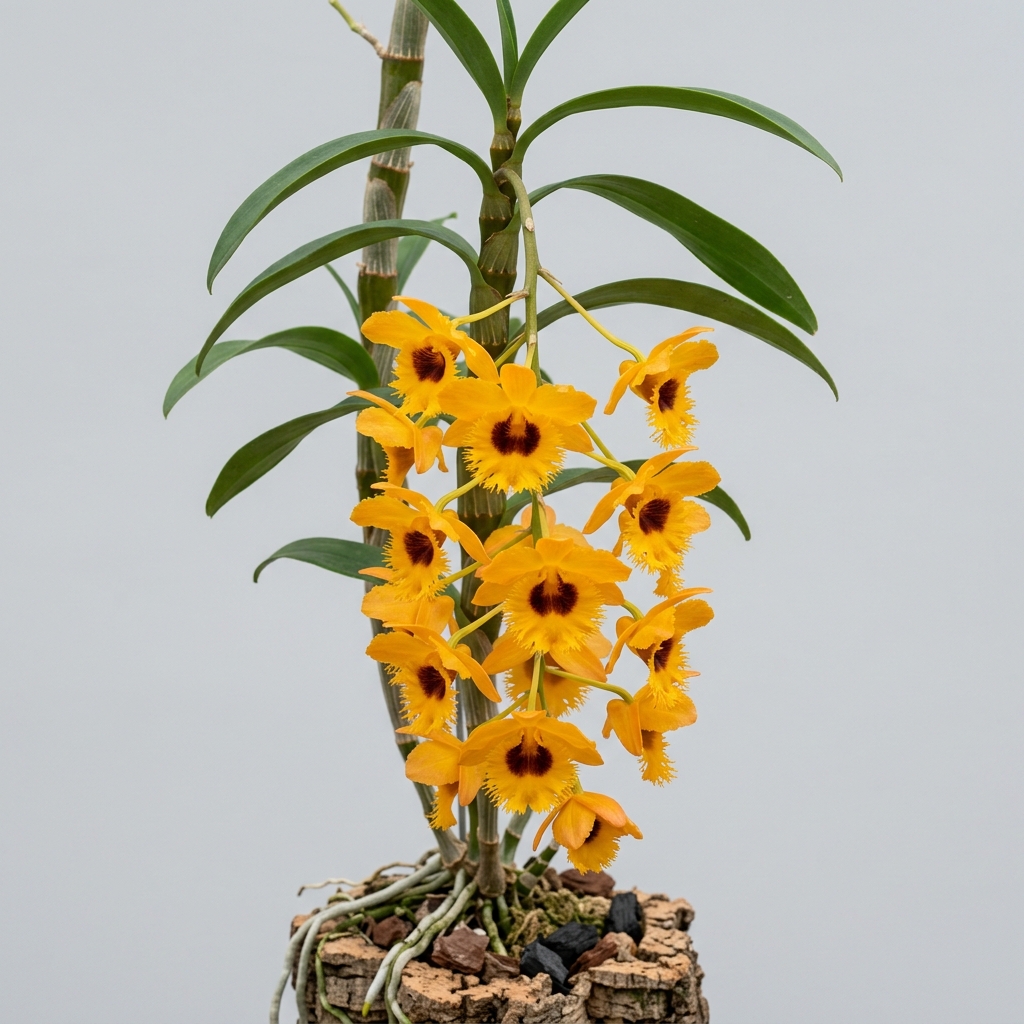
Dendrobium fimbriatum is a striking and robust epiphytic orchid species highly prized by collectors for its spectacular, golden-yellow blooms. Characterized by its tall, cane-like pseudobulbs and pendulous flowering habit, this orchid brings a dramatic tropical flair to any greenhouse or indoor growing space. Its most defining feature is the intricately fringed lip, which lends the plant both its botanical name and its common designation as the fringed-lipped Dendrobium.
Cultivating this species requires an understanding of its seasonal growth cycle, which alternates between a vigorous summer growing period and a cooler, drier winter rest. While it can grow quite large over time, its reliable seasonal displays of vibrant, clustered flowers make it a rewarding choice for intermediate to advanced growers. When provided with bright light and proper humidity, it rewards patience with some of the most visually captivating inflorescences in the Dendrobium genus.
💡 Did You Know?
The specific epithet fimbriatum refers to the beautifully fringed margin of the flower's lip. This intricate, lace-like structure is not just for show; in the wild, it helps guide specific insect pollinators directly to the center of the bloom, ensuring successful pollination in its dense forest habitats.
🌿 Botanical Overview
Dendrobium fimbriatum is native to a broad range across Southeast Asia, including the Himalayas, southern China, and Indochina. In its natural habitat, it grows epiphytically on tree trunks or lithophytically on mossy rocks in humid, semi-deciduous forests. This evolutionary background has equipped the orchid with a robust constitution and a distinct seasonal rhythm that growers must replicate for long-term success.
The plant features arching, cane-like pseudobulbs that can reach impressive heights, sometimes exceeding three to four feet under optimal conditions. These canes are leafy along the upper portion, bearing lanceolate, leathery leaves that persist for several seasons before dropping. As the canes mature, they become the primary source of energy storage, supporting the development of pendulous flower spikes from the upper nodes.
🌸 Flower Characteristics
The blooms of Dendrobium fimbriatum are typically produced in pendulous racemes, carrying anywhere from 8 to 15 flowers per spike. Each flower measures approximately two to three inches across, displaying a brilliant golden-yellow or rich orange hue. The sepals and petals are relatively broad and spread wide, creating a full, rounded silhouette.
The star of the show is the labellum, which is heavily fimbriate, meaning it features a delicate, moss-like fringe along its entire margin. In the common variety Dendrobium fimbriatum var. oculatum, the center of the lip is marked by a deep, velvety maroon or purple-black blotch, providing a stark, eye-catching contrast to the bright yellow petals.
Fragrance & Bloom Profile
The fragrance of Dendrobium fimbriatum is often described as mildly sweet, reminiscent of fresh honey or wildflowers, though some growers report a more subtle, musky scent. The scent is typically most pronounced during the morning hours when temperatures begin to rise. While the individual flowers are relatively short-lived compared to some other orchid genera—usually lasting about one to two weeks—the sheer volume of blooms on a mature specimen creates a breathtaking visual display that easily compensates for their brief duration.
Parentage & Hybrid Lineage
Dendrobium fimbriatum is a naturally occurring species rather than a man-made hybrid. While it has been used in hybridizing programs to introduce its vibrant yellow coloration and unique fringed lip to new grexes, its primary presence in the horticultural trade remains as the pure species. Because its exact wild origins span various elevations across Asia, some regional variations in growth habit and flower size exist, but these are generally classified under the main species or recognized varieties like var. oculatum rather than distinct cultivars.
🌱 Growing Conditions
To thrive, Dendrobium fimbriatum requires bright, indirect light, similar to the conditions preferred by Cattleyas. A location with strong morning sun and filtered afternoon light is ideal. During the active growing season in spring and summer, the plant prefers warm temperatures ranging from 75 to 85 degrees Fahrenheit during the day. High humidity levels of 60% to 80% coupled with strong, continuous air movement are essential to prevent fungal pathogens and mimic its breezy, montane native habitat.
💡 Care Tip
To ensure robust growth, provide maximum air circulation around the root zone. If growing in a pot, use clay pots with side slits or wooden baskets to help the coarse bark medium dry quickly between waterings, mimicking the breezy canopy conditions of its native environment.
Watering, Feeding & Potting Media
During the active growth phase, this orchid is a heavy feeder and drinker. Water copiously as soon as the potting medium approaches dryness, and apply a balanced, diluted orchid fertilizer weekly. The potting medium must be highly porous and fast-draining to prevent root rot; a mix of coarse fir bark, horticultural charcoal, and perlite works exceptionally well. Alternatively, larger specimens can be mounted on cork bark or grown in open wooden baskets, which allow the roots to dry rapidly after watering.
Blooming Season & Care Notes
The primary blooming season occurs in spring, triggered by a distinct winter rest period. As autumn approaches, growers should gradually reduce watering and cease fertilization entirely. During the winter, the orchid should be kept in cooler temperatures (around 50 to 55 degrees Fahrenheit) and watered only enough to prevent the pseudobulbs from shriveling excessively. This cool, dry rest is critical; failing to provide it will often result in the plant producing vegetative keikis instead of flower buds along the mature canes.
⚠️ Common Issues
⚠️ Common Mistake
The most common error is and fertilizing the plant continuously throughout the year. Without a distinct, dry winter rest period with reduced water and cooler temperatures, the orchid will fail to bloom and will instead produce weak vegetative growth or suffer from root rot.
- Root Rot: Caused by overwatering during the winter rest period or using a degraded, water-retentive potting medium.
- Bud Blast: Sudden drops in humidity or temperature fluctuations can cause developing flower buds to yellow and drop prematurely.
- Shriveled Canes: While some wrinkling is normal during the winter rest, severe shriveling indicates extreme dehydration.
- Pests: Spider mites and scale insects can occasionally target the undersides of the leaves, especially in dry, stagnant air.
- Lack of Flowering: Often the result of insufficient light during the growing season or a failure to provide a cool, dry winter rest.
❓ Frequently Asked Questions
How do I trigger blooms on my Dendrobium fimbriatum?
Triggering blooms requires a strict winter rest. Starting in late autumn, reduce watering significantly and stop all fertilizer. Expose the plant to cooler night temperatures (around 50 to 55 degrees Fahrenheit) and bright light for several weeks. This mimics the dry season of its native habitat, prompting the nodes to produce flower buds instead of vegetative growth.
Why is my orchid producing baby plants (keikis) instead of flowers?
The production of keikis (vegetative offsets) along the canes is usually a sign that the plant did not receive a proper winter rest, or that it was fertilized too late into the autumn. High nitrogen levels and excess moisture during the cool season encourage the plant to produce new growth rather than flowers.
Can I grow Dendrobium fimbriatum under LED grow lights?
Yes, you can grow this species under high-output LED grow lights, provided they deliver sufficient intensity. Because this orchid requires bright light comparable to Cattleya levels, place the plant relatively close to the light source, but monitor the leaves for signs of bleaching or burning, and ensure adequate heat dissipation.
When is the best time to repot this orchid?
The best time to repot is in late spring or early summer, immediately after the blooming cycle has finished and just as new root growth begins to emerge from the base of the new pseudobulbs. Avoid repotting during the winter rest or when the plant is actively developing flower buds.
⭐ Final Growing Notes
Dendrobium fimbriatum is a magnificent addition to any orchid collection, offering a dramatic display of fringed, golden blossoms that capture the essence of tropical beauty. While its large size and specific seasonal requirements demand a bit of space and attentiveness, the reward of a fully blooming specimen is unmatched. By respecting its natural cycle of summer abundance and winter rest, growers can enjoy this spectacular species for many years.
🌱 Propagation Tip
While division of large clumps is possible, the easiest way to propagate this species is by harvesting keikis that occasionally form on older canes. Wait until the young plantlet has developed several roots at least two inches long before gently detaching and potting it in a fine bark mix.
⭐ Expert Advice
When the cane-like pseudobulbs shed their leaves, do not cut them off. These leafless back-canes act as vital energy and water reservoirs for the plant, and they can continue to produce flowers from older nodes for several subsequent seasons.




Leave A Comment