

Dendrobium Glomeratum is a highly prized orchid species native to the humid forests of Indonesia, particularly Sulawesi and the Moluccas. Known for its striking, clustered blooms that emerge directly from mature, often leafless canes, this epiphyte offers a dramatic splash of color that captivates orchid enthusiasts. Its semi-pendulous growth habit and vibrant floral presentation make it an excellent candidate for mounted cultivation or hanging baskets.
Growers value this species for its relatively robust nature and its ability to produce dense clusters of long-lasting flowers. Unlike many orchids that bloom from the apex of new growth, Dendrobium Glomeratum showcases its brilliant magenta and orange blossoms along the length of older pseudobulbs, creating a unique architectural display. With proper attention to humidity and watering cycles, this orchid rewards collectors with reliable, eye-catching seasonal displays.
💡 Did You Know?
Dendrobium Glomeratum is part of the Dendrobium orchid group, a favorite among growers because its flowers, growth habit, and care needs make it useful for comparing cultivated orchids within the same . Observing its leaves, roots, and bloom spikes can help growers understand how this cultivar responds to indoor conditions.
🌿 Botanical Overview
Dendrobium Glomeratum is characterized by its slender, cane-like pseudobulbs that can grow quite long, often taking on a pendulous or arching habit as they mature. The leaves are lanceolate, arranged alternately along the upper portion of the canes, and are typically deciduous, shedding after one or two seasons. This shedding is a natural part of the plant’s life cycle and often precedes the blooming phase.
In its native habitat, this orchid grows as an epiphyte on tree branches, where it is exposed to high humidity, frequent rainfall, and excellent air circulation. Understanding this natural environment is key to successful cultivation, as the plant relies on its extensive root system to quickly absorb moisture and nutrients before drying out.
🌸 Flower Characteristics
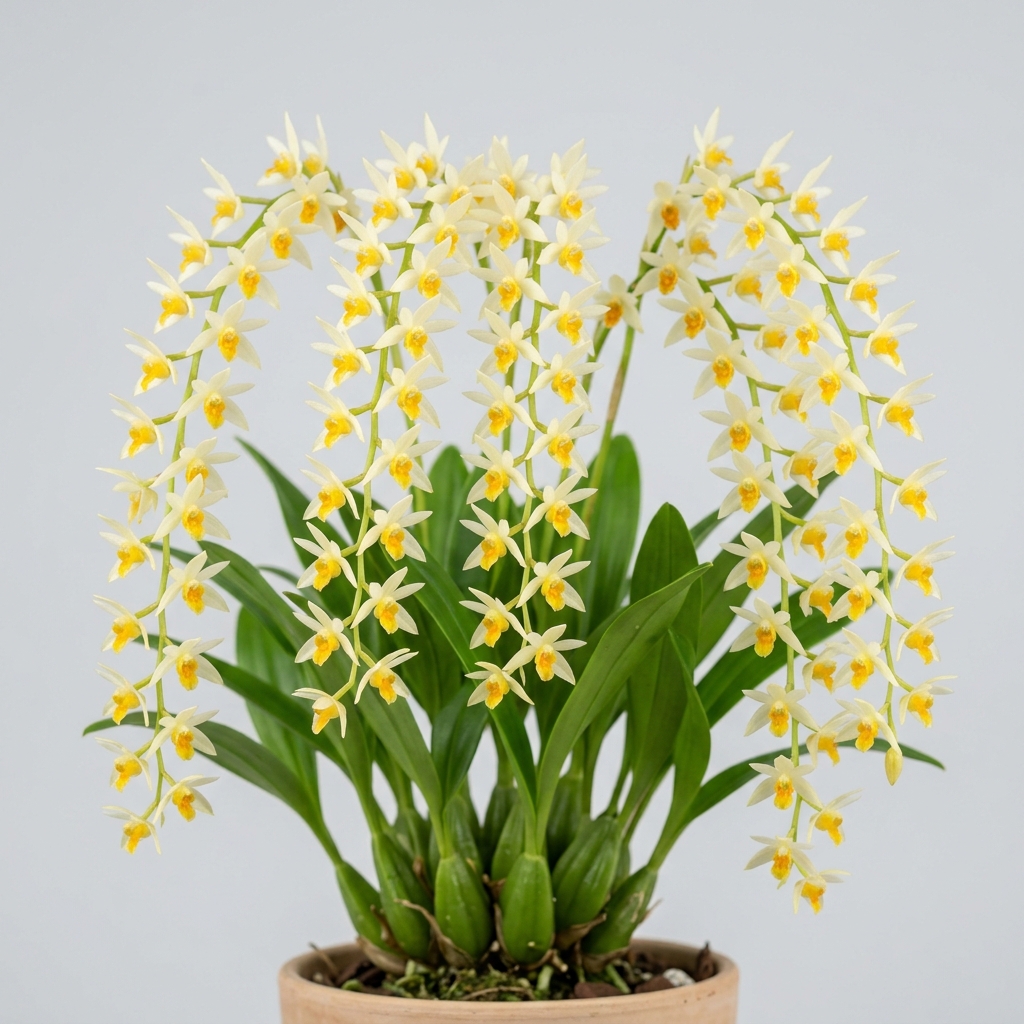
The flowers of Dendrobium Glomeratum are celebrated for their intense color contrast. The sepals and petals exhibit a vibrant magenta or deep pinkish-purple hue, while the small, tubular lip (labellum) provides a brilliant, contrasting orange or reddish-orange center. The flowers are relatively small, typically measuring between 1 to 1.5 inches in diameter, but they are produced in tight, rounded clusters (glomerules) that create a highly visible impact.
These clusters emerge from the nodes of older, leafless canes, sometimes producing dozens of flowers on a single pseudobulb. The blooms are long-lasting, often remaining fresh for several weeks, and their waxy texture helps them withstand environmental fluctuations better than more delicate orchid flowers.
Fragrance & Bloom Profile
While some growers report a very faint, sweet scent under warm, humid conditions, Dendrobium Glomeratum is generally not grown for its fragrance. The primary appeal lies entirely in its visual presentation. The blooming cycle is highly dynamic, with flowers opening nearly simultaneously within each cluster, creating a sudden and dramatic burst of color.
Because the blooms develop on older canes, growers should resist the urge to cut back leafless pseudobulbs unless they are completely dry, brown, and shriveled. These bare canes serve as vital energy reservoirs and remain capable of producing flowers for multiple consecutive years.
Parentage & Hybrid Lineage
Dendrobium Glomeratum is a naturally occurring species rather than a man-made hybrid. In botanical literature, it is sometimes referred to or confused with Dendrobium sulawesiense, which is widely considered a taxonomic synonym. Because it is a true species, its genetic lineage is pure, reflecting the evolutionary adaptations of its native Indonesian environment.
In hybridization programs, Dendrobium Glomeratum is occasionally used to introduce its intense magenta and orange coloration, as well as its clustering bloom habit, into new Dendrobium hybrids. However, in the general hobbyist market, it is most commonly grown and appreciated in its pure, species form.
🌱 Growing Conditions
To thrive, Dendrobium Glomeratum requires bright, filtered light. Direct midday sunlight should be avoided to prevent leaf scorch, but adequate light intensity is crucial for stimulating flower production. A location near an east- or shaded south-facing window, or under professional LED grow lights, is typically ideal.
💡 Care Tip
For best results, grow Dendrobium Glomeratum in bright filtered with steady and gentle airflow. Avoid placing the plant in harsh midday sun, but do not keep it in a dark corner; weak is one of the most common reasons cultivated orchids refuse to rebloom.
Temperature ranges should mimic its tropical origin, favoring warm to intermediate conditions. Daytime temperatures between 75 and 85 degrees Fahrenheit, with a night drop to 60 or 65 degrees Fahrenheit, support healthy growth. High humidity, ideally between 60% and 80%, must be maintained, accompanied by constant, gentle air movement to prevent fungal pathogens from settling on the foliage or roots.
Watering, Feeding & Potting Media
During the active growing season in spring and summer, Dendrobium Glomeratum requires frequent watering. The potting medium should be kept consistently moist but never waterlogged. As growth slows in the late autumn and winter, watering should be reduced, allowing the medium to dry out more thoroughly between applications, though the canes should not be allowed to shrivel excessively.
A balanced, diluted orchid fertilizer should be applied weekly or bi-weekly during active growth, using a “weakly, weekly” approach. For potting media, a highly draining mixture of coarse fir bark, perlite, and charcoal works well in pots. Alternatively, because of its pendulous habit, mounting the orchid on a cork slab with a small pad of sphagnum moss is highly recommended, as this closely mimics its natural epiphytic growth.
Blooming Season & Care Notes
Blooming typically occurs in the spring or summer, though Dendrobium Glomeratum can occasionally surprise growers with off-season blooms if environmental conditions remain stable. To encourage robust flowering, ensure the plant experiences a slight cooling and a reduction in watering during the winter months. This subtle rest period helps trigger the development of flower buds along the mature canes.
Repotting or remounting should only be performed when new root growth is visible at the base of the newest pseudobulbs, usually in early spring. Avoid disturbing the root system unnecessarily, as this species can take some time to recover from transplant shock.
⚠️ Common Issues
⚠️ Common Mistake
The most common mistake is by calendar instead of root and potting-media condition. Dendrobium roots need moisture and air at the same time, so constantly wet bark or sphagnum can lead to root loss even when the leaves still look healthy.
- Root Rot: Caused by overwatering or compacted, poorly draining potting media. Ensure the roots dry rapidly after watering.
- Bud Blast: Sudden dropping of flower buds before they open, often triggered by rapid changes in humidity, drafts, or temperature shocks.
- Leaf Spotting: Fungal or bacterial spots can develop if water sits on the leaves overnight without adequate air circulation.
- Spider Mites and Mealybugs: Common pests that hide in the crevices of the leaves and canes; treat promptly with insecticidal soap or neem oil.
- Shriveling Canes: A sign of dehydration, either due to underwatering or a loss of roots from overwatering.
❓ Frequently Asked Questions
How do I get my Dendrobium Glomeratum to bloom?
To encourage blooming, ensure the orchid receives bright, indirect light and a slight reduction in water and temperature during the winter months. Do not cut off old, leafless canes, as these are the primary source of future flower clusters.
Can I grow Dendrobium Glomeratum mounted on wood?
Yes, mounting this species on a cork slab or hardwood branch is highly recommended. Its pendulous growth habit makes it ideal for mounting, provided you can maintain high humidity and water the plant frequently enough to prevent dehydration.
Why are the leaves on my orchid turning yellow and falling off?
Dendrobium Glomeratum is naturally deciduous on its older canes. It is completely normal for leaves on mature pseudobulbs to turn yellow and drop off before or during the flowering cycle, leaving bare canes that will eventually produce blooms.
How often should I fertilize Dendrobium Glomeratum?
Apply a highly diluted, balanced orchid fertilizer once a week during the active spring and summer growing season. Reduce fertilization significantly during the winter rest period to avoid salt buildup and root damage.
⭐ Final Growing Notes
Dendrobium Glomeratum is a rewarding and visually spectacular species that brings a touch of tropical Indonesian elegance to any orchid collection. By respecting its natural growth cycle—providing bright light, high humidity, and a slight winter rest—growers can enjoy its brilliant magenta and orange floral clusters year after year. Its unique habit of blooming on bare canes makes it a fascinating study in botanical adaptation and a standout performer in any greenhouse or indoor growing space.
⚕️ Health, Safety & Edibility
Understanding how a plant interacts with people, pets, and the surrounding environment is part of responsible cultivation. This section uses conservative, general guidance and does not replace professional medical or veterinary advice.
Human Safety: No published evidence currently identifies species-specific toxicity concerns for Dendrobium Glomeratum during normal handling. As with most ornamental plants, it should not be intentionally consumed.
Pet Safety: Published information does not indicate that this orchid commonly poses a toxicity concern for cats or dogs. However, chewing leaves, flowers, roots, or potting media may still cause mild digestive upset.
Edibility: This orchid is cultivated for ornamental display rather than food. Ornamental plants may carry fertilizers, pesticides, or other horticultural treatments that make them unsuitable for consumption.
Skin Contact: Routine handling is not generally associated with skin irritation. Gardeners with sensitive skin may prefer wearing gloves when repotting, pruning, or handling potting media.
🌱 Propagation Tip
Propagation should be approached patiently. Most home growers should wait for natural keikis or divide only mature, healthy plants when the orchid type allows it. Never remove a young growth until it has strong roots and enough leaves to support itself away from the parent plant.
⭐ Expert Advice
Repot after flowering when fresh root tips begin to appear. This timing helps the plant anchor quickly into new bark or sphagnum and reduces stress, especially for orchids grown indoors where airflow, , and drying speed can change from season to season.

Leave A Comment