

Dendrobium Hancockii, commonly known as the bamboo orchid, is a highly distinctive species prized by collectors for its unique vegetative appearance and bright, cheerful blooms. Unlike many of its thick-caned relatives, this orchid features slender, branching stems and narrow, grass-like leaves that closely resemble miniature bamboo. This elegant growth habit makes it an attractive foliage plant even when it is not in bloom, offering a delicate texture that stands out in any orchid collection.
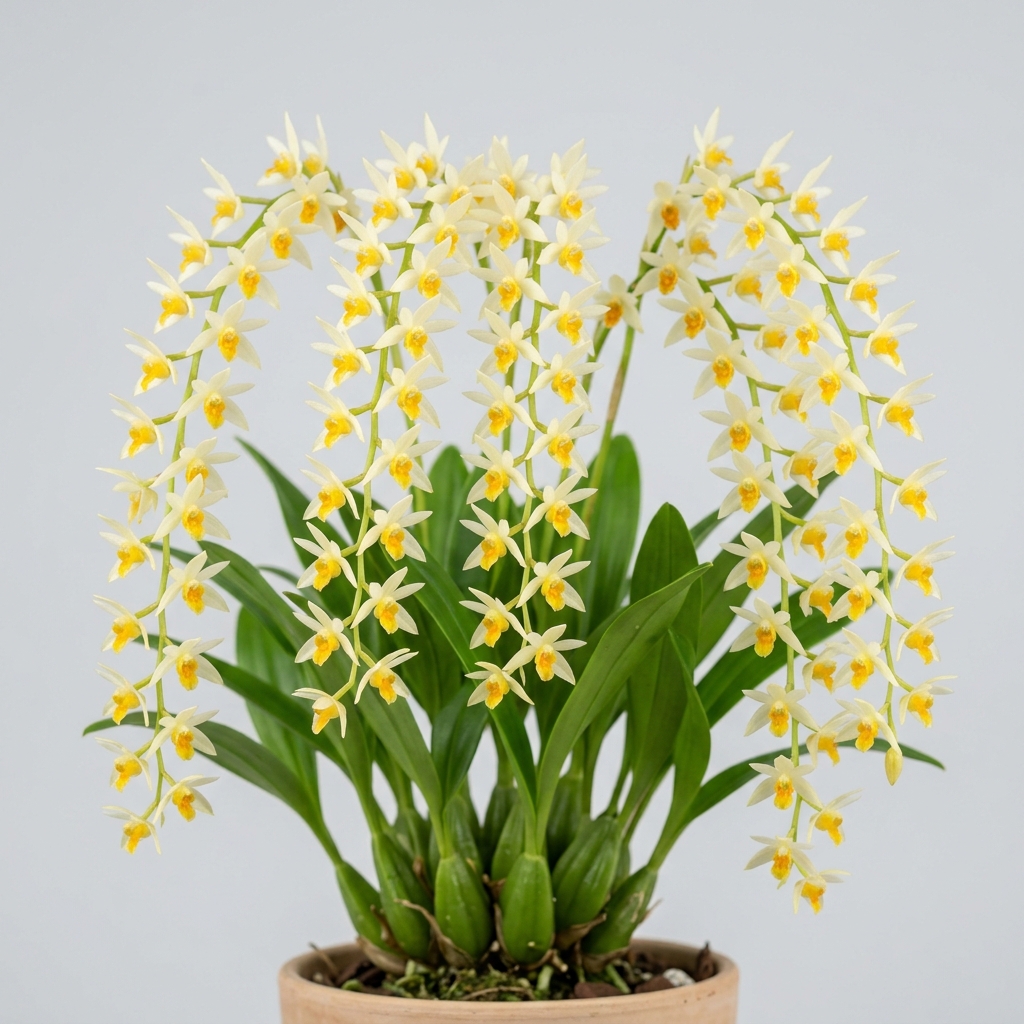
When the blooming season arrives, Dendrobium Hancockii transforms with an abundance of glossy, golden-yellow flowers that emerge from the upper nodes of its mature canes. These blossoms are celebrated not only for their vivid color and waxy texture but also for their delightful, sweet fragrance, which many growers liken to honey or fresh grass. Cultivating this species successfully requires an understanding of its seasonal growth cycle, making it an engaging and rewarding choice for intermediate orchid enthusiasts.
💡 Did You Know?
Dendrobium Hancockii is often called the bamboo orchid because its slender, branching canes and narrow, grass-like leaves mimic the appearance of miniature bamboo. This unique vegetative form makes it a highly sought-after species for collectors who appreciate orchids with exceptional foliage and structural beauty even when the plant is not in bloom.
🌿 Botanical Overview
Dendrobium Hancockii is native to mountainous regions of southern China and northern Vietnam, where it typically grows lithophytically on rocks or epiphytically on trees in sparse forests. This natural habitat experiences distinct seasonal shifts, which have shaped the orchid’s growth cycle and physiological needs. The species is highly adapted to environments with wet, humid summers and cooler, drier winters.
The most striking botanical feature of this orchid is its growth habit. The pseudobulbs are exceptionally slender, woody, and multi-branched, reaching heights of 30 to 90 centimeters. The leaves are linear, grass-like, and semi-deciduous, shedding periodically as the canes mature. This combination of branching stems and fine foliage gives the plant its characteristic bamboo-like appearance, a rarity within the Dendrobium genus.
🌸 Flower Characteristics
The flowers of Dendrobium Hancockii are borne on short inflorescences that arise from the upper nodes of both leafy and leafless mature canes. Each inflorescence typically carries one to three flowers, but a well-grown specimen can produce dozens of blooms simultaneously across multiple canes, creating a spectacular golden display.
Individual flowers measure approximately 3 to 5 centimeters in diameter and feature a glossy, waxy texture that contributes to their longevity. The petals and sepals are a uniform, vibrant golden-yellow. The lip, or labellum, is slightly darker yellow, often featuring a finely fringed or pubescent margin and a small, reddish-brown spot or faint veining deep within the throat, which guides pollinators.
Fragrance & Bloom Profile
One of the most appealing attributes of Dendrobium Hancockii is its fragrance. The blooms emit a strong, sweet scent that is most pronounced during the morning and early afternoon when temperatures rise. The aroma is frequently described as a blend of honey, clover, and fresh-cut hay, filling the growing space with a pleasant, natural perfume.
The blossoms are remarkably long-lasting for a Dendrobium species, often remaining fresh on the plant for four to six weeks if kept in cool, stable conditions. To maximize the lifespan of the flowers, growers should avoid getting the blooms wet during watering and shield the plant from drafts or sudden temperature fluctuations.
Parentage & Hybrid Lineage
Unlike many commercially available orchids, Dendrobium Hancockii is a naturally occurring species rather than a man-made hybrid. Consequently, it does not have a complex lineage of parental cultivars. In botanical nomenclature, it remains recognized as a distinct species within the section Dendrobium.
While it is primarily grown as a species by collectors, its unique growth habit and intense yellow coloration have occasionally made it a subject of interest for hybridizers. However, registered hybrids utilizing Dendrobium Hancockii remain relatively uncommon in the mass market, and most specimens found in cultivation are propagated directly from wild-type species stock.
🌱 Growing Conditions
To thrive, Dendrobium Hancockii requires bright, filtered light. It can tolerate some direct morning sun, but harsh afternoon sunlight will scorch its delicate, grass-like leaves. An east- or semi-shaded south-facing window is often ideal for indoor cultivation, while greenhouse growers should use moderate shading.
💡 Care Tip
Ensure your Dendrobium Hancockii receives excellent air movement, especially during the hot, humid summer months. Strong air circulation mimics its mountainous native habitat, helping to prevent fungal leaf spot and keeping the fine root system healthy.
Temperature management is critical for this species. During the active growing season in spring and summer, it prefers intermediate to warm temperatures, ranging from 20 degrees to 30 degrees Celsius during the day. In the winter, the plant requires a distinct cooling period, with nighttime temperatures dropping to 10 degrees to 15 degrees Celsius. Good air circulation is essential at all times to prevent stagnant air pockets and fungal issues.
Watering, Feeding & Potting Media
Watering practices must align with the orchid’s seasonal growth phases. During the spring and summer, when new canes are actively developing, Dendrobium Hancockii should be watered copiously, keeping the medium evenly moist but never waterlogged. Apply a balanced, diluted orchid fertilizer weekly or bi-weekly during this active growth period.
As autumn approaches, gradually reduce watering and cease fertilization entirely to initiate the winter rest. The potting medium should be highly free-draining to protect the fine root system. A mix of medium-grade fir bark, perlite, and charcoal works well in clay or plastic pots. Alternatively, this species can be mounted on cork bark or tree fern plaques if high humidity can be consistently maintained.
Blooming Season & Care Notes
The primary blooming season for Dendrobium Hancockii occurs in late spring and early summer, triggered by the transition out of its winter rest. To ensure a successful bloom cycle, the winter cooling period must be accompanied by a significant reduction in water. During this rest, water only enough to prevent the slender canes from shriveling excessively.
Once flower buds begin to emerge from the nodes in early spring, gradually increase watering and resume light fertilization. After flowering is complete, the plant will initiate new vegetative shoots from the base of the canes. Repotting should only be done during this post-bloom period when new root growth is visible, as this species dislikes being disturbed and prefers to be slightly pot-bound.
⚠️ Common Issues
⚠️ Common Mistake
A frequent error is failing to provide a distinct winter rest. Keeping this orchid warm and wet year-round will result in lush vegetative growth but will prevent the plant from initiating flower buds, leading to a disappointing lack of spring blooms.
- Root Rot:
Caused by overwatering or compacted, poorly draining potting media, leading to mushy, black roots and declining canes. - Shriveled Canes: While some wrinkling is normal during the winter rest, severe shriveling during the growing season indicates underwatering or root loss.
- Bud Blast:
Sudden dropping of flower buds before they open, often triggered by low humidity, cold drafts, or sudden environmental changes. - Spider Mites and Scale: These pests can hide in the dense, grassy foliage or along the leaf sheaths of the slender canes; treat promptly with insecticidal soap or neem oil.
- Foliage Spotting: Fungal or bacterial spots can develop on the leaves if air circulation is poor and water is allowed to sit on the foliage overnight.
❓ Frequently Asked Questions
Why is my Dendrobium Hancockii not blooming?
The most common reason for a lack of blooms is the absence of a proper winter rest. Dendrobium Hancockii requires a distinct period of cooler temperatures and reduced watering during the winter months to trigger bud initiation in the spring. Additionally, insufficient light during the growing season can limit the plant’s energy reserves.
How often should I water this orchid during the winter?
During its winter dormancy, watering should be significantly reduced. Instead of thorough watering, lightly mist the potting medium or mount every one to two weeks, just enough to keep the canes from shriveling severely. Resume regular watering only when new growth or flower buds appear in spring.
Can Dendrobium Hancockii be grown mounted?
Yes, this species performs exceptionally well when mounted on cork bark or tree fern plaques, which mimics its natural epiphytic growth habit. However, mounted plants dry out much faster than potted ones and will require daily watering or misting during the hot summer months, along with high ambient humidity.
What should I do with the canes after they finish flowering?
Do not cut off the old canes after they finish blooming. Dendrobium Hancockii can produce flowers from the same canes for multiple years, and even leafless old canes serve as vital energy and water storage organs for the developing new shoots at the base of the plant.
⭐ Final Growing Notes
Dendrobium Hancockii is a captivating species that rewards patient growers with its unique bamboo-like aesthetic and highly fragrant, golden blossoms. By respecting its natural seasonal rhythm, providing abundant water and warmth in summer followed by a cool, dry winter rest, you can enjoy this remarkable orchid’s elegant form and sweet perfume for many years to come.
⚕️ Health, Safety & Edibility
Understanding how a plant interacts with people, pets, and the surrounding environment is part of responsible cultivation. This section uses conservative, general guidance and does not replace professional medical or veterinary advice.
Human Safety: No published evidence currently identifies species-specific toxicity concerns for Dendrobium Hancockii during normal handling. As with most ornamental plants, it should not be intentionally consumed.
Pet Safety: Published information does not indicate that this orchid commonly poses a toxicity concern for cats or dogs. However, chewing leaves, flowers, roots, or potting media may still cause mild digestive upset.
Edibility: This orchid is cultivated for ornamental display rather than food. Ornamental plants may carry fertilizers, pesticides, or other horticultural treatments that make them unsuitable for consumption.
Skin Contact: Routine handling is not generally associated with skin irritation. Gardeners with sensitive skin may prefer wearing gloves when repotting, pruning, or handling potting media.
🌱 Propagation Tip
This species can be propagated by division during repotting, ensuring each division has at least three to four healthy, mature canes. Occasionally, it may also produce keikis (baby plants) along the nodes of older canes, which can be removed and potted once they develop several roots.
⭐ Expert Advice
When repotting, choose a pot that seems slightly too small. Dendrobium Hancockii thrives when its roots are snug and pot-bound. Disturbing the root system too frequently can set back growth, so only repot when the medium has degraded or the plant is physically outgrowing its container.

Leave A Comment