

Dendrobium Moschatum, commonly known as the musk-scented Dendrobium, is a magnificent and robust epiphytic orchid species native to the montane forests of the Himalayas and Southeast Asia. Highly prized by collectors for its impressive stature and unique floral morphology, this orchid produces large, cane-like pseudobulbs that can reach several feet in length. Its pendulous growth habit and dramatic flowering display make it a standout specimen in any intermediate to warm greenhouse or indoor growing space.
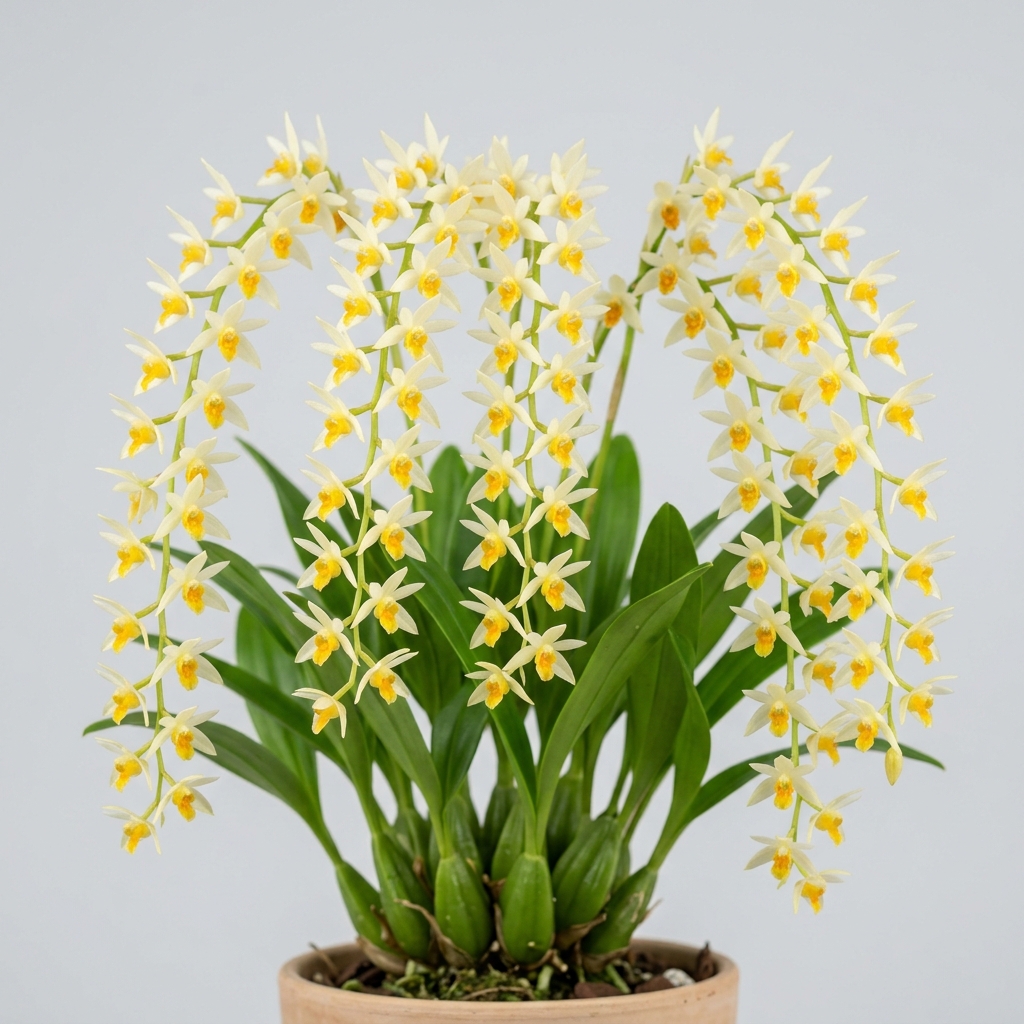
When in bloom, this species stands out with its cascading racemes of apricot-yellow to peach-colored blossoms. Each flower features a distinctive, pouch-like lip lined with soft hairs and marked by deep purple-maroon eyes inside the throat. While the individual flowers are relatively short-lived, the sheer volume of blooms produced on mature plants creates an unforgettable visual and aromatic experience for dedicated orchid enthusiasts.
💡 Did You Know?
Dendrobium Moschatum is famous for its unique pouch-like lip, which closely resembles the pouch of a slipper orchid. This distinctive anatomical feature, combined with its rich, musk-like , makes it one of the most morphologically fascinating species within the vast Dendrobium , captivating botanists and hobbyists alike for generations.
🌿 Botanical Overview
Dendrobium Moschatum is a large-sized, warm-to-cool growing epiphyte or occasional lithophyte. It is characterized by its tall, tufted, cane-like pseudobulbs that are woody, slightly compressed, and covered with leaf-sheaths. In its natural habitat, it grows on tree trunks in open forests at elevations ranging from 300 to 1,500 meters, where it experiences distinct seasonal shifts in moisture and temperature.
The leaves are lanceolate to oblong, leathery, and arranged distichously along the upper portion of the canes. These leaves are deciduous, often falling off older canes after a couple of seasons, leaving bare, silvery-gray stalks that remain capable of producing flowers for several years. Understanding this growth cycle is key to managing the plant’s seasonal care and maximizing its blooming potential.
🌸 Flower Characteristics
The inflorescence of Dendrobium Moschatum is a pendulous raceme that emerges from the upper nodes of both leafy and leafless canes. Each raceme can carry anywhere from 5 to 15 flowers, which measure approximately 2 to 3 inches (5 to 7.5 cm) in diameter. The sepals and petals are broad, spreading, and typically exhibit a delicate shade of pale yellow, apricot, or tawny copper.
The most striking feature of the flower is its cup-shaped or slipper-like lip (labellum). The interior of the lip is densely pubescent (hairy) and features two large, dark purple-maroon spots or “eyes” at the base, which contrast sharply with the lighter exterior. This pouch-like structure serves as a visual guide for natural pollinators in the wild.
Fragrance & Bloom Profile
As its specific epithet suggests, Dendrobium Moschatum is famous for its distinct musk-like fragrance. The scent is often described as a complex blend of sweet musk, ripe melon, and woody undertones. This fragrance is most pronounced during the warm midday hours when humidity levels are moderate and the flowers are fully open.
Growers should note that the individual flowers of this species are relatively short-lived, typically lasting between 3 to 7 days. However, a mature, well-established specimen can produce multiple spikes simultaneously or in succession, extending the overall blooming display over several weeks during the late spring and summer months.
Parentage & Hybrid Lineage
Dendrobium Moschatum is a naturally occurring species rather than a man-made hybrid. It belongs to the section Dendrobium within the genus. While its exact evolutionary lineage is shaped by its wild distribution across Asia, it has been used occasionally in hybridization programs to introduce its unique pouch-like lip and warm color tones to new Dendrobium grexes.
Because it is a species, there are no direct parent plants to document. Growers should be aware that some variation in flower color and plant size exists within the species, depending on the geographic origin of the specific clone or population from which the plant was propagated.
🌱 Growing Conditions
To cultivate Dendrobium Moschatum successfully, growers must mimic its native monsoon environment. It thrives in bright, filtered light, similar to the conditions preferred by Cattleyas. While it can tolerate some direct morning sun, harsh afternoon sunlight will scorch the foliage. High light levels are essential for promoting robust cane growth and later flowering.
💡 Care Tip
Provide maximum air circulation around the root zone of Dendrobium Moschatum. Because this orchid grows quite large and produces heavy canes, mounting it on a large cork slab or planting it in a slatted wooden basket allows the roots to dry rapidly, preventing rot while mimicking its natural epiphytic habitat.
Temperature requirements are intermediate to warm during the active growing season, with daytime temperatures ranging from 75°F to 85°F (24°C to 29°C) and a slight drop at night. Good air movement is critical at all times to prevent fungal pathogens from establishing on the dense foliage and within the potting medium.
Watering, Feeding & Potting Media
During the spring and summer active growth phase, Dendrobium Moschatum requires abundant watering and high humidity. The potting medium should be kept consistently moist but never waterlogged. Apply a balanced, water-soluble orchid fertilizer at quarter or half strength weekly to support the rapid development of new canes.
Due to its large size and pendulous blooming habit, this orchid is often grown in slatted wooden baskets or mounted on large cork plaques. If potted, use a highly porous, free-draining medium consisting of coarse fir bark, charcoal, and perlite. This ensures that the thick, fleshy roots receive adequate oxygen and dry out slightly between waterings.
Blooming Season & Care Notes
The primary blooming season occurs in late spring and early summer. To trigger bud initiation, Dendrobium Moschatum requires a distinct, cooler, and drier rest period during the winter months. Reduce watering significantly when winter approaches, allowing the medium to dry out completely between light mistings, and suspend all fertilizing.
This winter rest mimics the dry season of its native habitat. Once green flower buds begin to emerge from the nodes of the canes in early spring, gradually resume regular watering and feeding. Avoid moving the plant or changing its orientation once buds form, as sudden environmental shifts can cause bud drop.
⚠️ Common Issues
⚠️ Common Mistake
The most common mistake growers make is Dendrobium Moschatum continuously through the winter. Without a distinct dry winter rest, the plant will fail to produce flower buds in the spring and will instead produce vegetative growth or suffer from root rot due to cold, wet .
- Bud Blast:
Sudden changes in temperature, low humidity, or moving the plant while buds are developing can cause them to yellow and drop before opening. - Root Rot:
Overwatering during the winter rest period or using a degraded, compacted potting medium will quickly suffocate and rot the root system. - Spider Mites and Mealybugs: These pests can hide in the leaf sheaths of the canes; regular inspection and treatment with insecticidal soap are recommended.
- Foliar Spotting: Poor air circulation combined with high humidity can lead to fungal or bacterial leaf spots on the deciduous foliage.
❓ Frequently Asked Questions
Why are the leaves on my Dendrobium Moschatum turning yellow and falling off?
It is completely natural for older canes of Dendrobium Moschatum to shed their leaves, especially during the autumn and winter rest periods. As long as the canes remain firm and plump, this deciduous behavior is a normal part of the plant’s life cycle and often precedes the spring blooming cycle.
How long do the flowers of Dendrobium Moschatum last?
Individual flowers of this species are notoriously short-lived, typically lasting only 3 to 7 days. However, a mature specimen with multiple pseudobulbs can produce several flower spikes that open in succession, extending the overall blooming period of the plant over a few weeks.
Does Dendrobium Moschatum require a winter rest to bloom?
Yes, a cool and dry winter rest is essential to trigger blooming. During this period, which usually lasts from late autumn to early spring, you should significantly reduce watering, withhold fertilizer, and keep the plant in a cooler location with bright light until new flower buds appear.
Can I grow Dendrobium Moschatum indoors under LED lights?
Yes, Dendrobium Moschatum can be grown indoors under high-intensity LED grow lights designed for plants. Ensure the lights are positioned to provide bright, filtered light equivalent to Cattleya levels, and maintain adequate humidity and air circulation around the large canes.
⭐ Final Growing Notes
Dendrobium Moschatum is a rewarding species for intermediate orchid growers who have the space to accommodate its impressive size. By respecting its natural seasonal cycle of wet, warm summers and cool, dry winters, you will be rewarded with a spectacular annual display of unique, musk-scented, pouch-lipped blossoms that bring a touch of the wild Himalayas into your collection.
⚕️ Health, Safety & Edibility
Understanding how a plant interacts with people, pets, and the surrounding environment is part of responsible cultivation. This section uses conservative, general guidance and does not replace professional medical or veterinary advice.
Human Safety: No published evidence currently identifies species-specific toxicity concerns for Dendrobium Moschatum during normal handling. As with most ornamental plants, it should not be intentionally consumed.
Pet Safety: Published information does not indicate that this orchid commonly poses a toxicity concern for cats or dogs. However, chewing leaves, flowers, roots, or potting media may still cause mild digestive upset.
Edibility: This orchid is cultivated for ornamental display rather than food. Ornamental plants may carry fertilizers, pesticides, or other horticultural treatments that make them unsuitable for consumption.
Skin Contact: Routine handling is not generally associated with skin irritation. Gardeners with sensitive skin may prefer wearing gloves when repotting, pruning, or handling potting media.
🌱 Propagation Tip
While division of large clumps is possible, the safest way to propagate Dendrobium Moschatum is by harvesting keikis (baby plants) that occasionally form on the nodes of older canes. Wait until the keiki has developed several roots at least two inches long before gently detaching and potting it.
⭐ Expert Advice
To maximize the short-lived blooms of Dendrobium Moschatum, keep the plant in a slightly cooler, shaded location once the flowers open. Lowering the ambient by a few degrees and shielding the blossoms from direct sunlight can extend the lifespan of the delicate, apricot-colored flowers by several days.

Leave A Comment