
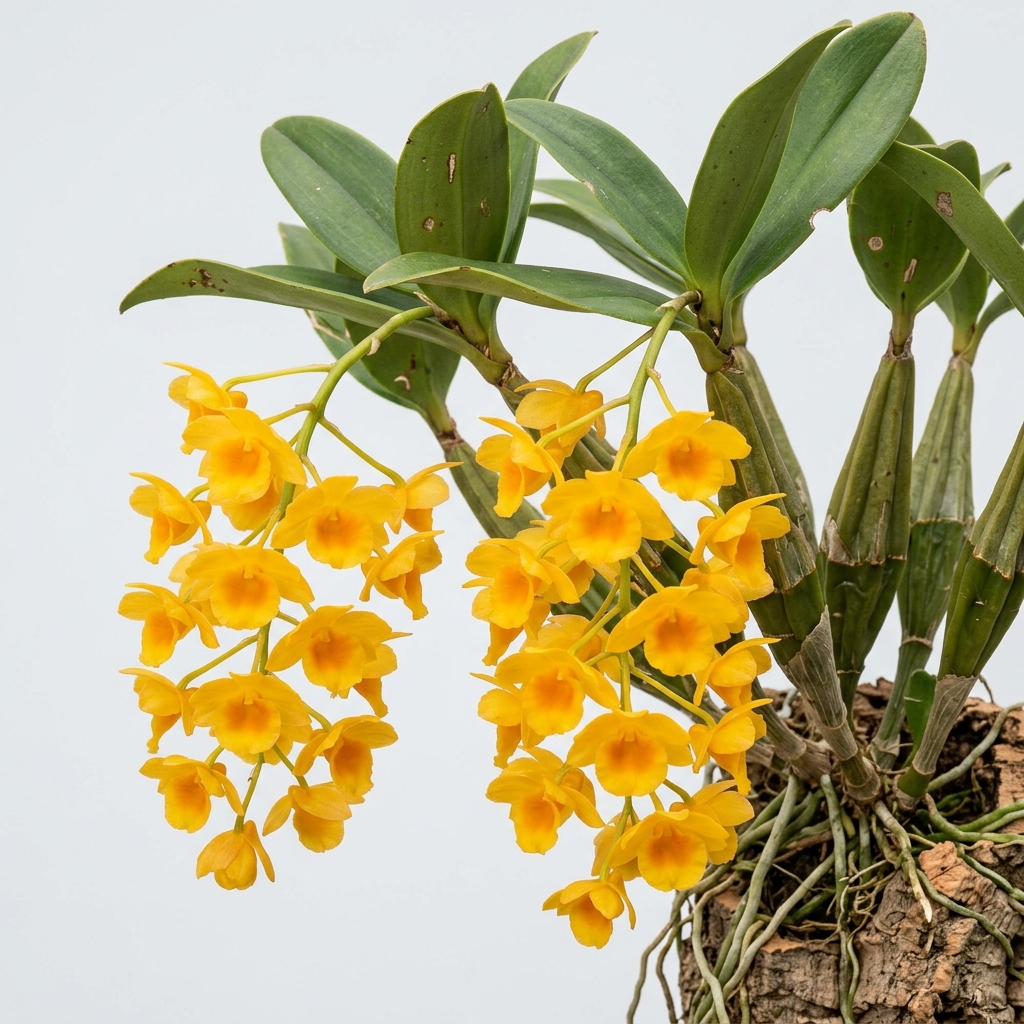
Dendrobium Guibertii is a magnificent epiphytic orchid highly prized by collectors for its spectacular, pendulous clusters of vibrant golden-yellow flowers. Belonging to the diverse and expansive Dendrobium genus, this orchid shows a robust growth habit characterized by club-shaped, multi-angled pseudobulbs that support leathery, evergreen foliage. When in full bloom, the plant presents a breathtaking visual display, with dense, grape-like racemes arching gracefully beneath the canopy of its leaves.
Horticulturists value this orchid not only for its striking floral presentation but also for its rewarding growth cycle, which closely mirrors the seasonal monsoonal shifts of its native Asian habitats. While it requires a disciplined approach to seasonal watering and temperature management to initiate blooming, its overall resilience makes it an excellent choice for intermediate growers looking to expand their collection of showy epiphytes. Providing the proper balance of bright light and a distinct winter rest is the key to unlocking its full flowering potential.
💡 Did You Know?
Dendrobium Guibertii is part of the Dendrobium orchid group, a favorite among growers because its flowers, growth habit, and care needs make it useful for comparing cultivated orchids within the same . Observing its leaves, roots, and bloom spikes can help growers understand how this cultivar responds to indoor conditions.
🌿 Botanical Overview
Dendrobium Guibertii is characterized by its distinctive vegetative structure, featuring upright, club-shaped pseudobulbs that are distinctly ridged or quadrangular. These pseudobulbs serve as vital water and nutrient storage organs, allowing the plant to survive periods of seasonal drought in its natural environment. The leaves are typically concentrated near the apex of the pseudobulbs, presenting a leathery texture and a deep green hue that remains attractive year-round.
As an epiphyte, this orchid naturally grows anchored to the bark of trees, where it benefits from rapid drainage and excellent air circulation around its root system. In cultivation, replicating this epiphytic lifestyle is crucial for maintaining root health. The plant’s growth pattern is sympodial, meaning it produces new leads from the base of older pseudobulbs each growing season, gradually forming a large, multi-stemmed specimen.
🌸 Flower Characteristics
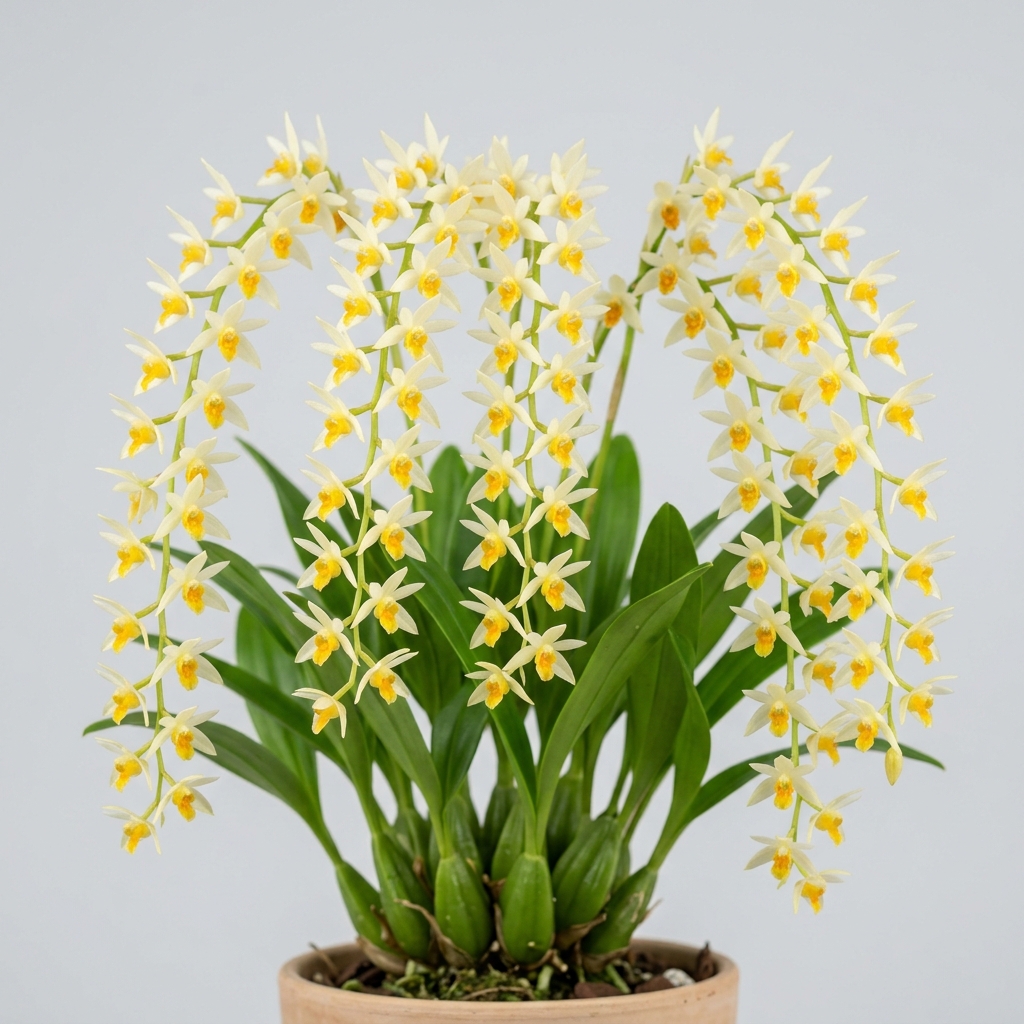
The defining feature of Dendrobium Guibertii is its spectacular inflorescence. The flowers are produced on pendulous, densely packed racemes that emerge from the upper nodes of mature, often leafless pseudobulbs. Each raceme can carry dozens of individual blooms, creating a tightly clustered, cylindrical display that resembles a bunch of golden grapes.
Individual flowers typically feature bright yellow to cream-colored sepals and petals that frame a prominent, intensely saturated golden-orange lip. The lip is often fringed or finely pubescent, adding a delicate texture to the bold color palette. The overall presentation is highly dramatic, though the individual flowers are relatively short-lived, lasting anywhere from one to two weeks depending on environmental conditions.
Fragrance & Bloom Profile
While some growers report a mild, sweet, or slightly musky fragrance during the warmest hours of the day, the scent profile of Dendrobium Guibertii is not consistently documented across all cultivated specimens. Fragrance intensity can vary significantly based on light levels, humidity, and individual plant genetics.
The blooming cycle is highly synchronized, with all flowers on a single raceme opening nearly simultaneously to maximize visual impact. Because the flowers are delicate and high in moisture content, maintaining moderate temperatures and avoiding direct water contact on the blooms will help prolong the life of the display.
Parentage & Hybrid Lineage
The taxonomic status of Dendrobium Guibertii has been subject to debate among botanists, with some classifying it as a distinct species and others treating it as a horticultural variety or synonym of Dendrobium densiflorum. Because of these historical shifts in nomenclature, its precise hybrid lineage or wild origin is not always consistently documented in standard grower references.
Regardless of its exact taxonomic placement, it is widely recognized within the Callista section of the genus Dendrobium. This group is famous for producing pendulous, multi-flowered inflorescences and requiring a cool, dry winter rest to stimulate bud development. Growers should treat it with the same cultural care as other closely related golden-flowered Asian Dendrobium species.
🌱 Growing Conditions
To thrive, Dendrobium Guibertii requires bright, filtered light, similar to the conditions preferred by many Cattleya orchids. Strong, indirect sunlight encourages robust pseudobulb development and is essential for successful flower initiation. A slight yellow-green tint to the foliage indicates optimal light levels, while dark green leaves suggest the plant is receiving insufficient light.
💡 Care Tip
For best results, grow Dendrobium Guibertii in bright filtered with steady and gentle airflow. Avoid placing the plant in harsh midday sun, but do not keep it in a dark corner; weak is one of the most common reasons cultivated orchids refuse to rebloom.
Temperature management is critical for this orchid. During the active spring and summer growing season, it prefers warm temperatures ranging from 75 to 85 degrees Fahrenheit during the day. In the winter, a distinct cooling period is required, with night temperatures dropping to 50 to 55 degrees Fahrenheit. High humidity of 60% to 80% coupled with strong air movement is vital to prevent stagnant air pockets and fungal issues.
Watering, Feeding & Potting Media
During the active growing season in spring and summer, Dendrobium Guibertii requires copious watering and regular fertilization. The potting medium should be kept evenly moist but never waterlogged. A balanced, diluted orchid fertilizer applied weekly is highly beneficial to support the rapid development of new pseudobulbs.
The choice of potting media is crucial for root health. A coarse, free-draining mix composed of medium-grade fir bark, perlite, and charcoal works exceptionally well in clay or plastic pots. Alternatively, larger specimens can be grown in open wooden baskets or mounted on cork slabs, which allows the roots to dry rapidly after watering. As autumn approaches, watering and feeding must be gradually reduced to prepare the plant for its winter rest.
Blooming Season & Care Notes
The primary blooming season for Dendrobium Guibertii occurs in late winter to mid-spring, triggered by the cool, dry winter rest. During this rest period, which typically lasts from November to February, watering should be reduced to a bare minimum—only enough to prevent the pseudobulbs from shriveling excessively. Fertilization should be entirely suspended during this time.
Once the flower buds begin to emerge from the nodes of the pseudobulbs in early spring, normal watering and warmer temperatures can gradually be resumed. After flowering is complete, the plant will initiate new vegetative growth from the base, which is the ideal time to consider repotting if the potting medium has begun to decompose.
⚠️ Common Issues
⚠️ Common Mistake
The most common mistake is by calendar instead of root and potting-media condition. Dendrobium roots need moisture and air at the same time, so constantly wet bark or sphagnum can lead to root loss even when the leaves still look healthy.
- Bud Blast:
Sudden drops in humidity, drafts, or moving the plant while buds are developing can cause them to yellow and drop before opening. - Root Rot:
Overwatering during the winter rest period or using a degraded, compacted potting medium easily suffocates the sensitive root system. - Pseudobulb Shriveling: While slight wrinkling is normal during the dry winter rest, severe shriveling indicates extreme dehydration or root loss.
- Pest Infestations: Spider mites, scale, and mealybugs can occasionally target the tender new growth and the crevices of the pseudobulbs.
- Foliar Spotting: Inadequate air circulation combined with high humidity can lead to fungal or bacterial leaf spots.
❓ Frequently Asked Questions
How do I trigger blooms on my Dendrobium Guibertii?
Triggering blooms requires a strict winter rest period starting in late autumn. Reduce watering significantly, stop all fertilizer, and expose the plant to cool night temperatures around 50 to 55 degrees Fahrenheit for several weeks to stimulate bud initiation.
Can I grow Dendrobium Guibertii under LED grow lights?
Yes, this orchid can be successfully grown under high-output LED lights. Ensure the lights provide a broad spectrum suitable for flowering plants, and position the orchid close enough to receive bright, indirect light without overheating the foliage.
What should I do if the pseudobulbs start wrinkling?
Slight wrinkling during the dry winter rest is normal and expected. However, if severe shriveling occurs during the active growing season, check the roots; if they are mushy and brown, the plant has root rot and needs immediate repotting.
Is Dendrobium Guibertii suitable for beginners?
It is generally considered an intermediate orchid. While it is physically robust, its strict requirement for a cool, dry winter rest to achieve blooming means it requires more seasonal discipline than basic beginner orchids like Phalaenopsis.
⭐ Final Growing Notes
Dendrobium Guibertii remains one of the most rewarding orchids for growers who can accommodate its seasonal rhythms. Its spectacular, cascading golden blooms provide an unmatched spring display that easily justifies the careful attention required during its winter rest. By providing bright light, excellent air movement, and a disciplined watering schedule, you can enjoy this classical epiphytic beauty for many years to come.
⚕️ Health, Safety & Edibility
Understanding how a plant interacts with people, pets, and the surrounding environment is part of responsible cultivation. This section uses conservative, general guidance and does not replace professional medical or veterinary advice.
Human Safety: No published evidence currently identifies species-specific toxicity concerns for Dendrobium Guibertii during normal handling. As with most ornamental plants, it should not be intentionally consumed.
Pet Safety: Published information does not indicate that this orchid commonly poses a toxicity concern for cats or dogs. However, chewing leaves, flowers, roots, or potting media may still cause mild digestive upset.
Edibility: This orchid is cultivated for ornamental display rather than food. Ornamental plants may carry fertilizers, pesticides, or other horticultural treatments that make them unsuitable for consumption.
Skin Contact: Routine handling is not generally associated with skin irritation. Gardeners with sensitive skin may prefer wearing gloves when repotting, pruning, or handling potting media.
🌱 Propagation Tip
Propagation should be approached patiently. Most home growers should wait for natural keikis or divide only mature, healthy plants when the orchid type allows it. Never remove a young growth until it has strong roots and enough leaves to support itself away from the parent plant.
⭐ Expert Advice
Repot after flowering when fresh root tips begin to appear. This timing helps the plant anchor quickly into new bark or sphagnum and reduces stress, especially for orchids grown indoors where airflow, , and drying speed can change from season to season.

Leave A Comment