
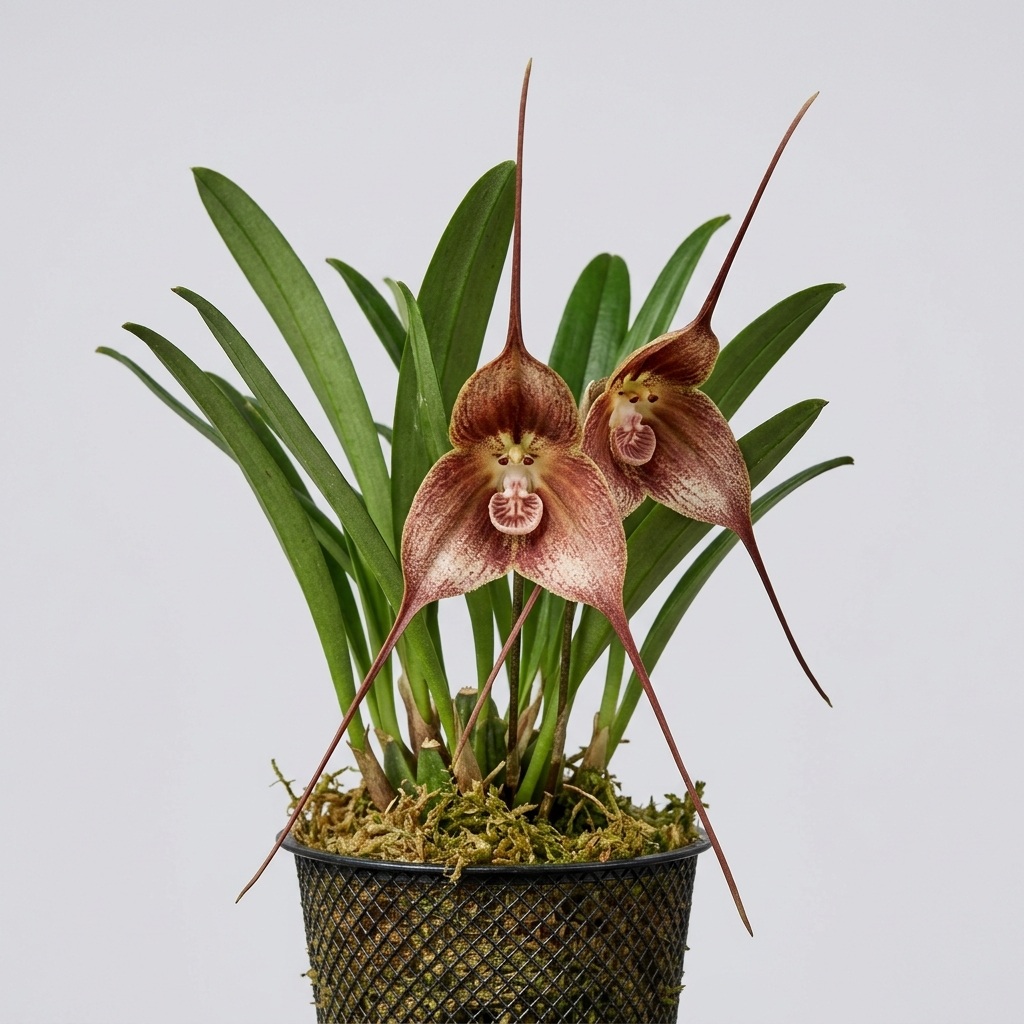
Dracula Simia, commonly known as the monkey orchid, is a fascinating epiphytic species native to the cloud forests of Ecuador and Peru. Renowned for its striking flowers that bear an uncanny resemblance to the face of a small monkey, this orchid has captured the imagination of horticulturists and plant enthusiasts worldwide. It belongs to a genus known for its preference for cool, humid, and shaded environments, mimicking the misty mountain habitats of its origin.
While highly sought after for its unique visual appeal, Dracula Simia presents a rewarding challenge for dedicated growers. It requires specific environmental conditions to thrive, particularly regarding temperature control and humidity. Cultivating this species successfully relies on understanding its natural cloud forest habitat and replicating those cool, moist conditions in a home or greenhouse setting.
💡 Did You Know?
The striking resemblance of Dracula Simia to a monkey's face is a classic example of visual mimicry, though in nature, it is believed to attract specific fungus gnat pollinators by mimicking the appearance and scent of forest mushrooms rather than primates.
🌿 Botanical Overview
Dracula Simia is an epiphytic orchid species that naturally grows on the mossy trunks and lower branches of trees in high-altitude cloud forests, typically at elevations between 1,000 and 2,000 meters. Unlike many other orchids, it does not possess pseudobulbs. Instead, it produces tufts of erect, thin, leathery leaves that emerge from short rhizomes, giving the plant a compact, grassy appearance.
The genus name Dracula translates to “little dragon,” referencing the dramatic, spur-like sepal tails characteristic of the flowers, while the species epithet simia directly points to the monkey-like facial features formed by the petals and lip. In the wild, these plants rely on a constant flow of cool, moisture-laden air and high humidity to survive, making them highly sensitive to dry air and heat.
🌸 Flower Characteristics
The flowers of Dracula Simia are the primary draw for collectors, featuring a complex structure that mimics a primate’s face. The three large sepals are the most prominent feature, ending in long, slender tails that drape downward. These sepals are typically patterned with reddish-brown spots over a lighter cream or yellowish background.
The “face” itself is formed by the small, dark petals that resemble eyes, while the complex, cup-shaped lip (labellum) forms the nose and mouth. The flowers are borne on descending or horizontal inflorescences that often grow downward through the potting medium, which is why growers typically cultivate this species in open-mesh baskets rather than traditional solid pots.
Fragrance & Bloom Profile
The fragrance of Dracula Simia is a notable characteristic, though its intensity can vary depending on environmental conditions and the specific clone. Many growers report a distinct, pleasant scent reminiscent of ripe citrus, specifically fresh oranges. This fragrance is typically most noticeable during the morning hours when humidity levels are high and temperatures are cool.
The blooms can appear at any time of the year when the plant is mature and healthy, often emerging successively on the same flower spike. Each individual flower can last for several days to a couple of weeks, provided the surrounding air remains cool and highly humid.
Parentage & Hybrid Lineage
Dracula Simia is a naturally occurring species rather than a man-made hybrid. It was first formally described in the late 20th century after being collected in the mountainous regions of South America. Because it is a species, its genetic lineage is pure, and it is often used by hybridizers looking to introduce unique patterns, long sepal tails, or cool-growing traits into new Dracula grexes.
While some artificial hybrids involving Dracula Simia exist in specialist collections, they are relatively rare compared to other orchid genera. Most plants available in the horticultural trade are propagated through tissue culture or division of established species specimens.
🌱 Growing Conditions
Replicating the cloud forest environment is essential for the survival of Dracula Simia. It thrives in cool to intermediate temperatures, ideally ranging from 50°F to 68°F (10°C to 20°C) during the day, with a distinct drop at night. Temperatures consistently exceeding 75°F (24°C) can cause rapid decline, leaf drop, and bud blast.
💡 Care Tip
Always use pure rainwater, distilled water, or reverse osmosis water for your Dracula Simia. This species has incredibly sensitive roots that will quickly burn and die if exposed to the chlorine, chloramines, and dissolved minerals found in typical tap water.
Light should be kept low to moderate, mimicking the dappled shade of the forest understory. Strong, direct sunlight will quickly scorch the delicate foliage. High humidity is critical, ideally maintained between 70% and 90%, accompanied by constant, gentle air movement to prevent fungal pathogens from settling on the wet leaves.
Watering, Feeding & Potting Media
This orchid must never be allowed to dry out completely. The potting medium should remain consistently damp but not waterlogged. Using pure water, such as rainwater, distilled water, or reverse osmosis water, is highly recommended, as Dracula species are extremely sensitive to dissolved salts and minerals in tap water.
The ideal potting medium is high-quality New Zealand sphagnum moss, often mixed with a small amount of fine tree fern fiber or perlite to maintain aeration. Because the flower spikes naturally grow downward, Dracula Simia must be planted in open plastic mesh baskets or wire baskets lined with moss. Fertilize very sparingly with a highly diluted, balanced orchid fertilizer, applying it only when the plant is actively growing.
Blooming Season & Care Notes
Unlike orchids with a strict seasonal blooming cycle, Dracula Simia is an opportunistic bloomer that can produce flowers throughout the year. The primary blooming periods often align with the cooler months of spring and autumn when temperature fluctuations stimulate spike development.
To encourage blooming, maintain a consistent temperature drop of 10°F to 15°F at night. Avoid cutting green flower spikes, as they can produce successive blooms. Repotting should be done carefully in the autumn or early spring when new root growth is active, taking care not to damage the fragile, thin roots.
⚠️ Common Issues
⚠️ Common Mistake
The most common mistake is growing this orchid in a standard solid plastic pot. Because the flower spikes naturally grow downward through the root mass, planting it in a solid container prevents the spikes from emerging, causing them to rot inside the pot.
- Root Rot:
Caused by compacted, decaying media or poor drainage, leading to limp, yellowing leaves. - Bud Blast:
Occurs when humidity drops suddenly or temperatures rise, causing developing buds to shrivel and die before opening. - Leaf Tip Burn: Often a sign of mineral buildup from tap water or over-fertilization; always use pure water.
- Fungal Spotting: High humidity without adequate air circulation can lead to black spots on the foliage.
- Pests:
Aphids and spider mites can occasionally target the soft leaves and buds, especially in dry conditions.
❓ Frequently Asked Questions
Why are the leaves on my Dracula Simia turning yellow?
Yellowing leaves are often a sign of heat stress, low humidity, or root rot. Ensure the plant is kept in a cool location below 70°F (21°C), maintain high humidity, and check that the potting medium is fresh and draining well.
Can I grow Dracula Simia in a standard plastic pot?
It is not recommended to grow this species in a standard solid pot. Because the flower spikes grow downward through the bottom of the plant, they will become trapped and rot inside a solid container. Always use an open-mesh basket.
How often should I water my monkey orchid?
Watering frequency depends on your environment, but the medium should remain consistently moist. This typically means watering every few days, or even daily in warmer weather, ensuring the sphagnum moss never dries out completely.
Does Dracula Simia require a winter rest period?
No, this species does not require a dry winter rest. It should receive consistent moisture, high humidity, and gentle fertilization year-round, though watering can be slightly reduced during the darkest, coolest winter months.
⭐ Final Growing Notes
While Dracula Simia requires a disciplined approach to temperature and humidity management, the reward of witnessing its unique, monkey-faced blooms is unmatched for the dedicated orchid enthusiast. By focusing on pure water, cool air, constant moisture, and mesh-basket cultivation, you can successfully replicate its native cloud forest home and enjoy one of the botanical world’s most extraordinary creations.
⚕️ Health, Safety & Edibility
Understanding how a plant interacts with people, pets, and the surrounding environment is part of responsible cultivation. This section uses conservative, general guidance and does not replace professional medical or veterinary advice.
Human Safety: Species-specific human toxicity data for Dracula Simia is limited. Use conservative handling practices and avoid intentional consumption.
Pet Safety: Pet-specific safety information for Dracula Simia is limited, so keep it away from animals that commonly chew plants.
Edibility: Dracula Simia should not be treated as edible. Ornamental specimens may contain natural irritants or horticultural residues that make them unsuitable for consumption.
Skin Contact: Skin irritation is not well documented for this plant, but gloves are sensible when repotting, pruning, or handling potting media.
🌱 Propagation Tip
Propagation is best achieved by carefully dividing mature, healthy clumps during repotting. Ensure each division has at least four to five healthy leaves and an active growth point, as smaller divisions can struggle to establish in cool conditions.
⭐ Expert Advice
If you struggle to keep temperatures cool enough during hot summer months, try placing your mesh basket inside a larger clay pot filled with damp sphagnum moss. The natural evaporation from the clay pot will help lower the around the orchid's roots.

Leave A Comment